
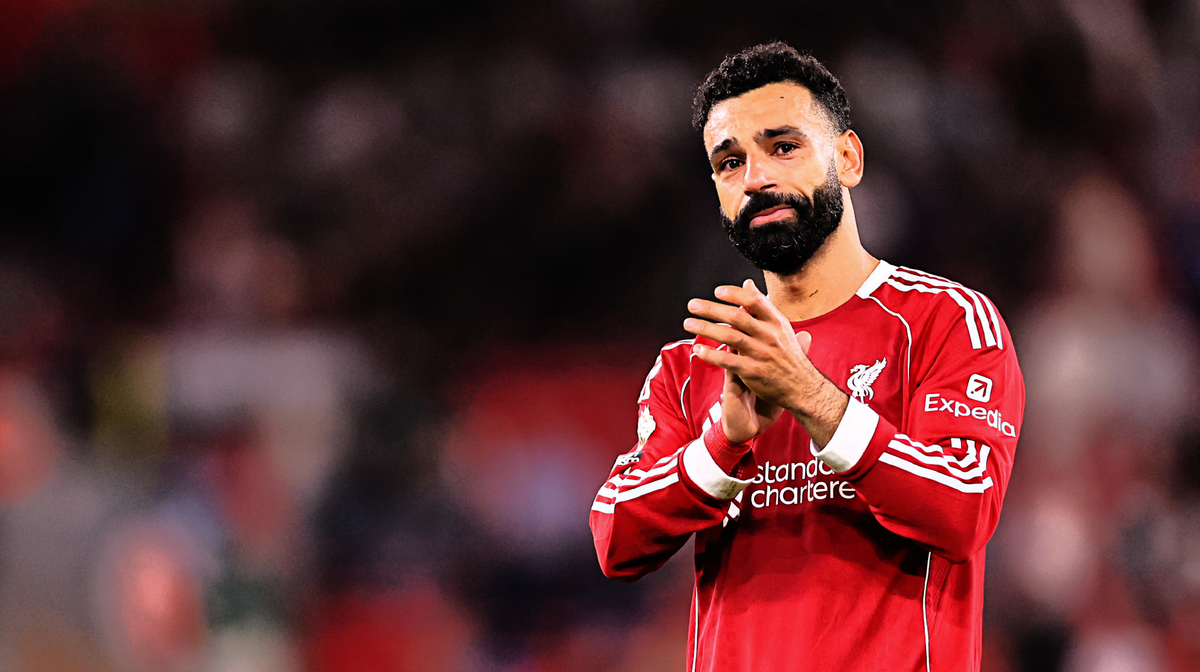
The ECHO’s Liverpool FC correspondent Paul Gorst takes a closer look at why Mohamed Salah has decided to call time on his Anfield career at the end of the season
13:30, 30 Mar 2026Updated 17:02, 30 Mar 2026
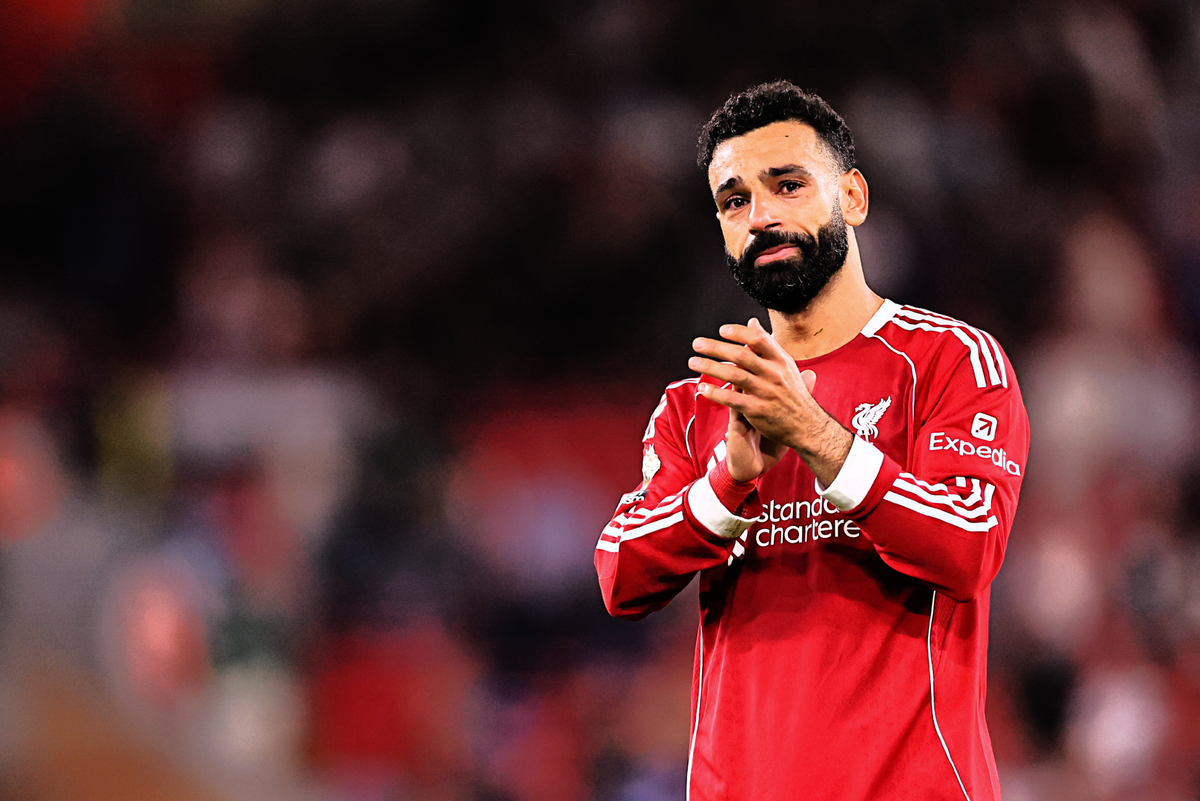
Mohamed Salah in tears after scoring in Liverpool’s 4-2 win over Bournemouth, August 2025
Mohamed Salah was just 94 minutes into his ninth and final season at Liverpool when its defining image was taken. The picture of a blurry-eyed goalscorer, struggling to hold back tears as he celebrated in front of the Kop, during an emotional 4-2 victory over Bournemouth was striking.
The reason that a sense of sadness hung as the champions confirmed that opening night victory – which was capped off by Salah’s customary goal contribution in the first game of the season – was of course Diogo Jota.
Liverpool FC, as a club and a fanbase, did their utmost to pay their respects to Jota on Friday August 15 and the sorrow, as his family watched on from the directors’ box was tangible. This was just six weeks after he and his brother, Andre Silva, died in a car accident in Northern Spain while traveling back to the UK to begin pre-season training at the AXA Centre in Kirkby.
And while it might be stretching it to frame everything that followed for Salah during a term of turbulence around the sudden and shock passing of his good friend in the early hours of July 3, Jota’s absence cannot be dismissed as a contributing factor for why the third highest goalscorer in Liverpool’s history believes his jig is finally up at Anfield.
FOLLOW OUR LIVERPOOL FC FACEBOOK PAGE! All the latest news and analysis from Anfield on the Liverpool Echo’s dedicated LFC Facebook page
“I never thought there would be something that would frighten me going back to Liverpool after the break,” Salah wrote on July 4 alongside a grey-scale image of him celebrating with Jota on the pitch. “Team-mates come and go but not like this. It’s going to be extremely difficult to accept that Diogo won’t be there when we go back.”
At a time when Liverpool were embarking on the biggest spending summer in their history – around £440m – to land marquee attacking names like Florian Wirtz and Alexander Isak and the emerging Hugo Ekitike, it wouldn’t have taken much for the 33-year-old to envision a Liverpool frontline that no longer needed him. The post-Salah plan had clearly been activated at the very top of the club, despite the Egyptian signing a two-year deal just a few months earlier.
And when results dipped, the output waned and the criticism arrived during a difficult run of nine defeats in 12 matches between September and November, Salah found himself on the bench – a position he had never meaningfully occupied before at Liverpool.
At a stadium where Salah once said “there will be fire if I speak today” after a public clash with Jurgen Klopp, there was some internal concern, once the team news dropped on November 30, that he might seek to rock the boat post match at West Ham United.
A place on the nine-man bench, however, passed without incident as goals from Isak and Cody Gakpo secured one of the campaign’s more routine victories. A disgruntled Salah traipsed through the mixed zone of the London Stadium, knowing there was little he could say after a good result. He kept his counsel, but not for long.
Just six days later, that all changed. Salah’s explosive outburst in a nondescript doorway at Elland Road is now viewed by many as the catalyst for the decision to leave.
Following back-to-back draws with Sunderland, where he played the second half, and Leeds – which were enough to confirm that Arne Slot’s side hadn’t yet turned the corner – Salah launched a remarkable broadside on December 6 at the head coach and other unnamed figures at the club, accusing them of “being thrown under the bus”.
As the defeats rained down on Slot and his team, Salah’s lack of defensive output was seen as something that needed to change and as the Reds boss sought more solidity, the No.11 was deemed expendable until the ship was steadied.
When Salah signed his two-year extension following a season where he scored 29 goals and 18 Premier League assists, the former Roma winger thought his career would end at Anfield. Barely six months into that deal, Salah’s future suddenly looked so much more uncertain.
“Somehow it will end but the thing in my head is like why it should end this way?” Salah said at the time. “Because I am too fit, just five months ago I was just winning every individual award so why should it go this direction? I’m sorry everybody in a team is not in their [best] form yet I’m the one has has to defend himself now.”
Salah faced criticism for his decision to go nuclear with Reds legend Jamie Carragher leading the way with a lengthy Sky Sports analysis on the Monday Night Football that followed. At a time when the Reds were finding it tough, it was an ill-advised outburst from someone so senior inside the squad.
A private apology was offered to his team-mates but it is believed that was only centred on the furore his interview caused. Salah maintained he was within his rights to call out being dropped given his sterling service to the club.
An uneasy truce was struck behind the scenes with Slot after being left at home for the 1-0 win at Inter in the Champions League and while he started his final game before the Africa Cup of Nations on the bench against Brighton, a first-half injury to Joe Gomez allowed Salah to quickly return to the team as the Reds won 2-0.
At the time, few knew if that would be Salah’s final Anfield appearance, as a month-long absence AFCON raised plenty of questions with the transfer window open. Despite the waters calming, it’s understood Slot privately felt vindicated by his decision to take Salah out of the team, believing it made his side more compact out of possession. While the football was not always easy on the eye, the Reds went on an unbeaten run that lasted 13 games before the loss to Bournemouth on January 24.
Despite the unrest, Liverpool received no approaches for Salah in the January market. Paying a fee on top of wages that aligned with the player’s profile complicated matters for interested parties and the two-time Premier League winner returned to Reds action in the 3-0 win over Marseille in the Champions League on January 21. The market wasn’t there for Salah, which is why his departure will now come as an agreed end-of-season exit as a free agent, despite having a year left on his terms.
Recent weeks have shown glimpses of the ‘old’ Salah, but those fleeting contributions – like his trademark efforts against Galatasaray and Qarabag in the Champions League, or the wing wizardry that won the penalty he converted against Brighton in the FA Cup – have stood out because they have become infrequent.
At a reputed £400,000 a week, Liverpool haven’t been getting value for money and when Salah penned that two-term extension 11 months ago, there was always a concern that the decline of a 33-year-old might come sooner rather than later.
However, a season-from-the Gods, where he dragged the Reds to a second title in five years, was enough to convince key figures that the inevitable drop-off could be staved off by the player’s professionalism and dedication. After all, Salah proved similar concerns misplaced in the summer of 2022, when he eventually signed a contract extension on the Greek island of Mykonos and subsequently scored 89 goals in three seasons.
Hindsight is a great gift but the thought of Salah leaving last summer as a free agent after arguably his finest-ever campaign on Merseyside would surely have led to an enormous backlash from supporters.
In March of 2026, however, things are slightly different. With the club clearly set to take the step in their attacking evolution next season with Wirtz, Ekitike and Isak, the decision to remove the highest-earning player ever is viewed internally as a smart call, regardless of the lack of a transfer fee. Liverpool will save nearly £21m next season just by having Salah off the wage bill. That can be reinvested into the playing staff when they inevitably come to replace him.
There’s also a sense of honour in allowing Salah to depart on his terms, given the relationship that exists and while the official video put on to social media last Tuesday evening was an in-house production with the Egyptian’s camp, it’s understood the club collaborated with their No.11 to an extent, putting forward the services of Steven Halliwell, who shot the video and took the images of Salah beside his bulging trophy cabinet in his Cheshire home.
Salah’s departure from Liverpool is more cordial than it perhaps appears on the surface, and a healthy level of respect will always exist between club and player. It’s been a mutually beneficial relationship over most of the last decade that has yielded too much for it to erode beyond repair this quickly.
But there is no denying this was not how it was supposed to end for one of the club’s greatest ever players. The long goodbye is underway and that August image of a teary Salah at the Kop End is likely to be recreated when his final appearance comes in just a few short weeks.