
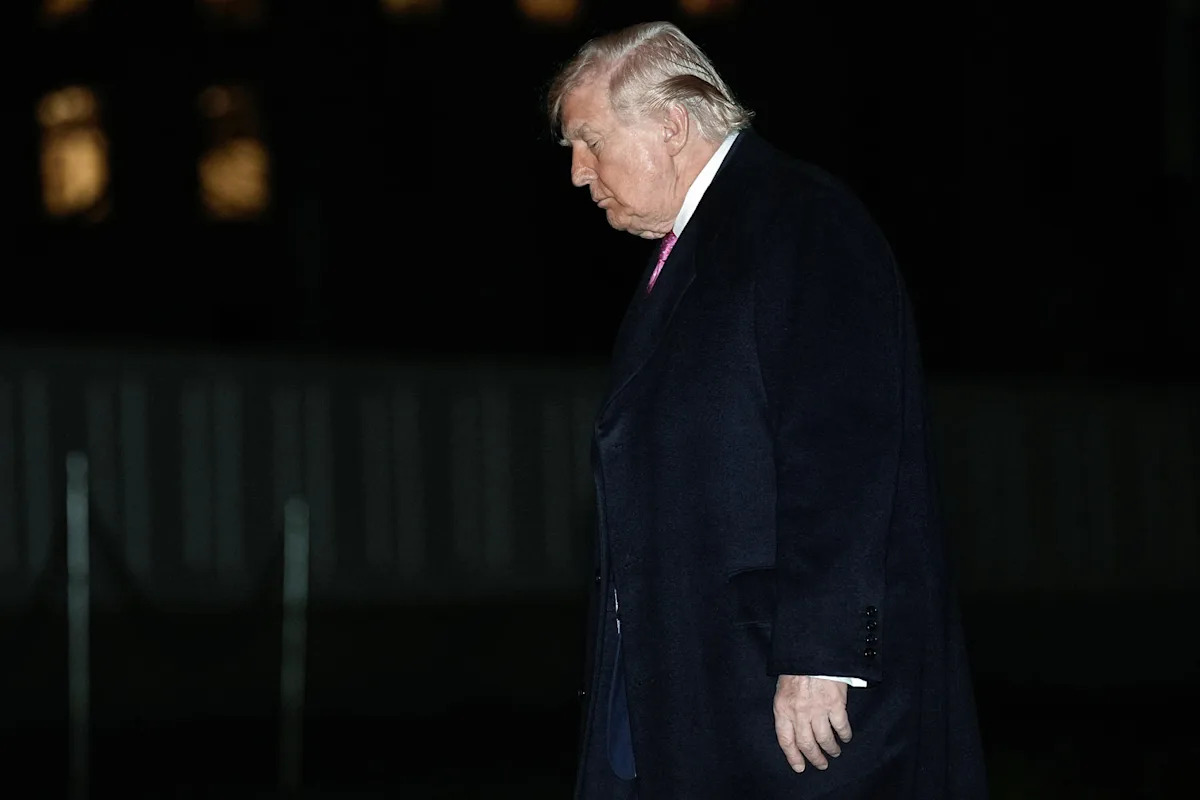
WASHINGTON — It has been more than a week since President Donald Trump announced the U.S. was in conversation with Iran, but despite offers by Pakistan to host in-person discussions, no face-to-face meeting has been set and Iran denies negotiations are taking place.
The two sides have acknowledged exchanging messages through intermediaries, and the top diplomats of Pakistan, Saudi Arabia, Turkey and Egypt have held talks about possible talks. But it wasn’t clear whether anything has resulted from the discussions, as thousands more U.S. troops arrive in the Middle East and Trump threatens to attack Iranian energy infrastructure.
In other words, while progress may be playing out behind the scenes, there’s little public indication that the war is coming to a diplomatic end anytime soon.
Meanwhile, oil prices continue to spike, and so do gas prices in the U.S., an issue for Trump as the midterm elections draw nearer.
Trump said Monday on Truth Social that the U.S. was in serious discussions with a “new, and more reasonable, regime” to end the war in Iran, adding that “great progress has been made,” but he also threatened to attack key Iranian energy infrastructure if a deal wasn’t reached shortly.
Iran has said there are no negotiations.
“What has occurred is the submission of requests for negotiations, along with a set of proposals from the United States, which have reached us through intermediaries, including Pakistan,” Esmaeil Baghaei, spokesperson for the Iranian Foreign Affairs Ministry, said on X.
“Our position is very clear. At a time when US military aggression continues with intensity, all our efforts and capabilities are focused on defending Iran.”
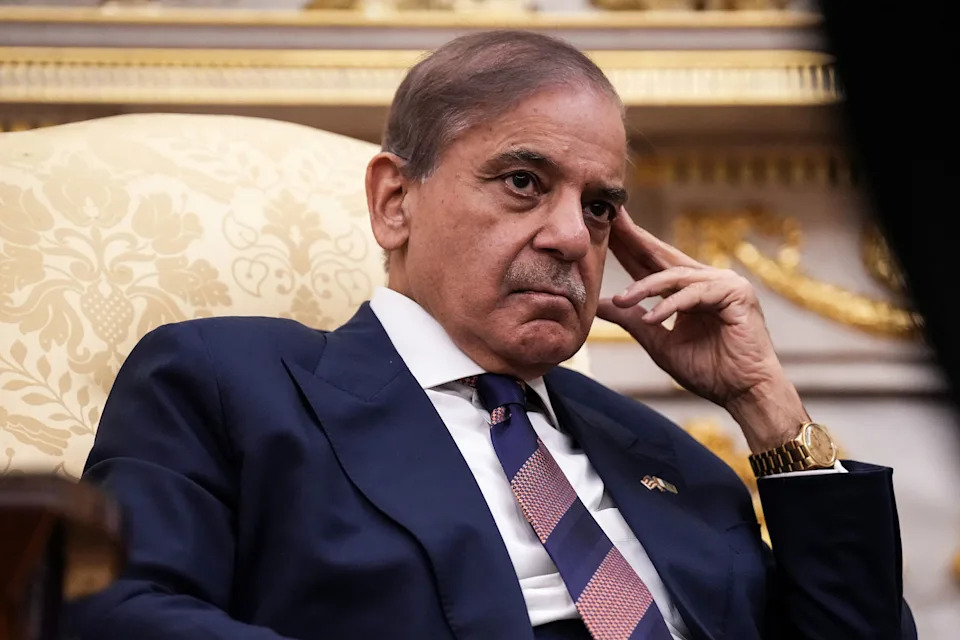
Pakistani Prime Minister Shehbaz Sharif in the Oval Office of the White House last year. (Andrew Harnik / Getty Images file)
(Andrew Harnik)
Pakistan army chief Syed Asim Munir, whom Trump has referred to as his “favorite field marshal,” has become a key go-between for the U.S. and Iran, and Pakistani Prime Minister Shehbaz Sharif and Sen. Mohammad Ishaq Dar, the deputy prime minister and foreign minister, have also worked on negotiations, according to a regional official and public statements.
The U.S. has proposed a 15-point plan, delivered to Iran via Pakistan. Trump said Sunday and White House press secretary Karoline Leavitt reiterated Monday that Iran has agreed to at least some of those points, the full list of which hasn’t been publicly released.
Special envoy Steve Witkoff has offered a few details, among them that Iran can’t enrich uranium on its soil — a demand that has been a nonstarter for Tehran in past discussions. He also said that as part of the 15 points, Iran would have to give up its stockpile of 10,000 kilograms of fissile material and that the “oversight question” would also be solved. “All of these are red lines for us,” he said.
Secretary of State Marco Rubio said Monday that U.S. demands included that the Iranian regime “can never have nuclear weapons, and they need to stop sponsoring terrorism, and they need to stop building weapons that can threaten their neighbors.”
Iran has repeatedly rejected the U.S. plan, including as recently as Monday, and has countered with its own five points, including a complete halt to “aggression and assassinations by the enemy,” the establishment of concrete mechanisms to ensure that war won’t be reimposed on Iran, war damages and reparations, and international recognition of Iran’s sovereign right to exercise authority over the Strait of Hormuz, a vital passageway that carries over 20% of global oil.
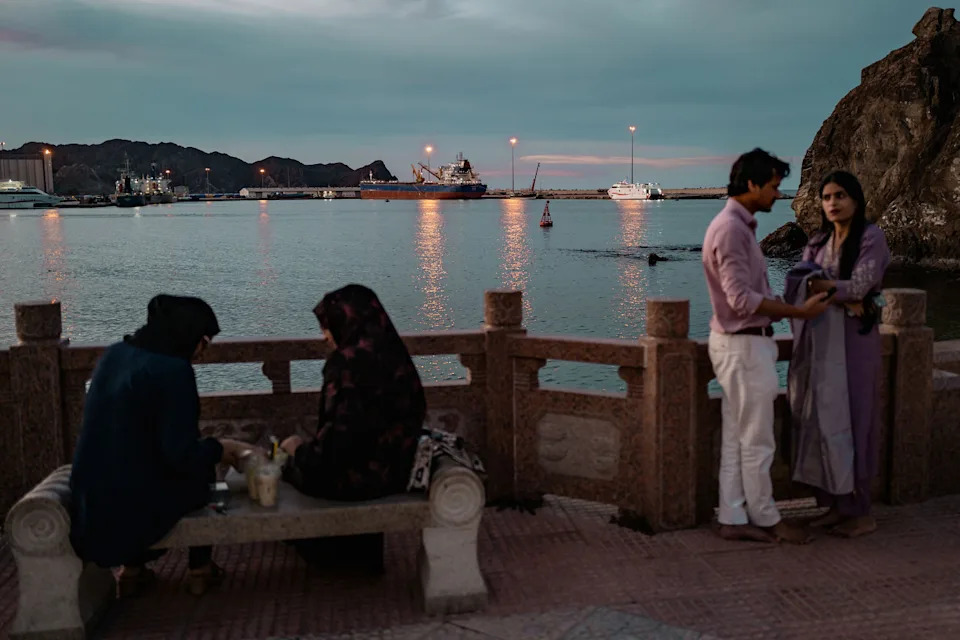
Oil tankers and high-speed craft anchored near the Strait of Hormuz in Oman on Monday. (Elke Scholiers / Getty Images)
(Elke Scholiers)
Trump announced Sunday that Iran had allowed 20 ships to safely pass through the strait, in addition to the 10 ships that were allowed to transit last week, and the White House has claimed their passage was “a result of the direct and indirect talks that are taking place between the United States and Iran.”
But Iran still controls the critical passageway, and the world continues to be cut off from a fifth of its oil supply with prices over a $100 a barrel. For the U.S., Iranian control of the Strait of Hormuz is one of many nonstarters.
Rubio said it was unclear who was even making the decisions in Iran, questioning whether Iran’s new supreme leader, Ayatollah Mojtaba Khamenei, is really in power.
“No one has seen him. No one has heard from him,” Rubio told Al Jazeera. “It’s very opaque right now. It’s not quite clear how decisions are being made inside of Iran.”
Trump said Monday that some of the diplomacy with Iran was with Parliament Speaker Mohammad Bagher Ghalibaf, telling the New York Post that he would know “in about a week” whether Ghalibaf was willing to work with Americans.
Publicly at least, Ghalibaf has dismissed the possibility of diplomacy, and Iran has repeatedly denied that any negotiations are taking place.
“The enemy sends messages of friendship openly, while secretly plotting a ground invasion. We are waiting for their arrival; we will set them ablaze and punish their regional partners forever,” Ghalibaf said Sunday.
Baghaei on Monday also denied, yet again, that there have any direct negotiations between the U.S. and Iran, according to Iranian PressTV, and said the U.S. plan included “very excessive, unrealistic and irrational” demands.
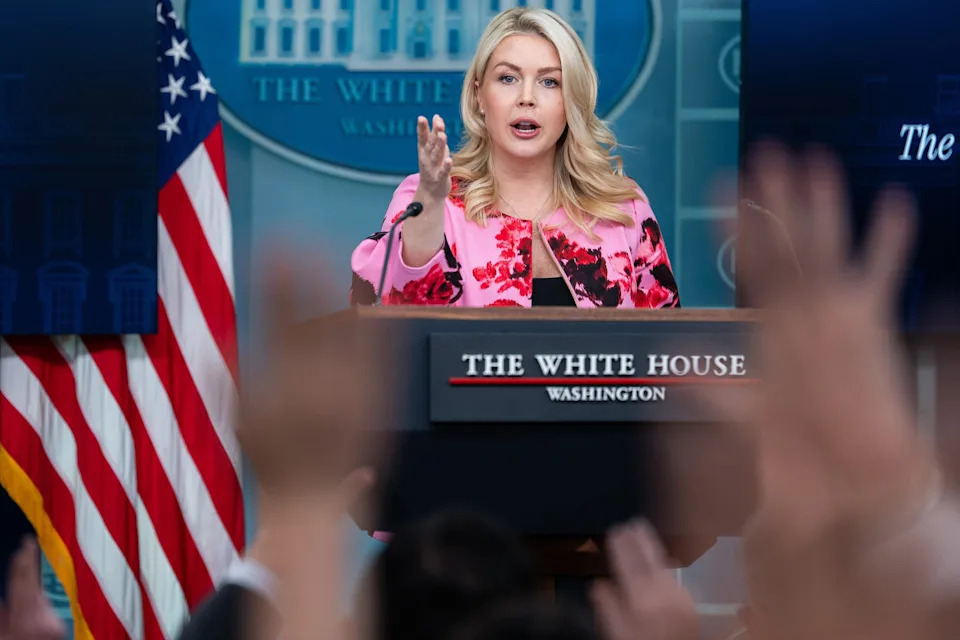
White House press secretary Karoline Leavitt at a news conference at the White House on Monday. (Aaron Schwartz / Bloomberg via Getty Images)
(Aaron Schwartz)
At the White House news briefing, Leavitt downplayed the significance of the Iranian officials’ remarks, telling reporters the remaining elements of the Iranian regime are “increasingly eager to end the destruction and come to the negotiating table while they still can.”
“Despite all of the public posturing you hear from the regime and false reporting, talks are continuing and going well,” she said. “What is said publicly is, of course, much different than what’s being communicated to us privately.”
This article was originally published on NBCNews.com