
Yahel and Repair the World, two leading volunteer service organizations — the former based in Israel and the latter in the United States — are set to become “sister movements,” representatives told eJewishPhilanthropy, with the goal of developing a global Jewish service movement and strengthening connections between young American Jews and Israelis.
In addition to merging Slack channels, the partnership will include developing a joint curriculum and hosting an annual summit focused on best practices in volunteer service learning and current volunteer needs in Israel. The conference will alternate each year between Israel and the U.S.
The partnership emerges out of two post-Oct. 7 trends: Israel travel declining sharply in the wake of the 2023 terror attacks except for volunteering and service work in the war-battered country; and a surge in participation in Jewish service programs more broadly.
The partnership will aim to “meet pressing needs in Israel, to build connections between Israelis and Americans, and to strengthen the work of bringing international volunteers to Israel overall,” Cindy Greenberg, president and CEO of Repair the World, told eJewishPhilanthropy.
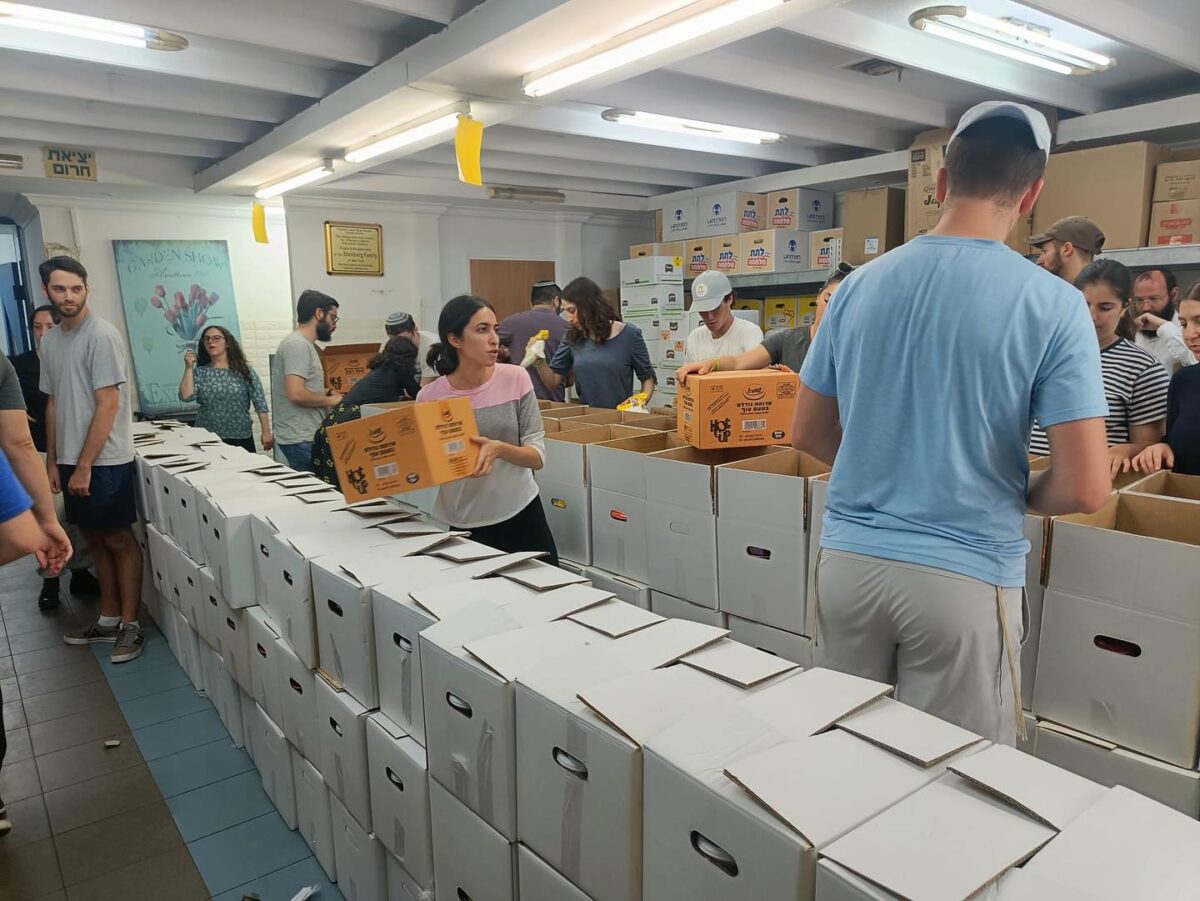
Before the war, Yahel, based in Israel, hosted roughly 600 volunteers annually, said Dana Talmi, the organization’s executive director. Now, even as overall travel to Israel has decreased, Yahel has about 2,200 volunteers — “a huge jump,” said Talmi — driven in part by a growing sense among visitors that they should volunteer while in the country. “Since Oct. 7, it’s very strange for people to come here and not volunteer. People are really feeling that it’s strange to be a tourist.”
When Repair the World was founded in 2009, the nonprofit supported service work in Israel, but the organization has focused primarily on domestic work “for a good decade,” said Greenberg.
Created to be a “meaningful entry point to Jewish life, for folks who might not find themselves elsewhere in Jewish community,” Repair now hopes to extend that entry point to Israel.
“Post-Oct.7, it became so clear to us that we can’t operate in a vacuum,” said Greenberg. “If we want to be serious about Jewish education and connecting our participants to the richness of Jewish life and to global Jewish Peoplehood, then Israel is an important piece of that. And we realized that service is such a powerful way to connect our participants to Israel. It was an urgent call for us to find a way to really grow and support that movement.”
For Yahel, coming to Israel — and even volunteering in Israel — is not enough; in order to make the experience meaningful, there needs to be a pedagogical component as well. For many Israeli trips, volunteering is still treated as an afterthought in an itinerary, or done without sufficient educational scaffolding, Talmi said. By partnering, the two organizations hope to expand the field overall and develop and dispense a “methodology” for service learning to make it into a more meaningful learning experience for travelers to Israel, she said.
Making volunteering in Israel more intentional is especially important given the current increase in volunteer participation, according to Greenberg. “Part of the urgency of this partnership is that we don’t want to miss the opportunity to make sure that the amazing volunteering that’s happening in Israel includes really significant Jewish learning and reflection,” she said.
A recent Birthright study found that young Jews visiting Israel after the war tend to be more Jewishly engaged and more likely to have preexisting ties to the country than before. So while Yahel has seen an overall uptick in participation, it has seen fewer “grapplers” — Talmi’s term for volunteers who visit Israel with preexisting criticisms or while still making their minds up about the current political situation. While in this year’s fellowship cohort, “the grapplers are back,” said Talmi, ongoing security concerns and academic programs being suspended has still significantly limited participation.
“The people who are very, very stubborn about coming are the people who already have a relationship with Israel,” said Talmi.
Through their partnership, Repair the World and Yahel aim to close that gap and reach those who feel less connected. In 2024, Repair the World shuttered two locations and ended its two-year fellowship program, instead prioritizing its Service Corps, a 10-week program where adults ages 18-29 are paired with a service partner organization. At the time, representatives said the Service Corps had the potential to reach a larger and broader pool of participants. According to Greenberg, Repair is currently engaging some 150,000 participants across the United States, spanning the religious and ideological spectrum.
“Especially in this moment where many of our young adults and young people are grappling with their connection to Israel, grappling with how they think about Israel, one of the best pathways to engaging them in that conversation is through service, right? It’s through introducing them to changemakers like Dana and her amazing network of change makers across Israel, and inviting our participants not to scream into the void, and to start being part of building the world as it should be,” said Greenberg.