
President Trump has suggested he could walk away from Iran and leave other nations to police the Strait of Hormuz, threatening that America “won’t be there to help you anymore”.
Traditional allies of the US, told one day that he does not need them, another day taunted as “cowards” and then told they should hurry up and “go to the Strait”, are wondering how best to respond — or whether Trump is playing a different game altogether.
Ever since the start of the conflict, Trump has been sending out a blizzard of conflicting messages: the war is won; it is not a war but an “excursion”; Iran has ten more days to stop fighting and make a deal; shipping companies should “show some guts”; Iran should “open up the Strait of Trump, I mean Hormuz”; and “we don’t need” it anyway.
In Washington, the ever-changing threats and demands are being referred to as “weaponised uncertainty”. That is not to “sane-wash” the process, which is hugely destabilising for the Middle East and the entire globe. But there is a growing feeling that Trump’s rhetorical somersaults are simply his way of buying time to prepare for a ground invasion.
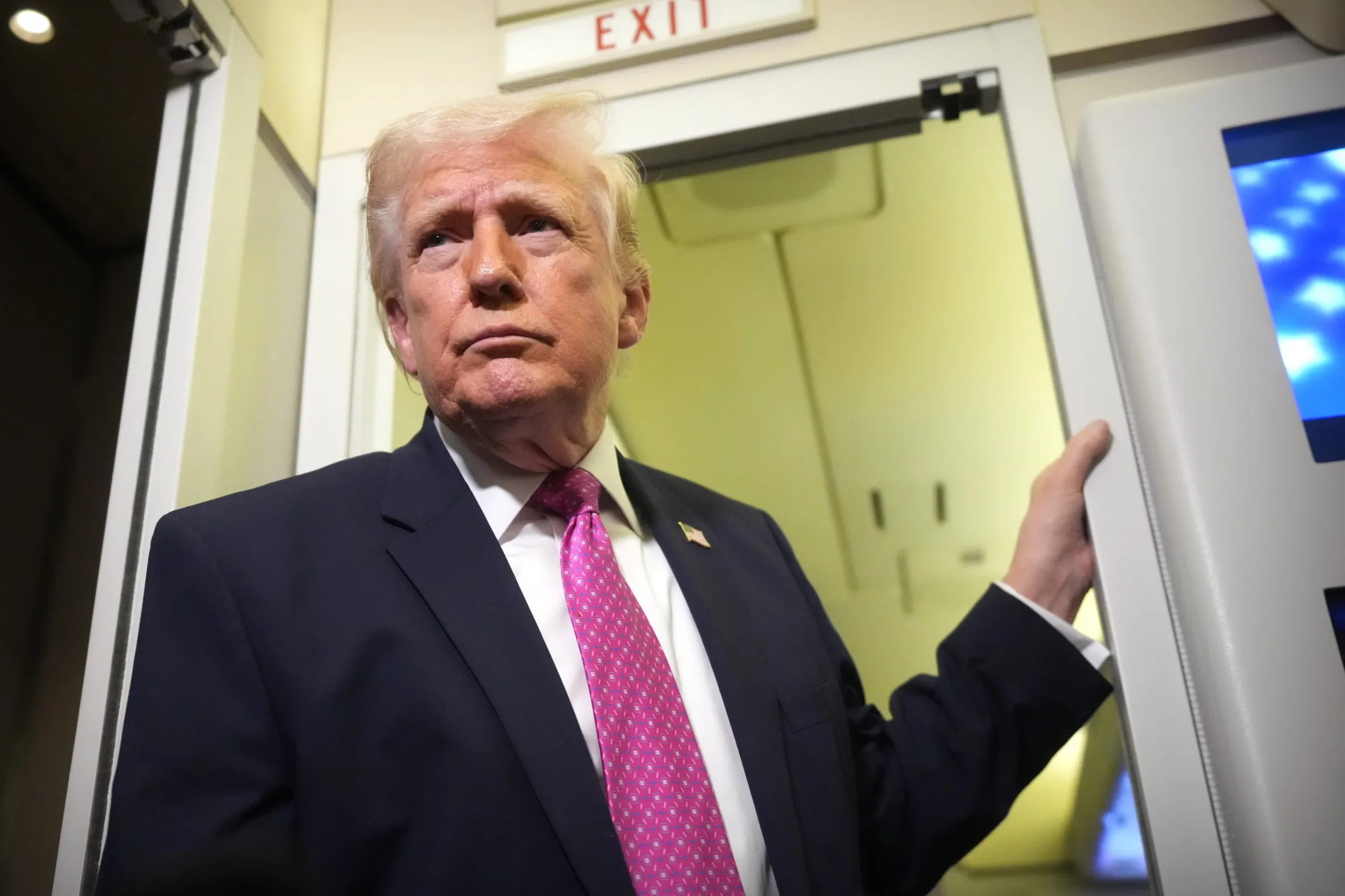 President Trump has been trying to force Iran to negotiate and reassure the marketsMark Schiefelbein/AP
In other words, when he said the war could last “four to six weeks”, he meant it — at least for the initial phase of reducing Iran’s ability to repel a raid to retrieve its enriched uranium or take strategic islands in the Gulf.
But Trump has also needed to convince markets constantly that a conclusion was just around the corner, especially at times of stress when it looked like a sell-off could be gathering pace.
A pattern has developed of terrible threats followed a day or so later by calming reassurance. Trump has huge belief in his own power to manipulate situations in his favour, even when the odds or logic are stacked against him: this was shown in his attempts to negate President Biden’s election victory in 2020, when he told two senior Department of Justice officials to “just say that the election was corrupt and leave the rest to me”. (They refused.)
With his rhetorical brinkmanship, Trump has allowed the US military to build up the troops it will need to raid Iran, if not to fight a prolonged land battle. This could enable a series of coastal forays to try to clear the land nearest the Strait of threats to shipping.
The best time to do this is when markets are closed, especially if the military has only short, sharp missions in mind before they reopen. When better than the coming three-day weekend, when Wall Street and Europe will closed for Good Friday?
This raises the prospect of an Easter ground offensive, despite the Pope’s Palm Sunday warning that “God … does not listen to the prayer of those who wage war”.
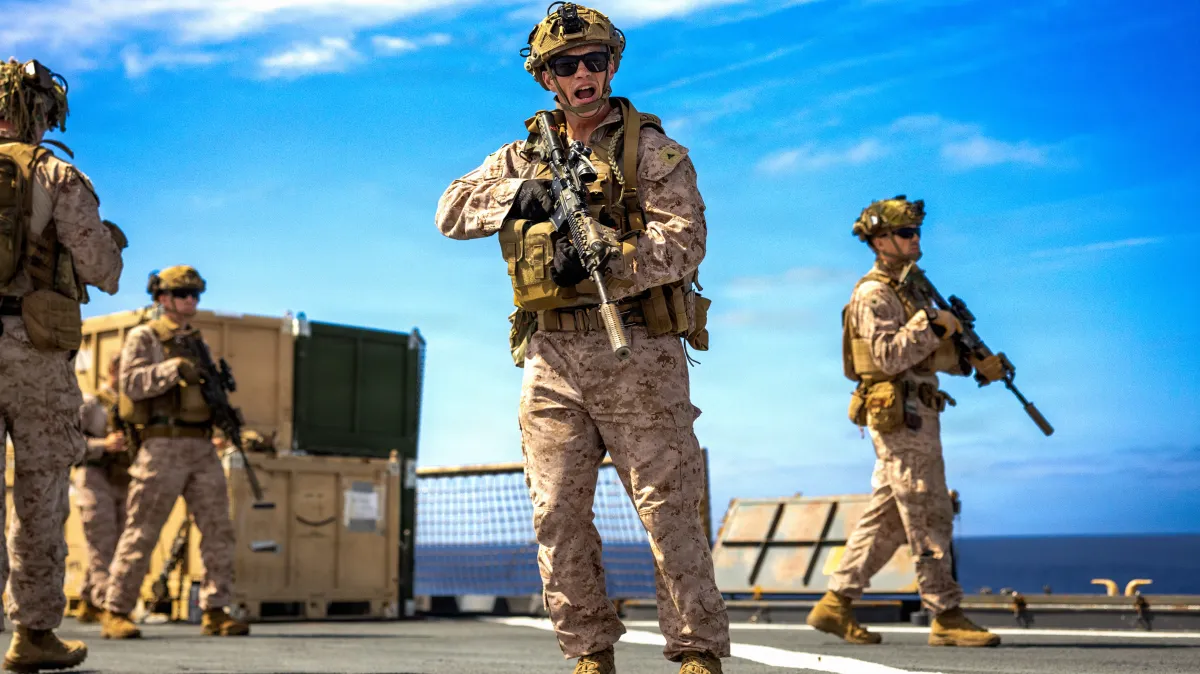
As usual with Trump, he is keeping everyone guessing, but he may be following a pattern, especially now that a 2,200-strong Marine expeditionary force has arrived and is being joined by thousands of paratroopers from the 82nd Airborne, as well as — it has been reported — by hundreds of Special Forces.
Becca Wasser, a Bloomberg economics analyst who carried out war games analysis for the Department of Defense from 2015 to 2025, said: “The troop deployments are real, they are in motion and once they start there’s almost a strange inevitability to them based on how President Trump has used them in the past.”
She said Trump liked to keep all his options open for as long as possible and that his threats to bomb Iranian infrastructure were attempts to pressure Tehran into an agreement at the same time as making preparations for boots on the ground.
“We’ve seen this in the Caribbean, and we’ve already seen this in the Middle East. I’ve researched … all of the strikes that Trump greenlit since taking office in his second term, and there is this pattern,” she said. “Once forces are there, even with Taco [Trump always chickens out], there is still action that gets taken.”