
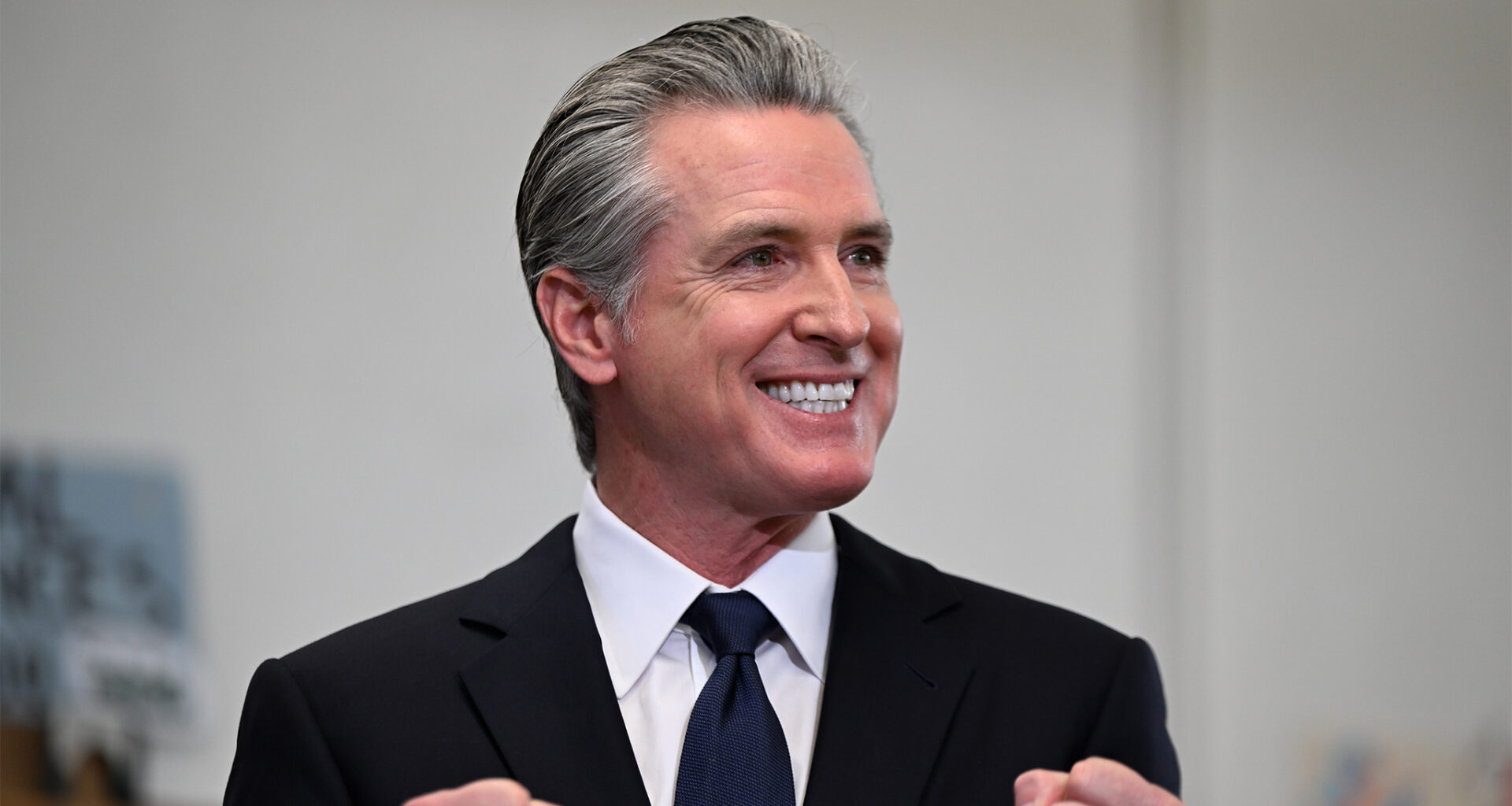
Gov. Gavin Newsom just signed an executive order requiring AI companies that want to do business with the state government to come up with public safety measures. It’s the governor’s latest act of defiance against President Donald Trump, who issued his own executive order in December ordering states to not impose regulations on companies.
The president in March asked individual states to avoid regulatory policies on AI companies and noted that, if they did, they would be flagged and could potentially face a lawsuit by the U.S. attorney general under a newly created AI task force. He reasoned that such policies would slow down innovation and set the U.S. behind on a global tech race. But Newsom’s executive order, signed Monday, is the latest move by state leaders, who are defying that request.
States have had some success implementing safety regulations around AI-created deepfakes and social media, but they are still confronting hurdles. Earlier this year, legislation in Utah and Colorado was derailed after receiving criticism from the White House for attempting to impose more guardrails.
Newsom’s plan “is taking a different approach,” his office said, and requires companies to meet strong safety standards, prevent the misuse of their technologies and prevent any “risk” to consumers.
“California’s always been the birthplace of innovation. But we also understand the flip side: in the wrong hands, innovation can be misused in ways that put people at risk,” Newsom said in a statement. He goes on to say that California is a leader in artificial intelligence and that the state wants to ensure companies will “protect people’s rights, not exploit them or put them in harm’s way.”
“While others in Washington are designing policy and creating contracts in the shadow of misuse, we’re focused on doing this the right way,” he said.
The plan will mandate that companies looking to do contract work in California provide safety and privacy protections around artificial intelligence. The state will also take into consideration any surveillance measures or ways in which their technologies monitor free speech.
Under the order, California will also review companies that are deemed a supply chain risk by the federal government. If the state doesn’t find a company to be a risk, then “departments and agencies can continue to easily procure from that company.” This order comes as Anthropic, a San Francisco-based company, sued the U.S. Department of Defense for labeling it a “supply chain risk.”
The California Department of Technology will also create recommendations and best practices for artificial intelligence companies to watermark their videos, which is part of an effort to make it more obvious to the public what is an AI-generated image or video and what is not.
These companies seeking to do work in California have four months to comply.