
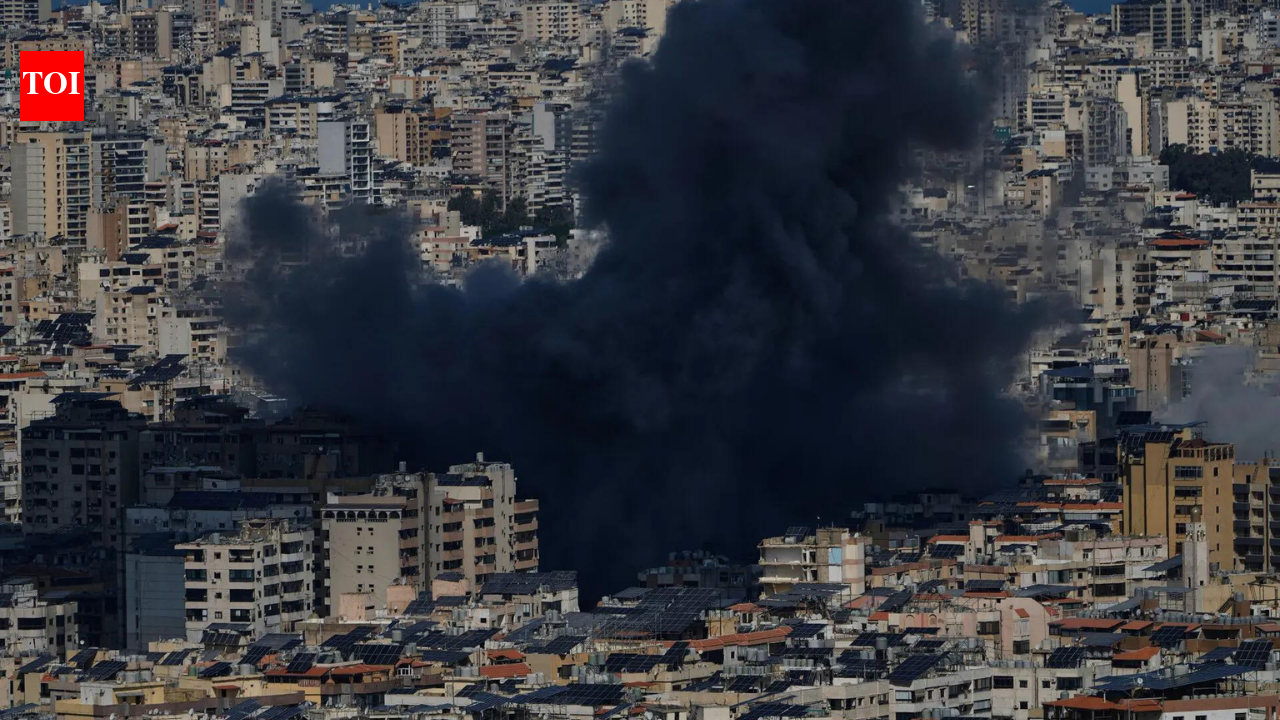
As the war in the Middle East crosses the one-month mark, signs of both escalation and possible de-escalation are emerging simultaneously, reflecting the complex and uncertain nature of the conflict.
The most significant signal of a potential turning point has come from US President Donald Trump, who has suggested that Washington may wind down its military operations against Iran within the next two to three weeks. His remarks indicate that the United States may choose to exit the conflict without a formal agreement with Tehran, marking a shift from traditional diplomatic expectations.
Trump has emphasised that the core objective of the US intervention is to ensure that Iran cannot rapidly develop nuclear weapons. Once that objective is met, he said, American forces would withdraw. He also stated that the US would not take responsibility for securing the Strait of Hormuz, a key global oil route, urging other nations to handle their own energy security concerns.
US Secretary of State Marco Rubio has echoed similar sentiments, saying that the “finish line” of the war is approaching, although not immediately. He also hinted at the possibility of direct talks with Iranian officials at a later stage.
On the battlefield, joint US-Israeli operations continue to target Iranian infrastructure. These strikes are aimed at weakening Iran’s military, nuclear and economic capabilities. At the same time, Israel has expanded its posture in the region, including operations in Lebanon, where the government has taken a strict stance on displaced populations.
Israeli Prime Minister Benjamin Netanyahu has described the campaign as a success so far, claiming that Iran has been significantly weakened. He said the offensive is “systematically crushing” Tehran’s capabilities and reshaping alliances across the Middle East. Netanyahu also suggested that new regional partnerships are forming, although he did not disclose specific countries.
Despite these claims, the human and strategic costs of the war remain high. Israel has reported casualties among its soldiers in Lebanon, highlighting the ongoing risks of ground operations.
Iran, meanwhile, continues to reject negotiations under current conditions. Its leadership has expressed deep distrust of the United States, even as indirect communication channels remain open. The situation is further complicated by threats from Tehran against major US technology companies, signalling a potential expansion of the conflict into cyber or economic domains.
Globally, concerns are mounting over the war’s impact on energy markets. Rising oil prices and disruptions in supply chains have already begun affecting economies worldwide.
At the diplomatic level, efforts to restore stability are intensifying. China and Pakistan have proposed a structured peace plan, while Gulf leaders are engaging in discussions to prevent further escalation.
As the conflict evolves, the coming weeks are expected to be critical in determining whether the war moves towards resolution or further instability.