
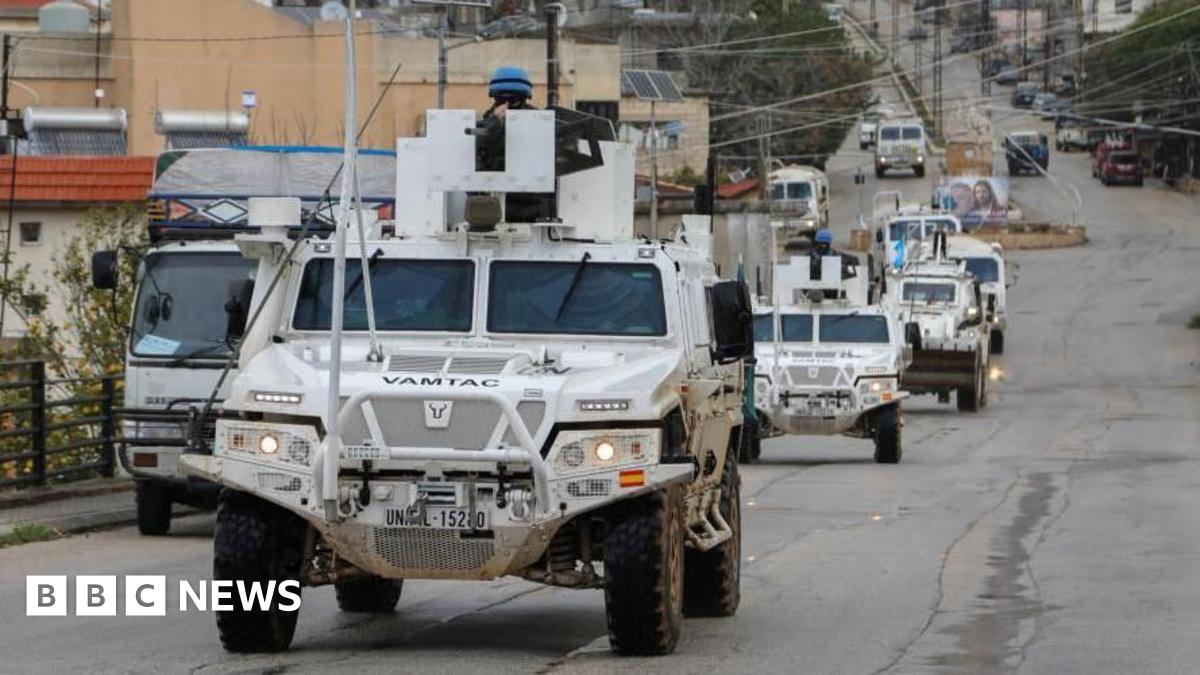
Unifil said it had launched investigations to determine what happened in both incidents.
The findings of an “initial” investigation into the incident on Monday “point to a roadside explosion striking the convoy”, Lacroix told the UN Security Council earlier.
Their deaths had “most likely” been caused by an IED (improvised explosive device), Stéphane Dujarric, spokesperson for the UN secretary-general, later said at a briefing.
Speaking about the other incident, on Sunday, Dujarric said it was likely caused by “an explosive that landed in the position that the Indonesians were holding”.
The deaths come shortly after the Israeli military announced it would step up ground and air attacks against the Lebanese armed group Hezbollah.
Hezbollah, an Iranian-backed militia as well as a political party, has fired rockets into Israel in retaliation for the ongoing US-Israeli strikes on Iran.
In a statement on Telegram, the Israel Defense Forces (IDF) said its own review had concluded that the Bani Hayyan explosion “was not caused by IDF activity”.
It went on: “A comprehensive operational examination indicates that no explosive device was placed in the area by IDF troops, and that no IDF troops were present in the area at all.”
Separately, the IDF said on Tuesday that four of its soldiers had been killed in combat in southern Lebanon. Another soldier was severely wounded and a reservist moderately wounded, the IDF said.
Dujarric, of the UN, said the peacekeepers in Lebanon were “soldiers sent there on behalf of the international community… and everyone needs to ensure that they are protected and never targeted”.
He urged Lebanon and Israel to use the Unifil mechanism for dialogue, saying “the bottom line is that the sovereignty and territorial integrity of Lebanon needs to be respected”.
Antara, an Indonesian government-owned news agency, named the soldier killed on Sunday as Chief Private Farizal Rhomadhon. The two soldiers killed on Monday were named as Captain Zulmi Aditya Iskandar and First Sergeant Muhammad Nur Ichwan.