
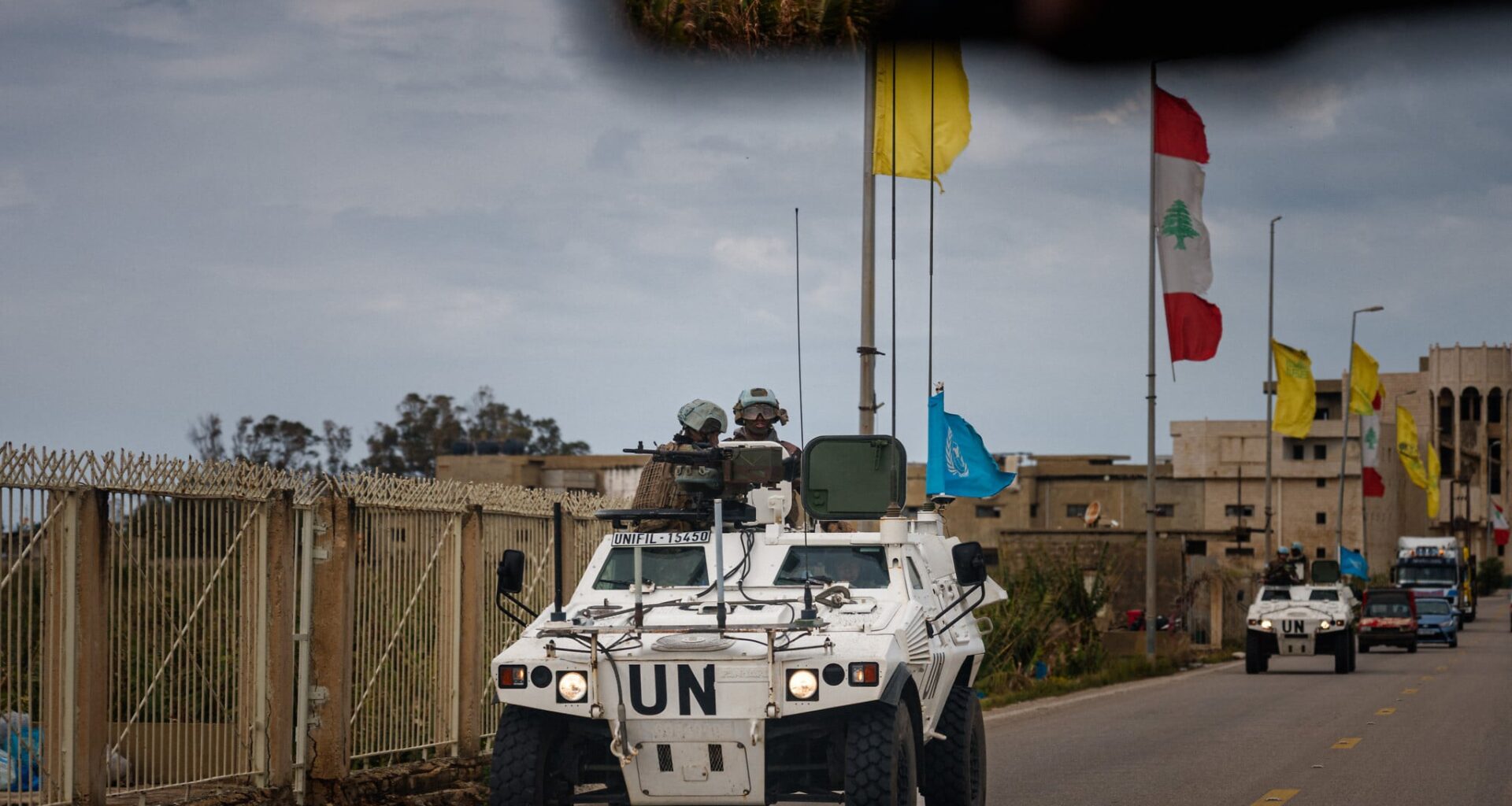
A roadside explosion appears to have struck the convoy of two Indonesian peacekeepers killed in southern Lebanon, the UN peacekeeping chief said on Tuesday, citing initial findings of an investigation.
The two peacekeepers with the UNIFIL force were killed on Monday near Bani Hayyan in south Lebanon and two other soldiers were wounded.
A preliminary review of the incident conducted by the Israel Defense Forces found that the blast was caused by roadside bombs likely placed by Hezbollah, a military official told The Times of Israel.
In an official statement, the military said that “a comprehensive operational examination indicates that no explosive device was placed in the area by IDF troops, and that no IDF troops were present in the area at all.”
“The IDF is operating against Hezbollah, and not against UNIFIL, the Lebanese Armed Forces, or Lebanese civilians. The IDF calls on UNIFIL to avoid presence in combat zones where the IDF has issued warnings to the civilian population to evacuate for their safety,” the military added.
Get The Times of Israel’s Daily Edition
by email and never miss our top stories
By signing up, you agree to the terms
Another Indonesian soldier was killed overnight Sunday into Monday when a projectile exploded near one of the group’s positions. According to a UN security source, the peacekeeper was killed by Israeli fire.
“UNIFIL is conducting investigations to determine the circumstances of these reprehensible developments,” Jean-Pierre Lacroix, the head of UN peacekeeping, told a UN Security Council meeting on Lebanon, where a new war between Israel and Lebanese terror group Hezbollah erupted on March 2.
Israel’s UN ambassador, Danny Danon, blamed the deaths of the three peacekeepers on Hezbollah. He charged that the group launches rockets from villages next to UN positions, “putting peacekeepers directly in the line of fire.”
Three UNIFIL peacekeepers were killed in south Lebanon in less than 48 hours.@UNPeacekeeping chief Jean-Pierre Lacroix affirmed that UN peacekeepers “remain on the ground, carrying out Security Council-mandated tasks, in extremely dangerous conditions.”https://t.co/qGgYopzCya pic.twitter.com/me6M6uDVWA
— UN News (@UN_News_Centre) March 30, 2026
Asked about Danon’s statement, UNIFIL spokesperson Kandice Ardiel said: “We invite them to share their evidence with our investigative team.”
UN spokesperson Stephane Dujarric told a briefing a “roadside bomb, most likely an IED,” or improvised explosive device, was to blame for the Bani Hayyan incident.
The third peacekeeper, who was killed the previous night, was struck by fire from an Israeli tank, a UN security source told AFP on condition of anonymity.
“Debris from a tank round has been recovered” at the site, the source added.
The IDF said it was probing the incident.
“It should be noted these incidents occurred in an active combat area,” the military said, adding that “it should not be assumed that incidents in which UNIFIL soldiers were harmed were caused by the IDF.”
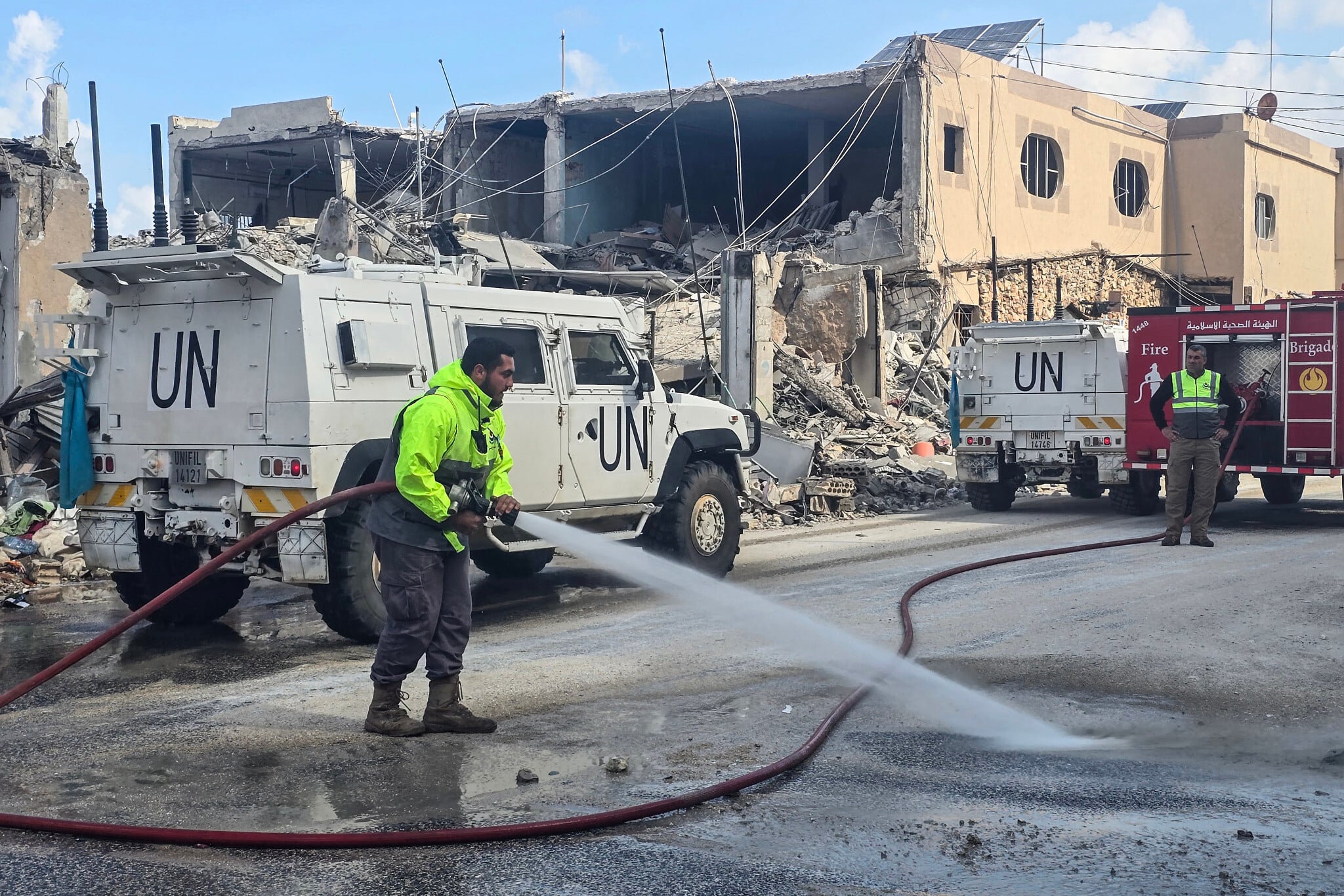
United Nations peacekeepers with the UN Interim Force in Lebanon (UNIFIL) drive past firefighters clearing the road at the site of an overnight Israeli airstrike in the area of Naqura in southern Lebanon on March 27, 2026. (KAWNAT HAJU / AFP)
UN Secretary-General Antonio Guterres strongly condemned the killing of the peacekeepers, saying that such attacks were “grave violations of international humanitarian law… and may amount to war crimes.”
“There will need to be accountability,” he added in a statement.
Indonesia’s foreign ministry on Tuesday condemned the attacks “in the strongest terms,” adding that they reflected the deteriorating security environment in the region. It said that ongoing Israeli military operations have placed UN peacekeepers in Lebanon at grave risk.
US envoy to the UN Mike Waltz told the Security Council meeting that since 1978, more than 300 UNIFIL peacekeepers had been killed, showing that the council “must think very carefully about the effectiveness of this effort.”
“We can help refocus international efforts on supporting Lebanese state institutions, reducing risk to peacekeepers, and pressing Hezbollah and Iran to cease their destabilizing activities,” he said.
Ten European countries, including France and the United Kingdom, urged all sides to ensure the safety of UNIFIL.
“We urge all parties, under all circumstances, to ensure the safety and security of UNIFIL personnel and premises, in accordance with international law,” the foreign ministers of Belgium, Croatia, Cyprus, France, Greece, Italy, Malta, the Netherlands, Portugal and the United Kingdom, as well as the European Union’s top diplomat, said in a joint statement.
In line with a Security Council decision, UNIFIL will cease operations at the end of 2026 and withdraw in 2027. As of March, UNIFIL had 7,505 peacekeepers from 47 nations.
Israel has long argued that the observer force has failed in its mission, doing little to block Hezbollah from building up its forces near the Israeli border over decades.
You appreciate our wartime journalism

You clearly find our careful reporting of the Iran war valuable, at a time when facts are often distorted and news coverage often lacks context.
Your support is essential to continue our work. We want to continue delivering the professional journalism you value, even as the demands on our newsroom have grown dramatically during this ongoing conflict.
So today, please consider joining our reader support group, The Times of Israel Community. For as little as $6 a month you’ll become our partners while enjoying The Times of Israel AD-FREE, as well as accessing exclusive content available only to Times of Israel Community members.
Thank you,
David Horovitz, Founding Editor of The Times of Israel