
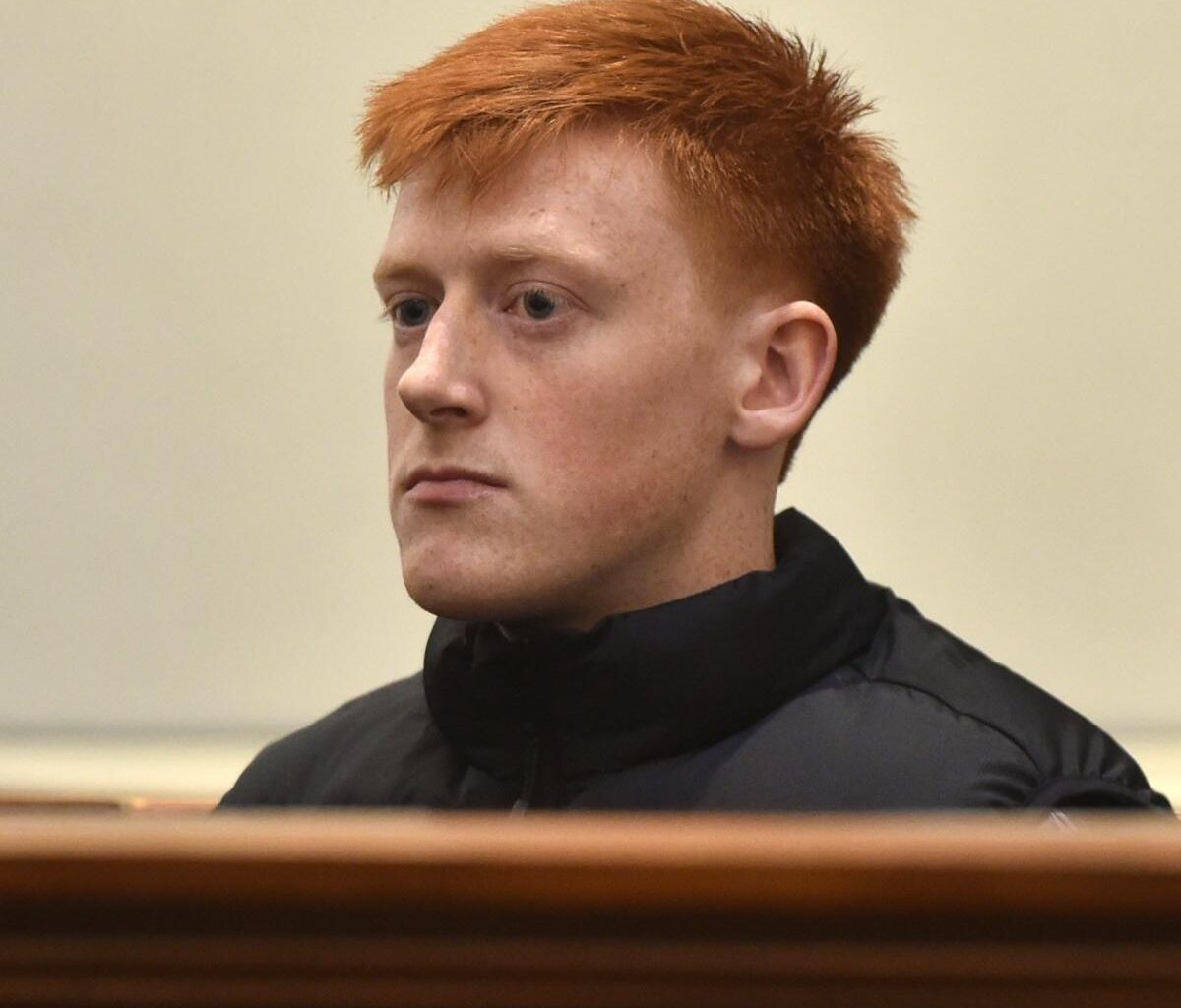
A Balclutha man who killed his ex-girlfriend by letting her drive drunk while sitting on his lap still describes her as the one he loves the most.
Maxwell Kenneth Burrow, 21, appeared in the Dunedin District Court yesterday and was sentenced to 10 and a-half months’ home detention after earlier admitting reckless driving causing the death of 20-year-old Aushiarn Skye Challis.
In a statement read to the court, Ms Challis’ mother said when she heard her only daughter had died, she crouched over in agony, “as if someone had ripped her from my womb”.
“The choices of one night ultimately cost her dearly and myself,” the statement read.
Burrow later addressed the full public gallery.
“I have made some very bad choices which have led to me losing my best friend and the one I love most in life,” he said.
“I promise to work toward regaining the trust in my community and most importantly to honour Aushiarn [through] my own actions and personal growth.”
Despite his remorse, Burrow racked up two driving infringements about eight months after the fatal crash — one for using his phone while driving and another 11 days later for speeding.
The court heard that on February 1 last year, the pair, who had broken up in late 2023, met up and Ms Challis, a learner driver, drove with Burrow to buy alcohol.
Burrow, on a restricted licence, drove them to Dunedin, where Ms Challis drank the alcohol and they spent hours driving around.
CCTV footage from a Milton petrol station later that night showed Ms Challis was the driver and Burrow was in the passenger seat.
By that time Ms Challis was “clearly quite intoxicated”, leaning on the defendant, at times staggering and having trouble with her balance, the police summary said.
The footage showed Burrow driving erratically at the station before filling up and then Ms Challis climbing on to Burrow’s lap before the pair drove away from the station about 1.27am on February 2.
It was slightly foggy, the road was wet and neither person was wearing a seatbelt.
About 8km south of the petrol station, they approached the Crichton Railway Overpass on the Milton Highway SH1, which had a 75km advisory speed and a sign that stated “slippery when wet”.
They drove into the right-hand lane, overcorrected and drove off the road, connecting with a dirt pile before the vehicle stopped about 30m from the highway near the railway line.
Ms Challis was thrown from the vehicle and found about 15m from the road.
She suffered fatal injuries, including a haematoma and fracture to her skull.
A witness spoke to a shaking “hysterical” Burrow and phoned emergency services.
Burrow gave confused accounts to witnesses and emergency services, provided the wrong name for Ms Challis and told police the names of two other males he said were in the vehicle.
No alcohol was found in his blood, but testing revealed Ms Challis was more than twice the legal limit.
Her father told the court he was still grieving the loss of his daughter, who would never get to realise her full potential.
“Not a day goes by that I don’t wonder why my daughter was just in the wrong car with the wrong person.”
Ms Challis’ paternal grandmother said it was upsetting to see Burrow not cry at her granddaughter’s funeral, and that he “should be made to pay for that life lost so senselessly.”
However, another of Ms Challis’ family members told Burrow the family did not hold any malice towards him.
“We know that to lay this to rest and for people to move on there is a level of forgiveness that has to occur.”
Judge David Robinson remarked on the “harrowing” victim impact statements.
In sentencing Burrow, he said he took into account the defendant’s youth, good character and remorse.
He noted Burrow had completed a driving programme and offered to return and volunteer as a helper on the course.
Burrow attended a restorative justice conference with the victim’s grandfather and offered $20,000 emotional harm reparation, which he worked two jobs to save for.
But Judge Robinson could not ignore the defendant’s infringements.
“You would’ve had the biggest wake-up call of your life through this tragedy and I am troubled by the fact that you’ve driven at speed and used a cellphone after this matter had occurred.”
A sentence of home detention was reached “by the narrowest of margins” and 300 hours’ community work was also imposed.
“You need to learn from this. You need to share your experience so that others aren’t put in the same position.
“You need to commit yourself to helping others to avoid tragedy,” the judge advised.