
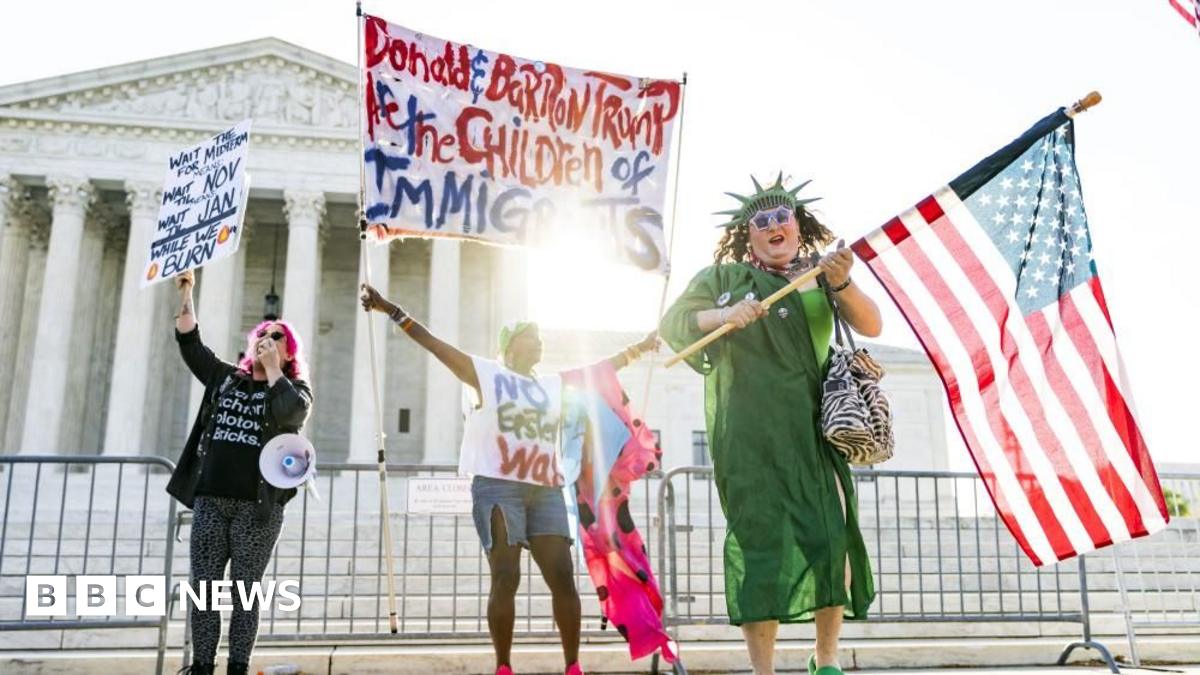
What’s been the legal back and forth on this case so far?published at 15:29 BST
15:29 BST
On his first day back in office last year, President Donald Trump signed an executive order aimed at ending automatic citizenship rights, which are enshrined in the US Constitution for nearly anyone born on US territory. It’s what is known as “birthright citizenship”.
The move was instantly met by lawsuits, including from five pregnant women, 22 states, two cities, the Maryland immigrant advocacy group CASA and the Asylum Seeker Advocacy Project.
Judges in district courts in Maryland, Massachusetts and Washington state blocked Trump’s order.
Trump’s Department of Justice responded by saying the case did not warrant the “extraordinary measure” of a temporary restraining order and appealed against the case to the Supreme Court.
After taking up the case, the high court ruled in June that federal judges cannot issue injunctions that block orders from going into effect nationwide.
But, the justices did not do away with injunctions entirely – judges can still block orders from taking effect for the people who sue against them while their lawsuits proceed.
Though it stemmed from a case about birthright citizenship, the Supreme Court’s June ruling was about injunctions specifically, not about the underlying issue of birthright citizenship.
That core issue of whether or not people born in the US are automatically considered citizens is what the high court is now considering, beginning with arguments at today’s hearing. A decision is expected by late June or July this year.