
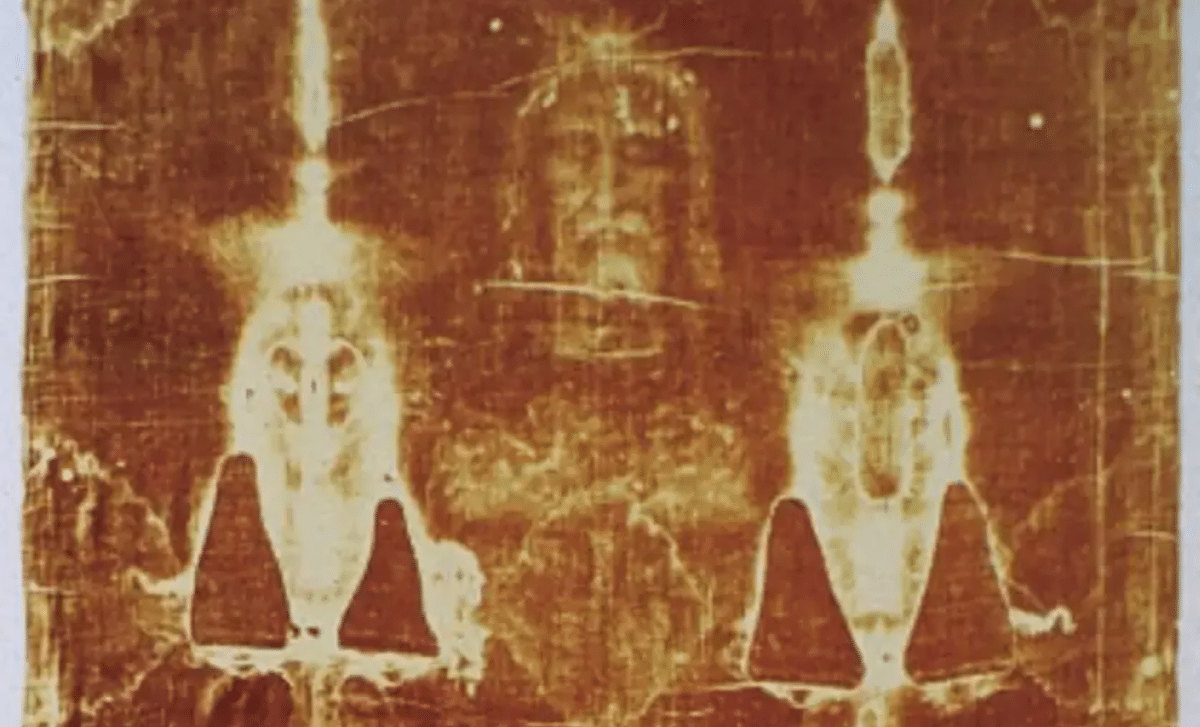
Researchers have uncovered an astonishing variety of DNA traces on the Shroud of Turin, complicating the centuries-old mystery of its origins. The DNA, which spans multiple species, humans, animals, and plants, raises new questions about the artifact, believed by many to have wrapped the body of Jesus Christ. This discovery, which challenges previous assumptions, could change the way we view the Shroud’s historical significance and its journey through time.
The Shroud’s DNA Puzzle: A New Perspective
The Shroud of Turin, a 4.4-meter-long linen cloth, is one of the most famous and controversial Christian relics in the world. Said to be the burial shroud of Jesus, it has drawn both awe and skepticism for centuries. Despite radiocarbon dating in 1988 suggesting a medieval origin, many still regard the Shroud as evidence of Christ’s crucifixion. However, a new study has taken a bold step forward in unraveling its secrets, examining the DNA embedded in the fibers of the cloth.
The DNA found on the Shroud includes genetic material from a wide range of organisms, including humans, animals, and plants. This discovery not only provides new insight into the artifact’s history but also challenges long-standing theories about its origin. According to the study, published in Biorxiv, which appeared on Biorxiv, the presence of so many different types of DNA suggests the Shroud was exposed to numerous people and environments over an extended period, complicating the effort to trace its original DNA.
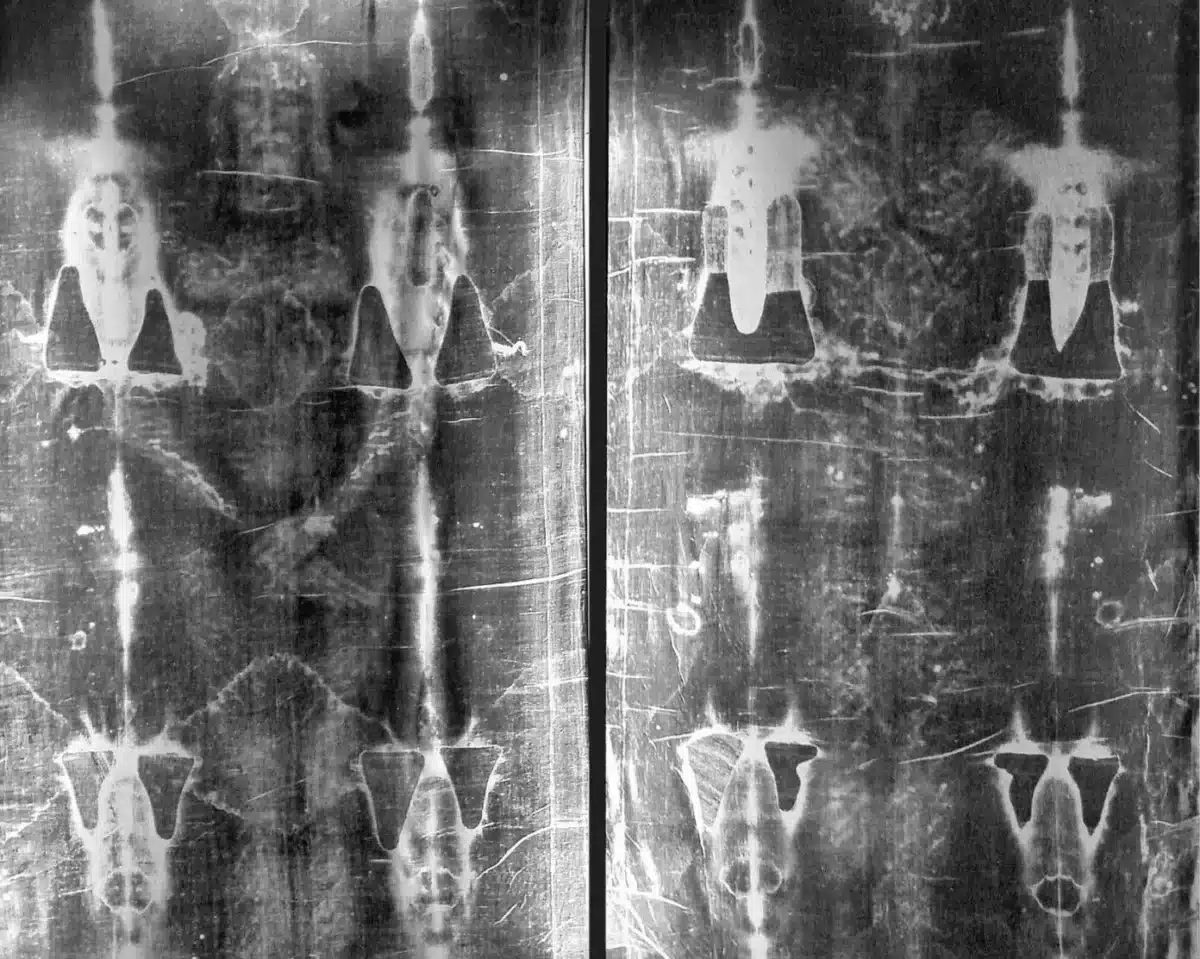 Negatives of the Shroud of Turin. Credit: World Imaging / Public domain
Multiple Individuals, Multiple Origins
The Shroud, believed by many to be the burial cloth of Jesus Christ, now faces a new scientific dilemma. According to the researchers,
“The Shroud came into contact with multiple individuals, thereby challenging the possibility of identifying the original DNA of the Shroud.”
This suggests that the cloth has been in contact with various people throughout its history, each leaving behind traces of their own genetic material.
The presence of diverse DNA also indicates that the Shroud may have been exposed to different regions and environments, further complicating any attempts to determine its true origin. The study proposes that the Shroud could have traveled across a wide geographic area, picking up genetic markers from different places. This could include both Mediterranean regions and distant lands.
The Mystery of the Shroud’s Yarn
Among the most intriguing aspects of the DNA study is the suggestion that the Shroud’s yarn may have been produced in India. According to the research team, “The DNA traces found on the Shroud of Turin suggests the potentially extensive exposure of the cloth in the Mediterranean region and the possibility that the yarn was produced in India.” This assertion adds another layer to the mystery, as it would imply that the Shroud’s origins could be even more complex than previously thought.
However, this claim has not gone without challenge. One prominent researcher, Götherström, remains unconvinced by the suggestion that the yarn came from India.
“I still see no reason to doubt that the Shroud is French and from the 13th-14th century,” Götherström states.
His skepticism highlights the ongoing debate surrounding the artifact’s origins and its connection to various regions.
Radiocarbon Dating: The Controversy Continues
The 1988 radiocarbon dating of the Shroud remains a significant part of the conversation, although it is far from definitive. Despite the advancements in DNA analysis, the radiocarbon results suggest a medieval origin, dating the cloth to the 13th or 14th century.
“While there is some debate around the 1988 radiocarbon dating, most researchers consider it sufficiently robust,” says one expert.
This ongoing conflict between the radiocarbon evidence and the genetic findings has fueled further controversy over the Shroud’s true age.
The DNA analysis adds a new layer of complexity to this debate, offering evidence of exposure to various environments over a long period. This new research challenges the simplicity of the radiocarbon dating, which has been widely accepted as evidence of the Shroud’s medieval origin.