
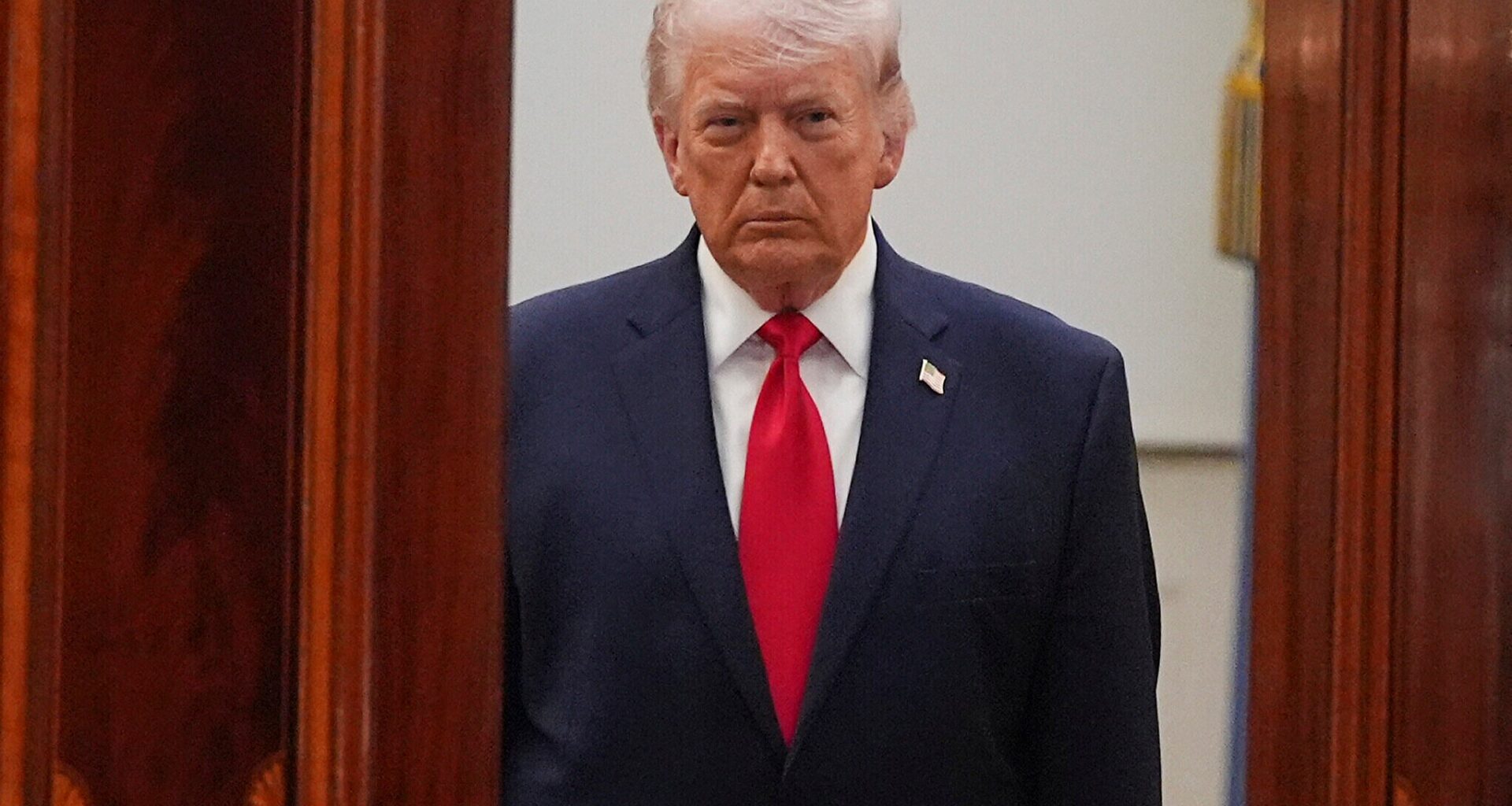
US President Donald Trump said Wednesday that Israel and the United States were close to completing their key objectives in the war against the Iranian regime and that the conflict would soon be over, without providing an exact timeline.
While the president stressed several times that the war was close to completion in his speech to the American public, it was unclear how the war would end, with The New York Times reporting that multiple US intelligence agencies have assessed in recent days that the Iranian government is not currently willing to engage in substantial negotiations.
In his speech, Trump touted the “swift, decisive and overwhelming” blows that he said Iran has been dealt over the past four weeks of war, claiming “victories like few people have ever seen before” in the ongoing military campaign.
Trump did not provide a specific timeline on when the operation against Iran will wind down, but said the US would strike the Islamic Republic “extremely hard” over the next two-three weeks as negotiations continue at the same time.
The US president initially gave the war, which began on February 28, a four-six week timeline.
Get The Times of Israel’s Daily Edition
by email and never miss our top stories
By signing up, you agree to the terms
“Tonight, Iran’s navy is gone, their air force is in ruins, their leaders, most of them… are now dead. Their command and control of the Islamic Revolutionary Guard Corps is being decimated as we speak,” he said at the White House. “Their ability to launch missiles and drones is dramatically curtailed, and their weapons factories and rocket launchers are being blown to pieces, very few of them left.”
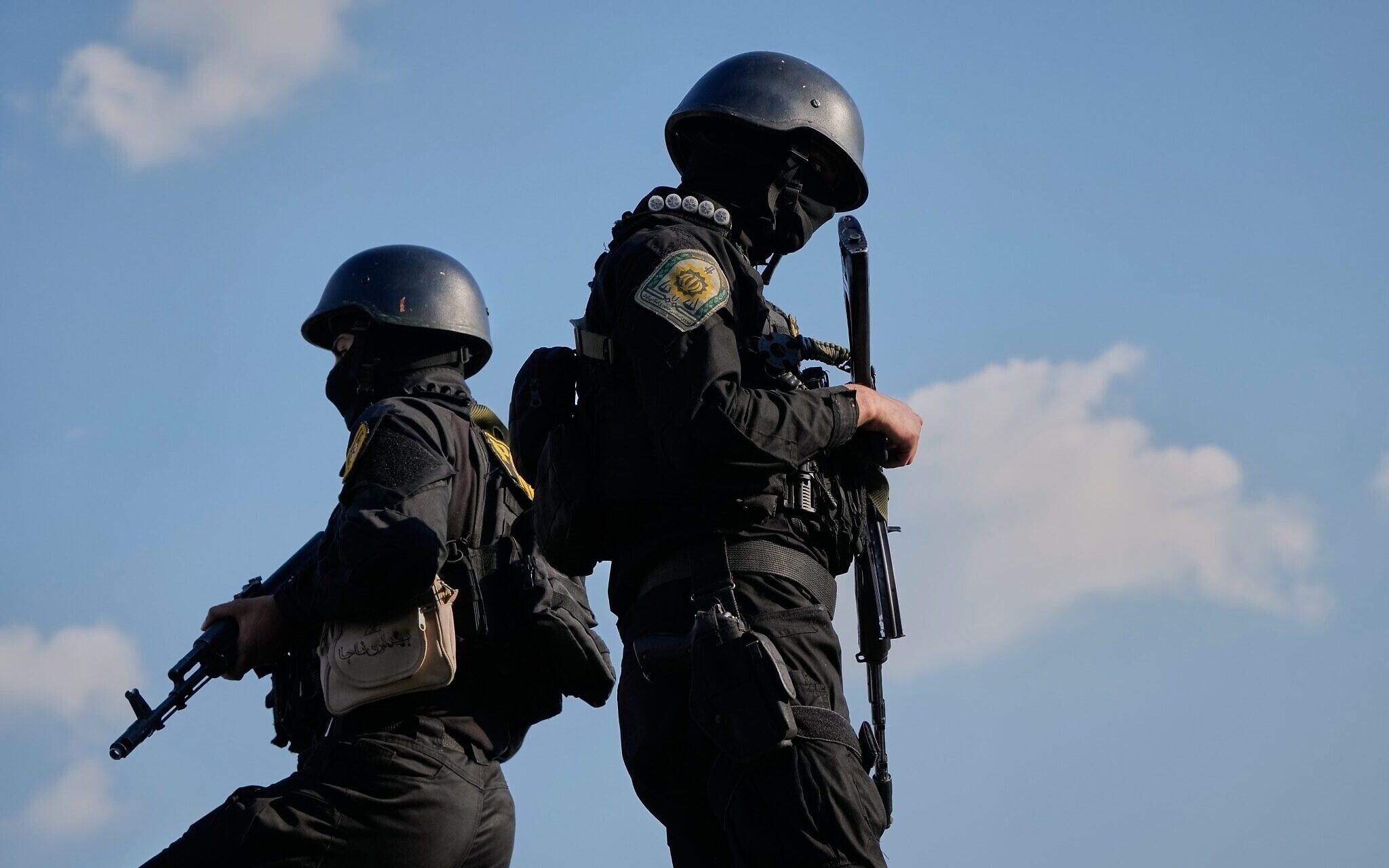
Iranian police special forces stand guard during a funeral procession for Alireza Tangsiri, head of Iran’s Islamic Revolutionary Guard Corps Navy, and others killed in Israeli strikes in late March, in Tehran, Iran, April 1, 2026. (AP Photo/Vahid Salemi)
“From the very first day I announced my presidency in 2015, I vowed that I would never allow Iran to have a nuclear weapon,” he emphasized, saying the “fanatical” Islamic Republic has been chanting “death to America” and “death to Israel” since its founding in 1979.
He also hit out at Iran over its role in numerous deadly attacks throughout the years, listing among them the October 7, 2023, onslaught against Israel by its Palestinian ally Hamas, while condemning Tehran for its recent brutal crackdown on anti-government protests.
“For these terrorists to have nuclear weapons would be an intolerable threat. The thuggish and most violent regime on earth would be free to carry out their campaigns of terror, coercion, conquest and mass murder from behind a nuclear shield. I will never let that happen,” Trump said.
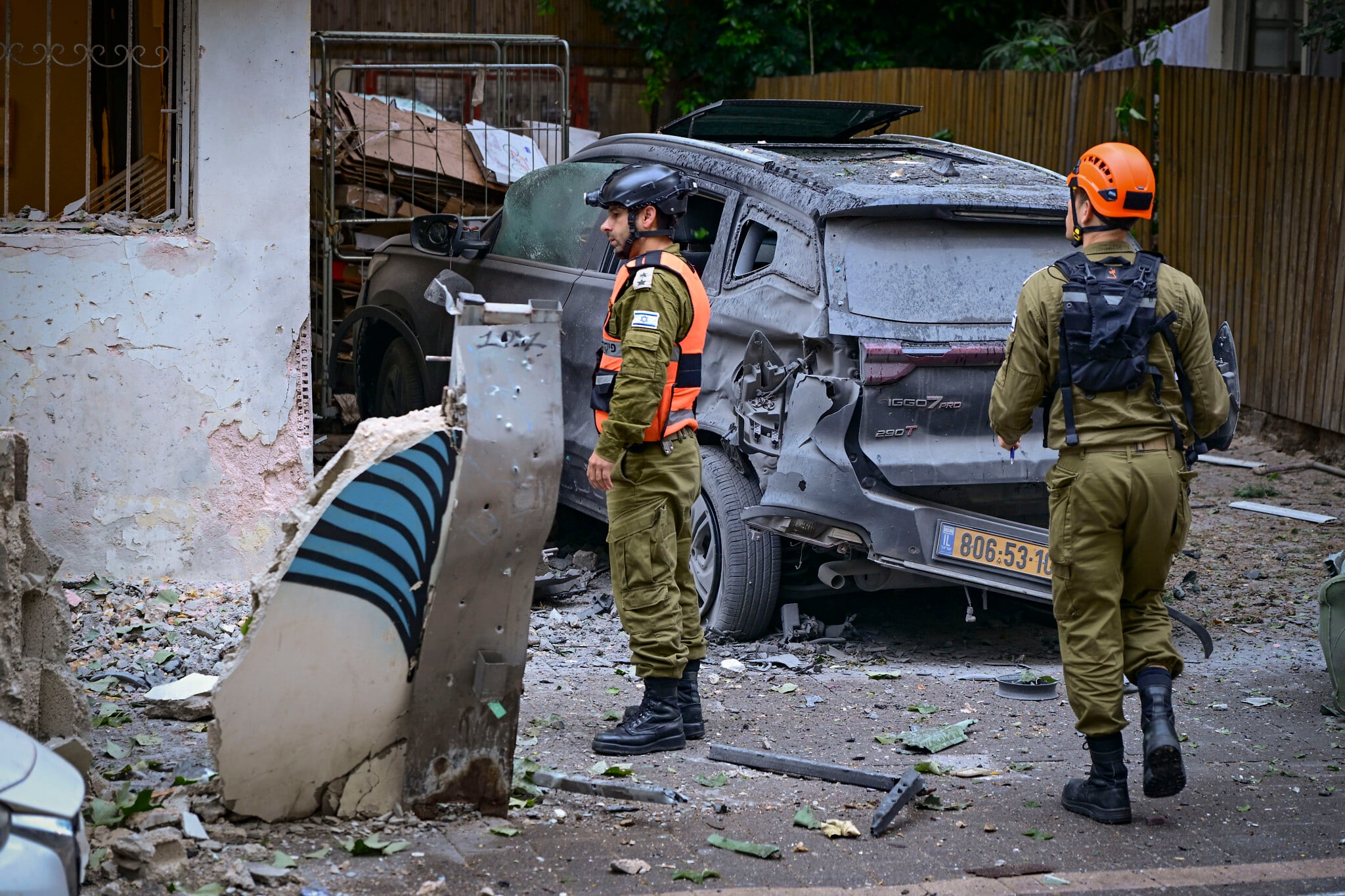
Israeli forces at the scene of an impact from a missile fired from Iran in Tel Aviv, April 1, 2026 (Avshalom Sassoni/Flash90)
The US president pointed to the actions he has taken against Iran during his two terms in office, including ripping up the nuclear deal negotiated by his predecessor Barack Obama, as well as the strike in 2020 that killed Iranian Quds Force Gen. Qassem Soleimani, whom Trump called an “evil genius, brilliant person, horrible human being however.”
“If he lived, we would probably be having a different conversation tonight,” he said of Soleimani.
Trump declared that he prefers diplomacy, but said the Iranian regime has rejected his overtures, leading him to order the strikes on Iranian nuclear sites last June amid Israel’s war with Iran.
According to Trump, Iran subsequently sought to rebuild its nuclear program and was “right at the doorstep” of obtaining an atomic bomb.
“For years, everyone has said that Iran cannot have nuclear weapons, but in the end, those are just words if you’re not willing to take action when the time comes,” he said.
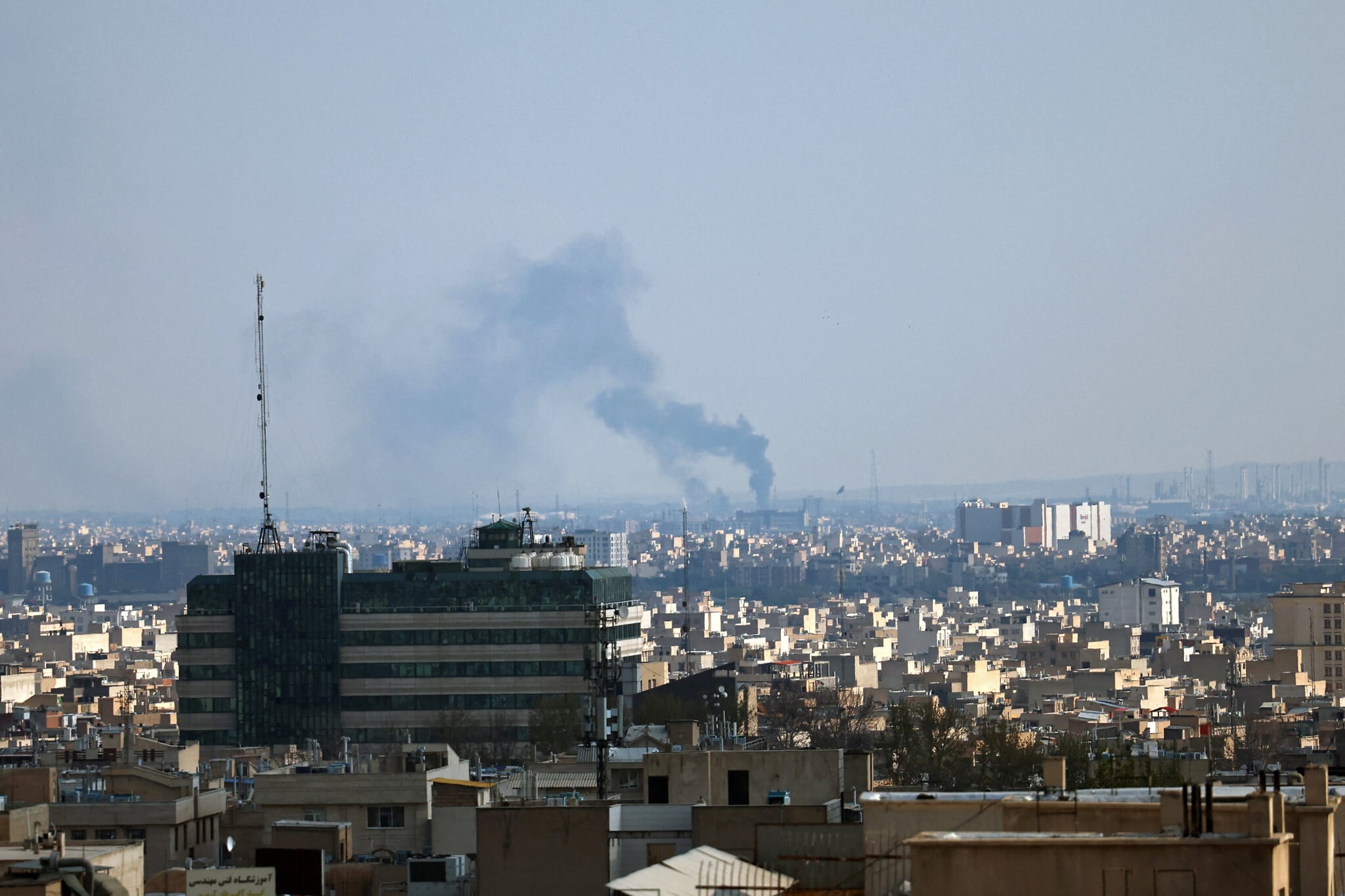
Smoke rises from the site of a strike in Tehran on April 1, 2026. (AFP)
“There has never been anything like it militarily, everyone is talking about it,” Trump added in regard to the current military campaign, saying that the “core strategic objectives are nearing completion.”
“We are getting very close to finishing the job, and I want to thank our allies in the Middle East: Israel, Saudi Arabia, Qatar, the UAE, Kuwait, and Bahrain. They’ve been great, and we will not let them get hurt or fail in any way, shape, or form.”
‘Will hit them very hard again’
In his remarks, Trump again insisted that “regime change was not our goal, we never said regime change.” Nevertheless, he claimed “regime change has occurred because “all of their leaders” have died, and claimed that those remaining “are less radical and much more reasonable.”
“If there is no deal, we are going to hit each and every one of their electric generating plants, very hard, and probably simultaneously,” he said, adding that the US has refrained from striking Iranian oil installations even though they are “the easiest target of all, because it would not give them even a small chance of survival or rebuilding.”
“The nuclear sites we obliterated with the B-2 bombers have been hit so hard that it would take months to get near the nuclear dust,” Trump went on. “If we seem them even make a move — even a move — for it, we will hit them with missiles very hard again.”
“We have all the cards; they have none. It’s very important we keep this conflict in perspective,” he said, comparing previous US wars that lasted for years to the current monthlong conflict.
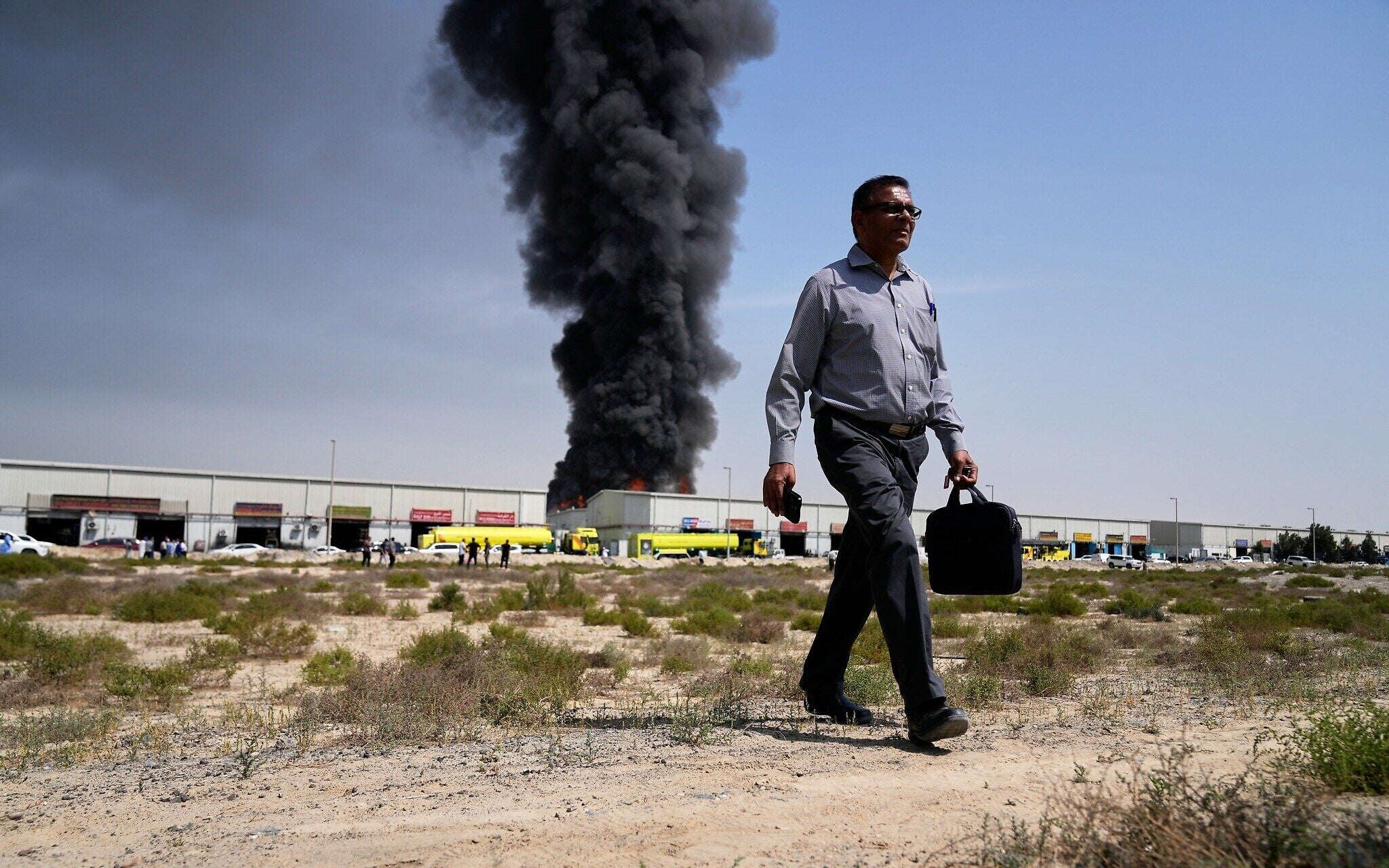
A man walks away after watching as a black plume of smoke rises from a warehouse in the industrial area of Sharjah City, United Arab Emirates, after an Iranian strike, March 1, 2026. (AP Photo/Altaf Qadri)
He also said the Iranians “were the bully of the Middle East, but they are the bully no longer,” calling the war “a true investment in your children and your grandchildren’s future” while adding that Americans can now “look forward to a day when we are finally free from Iranian aggression and the specter of nuclear blackmail.”
“Because of the actions we have taken, we are on the cusp of eliminating Iran’s sinister threat to America and the world… and when we do, it’s all over, the United States will be safer, more prosperous, and greater than it has ever been before.”
US intel agencies reportedly believe Iran unwilling to hold serious talks on ending war
While Trump sounded optimistic that Iran’s leaders were more reasonable, multiple US intelligence agencies have assessed Tehran would not take negotiations seriously, the New York Times reported Wednesday, citing US officials.
The officials told the US newspaper that the Islamic Republic thinks it’s in a strong position and does not have to agree to US demands for a deal. They also said that while Tehran is willing to maintain diplomatic channels, it doesn’t trust Washington or believe Trump is serious about talks.
As the report came out, a senior Iranian source told Reuters that Iran is demanding a guaranteed ceasefire to end the war permanently.
According to the source, intermediaries contacted Iran on Tuesday, with discussions focused on continuing diplomacy. The source added that no talks have taken place via mediators for a temporary ceasefire.
At the same time, Iran’s foreign ministry accused the United States of making “maximalist and irrational” demands and denied that negotiations on a ceasefire were taking place.
“Messages have been received through intermediaries, including Pakistan, but there is no direct negotiation with the US,” said foreign ministry spokesman Esmaeil Baqaei, quoted by the ISNA news agency.
He added in comments carried on state television that Iran was ready for any attack, including a potential invasion by ground forces.
Ahead of Trump’s address, Iranian President Masoud Pezeshkian said in a letter addressed to the American people that his country harbors no enmity toward ordinary Americans.
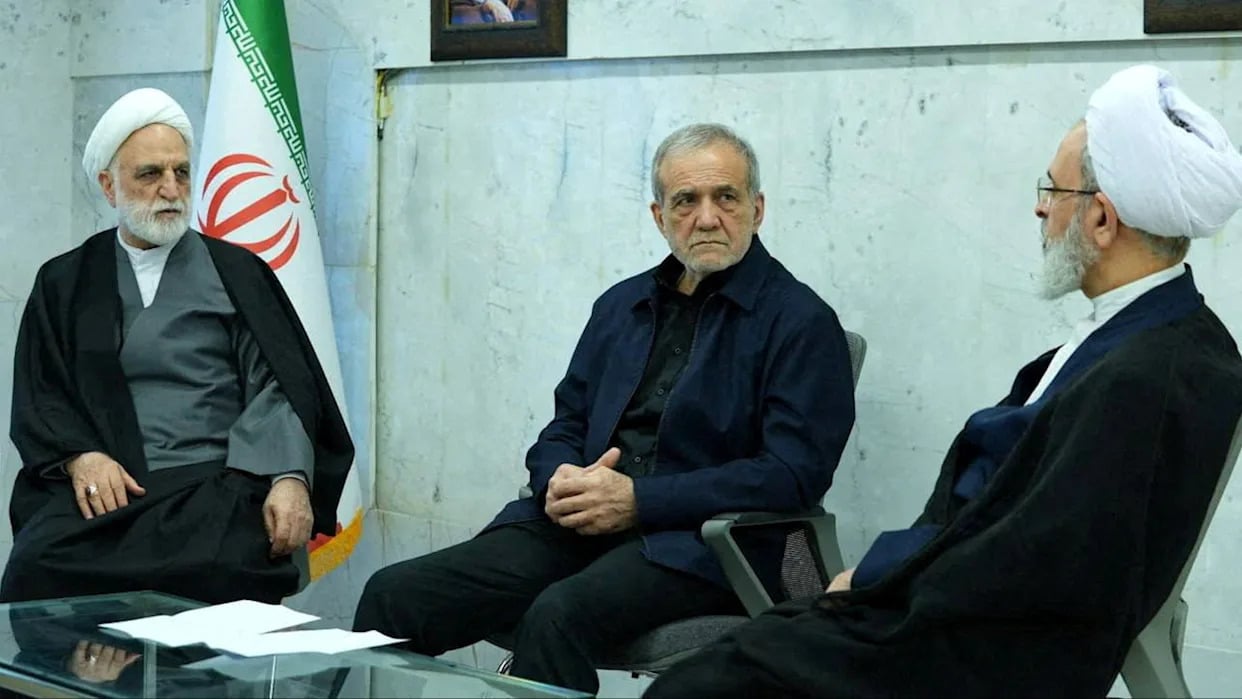
Iranian President Masoud Pezeshkian, Gholam-Hossein Mohseni-Eje’i, the head of the judiciary and Alireza Arafi, deputy chairman of the Assembly of Experts, attend the meeting of the interim leadership council of Iran in an unknown location, March 1, 2026. (Handout via IRIB/WANA)
He said in his letter that portraying Iran as a threat is “neither consistent with historical reality nor with present-day observable facts.”
“Which of the American people’s interests are truly being served by this war?” he asked. “Is it not also the case that America has entered this aggression as a proxy for Israel, influenced and manipulated by that regime?”
Trump had claimed earlier Wednesday that Iran’s president had sought a ceasefire, but said the Islamic Republic must first reopen the Strait of Hormuz — which he said in his later address would happen “naturally” once the conflict ended.
In his speech, he called for countries that receive oil through the Strait of Hormuz to show “courage” and seize the key waterway.
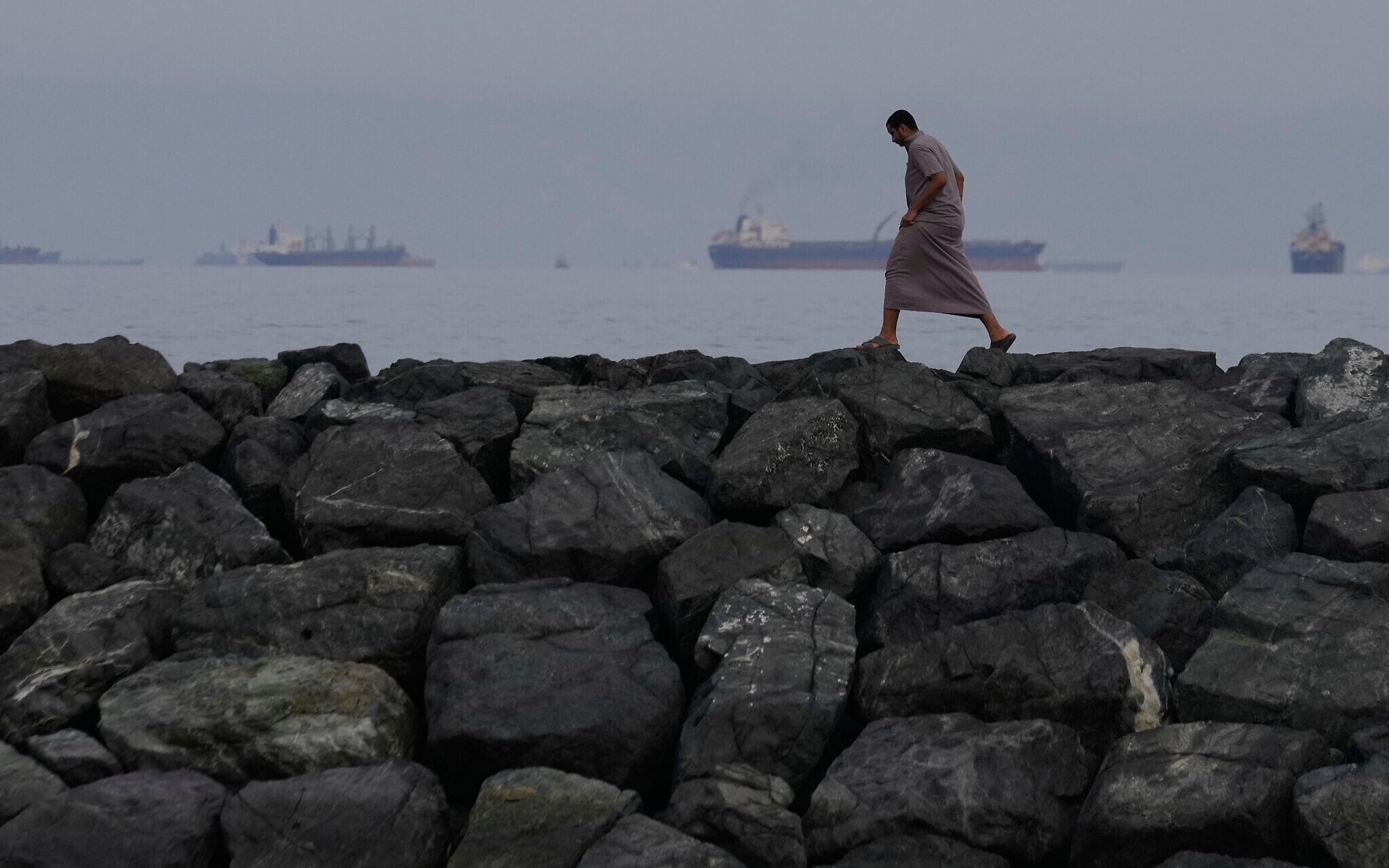
A man walks along the shore as oil tankers and cargo ships line up in the Strait of Hormuz, seen from Khor Fakkan, United Arab Emirates, March 11, 2026. (AP Photo/Altaf Qadri)
One-fifth of global oil normally passes through the Strait of Hormuz, and Iran’s Revolutionary Guards vowed Wednesday to keep it shut to the country’s “enemies.”
A British-led virtual meeting of dozens of nations will hold talks on Thursday to “assess all viable diplomatic and political measures that we can take to restore freedom of navigation” in the strait, Prime Minister Keir Starmer said Wednesday.
But Trump’s remarks did little to calm energy markets rocked by the waterway’s de facto closure, with oil prices again surging Thursday. Brent jumped more than four percent to more than $105, while West Texas Intermediate climbed three percent to hit around $103.