
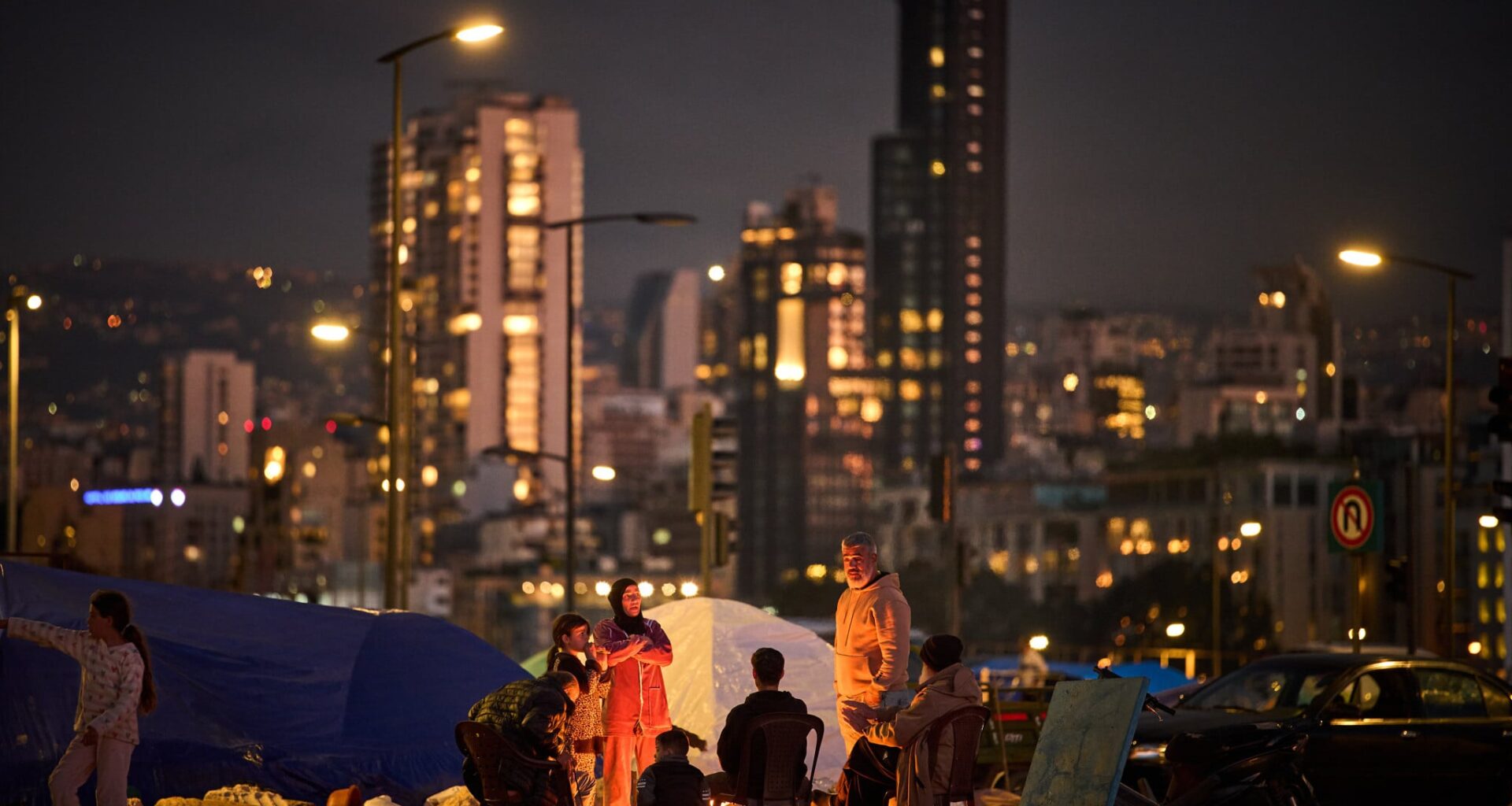
BEIRUT, Lebanon (AFP) — International Organization for Migration (IOM) chief Amy Pope told AFP on Thursday in Beirut that the prospects for prolonged mass displacement in Lebanon, due to the renewed conflict between Israel and Hezbollah, were “very alarming.”
“I think those prospects are very alarming because you look right now at the level of destruction that’s happening and… the further destruction that has been threatened,” she said when asked about the possibility of long-term mass displacement in the country.
“There are parts of the south that are being completely flattened… even if the war ends tomorrow, that destruction remains and there needs to be a rebuilding,” she said, noting that reconstruction would require funding, resources and peace.
“Unless we start to see those things come into place, that means that people will be displaced now for who knows how long,” she added.
Lebanon says more than one million people have been displaced since the country was drawn into the Middle East war last month when the Tehran-backed Hezbollah launched rockets at Israel to avenge the US-Israeli attack that killed Iran’s supreme leader Ayatollah Ali Khamenei.
Get The Times of Israel’s Daily Edition
by email and never miss our top stories
By signing up, you agree to the terms
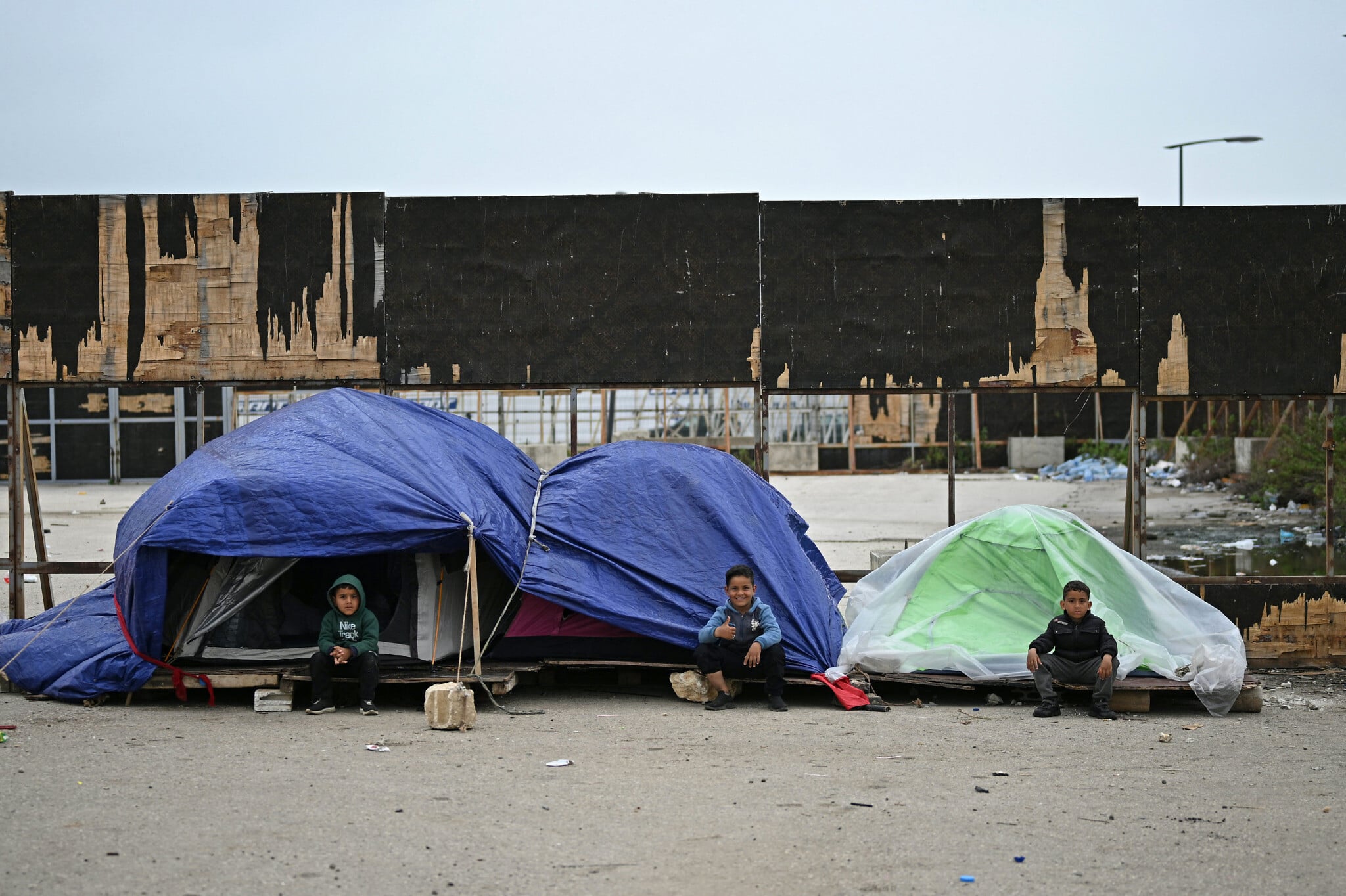
Displaced young children sit outside their tents at an unofficial camp for displaced people on Beirut’s waterfront area on April 2, 2026. (Joseph EID / AFP)
Israel has responded with massive strikes across Lebanon and a ground operation, issuing sweeping evacuation warnings for swaths of south Lebanon and Beirut’s densely populated southern suburbs.
Authorities say more than 136,000 people are staying in collective shelters, including schools and stadiums, while some people are sleeping on the streets.
According to Lebanese Prime Minister Nawaf Salam, over one million people have been internally displaced in the country, nearly a fifth of Lebanon’s population.
Israel’s Defense Minister Israel Katz has said the military would seize a swath of southern Lebanon and hold it even after the war ends, and that the return of hundreds of thousands of displaced Lebanese would be “completely prevented” until northern Israel’s security was ensured.
Displacement crisis ‘far more severe’ than before
Pope said the current displacement crisis was “far more severe” than during the previous hostilities between Hezbollah and Israel, which ended with a November 2024 ceasefire.
She noted the high number of displaced people, shelters struggling to cope and the fact that some people had been unable to return home after being displaced during the previous round of fighting.
People outside Lebanon “absolutely do not understand the scale” of the displacement crisis, which is “coming at a time where resources for humanitarian response are more limited than ever,” she said.
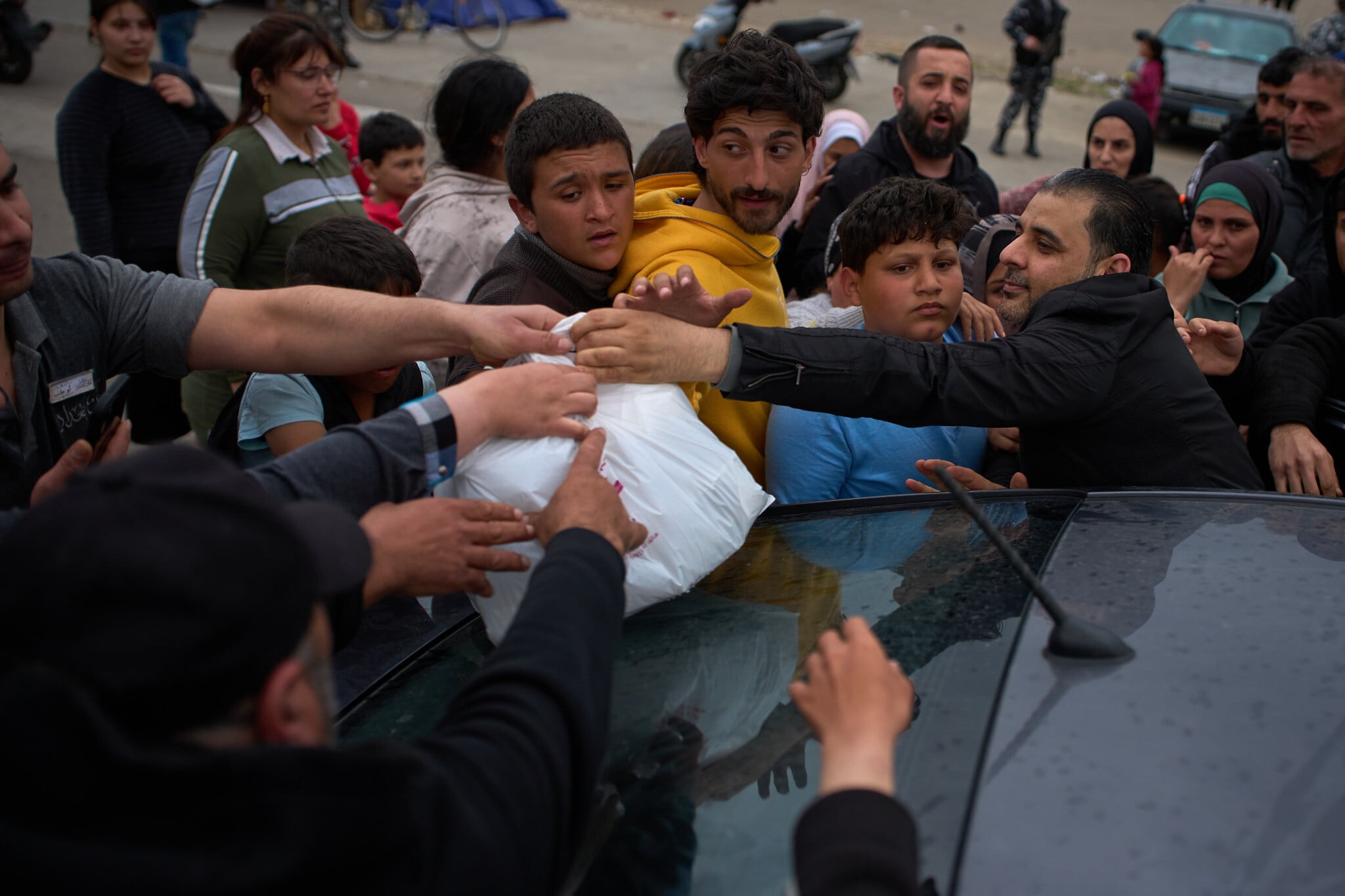
Displaced people in southern Lebanon reach for bags of food during distribution next to tents used as shelters in Beirut, Lebanon, April 1, 2026. (AP Photo/Emilio Morenatti)
The UN has launched a flash humanitarian appeal for more than $300 million for Lebanon, including an IOM appeal for around $19 million, Pope said, “but very, very little of that has now come in.”
“We’re seeing some of the most basic life-saving support really be needed,” she said, including shelter and blankets.
Pope also said a strike this week on Beirut’s Jnah district damaged the IOM premises nearby, shattering windows and rendering the agency’s health clinic for migrants “basically unusable.”
Authorities said the strike killed seven people, while Israel said it killed a senior Hezbollah commander.
Pope argued that such strikes were “shocking.”
“If people can’t find safety, they move. And if they can’t find safety at home, they move across borders,” she said.
Times of Israel staff contributed to this report.
You appreciate our wartime journalism

You clearly find our careful reporting of the Iran war valuable, at a time when facts are often distorted and news coverage often lacks context.
Your support is essential to continue our work. We want to continue delivering the professional journalism you value, even as the demands on our newsroom have grown dramatically during this ongoing conflict.
So today, please consider joining our reader support group, The Times of Israel Community. For as little as $6 a month you’ll become our partners while enjoying The Times of Israel AD-FREE, as well as accessing exclusive content available only to Times of Israel Community members.
Thank you,
David Horovitz, Founding Editor of The Times of Israel