
AP Photo/Emilio Morenatti
Bottom Line Up Front
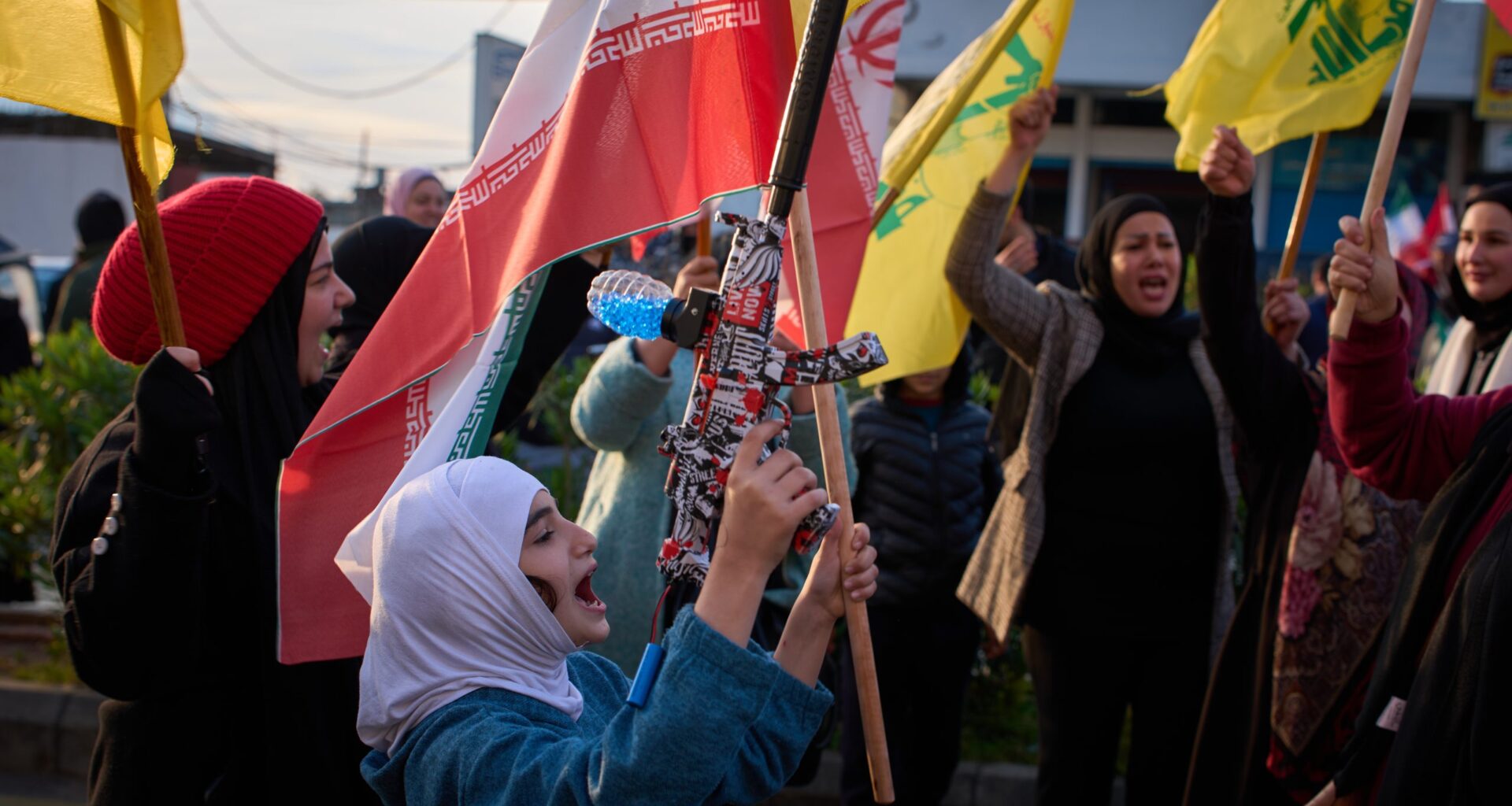
Iran’s Axis of Resistance partners have joined Iran’s war effort, using their geographic and political advantages against the U.S., Israel, and U.S. allies in the region.
By joining Tehran’s defense effort, Lebanese Hezbollah seeks to re-establish deterrence against Israel, but Israel’s response has brought Israeli forces deep into Lebanon, displacing nearly one million civilians.
Attacks on U.S. bases and the Arab Gulf states by Iran-aligned militias in Iraq represent not only wartime support for Tehran but also a revival of their longstanding efforts to diminish U.S. influence in Iraq.
Of Iran’s Axis partners, the Houthis have the greatest potential to help Tehran pressure the U.S. to end the war, but the group is wary of provoking powerful adversaries.
Iran has tasked its Axis of Resistance partners to help it thwart the assault by the militarily superior forces of the United States and Israel. The leaders of Iran’s key partners — Lebanese Hezbollah, the Houthi movement in Yemen, and Iran-aligned Popular Mobilization Force (PMF) militias in Iraq — share Iran’s ideology of “resistance” against the U.S., Israel, and their Arab allies. The Axis members, all non-state actors, each have a substantial socio-political base in their countries, but they also recognize that a collapse of Iran might represent an existential blow to their movements. All of the Iran-backed actors need Iran’s regime to survive the war intact and able to continue supplying them with ballistic missile technology and the Shahed and other armed drones Tehran has used to significant effect against U.S. bases and infrastructure in the Gulf states.
Unlike Iran itself, Axis members recognize threats beyond the U.S. and Israel, meaning defending Iran is not necessarily their highest priority. Axis partners are calibrating their actions to address all the challenges they face, in some cases limiting their capacity to serve as a force-multiplier for Tehran. The Houthi movement in Yemen fought a nearly eight-year war with neighboring Saudi Arabia and its partner, the United Arab Emirates (UAE), and seeks to avoid provoking the two powers to renew that war. Lebanese Hezbollah shares Iran’s goal of defeating Israel, but the group is under pressure from the Beirut government that insists on a monopoly of armed force and wants to end Hezbollah’s independent ability to drag all of Lebanon into conflict. Pro-Iranian PMF groups, although formally part of the national chain of command, often act autonomously and have been pressured to disarm by the government in Baghdad. However, Baghdad needs U.S. military assistance and wants to normalize relations with the rest of the Arab world. The challenges facing the Axis members will outlast the Iran war, implying that their attacks on the U.S., Israel, and U.S.-aligned Arab states will continue even if the U.S.-Israel-Iran conflict is settled.
The Iran-aligned PMF groups in Iraq are contributing more substantially to Iran’s war effort than any other Axis member, but they are embroiling an Iraqi government that has sought to stay out of the conflict. The nearly 2,000 U.S. military personnel deployed in bases in Iraq — primarily in the Kurdish-controlled north — are within easy reach of the missiles and drones operated by pro-Iranian Iraqi groups in a loose coalition called the Islamic Resistance in Iraq. The most prominent among them is Kata’ib Hezbollah (KH), whose attacks on U.S.-manned facilities in Iraq predate the Iran war, although the attacks tend to be more sporadic. The Iran-aligned PMF groups have long sought to achieve Tehran’s objective to expel U.S. forces from Iraq and limit its influence over Baghdad. As part of the PMF, the Iran-backed groups receive a portion of the $6 billion the government allots to the entire force, and the groups are able to operate in many bases all over Iraq, including areas dominated by Iraq’s Sunni Arabs and Kurds. As a sign of their close linkages to Iran, some PMF fighters reportedly have deployed to western Iran to help their Islamic Revolutionary Guard Corps (IRGC) and Basij mentors prevent a popular uprising.
Since the war began, the PMF coalition has claimed responsibility for numerous drone and missile attacks on American bases in Iraq and the U.S. Embassy in Baghdad, as well as on a logistical support center at Baghdad Airport. Their attacks have caused the U.S. to divert some of its airpower to retaliatory attacks on the PMF groups — strikes that would otherwise have targeted strategic sites in Iran. In at least one instance, a U.S. retaliatory attack, which Iraq said struck a medical clinic in Anbar province, killed seven members of the Iraqi military and injured 13, straining U.S. relations with a government in Baghdad that relies on support from Iraq’s majority Shia Arabs — many of whom perceive Iran as the victim of U.S.-Israeli aggression. Sabah al-Numan, a spokesman for the commander of Iraq’s armed forces, called the strike “heinous aggression,” to which Iraq reserved “the right to respond by all available means.”
The PMF weaponry is also easily able to reach key infrastructure targets in the Arab Gulf states, reinforcing Iran’s strategy to expand the war throughout the region. Iraqi militia attacks on Kuwait, Saudi Arabia, and other Arab states prompted the Kingdom, the UAE, Qatar, Kuwait, Bahrain, and Jordan to issue a joint statement last week calling on Baghdad to take “necessary measures” to halt the attacks immediately. Public and private Gulf messaging to Baghdad has made clear that continued attacks will damage Iraq’s relations with Gulf Cooperation Council (GCC) states and harm efforts by Iraqi caretaker Prime Minister Mohammad Shia al-Sudani to realign Iraq with the Arab world.
The Iran war has provided the leaders of Lebanese Hezbollah an opportunity to not only show support for their Iranian benefactors, but also to restore deterrence against Israel and counter the efforts by Beirut to disarm it. Since November 2024, government leaders in Beirut have been responding to the Trump team’s pressure to disarm the weakened group throughout Lebanon, but that process was still in its early stages when the Iran war began. Beirut has sought to avoid a civil war by prodding, rather than forcing, the group to demobilize.
Hezbollah joined Tehran’s war effort within days of the outbreak of the conflict, in close coordination with the IRGC, by launching missile and drone barrages into Israel. The attacks prompted a predictable Israeli response in the form of airstrikes as well as a ground incursion into southern Lebanon. Hezbollah leaders argue the U.S.-Israel war represented unprovoked aggression against Iran and justified Hezbollah’s insistence it should remain armed as a resistance force against Israeli expansionism. Beyond adding damage inside Israel to that caused by Iran’s missiles and drones, Hezbollah’s attacks have compelled Israel to redirect some of its hard-pressed air and missile defenses, as well as intelligence and other assets, to the Lebanon war front.
The war in Lebanon is likely to outlast the Iran war, with devastating consequences for the people of Lebanon. Israeli Prime Minister Benjamin Netanyahu said Sunday that Israel’s military will widen its ground campaign in southern Lebanon, which already has reached the Litani River, to create a security belt intended to “thwart the threat of invasion and to keep the anti-tank missile fire away from our border.” Netanyahu’s announcement intensified fears that Israel intends to model its invasion of southern Lebanon on its military offensive against Hamas in Gaza, including blowing up bridges, destroying homes, and displacing even more than the nearly one million already driven from their homes in southern Lebanon. Since March 2, nearly 1,200 people have been killed, and more than 3,400 have been wounded in Lebanon. Experts predict Israel will offer to vacate the ground captured in exchange for full Hezbollah disarmament and a peace treaty with Lebanon.
Controlling Yemeni territory along the Red Sea and another regional chokepoint — the Bab el-Mandeb Strait — the Houthi movement is best positioned among Iran’s allies to add strategic weight to Iran’s war effort. A Houthi closure of the Bab el-Mandeb, if achieved, would add significant fuel to Iran’s efforts to pressure Trump to end the conflict by upending global energy markets and the economy. Prior to the Gaza war, nearly 12 percent of global maritime trade passed through that Strait, and Houthi attacks during that conflict forced ships to use the longer and more expensive route around the Cape of Good Hope. Commercial traffic still has not recovered nearly a year after a U.S.-Houthi ceasefire that ended a U.S. air campaign against the group (Operation Rough Rider). About five percent of seaborne traded oil flows through that Strait, and its closure would, among other effects, complicate Saudi Arabia’s effort to bypass the closed Strait of Hormuz by exporting more of its oil through the Red Sea port of Yanbu.
Last Saturday, the Houthis formally joined Iran’s war effort with a two-missile salvo against Israel, followed by another launch on Wednesday — all of which were intercepted. The largely symbolic Houthi actions, to date, reflect their hesitation to provoke powerful antagonists. A major escalation, such as attacking Red Sea shipping or closing the Bab el-Mandeb, risks triggering another U.S. air campaign against the group and, potentially, pushing both Saudi Arabia and the UAE to join the U.S. campaign against Tehran. Uncertain of being resupplied by a strapped Tehran, the Houthis furthermore do not want to risk a resumption of ground combat war with both Gulf powers — fighting which has been largely frozen since a 2022 UN-backed ceasefire. The Saudis had indicated a willingness to permanently settle the Yemen war on financial and territorial terms largely favorable to the Houthis.
However, despite the risks, and perhaps hoping to deter the Kingdom and the Emirates from joining the conflict, Houthi leaders have indicated they would escalate if the U.S. and its allies, the Gulf powers, do so. Houthi Deputy Information Minister Mohammed Mansour told Al Monitor, “The option of closing the Bab el-Mandeb Strait is a Yemeni option that can be implemented should the aggression against Iran and Lebanon escalate savagely, or if any Gulf state becomes directly involved in military operations in support of the [Zionist] entity or the United States.”