
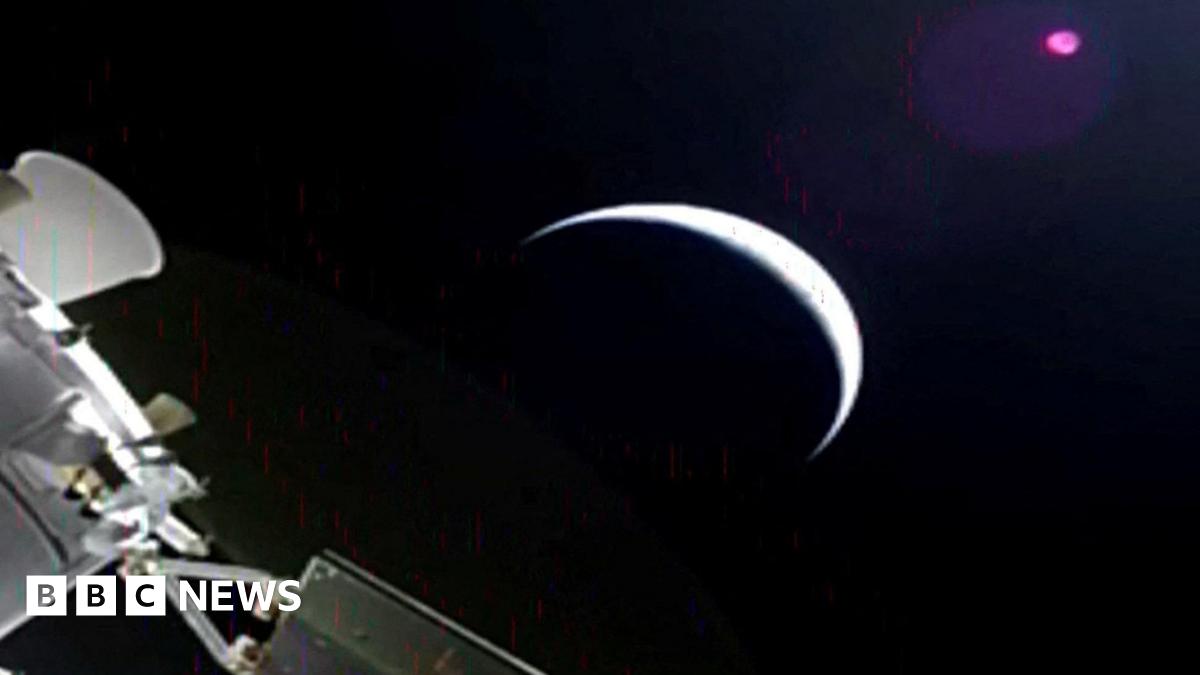
The TLI propelled the spacecraft on a journey that is expected to carry the crew farther from Earth than anyone has been before – more than 4,700 miles (7,600 km) beyond the Moon – before gravity swings them back.
Nasa estimates that this could edge past the record set by Apollo 13 in 1970, depending on the fine details of the timing and trajectory.
TLI is not a point of no return for Orion – even after the big burn to the Moon, controllers can still carry out the equivalent of a handbrake turn in space and bring the crew back to Earth if something goes seriously wrong.
In the event of an emergency, the U-turn is the fastest way home in the first 36 hours after the TLI. After that it can be just as quick, and often simpler, to stay on course around the Moon and fall back to Earth, Orion programme manager Howard Hu said before the launch.
He added that the team have “run hundreds of thousands of [simulations] to ensure that we are able to get the crew home safely.”
At a briefing after the successful engine burn, he was all smiles, telling reporters: “What a great couple of days!”