
Just last night, Iran’s foreign minister said his government is not planning negotiations to end the war. Now President Trump is explaining why there may be this mixed messaging. They are negotiating, by the way, and they want to make *** deal so badly, but they’re afraid to say it. Because they figure they’ll be killed by their own people. We’ve also learned the Trump administration is offering Iran *** 15-point ceasefire deal, but on Wednesday, Iran dismissed the plan and continued to launch more attacks in the Middle East. If talks are unproductive, the White House says President Donald Trump will strike Iran harder than ever. Now on Capitol Hill. There is frustration about the buildup of military troops in the region, and after *** closed-door briefing with lawmakers overseeing the military, Democrats and some Republicans expressed concern about the potential for boots on the ground. Would you support troops on the ground in Iran on this point? No, I’ve been 100% crystal clear from the beginning, no. The answer is no. We can achieve the strategic goals that Donald Trump wants to achieve without doing that. I don’t support that. I was not convinced when I walked out of there that troops on the ground were necessary to declare victory. I believe President Trump can declare victory now. The president has said on multiple occasions that the US has already won the war. He also said that the operation will take 4 to 6 weeks. Well, Saturday marks 1 month since the war began. At the White House. I’m Rachel Hirsheimer.
Which countries side with the US and Iran — and how the war is pulling them in

Updated: 10:52 AM MDT Apr 3, 2026
With the war in Iran now in its second month, President Donald Trump addressed the nation Wednesday, reiterating how Operation Epic Fury is “systematically dismantling the regime’s ability to threaten America or reject power outside of their borders.”On Friday, the situation was further escalated with word that an American military F-15E fighter jet was shot down in Iran, with search and rescue operations underway for the two-person crew.As the fighting between Iran, the United States and Israel continues, the conflict is affecting several nations that have complex relationships with either the U.S. or Iran or both. The Get the Facts Data Team analyzed the histories of 19 Mideast nations and the immediate neighbors of Iran, dividing them into three categories. We found the U.S. maintains close partnerships with several of the countries, while many others balance relationships with both Washington, D.C., and Tehran. One country remains officially neutral. U.S.-aligned countriesThe U.S. maintains strong relationships with several regional partners.Israel is its closest ally. The U.S. provides roughly 14% of Israel’s annual defense budget, according to the Congressional Research Service, and the Trump administration has bypassed congressional review to send Israel military weapons and air and land combat vehicles. Israel, along with Bahrain, Egypt, Jordan, Kuwait, Qatar and Saudi Arabia, is designated a major non-NATO ally, giving it “benefits in the areas of defense trade and security cooperation” under U.S. law.Oman and the United Arab Emirates also maintain strong ties with Washington and host U.S. military forces. The U.S. has reaffirmed its partnership with Oman in 2026, while maintaining deep defense cooperation with the UAE.However, several of these same countries have already been drawn into the conflict. Iran has launched missile and drone attacks targeting Israel as well as U.S.-aligned Gulf states, including Bahrain, Saudi Arabia, the United Arab Emirates, Kuwait and Qatar.Countries with situational relationshipsMany countries in the region balance ties between the U.S. and Iran.Turkey, a NATO member, has a fluctuating relationship with Washington, described as being “between close cooperation and notable division” in government documents. Turkey also has a complex relationship with Iran, and missiles have been intercepted in Turkish airspace during the current conflict.Armenia and Azerbaijan have strengthened ties with the U.S. in recent years, even signing agreements and facilitating diplomacy in 2025. Armenia, however, has historically maintained closer relations with Iran. In Lebanon, the Iran-backed group Hezbollah plays a major political and military role, complicating U.S. relations. Ongoing exchanges between Hezbollah and Israel have further destabilized the country, prompting the U.S. to warn Americans to leave. Pakistan, a major non-NATO ally of the U.S., also maintains ties with Iran and has attempted to remain neutral in the current conflict while engaging both sides diplomatically.Yemen remains unstable, with the U.S. supporting humanitarian efforts while Iran backs the Houthi movement, which holds power in parts of Yemen.Afghanistan’s relationship with the U.S. remains hostile following the Taliban takeover amid the U.S. military withdrawal in 2021, while its ties with Iran are limited and shaped by regional disputes.Iraq and Syria are among the most complex cases. Both host U.S. interests while also maintaining strong Iranian influence. Iran has also been linked to strikes in Iraq and Syria during the conflict with the U.S. and Israel.Iran has relied on militias in Iraq, which have launched attacks on U.S. bases there and in neighboring countries.In Syria, the fall of the previous regime in 2024 strained ties with Iran, as the country has begun cautiously rebuilding relations with the U.S. NeutralTurkmenistan remains officially neutral, a status recognized by the United Nations for decades, though it maintains limited relations with both the U.S. and Iran. PHNjcmlwdCB0eXBlPSJ0ZXh0L2phdmFzY3JpcHQiPiFmdW5jdGlvbigpeyJ1c2Ugc3RyaWN0Ijt3aW5kb3cuYWRkRXZlbnRMaXN0ZW5lcigibWVzc2FnZSIsKGZ1bmN0aW9uKGUpe2lmKHZvaWQgMCE9PWUuZGF0YVsiZGF0YXdyYXBwZXItaGVpZ2h0Il0pe3ZhciB0PWRvY3VtZW50LnF1ZXJ5U2VsZWN0b3JBbGwoImlmcmFtZSIpO2Zvcih2YXIgYSBpbiBlLmRhdGFbImRhdGF3cmFwcGVyLWhlaWdodCJdKWZvcih2YXIgcj0wO3I8dC5sZW5ndGg7cisrKXtpZih0W3JdLmNvbnRlbnRXaW5kb3c9PT1lLnNvdXJjZSl0W3JdLnN0eWxlLmhlaWdodD1lLmRhdGFbImRhdGF3cmFwcGVyLWhlaWdodCJdW2FdKyJweCJ9fX0pKX0oKTs8L3NjcmlwdD4=
NEW YORK —
With the war in Iran now in its second month, President Donald Trump addressed the nation Wednesday, reiterating how Operation Epic Fury is “systematically dismantling the regime’s ability to threaten America or reject power outside of their borders.”
On Friday, the situation was further escalated with word that an American military F-15E fighter jet was shot down in Iran, with search and rescue operations underway for the two-person crew.
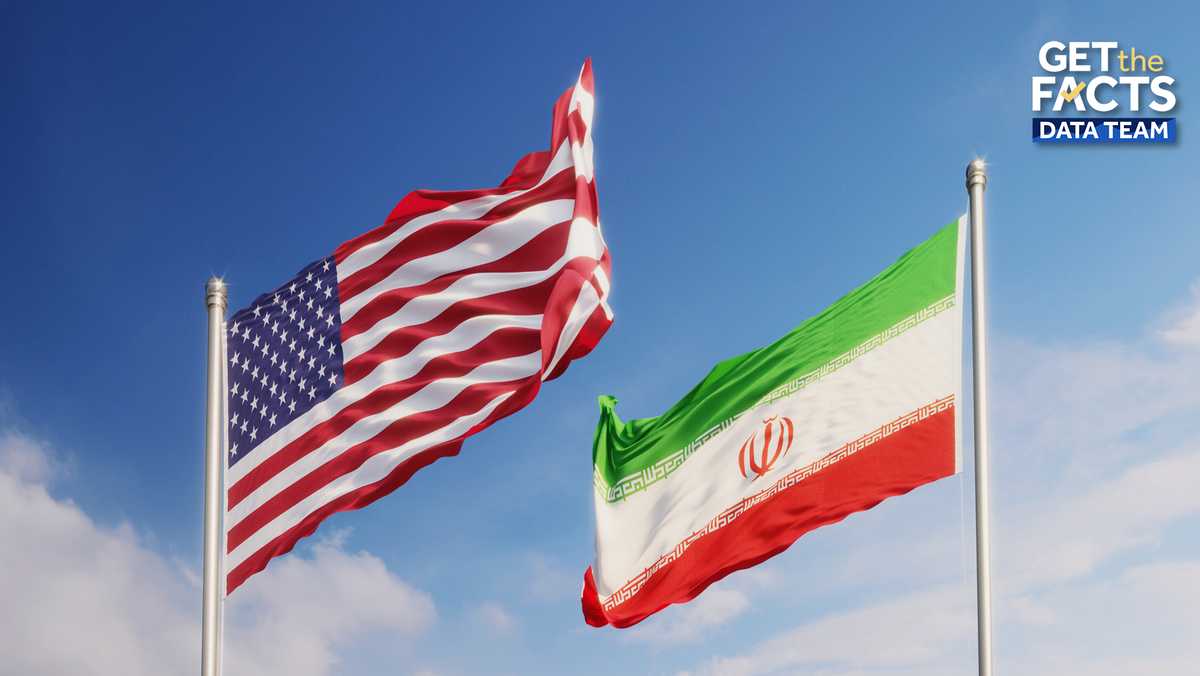
As the fighting between Iran, the United States and Israel continues, the conflict is affecting several nations that have complex relationships with either the U.S. or Iran or both.
The Get the Facts Data Team analyzed the histories of 19 Mideast nations and the immediate neighbors of Iran, dividing them into three categories. We found the U.S. maintains close partnerships with several of the countries, while many others balance relationships with both Washington, D.C., and Tehran. One country remains officially neutral.
U.S.-aligned countries
The U.S. maintains strong relationships with several regional partners.
Israel is its closest ally. The U.S. provides roughly 14% of Israel’s annual defense budget, according to the Congressional Research Service, and the Trump administration has bypassed congressional review to send Israel military weapons and air and land combat vehicles.
Israel, along with Bahrain, Egypt, Jordan, Kuwait, Qatar and Saudi Arabia, is designated a major non-NATO ally, giving it “benefits in the areas of defense trade and security cooperation” under U.S. law.
Oman and the United Arab Emirates also maintain strong ties with Washington and host U.S. military forces. The U.S. has reaffirmed its partnership with Oman in 2026, while maintaining deep defense cooperation with the UAE.
However, several of these same countries have already been drawn into the conflict. Iran has launched missile and drone attacks targeting Israel as well as U.S.-aligned Gulf states, including Bahrain, Saudi Arabia, the United Arab Emirates, Kuwait and Qatar.
Countries with situational relationships
Many countries in the region balance ties between the U.S. and Iran.
Turkey, a NATO member, has a fluctuating relationship with Washington, described as being “between close cooperation and notable division” in government documents. Turkey also has a complex relationship with Iran, and missiles have been intercepted in Turkish airspace during the current conflict.
Armenia and Azerbaijan have strengthened ties with the U.S. in recent years, even signing agreements and facilitating diplomacy in 2025. Armenia, however, has historically maintained closer relations with Iran.
In Lebanon, the Iran-backed group Hezbollah plays a major political and military role, complicating U.S. relations. Ongoing exchanges between Hezbollah and Israel have further destabilized the country, prompting the U.S. to warn Americans to leave.
Pakistan, a major non-NATO ally of the U.S., also maintains ties with Iran and has attempted to remain neutral in the current conflict while engaging both sides diplomatically.
Yemen remains unstable, with the U.S. supporting humanitarian efforts while Iran backs the Houthi movement, which holds power in parts of Yemen.
Afghanistan’s relationship with the U.S. remains hostile following the Taliban takeover amid the U.S. military withdrawal in 2021, while its ties with Iran are limited and shaped by regional disputes.
Iraq and Syria are among the most complex cases. Both host U.S. interests while also maintaining strong Iranian influence. Iran has also been linked to strikes in Iraq and Syria during the conflict with the U.S. and Israel.
Iran has relied on militias in Iraq, which have launched attacks on U.S. bases there and in neighboring countries.
In Syria, the fall of the previous regime in 2024 strained ties with Iran, as the country has begun cautiously rebuilding relations with the U.S.
Neutral
Turkmenistan remains officially neutral, a status recognized by the United Nations for decades, though it maintains limited relations with both the U.S. and Iran.