
The current round of fighting between Israel, the United States and the Islamic Republic of Iran appears to have reached a stalemate. On the one hand, Iran is being pummelled by US and Israeli air power, against which it can mount no effective defense. At the same time, the demonstration of US and Israeli military superiority has not, until now at least, produced a positive, victorious outcome from the Israeli and American point of view.
Unless the U.S. and Israel can decisively break this stalemate, the battle of the last month is likely to be recorded as a limited but notable achievement for the Iranian side.
Unless the U.S. and Israel can decisively break this stalemate, the battle of the last month is likely to be recorded as a limited but notable achievement for the Iranian side.
The regime, if it survives and if it ends the war in effective control of the Strait of Hormuz, will have demonstrated that despite its conventional inferiority, it possesses sufficient vigor and durability to endure the assaults of its enemies unbowed. It will also have shown that it can respond with consequential, strategic moves of its own.
Should this prove the outcome, the long Iranian bid for domination of the region will be set to continue. Further rounds of fighting will almost certainly lie ahead. But more broadly, the Iranian regional strategy will continue to produce instability and dysfunction across the Middle East, preventing the normal development of societies, and ensuring continued strife.
Declaring Victory?
Statements from both the US and Israeli leadership of the last days appear to suggest a framing of the situation that is preparing the way for an acceptance of this stalemate.
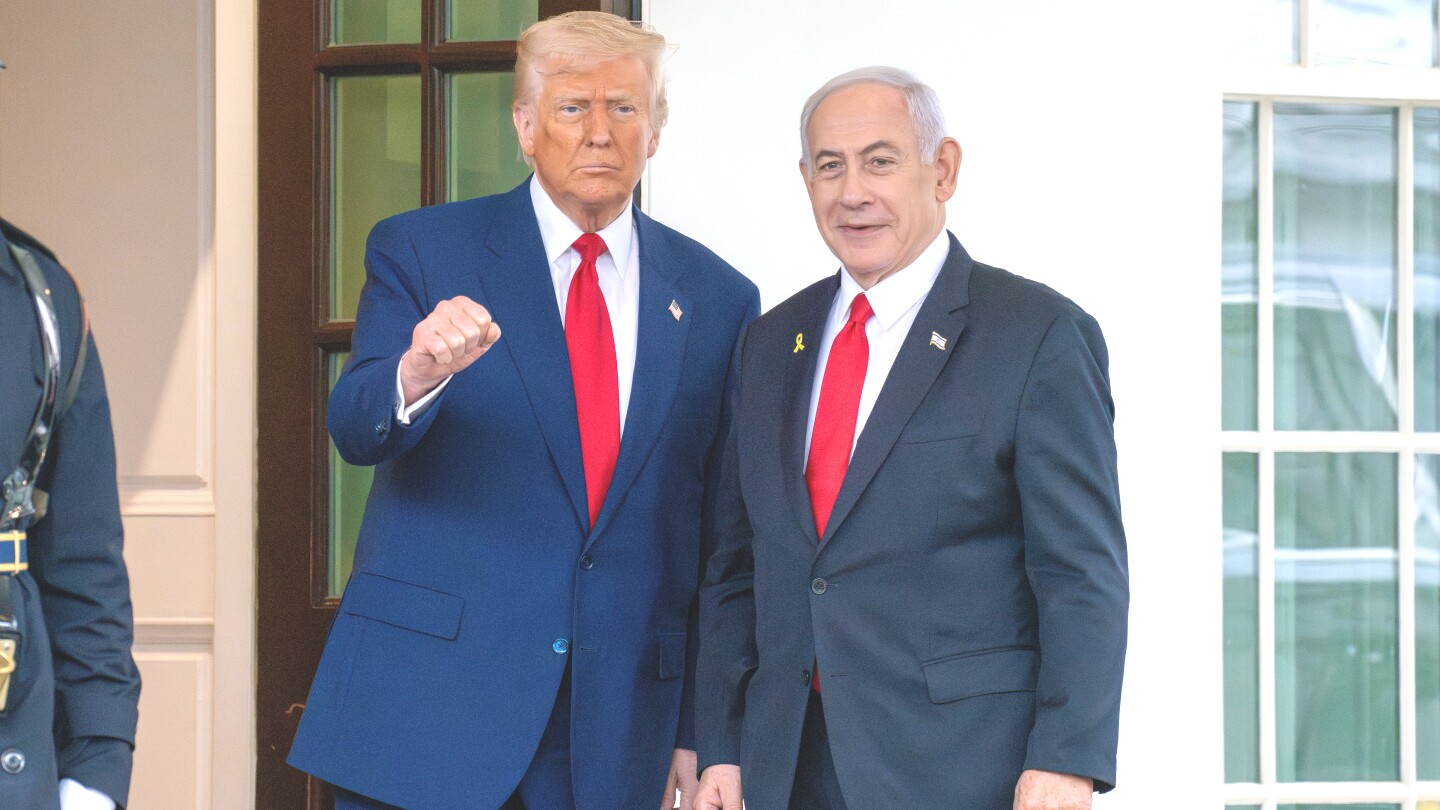
President Trump, responding to reporters’ questions at the White House on Tuesday, suggested that the Iranians ‘don’t have to make a deal. … When we feel that they are … put into the stone ages and won’t be able to come up with a nuclear weapon, then we’ll leave, whether we have a deal or not. It’s irrelevant now.”
Regarding the Strait of Hormuz, the president appeared to reiterate that this was not a US concern, saying that “I think it’ll be very safe, but we have nothing to do with that.”
President Donald Trump has on two occasions now appeared to suggest a desire to avoid conflict with Iran, before launching decisive military action.
Prime Minister Netanyahu, meanwhile, in a video statement this week, asserted that “In Operation Rising Lion, we removed from upon us the immediate threat of Iran arming itself with a nuclear weapon and many ballistic missiles,” while in the current war, “we brought a complementary achievement, by smashing the industrial capability of the regime to produce these tools of destruction.”
It is wise to be sceptical regarding public declarations from leaders in wartime. US President Donald Trump has on two occasions now appeared to suggest a desire to avoid conflict with Iran, before launching decisive military action.
The first of these was before Operation ‘Midnight Hammer’ in June 2025. On that occasion, Trump granted a two week window for negotiations on June 17, before launching air strikes on June 22. The second occasion when Trump’s apparent preference for diplomacy turned out to be a feint was prior to the commencement of the current round of fighting on February 28.
So it may be that the latest statements are also designed to instill uncertainty in the enemy, and conceal upcoming decisive action. Perhaps the US may yet move to seize Qeshm or Kharg islands, and contest Iranian control of the Strait of Hormuz, once the second of the two Marine Expeditionary Units arrives in the region in early April. Still, it is worth considering the possibility that the current effective stalemate will not be broken, and the implications if this turns out to be so.
How weakened is the regime?
The statements of the president and the prime minister, along with similar remarks by senior officeholders including Secretary of State Marco Rubio, place emphasis on the physical damage inflicted on the Iranian regime as an indicator of success.
This is to some extent justified. It is undoubtedly the case that Iran’s capacities in every area, including that of missile production and deployment, have been massively damaged over the last month.
More broadly, Iran’s Hamas clients have been decimated by two years of war with Israel. Its proxy Hizballah movement in Lebanon has lost its historic leadership and was revealed to be thoroughly penetrated by Israeli intelligence. The Houthis in Yemen waged an effective campaign against shipping on the Red Sea-Gulf of Aden route but signed a ceasefire (with the US, not Israel) after massive damage at the hands of US and Israeli air power. The Iran-aligned Assad regime has gone, replaced by a sectarian, Sunni Islamist government.
But it is also a fact that for all this, the Iranian regime is intact, and determined to continue on its chosen path.
The proxy strategy is the most original and in many ways the least understood element of Iran’s power projection.
The events of the last month have shown that the assumption that took hold in the US and Israel after the 12 Day War last summer – that the Iranian regime and therefore the Iranian regional strategy and project had been defeated and broken – was severely premature.
Weakened and exposed in its conventional inferiority by Israeli and US air attacks, the regime faced a moment of extreme vulnerability in January of this year, when mass popular protests broke out across the country. But the regime crushed the protests by force. Renewed internal unrest does not appear to be on the horizon.
The three elements of Iranian power projection which Israeli planners in the course of the war have spoken about destroying or weakening are: the nuclear program, the ballistic missile program and the support for proxies.
Of these three, the nuclear program is of course the most potentially dangerous. If the war ends at its current point, Iran will retain possession of highly enriched uranium, including a stockpile of approximately 450 kg of uranium enriched to 60%. Weapons grade is 90%. This will be in the hands, it should be recalled, of a new team at the pinnacle of the regime, dominated now not by clerics, but by operatives of the Islamic Revolutionary Guards Corps (IRGC). They will have witnessed what they will accurately regard as an attempt to take down their rule of Iran by force. They will have every incentive to seek to acquire the ultimate insurance possibility against any such attempt being made again.
In terms of ballistic missiles and drones, it is Iran’s capacities in this area which have caused the most actual physical damage, as witnessed in the relentless and ongoing attacks on Israel and the Gulf countries. Iran has certainly suffered severe degradation over the last month. But it is still launching missiles and drones (by itself and through proxies) at Israel, at Iraq and at the Gulf. Neither supplies nor capacities are exhausted. More importantly, the domestic capacities for missile production, and the relationships – with North Korea, Russia and China – which underly the Iranian ballistic missile program are intact. For as long as the regime exists, these capabilities can and will be built back.
The strategy of support for proxies has brought the regime its greatest measure of practical power and achievement in the Middle East. This area remains the most impervious to US and Israeli conventional superiority. The long strategy of support for proxy and client military organisations across the region is what has turned the Iranian regime into a player of strategic consequence in the region, despite its conventional military inferiority. The regime’s prowess in irregular and asymmetric methods also enables it to hold power at home.
So the regime has been weakened but if not damaged further, it will immediately set about rebuilding and recommencing its activities on familiar lines.
The proxy strategy is the most original and in many ways the least understood element of Iran’s power projection. It derives from the core, ideological nature of the Iranian regime. But the original ideological fervor of the Islamic Revolution of 1979 has long since solidified into a sophisticated methodology. The IRGC either creates franchises of itself (Lebanon, Iraq) or locates like minded organisations (Yemen, Gaza) and then turns these into instruments for the wielding of power and influence. Through the judicious combining of political and military capacities adapted to local conditions, Iran achieves practical domination of geographic spaces without the need for anything as crude as conventional military conquest.
By these methods, Iran has acquired domination of or access to key regional strategic locations (such as the Bab al Mandeb Strait, via the Houthis and the Mediterranean, via Lebanese Hizballah). The proxy strategy is relevant also to the regime’s domestic standing. In many ways, indeed, proxies such as Lebanese Hizballah and Iraqi Ktaeb Hizballah operate in imitation of the way that the IRGC wields coercive power in Iran itself. That is, the Iranian regime is also engaged in asymmetric warfare against its own population. Iran employs the ways, motivations and means of Islamic revolution across the region and at home, in a kind of process of permanent revolution. No local force has yet found an adequate answer to these methods, not in Gaza, or Lebanon, or Iraq, or Yemen – or in Iran itself.
So the regime has been weakened but if not damaged further, it will immediately set about rebuilding and recommencing its activities on familiar lines.
The Regime’s Belief System
Behind all these elements of Iranian strategy, of course, is the regime’s religious and ideological belief system. What idea does the Iranian regional project exist to serve?
The belief system underlying the Iranian regime is not simply a politicised version of Shia Islam. Rather, it is a hybrid of a variety of elements, including influences both from Sunni Islamism and from non-Islamic sources. At its center is the concept of the ‘rule of the jurisprudent’ (ie rule by Shia clerics) as outlined by Ayatollah Ruholla Khomeini, founder of the Islamic Republic in his book ‘Islamic Governance.’
Khomeini was influenced by ‘anti imperialist’ and left wing ideas, as interpreted by Ali Shariati, one of the theorists of the Islamic Revolution. The Marxist tinged notions of Oppressors” (Mostakberan) and “Oppressed” (Mostazafan) which form a central element in the regime’s rhetoric derive from this outlook.
There is an apocalyptic element to the thinking of the Iranian regime, deriving from the Shia notion of the return of the Mahdi, the Hidden Imam, who has been in occultation for 14 centuries and whose return presages the end of days.
Khomeini was also aware of the Sunni Islamism of the Muslim Brotherhood, and the thinking of its chief ideologue, Sayyid Qutb, to which he was introduced by earlier Shia Islamist activists who had been in direct contact with Qutb in Egypt. Qutb’s thought in turn was to a great extent colored by the influence of European fascist and Nazi ideologies, particularly in its antisemitism and its tendency to belief in conspiracy.
There is an apocalyptic element to the thinking of the Iranian regime, deriving from the Shia notion of the return of the Mahdi, the Hidden Imam, who has been in occultation for 14 centuries and whose return presages the end of days. According to these views, the actions of Iran against Israel and the US are part of a process intended to hasten and trigger the Imam’s return. As revealed in statements by senior officials including current IRGC Qods Force Commander Esmail Ghaani and former President Mahmoud Ahmedinejad, this strand of thinking exists at the highest level of the Iranian regime.
Finally, hatred of Israel and the Jews forms a central element in the outlook of the Iranian regime. Senior clerics, such as Ayatollah Ahmed Jannati, have described the Jews as ‘najes’ – ritually unclean. Holocaust denial is officially promoted by the regime. The late Supreme Leader Ali Khamenei repeatedly referred to Israel as a ‘malignant cancerous tumor’ which must be ‘eradicated.’
Permanent Crisis
So the Iranian regime is based on a system, practical and ideological, which is seeking to dominate the Middle East, to drive out the United States and to destroy Israel. This system has been damaged by the war of the last two years. It has not been broken. If the United States and Israel really do intend to ‘declare victory’ and desist from further action, then that will with some justification be presented by the Iranian regime as an achievement. The implications of this achievement will be that this system will immediately begin repairing itself and will recommence its activities.
Ultimately, and to put it plainly, a chance at normal development for the Middle East can’t really coincide with the continued existence of the Iranian system and the ideology which underlies it. Toppling the Iranian regime, though, cannot be achieved from the air, and cannot be achieved swiftly and with a single blow. A sustained, ongoing strategy, with political as well as military elements needs to be put in place, under US leadership and committed to the long term. Absent that, the regime looks set to survive and to move forward, with profoundly malign consequence for the Middle East and all its peoples.
Published originally under the title “‘Stone Age’ or Not, Iran Is Poised to Win the War.”