
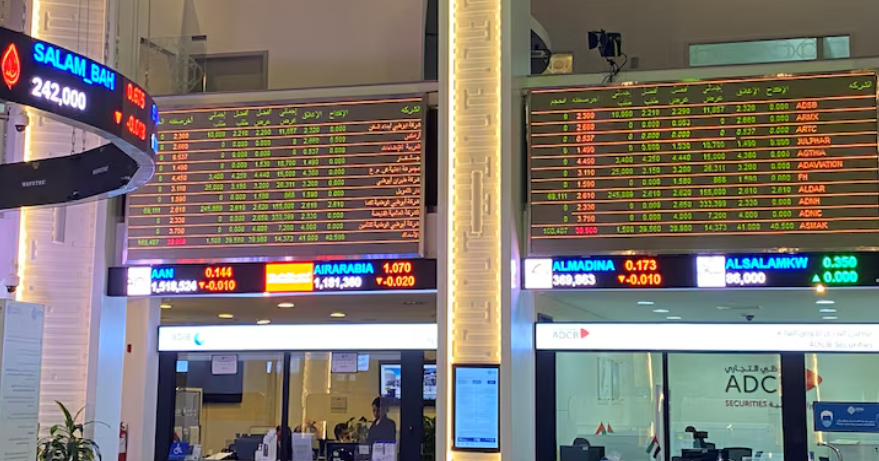
Earlier this week, UAE authorities detained dozens of money changers tied to financial entities linked to Iran’s Revolutionary Guards, shut down associated companies and closed their offices, sources familiar with the matter told Iran International.
The crackdown followed days of mounting regional tensions and came after other measures targeting Iranian nationals, including visa revocations and tighter travel restrictions through Dubai.
While the initial crackdown appears focused on exchange houses and foreign-currency procurement, the bigger question now is whether Emirati authorities are prepared to move deeper into the far larger ecosystem of front companies and free-zone entities that have long enabled Iran’s oil, petrochemical, metals and procurement networks.
That next step could determine whether this is a structural threat to one of Tehran’s most important offshore financial systems.
“It’s unclear, I think we’ve got to wait and see the extent of the crackdown,” Miad Maleki, former senior US Treasury sanctions strategist and a senior fellow at the Foundation for Defense of Democracies (FDD) said on Eye for Iran podcast.
“If it only has to do with the current crackdown….whether it’s really limited to IRGC’s foreign currency procurement activities in Dubai, which is significant or it goes beyond that and they’re going after Iranian connected companies in free zones,” said Maleki.
That distinction matters.
For years, Dubai’s exchange houses were only the most visible layer of Iran’s shadow economy. Beneath them sits a much deeper network of shell firms, nominee ownership structures, commodity brokers and free-zone companies often run by third-country nationals.
According to Maleki, many of those firms were designed precisely to hide any direct Iranian fingerprints.
“Usually, the connections to Iran are nothing. There are no Iranian hands or fingerprints over these companies,” he said.
“There are third country nationals, Indians and Pakistani nationals who are running these companies and you have an Emirati national who is only on paper as the owner.”
That architecture has allowed Iranian petrochemical, petroleum and metals businessmen to move funds, settle transactions and procure goods while remaining beyond the immediate reach of sanctions enforcement.
Daniel Roth, research director at United Against Nuclear Iran, said the sophistication of those structures is exactly what makes the next phase of enforcement so consequential.
“It has been a sophisticated operation to the extent that anybody working in just the general compliance AML unit, say in the west wouldn’t necessarily know that this is,” Roth said on Eye for Iran.
He warned that seemingly generic corporate branding can make sanctions-linked entities difficult to detect.
“If I’m going to be a little bit more clever than that, and obviously I’m getting to use a name like some generic name, some boilerplate name.”
Roth added that the opacity of Dubai’s business ecosystem has historically made ownership trails difficult to establish.
“The Dubai environment or the financial system, it is quite opaque.”
That opacity becomes even more important when looking beyond money changers and toward the free-zone corporate structures that may still remain untouched.
Mohammad Machine-Chian, a senior journalist covering economic affairs at Iran International, said the economic stakes of a broader move into shell companies could be enormous.
“So all in all, I think it’s fair to estimate around $8 to maybe $15 billion a year,” he said, referring to the Dubai channel’s role in supplying hard currency.
“In this scenario, they’re expected to lose much more, maybe between at least $15 to $20 billion.”
If authorities expand the crackdown into those deeper layers, the consequences for Tehran could extend far beyond exchange houses.
It would raise the cost of moving oil proceeds, complicate hard-currency conversion, threaten procurement channels, and strike at the free-zone companies that have long helped disguise Iranian-linked exports.
For now, that remains the unanswered question.
The arrests have exposed the first layer of Iran’s financial architecture in Dubai.
Whether the UAE is prepared to absorb the economic and political costs of moving against the deeper shell-company maze may determine whether Tehran’s most important offshore pressure valve is merely disrupted or fundamentally dismantled.
You can watch Eye for Iran on YouTube or listen on any podcast platform of your choosing.