
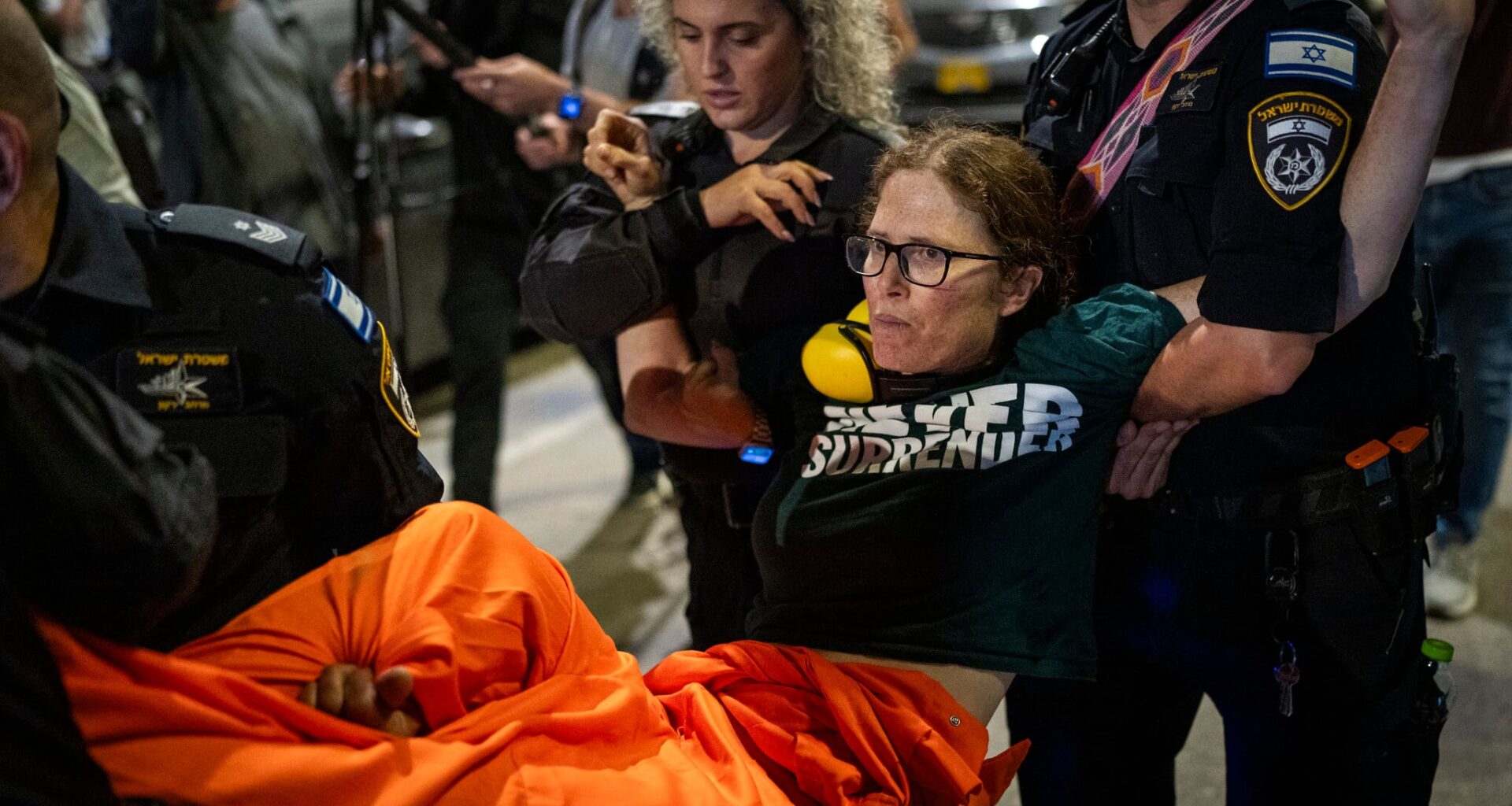
Hundreds of anti-war activists demonstrated in Tel Aviv and dozens in other cities on Saturday, after an interim order by the High Court of Justice ordered police to allow protests on a larger scale than permitted under the IDF Home Front’s regulations, despite the military’s objection that it would not be safe amid the ongoing missile threats from Iran, Hezbollah and the Houthis.
Just before 9 p.m., however, police said the main demonstration at Tel Aviv’s Habima Square had exceeded the court’s 600-protester limit, declared the event unlawful, and violently dispersed the crowd, making 17 arrests.
Soon after, alarms sounded for an imminent missile attack, and the detainees, who were being held on a bus, asked to be allowed to join protesters and others heading to the square’s large, protected underground parking lot. Police said they evacuated them, instead, to a safer area. The detainees claimed, however, that they were placed in an unprotected room.
Israel’s Sephardic Chief Rabbi David Yosef denounced the judges’ decision to let the rallies go ahead, calling the High Court “the enemy of Judaism,” and focusing his ire on the fact that it made a decision “during Shabbat to force the government to allow them [protesters] to demonstrate.”
Many of the demonstrators in Tel Aviv’s Habima Square had waved signs demanding an end to the ongoing war with Iran, while others decried a newly passed law enshrining the death penalty for Palestinian terrorists.
Get The Times of Israel’s Daily Edition
by email and never miss our top stories
By signing up, you agree to the terms
Much of the protest’s messaging included accusations that the governing coalition has exploited the war for its own political survival. “Government of detachment, the home front is silent, under the cover of war, they are looting the country,” one sign read.
Another group of demonstrators dressed themselves in orange prison jumpsuits and cardboard cutout masks of various ministers in Israel’s ruling coalition, and waved fake dollar bills.
A recent poll found that a large majority — some 78 percent — of Jewish Israelis support the US-Israeli campaign against the Islamic Republic, but that a large majority of Arab Israelis oppose it.
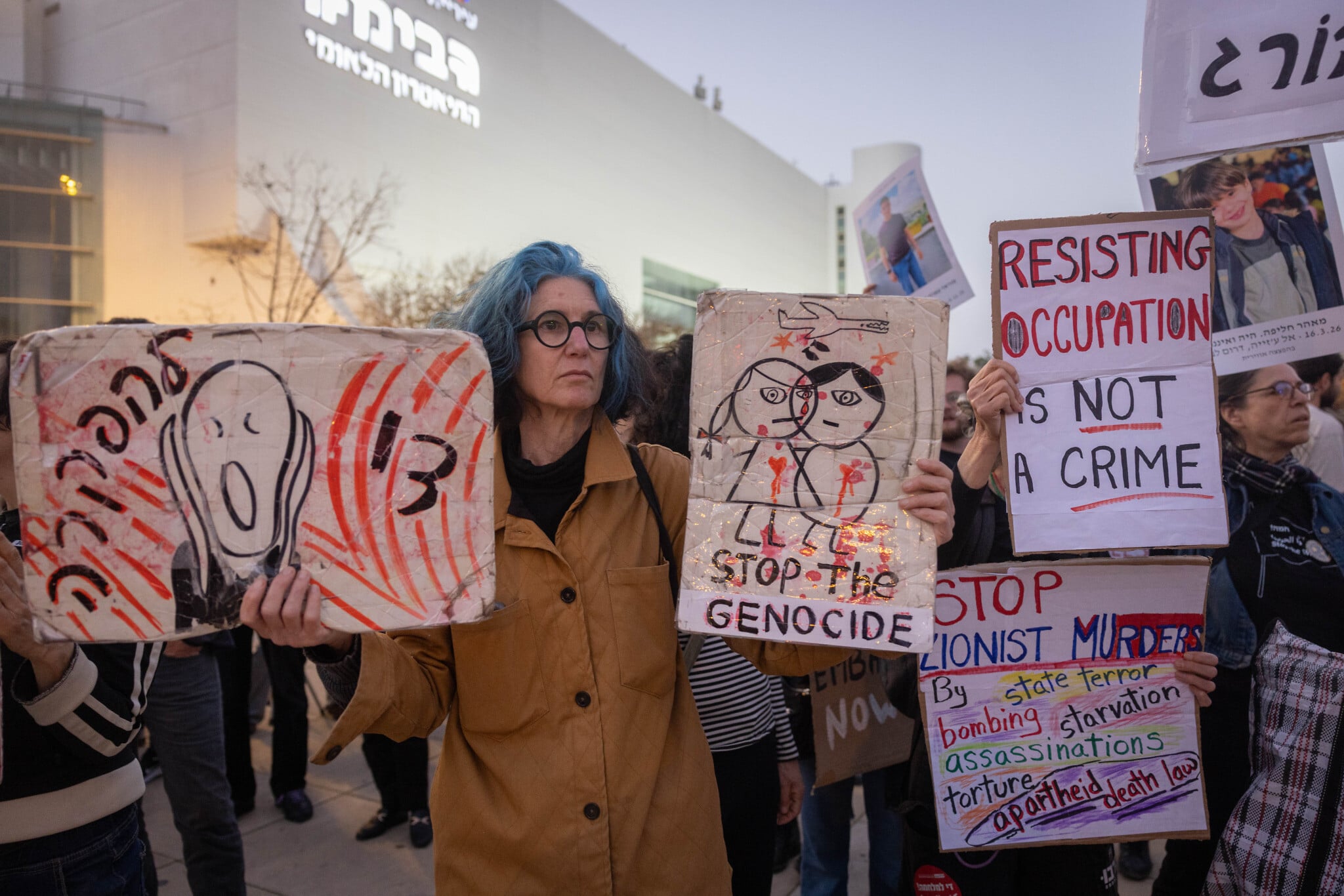
A protester is seen at a demonstration against the current Israeli government and the ongoing war with Iran, at Habima Square in Tel Aviv, April 4, 2026. (Flash90)
Hours before the protests were set to begin on Saturday, the High Court of Justice issued an interim order allowing up to 600 people at the main demonstration in Tel Aviv, and 150 attendees in Jerusalem, Haifa and Kfar Saba, despite the Home Front Command regulations restricting large gatherings due to the risk of missiles from Iran.
When police adjudged the Habima protest to be too large, the commander at the scene ordered protesters to vacate the plaza, and police began to violently disperse them. Footage from the protest showed police forcefully shoving demonstrators. Mounted officers also arrived at the scene.
אלימות משטרתית כנגד מפגינים
04/04/2026 תל אביב @imahot4 pic.twitter.com/CUI9MheQmj
— אלימות ישראל (@Alimut_Israel) April 4, 2026
Before officers began to break up the crowd, organizer Alon Lee Green was seen giving an impromptu speech to demonstrators decrying the police’s behavior.
“The police are again threatening us, as if our demonstration isn’t legal. There is no illegal demonstration,” he shouted through a megaphone.
“We don’t trust this government, not Netanyahu, not Ben Gvir and not Smotrich. They don’t want us to demonstrate, we know this and we are here to say: Enough with the forever war,” he continued.
Green was one of the 17 demonstrators arrested on suspicion of disorderly conduct.
Detained activists say cops took them to unsafe room amid sirens
Shortly thereafter, the protest was disrupted by a ballistic missile attack by the Iran-backed Houthis in Yemen.
The IDF issued an early warning upon detecting the attack, several minutes before sirens sounded, allowing demonstrators to begin moving to the large protected area underneath the plaza.
Protesters continued to chant as they headed for shelter, deriding police as “criminals” and waving signs with anti-government slogans.
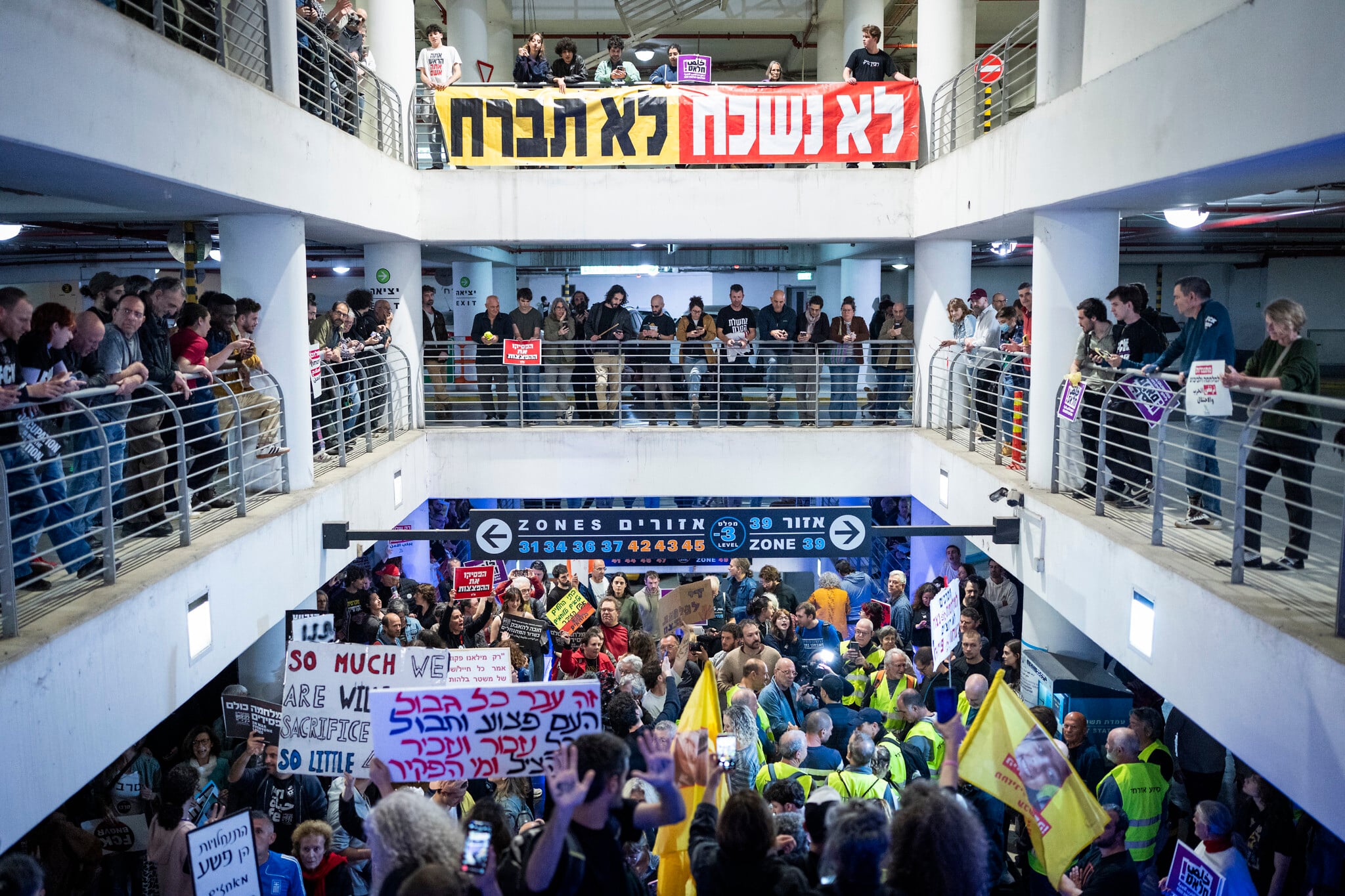
Anti-war protesters take cover at an underground parking lot in Tel Aviv as a siren sounds warning of incoming ballistic missiles fired toward Israel, April 4, 2026. (Flash90)
But the protesters who’d been detained and were being held on a nearby bus said that when they urged police to allow them to go to the same protected space, they were instead taken to a room in a nearby building.
The police claimed that the decision to take them to a separate area was due to “significant congestion leading to the protected area beneath Habima Square.”
“Officers acted swiftly in relocating the bus to a position between buildings and evacuating the detainees to a safer location, all while risking their own lives,” the Israel Police said in a statement, adding that “police officers and mounted units were forced to remain outside protected areas, even after the sirens, due to severe congestion at entrances to shelters.”
המשטרה לא אפשרה ל 16 עצורים באוטובוס לרדת למרחב המוגן בהבימה – האוטובוס נסע והוריד אותם בחדר של בניין מלא חלונות
תל אביב 04/04/2026 @AtzurimHafganot pic.twitter.com/audVAobrAi
— אלימות ישראל (@Alimut_Israel) April 4, 2026
Footage from the event showed that despite the police claiming to take the detained protesters to a safe space, they were held in a room that did not appear to be protected, due to its glass windows and doors.
“There is glass here, glass there… there is no security whatsoever,” one of the detained protesters says in the footage.
One detainee also accused police of transporting the group to the building only after sirens began, as opposed to when the early warning was received.
As of late Saturday, the exact time that the bus had left the square was unclear, and police had not responded to a request for comment on the matter.
Green, who was among those detained, charged: “All of these police officers broke the law.”
High Court okayed up to 600 protesters, over IDF’s objections
The protests were only approved after the High Court of Justice, hours earlier, issued an interim order effectively forbidding law enforcement from forcibly dispersing demonstrations of fewer than 600 attendees at Habima, and fewer than 150 attendees in Jerusalem, Haifa and Kfar Saba.
The order applied only to Saturday night’s rallies.
The judges were responding to a case that was brought after the police forcibly dispersed similar demonstrations the week before, citing the wartime restrictions issued by the Home Front Command.
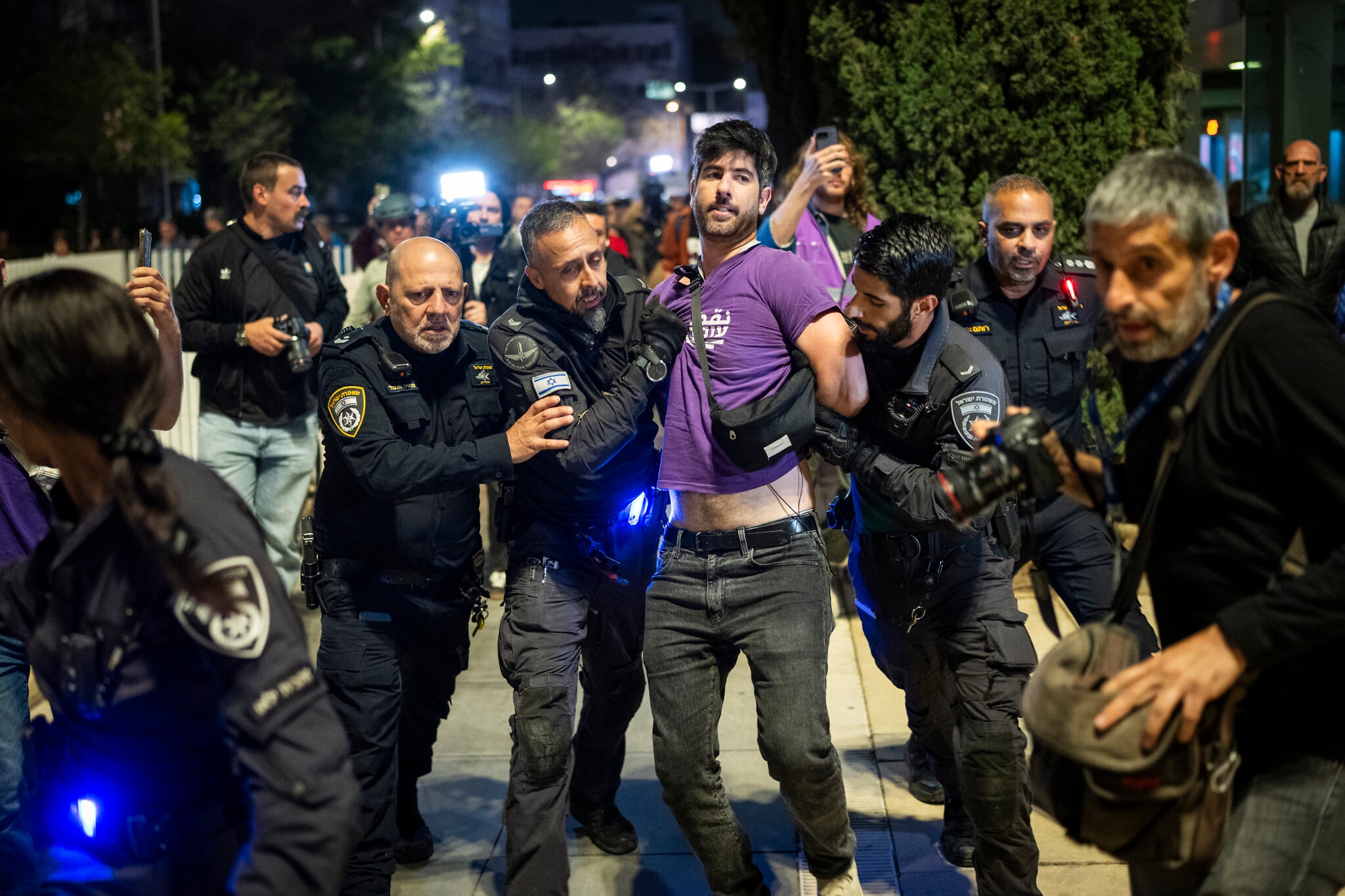
Police detain Alon Lee Green, co-founder of Standing Together, at a rally against the war with Iran, Tel Aviv, April 4, 2026. (Flash90)
In the decision, judges accused police of selectively enforcing the restrictions, which cap outdoor public gatherings at 50 people.
“Police enforcement of Home Front Command guidelines is carried out against protest demonstrations, but not towards other places and events. This situation is difficult to reconcile,” judges wrote.
The ruling was handed down despite the Home Front Command submitting a framework to the court stating that it intended to allow small demonstrations, with a maximum of 150 people at Habima and 50 at other locations.
The court nevertheless issued an interim order as the framework was submitted hours after the 11 a.m. deadline set by the court on Friday, leaving little time for deliberation.
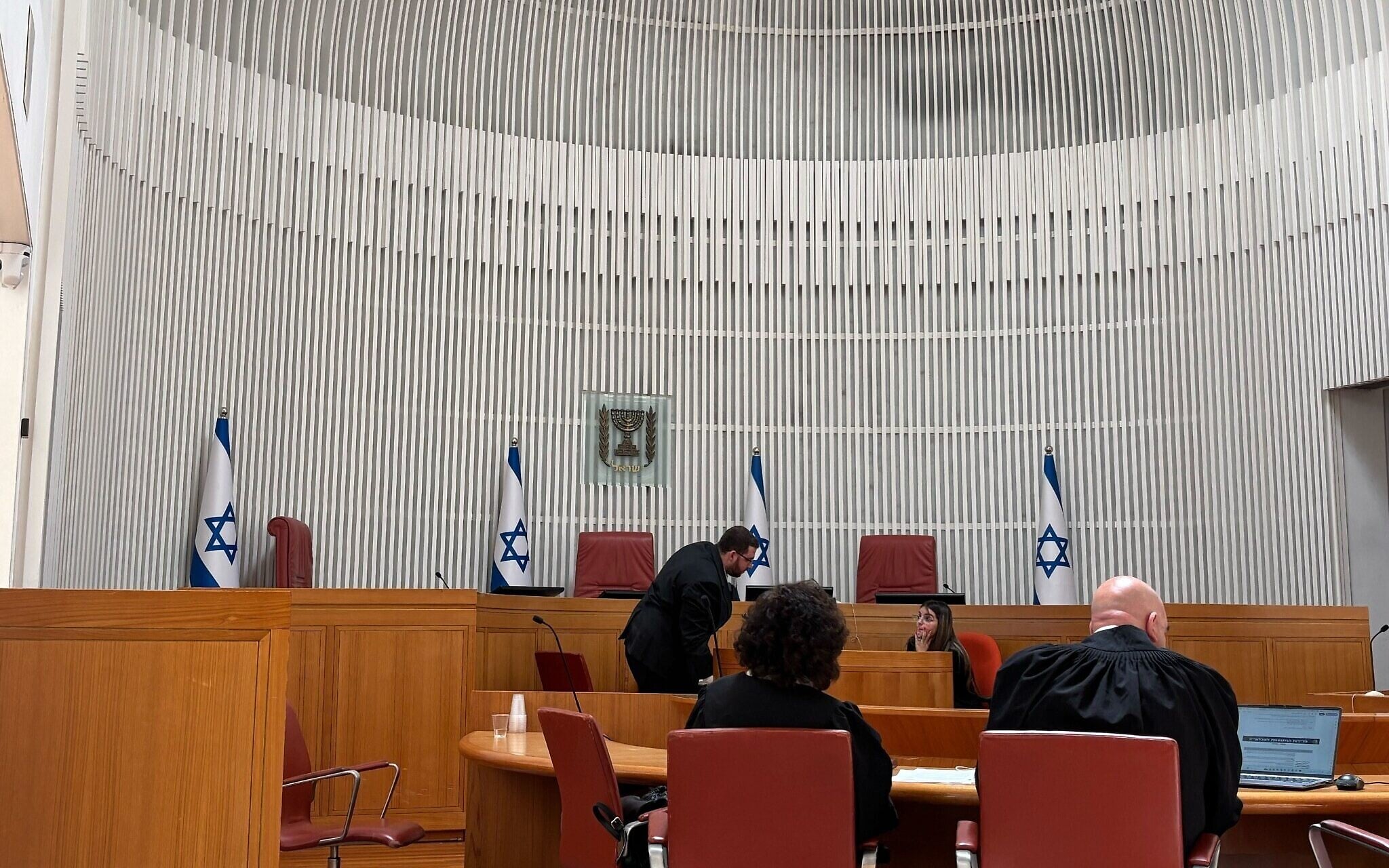
Lawyers for the Association for Civil Rights in Israel prepare for a hearing on their petition against police policies on dispersing protests during times of war, at the High Court of Justice in Jerusalem on April 3, 2026. (Charlie Summers/Times of Israel)
The interim court order was welcomed by left-wing lawmaker Gilad Kariv, of The Democrats, who accused the IDF of showing a “deep disregard for fundamental democratic values” by its policy.
Kariv charged that “malls are open,” Hasidic courts are “doing whatever they please,” and people are going to the tomb of Rabbi Shimon Bar Yochai in Meron, “while only the democratic protest and the protest against being dragged into a war of attrition are silenced.”
Ofer Cassif, the Arab-majority Hadash-Ta’al party’s only Jewish lawmaker, posted a video on X showing himself attending the anti-war protest in Tel Aviv.
He accused the police – whom he called National Security Minister Itamar Ben Gvir’s “militia” – of having “exerted severe violence against protesters, a blatant violation of freedom of expression and the right to protest.”
שוב השבוע בתל אביב, מיליציית השר כהרגלה הפעילה אלימות קשה נגד המפגינים – פגיעה בוטה בחופש הביטוי ובזכות המחאה.
לא מפחדים, לא מהמשטר ולא מכנופיות הטרור שלו. עם הישמע ההתרעה, ירדנו לחניון הממוגן (לא מזלזלים) ושם המשיכה קריאת ההמונים: די למלחמה!
לא ניכנע לעולם!
שלום, שוויון, צדק… pic.twitter.com/mgO2pX6C0g
— Ofer Cassif עופר כסיף عوفر كسيف (@ofercass) April 4, 2026
Ben Gvir, meanwhile, joined other lawmakers from far-right and ultra-Orthodox parties, as well as the chief rabbi, in condemning the High Court for issuing the decision on Shabbat.
“The Home Front Command does not allow worshipers to show up at the Temple Mount, Western Wall and other holy sites, yet the High Court on Shabbat issues another decision that harms the security of officers and citizens,” his Otzma Yehudit party said in a statement.
The far-right party accused the court of “allowing protesters to show contempt for the law just because they are protesting against the State of Israel,” and suggested that any judge who would issue such rulings is not “on Israel’s side.”
High Court is ‘the enemy of Judaism’
Sephardic Chief David Yitzhak Yosef, responding to the decision, called the High Court “the enemy of Judaism” for issuing the ruling during the Jewish day of rest.
“We will struggle with all our might against the High Court… God willing, at the end of the day, we will be victorious,” he said, accusing the court of “walking all over the law” by holding an “illegal” session on Shabbat to “force the government” to allow the demonstrations to go ahead.
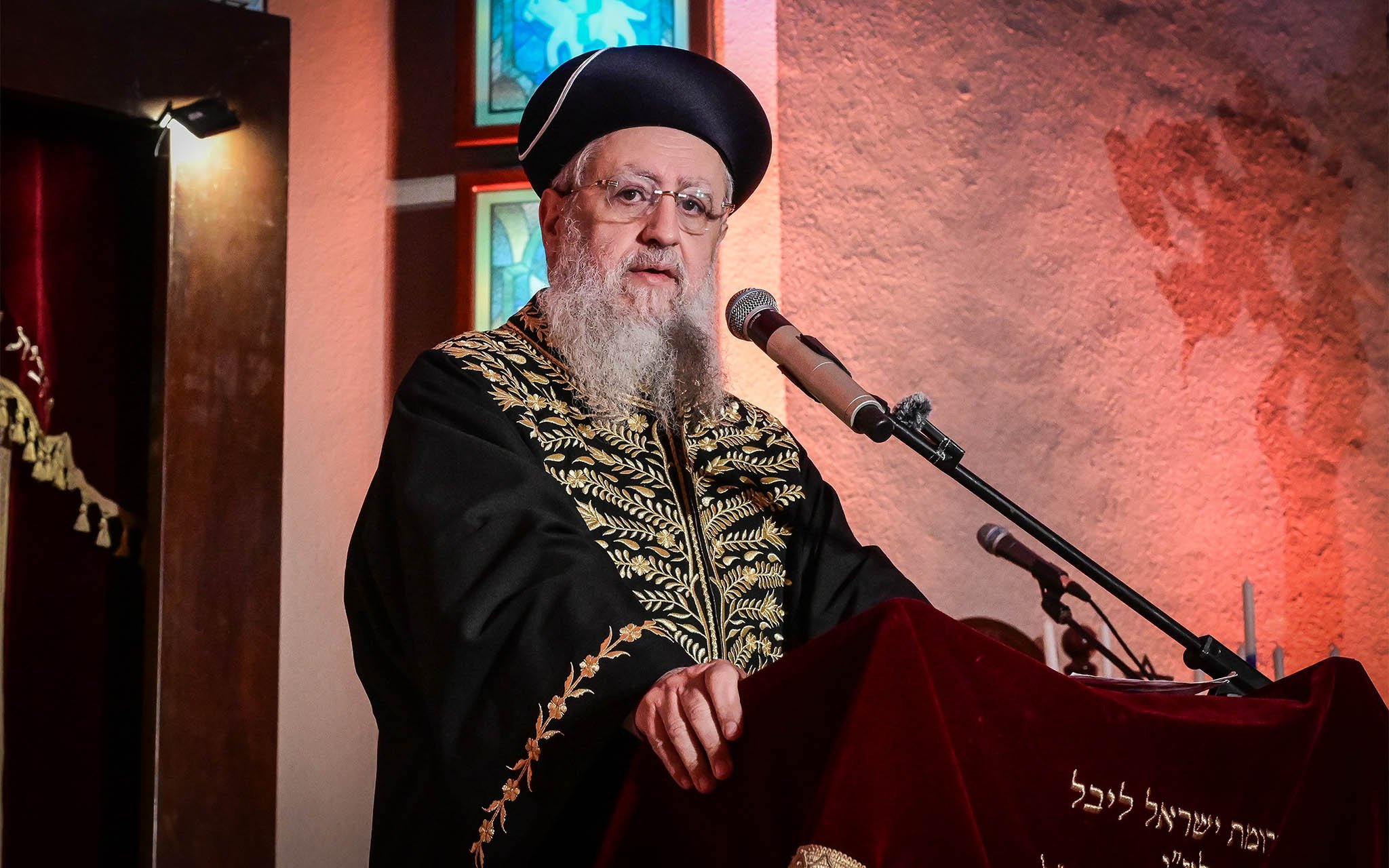
Sephardi Chief Rabbi David Yosef at a menorah-lighting ceremony on the sixth night of the Jewish holiday of Hanukkah, at the Great Synagogue in Tel Aviv, December 30, 2024. (Avshalom Sassoni/Flash90)
He accused Israel’s justice system of operating on a double standard that he said favors anti-government protesters — who are largely secular Jews — when it comes to wartime restrictions on public gatherings.
“I don’t think that the value of the demonstrations — holy in their eyes — is more important than the holiness of our Western Wall, and the Western Wall is closed right now,” he said.
“We understand the situation… None of us even dreamed of petitioning the High Court, because we know that if we were to petition the High Court, they wouldn’t agree, of course.”
The chief rabbi’s brother, former chief rabbi Yitzhak Yosef, went further with his denunciation of the court.
הפרגוד: ”הקדוש ברוך הוא יהרוג וישמיד את שופטי בג”צ”
האמירה של מרן הרב יצחק שהלך צעד חריף יותר מאחיו הרב הראשי המכהן. אמירה שתעורר סערה ולצידו הרב שמואל רבינוביץ מופתע. pic.twitter.com/dwTedMTQ76
— הפרגוד (@moshepargod) April 4, 2026
“All our troubles,” Yitzhak Yosef said, “including the drafting of yeshiva students, are because of these evil judges… The Almighty will wipe them out, will kill them.”
He later issued a clarification, ruling out the use of violence, and saying he had meant that God would give the judges their punishment.
By contrast, critics of the ruling coalition have accused police of enforcing a double standard when it comes to Home Front Command restrictions.
While law enforcement regularly breaks up anti-government demonstrations that exceed this limit, non-political gatherings are very rarely dispersed by force.
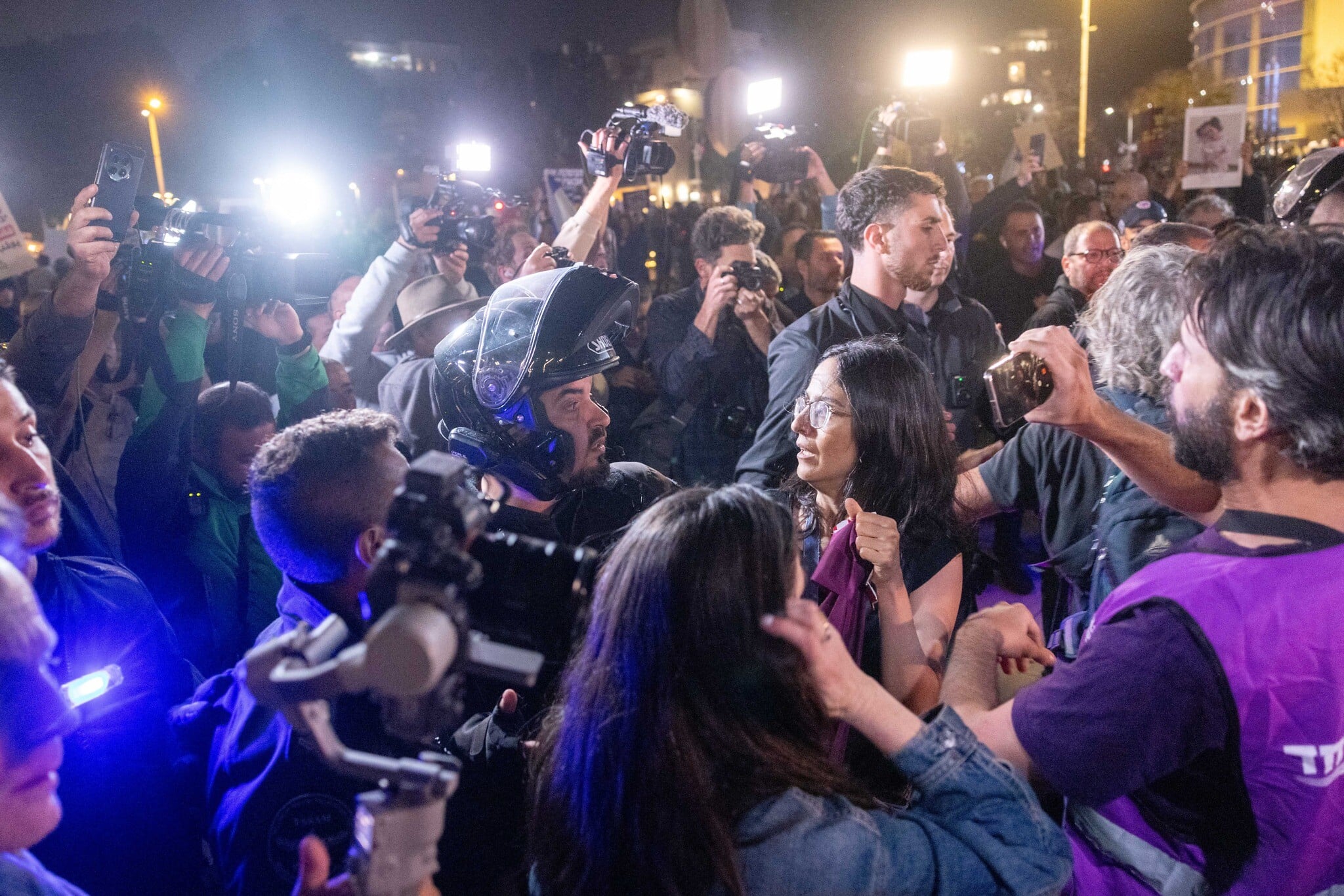
Police clash with Israelis during a protest against the current Israeli government and the ongoing war with Iran, at Habima Square in Tel Aviv, April 4, 2026. (Flash90)
Backing up Yosef’s remarks, MK Moshe Gafni, chairman of the ultra-Orthodox Degel HaTorah faction, asserted that the chief rabbi should replace Chief Justice Isaac Amit as High Court president.
Yosef recognizes the “sensitivity and complexity” of ruling on issues related to “values sacred to the Jewish people,” Gafni declared.
The Degel HaTorah chair called the ruling “outrageous” and “contrary to the law, while Deputy Communications Minister Yisrael Eichler, who belongs to UTJ’s other faction, Agudat Yisrael, claimed that it the court had handed down “a declaration of war against the sanctity of Shabbat and against the tradition of the Jewish people.”
“The High Court of Justice judges proved today that even from the abyss it is still possible to descend to the lowest depths of Sheol,” Eichler argued, using a Hebrew phrase for the depths of hell.