
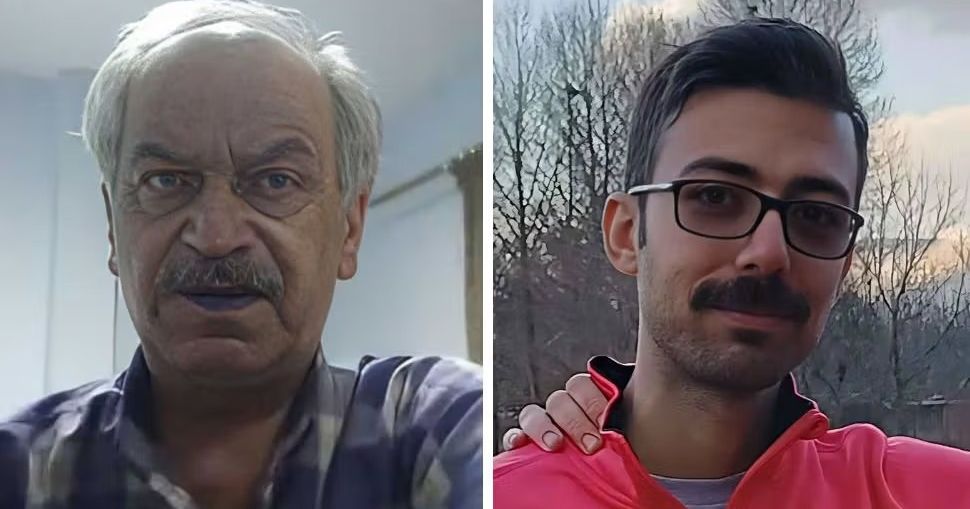
Hatami was among a group of detainees held responsible for the events at the “185 Mahmoud Kaveh” Basij base on January 8. Families of the detainees told Iran International that Hatami and others were pushed into the building by unidentified armed individuals, after which the base caught fire. Witnesses said the protesters were trapped inside, with the blaze putting their lives at risk.
Mizan, the judiciary news outlet, wrote that Hatami was “convicted of actions that targeted national security and involved attempting to access weapons and ammunition in a classified military site” and that his trial followed the presentation of confessions and investigative reports. The outlet added that the Supreme Court had reviewed and upheld the ruling.
The other detainees named in the report were Mohammadamin Biglari, Shahin Vahedparast, Abolfazl Salehi and Ali Fahim.
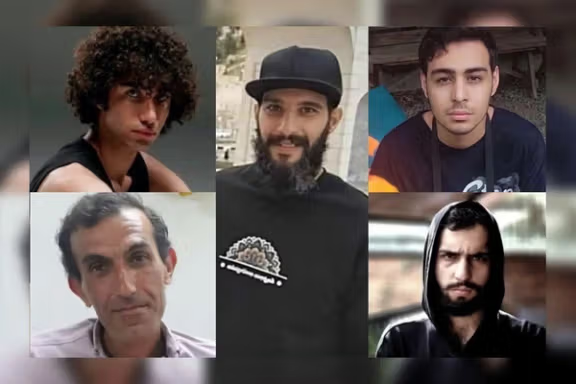
Their case was heard at Branch 15 of Tehran’s Revolutionary Court, presided over by Judge Abolqasem Salavati, and death sentences were issued in February, according to the report.
 No leniency for January protesters, Iran judiciary warns
Court documents cited in the report said Hatami’s presence at the base coincided with efforts to breach military restrictions, although family accounts and independent reporting suggest he did not set the fire nor voluntarily enter the premises.
Eyewitnesses told Iran International that a large crowd had gathered outside the base on the evening of January 8 during nationwide protests, and several motorbikes in the street were set on fire. Some armed and unidentified individuals pushed protesters into the base and locked the doors, filling the building with smoke and putting those inside at immediate risk.
Detainees caught in prearranged scenario
Based on witnesses’ reports, the seven detainees were victims of a prearranged scenario by security and Basij forces intended to make them appear culpable for the fire. After the plan failed, five of them were referred for execution on charges including “enmity against God, corruption on earth, and conspiracy against national security.”
Hatami was one of five prisoners removed from Ghezalhesar prison for execution on Tuesday. Families reported that detainees, including Hatami, were transferred to undisclosed locations shortly before the execution. The prisoners, aged between 19 and 25, had limited access to legal counsel during a trial concluded within 30 days of their arrest.
 Wrestler’s execution raises fears for detained athletes in Iran
Iran’s judiciary also announced that other political prisoners, including Pouya Ghobadi Bistouni and Babak Alipour, were executed earlier this week, along with Akbar (Shahrokh) Daneshvarkar and Mohammad Taghavi Sangdehi. Two additional prisoners, Vahid Baniamrian and Abolhassan Montazer, had been sentenced to death in December 2024.
Human rights groups warn of rushed executions
Families and human rights groups have repeatedly warned against executing prisoners under such circumstances and called for an immediate halt to the sentences. The cases have drawn international attention, highlighting the dangers of issuing death penalties without guaranteeing basic legal rights.
Amid heightened security tensions and restricted internet access, the rapid pace of executions in politically sensitive cases has increased, leaving detainees exposed to unpredictable and direct threats to their lives. Human rights organizations have warned that the acceleration of these executions could lead to a humanitarian crisis.