
When confronted about this, Sanjelekani denied any form of child abuse.
“I can only say I am trying to save his life. I am trying my best to save him,” she says.
When questioned about claims of two types of autism, accused of running a scam, and asked to admit she is lying, she says: “Let me just accept I have failed this child.”
Natasha eventually took Shalom home but still clings to her faith that God will help her find a cure. For her, this is still the only hope.
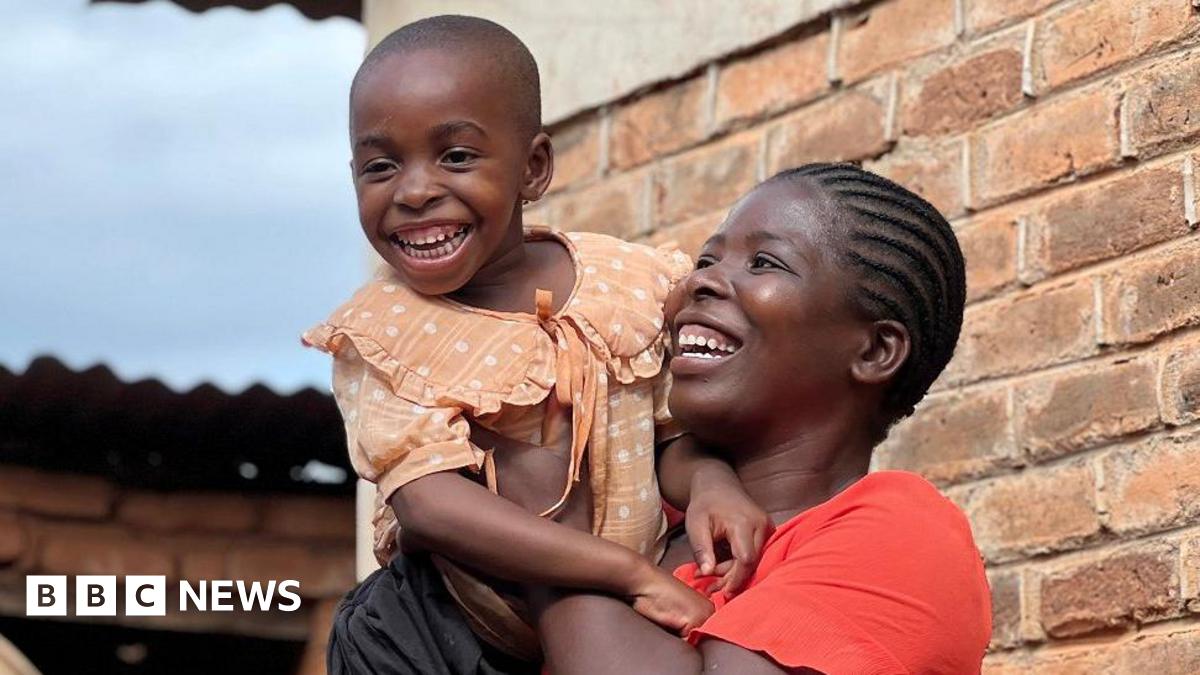
Back in Mzuzu, Martha helps Rachael get dressed in her blue-and-white chequered school uniform. She has been going to a Saint John of God school for a year now.
In the Mzuzu facility, the organisation has the capacity to help more than 600 children a year.
Rachael is learning to speak and when her name is called in class, she jumps up, grabs her friend’s hand and encourages her to stand and sing with her.
In the well-maintained gardens, young adults – some with Down’s syndrome, others with cerebral palsy, and autism – carefully tend their crops.
“I want us to conceptualise disability in a positive way,” says Mhone.
“Disability is ability, in a different way. And if society begins to understand that, then there will be less stigmatisation, and they will be looking at the positive things that can come out of those with disabilities.”
Martha can hardly believe the change in her daughter and in their lives.
She has shared her story in the hope that it will help other mothers and wishes she had got help sooner.
“When I look at her, I feel so guilty. Every day I think about the fact that my daughter could have been dead.
“I adore her now.”
Additional reporting by Tamasin Ford