
Sacking officers ‘aims to create the impression that the failure to achieve war objectives lies with the military,’ says Ahron Bregman of King’s College LondonAnalyst Ryan Bohl warns more aggressive US military leadership choices could have implications beyond Iran, including for Cuba and Greenland
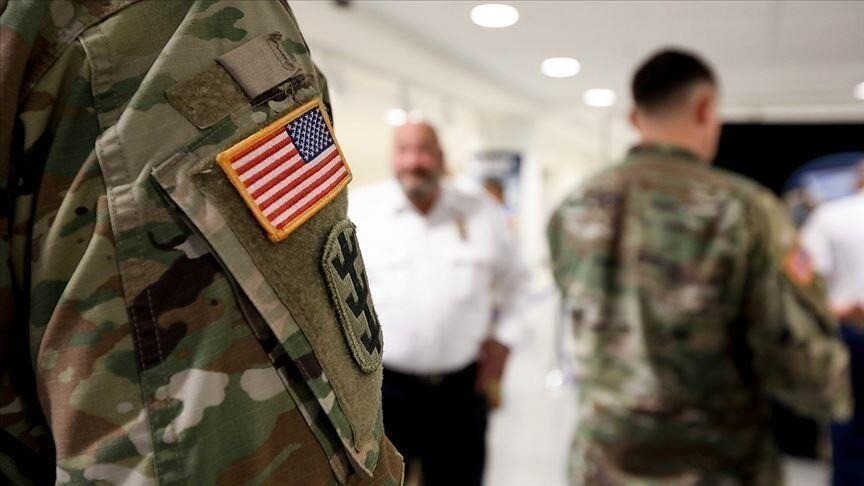
The abrupt removal of senior US military leaders in the midst of the Iran war is raising questions over timing and motive, with analysts seeing the shake-up as part of a broader effort to deflect blame for a faltering campaign.
On Thursday, with the war in its fifth week, Army Chief of Staff Gen. Randy George was asked to retire, according to CBS News, marking the most senior dismissal so far. Two other high-ranking officers — the commander of Army Transformation and Training Command and the Army chief of chaplains — were also asked to step down.
Analysts say such removals during an active conflict are highly unusual and point to mounting pressure within the administration.
Ahron Bregman, a senior teaching fellow at King’s College London, said US President Donald Trump and Defense Secretary Pete Hegseth are seeking to shift responsibility for what he described as a failing war effort and “strategic catastrophe.”
“Military personnel, who cannot defend themselves while in uniform, are easy targets. Sacking them aims to create the impression that the failure to achieve war objectives lies with the military,” he told Anadolu.
The dismissals also come as part of Hegseth’s wider military purge, with more than a dozen senior officers removed, forced into retirement or blocked from promotion during his term, according to reports.
Battlefield setbacks
The leadership changes come as the Iran war faces growing criticism at home and mounting challenges on the battlefield.
“It’s happening in the midst of a war. Normally this wouldn’t happen unless there is a real crisis of confidence in a specific leader at the Joint Chiefs level,” Ryan Bohl, a senior Middle East and North Africa analyst at the RANE Network, told Anadolu.
Analysts say the timing suggests an effort to reshape the narrative as the conflict drags on.
“They are trying to find a way to create the narrative that it is someone else’s fault other than Trump or Hegseth,” he said. “So that means pushing people out who have an association with (former US President Joe) Biden.”
When Trump launched the campaign, he suggested it would last only three or four weeks. Instead, the conflict has dragged on, while economic pressures have mounted, including rising fuel prices in the US.
Around six in 10 Americans say the US made the wrong decision in using military force in Iran, according to a Pew survey from late March.
“It will be one of the top reasons that the Republicans lose the House in November, and it could cost them the Senate,” said Bohl, referring to the upcoming midterm elections. “That’s where I think the urgency for the timing came through.”
The war’s early momentum has also faded, Bregman said.
“The war is not going well. What initially seemed like a successful campaign, following a strong opening by the US and Israel, is starting to look grim.”
Iran’s move to restrict the Strait of Hormuz has proven particularly disruptive and will likely be seen as a turning point in the conflict, he added.
Analysts also point to tensions over potential next steps, including the possibility of US ground operations in Iran.
With additional troops deployed to the region, Bohl said military officials are likely cautioning against escalation, warning that a ground campaign would carry significant risks without delivering a decisive outcome.
Such assessments, he suggested, may be at odds with political leadership seeking stronger backing for its strategy.
Domestic pressure and divisions
The string of removals is also unfolding against a backdrop of domestic political tensions.
Nine US officials told NBC News that some officers appeared to have been targeted based on race, gender or perceived alignment with policies of former President Joe Biden.
These include Chief of Naval Operations Adm. Lisa Franchetti, the first woman to lead the US Navy, and Air Force Gen. Charles Brown Jr., former chair of the Joint Chiefs of Staff, who Hegseth said was appointed due to race. Both were dismissed last year.
Defense Intelligence Agency Director Lt. Gen. Jeffrey Kruse was also removed after an intelligence assessment suggested the 2025 strikes on Iran’s nuclear facilities had limited impact, contradicting Trump’s claims at the time.
At the same time, more than a dozen Black and female senior officers across the Army, Air Force, Navy and Marine Corps have reportedly faced delays or blocks in promotion.
“There is not a single service that has been immune to this level of involvement by Hegseth,” one US official told NBC News.
Bohl said the changes reflect not only wartime pressures but also ongoing domestic political dynamics.
“Some of it is people of color, women … they believe that those candidates were not qualified so there’s that angle of domestic politics and kind of culture war,” said Bohl.
He also suggested that the Trump administration wanted to remove people who were seen as disloyal.
The scale of the changes goes beyond typical political turnover, he added.
“It is very unusual for Joint Chiefs to come and go like this unless it’s something that was arranged beforehand in combat in wartime,” he said.
Changes may signal a more aggressive approach
Analysts warn the leadership overhaul could reshape US military strategy moving forward.
Experts say the changes could pave the way for more aggressive military policies, with new leadership more aligned with high-risk strategies, including the possible deployment of ground troops in Iran.
“What we will see potentially is a more aggressive Joint Chiefs of Staff that is more aligned with this high-risk military strategy that Trump has embraced,” he said.
Trump, he said, favors the use of special forces and airpower and is increasingly adopting a more force-driven approach to foreign policy.
“He loves using commandos. He loves using airpower. He is embracing this 21st century of gunboat diplomacy, and Biden appointees and in fact many professional officers within the US military aren’t really comfortable with that approach,” Bohl added.
Gen. Christopher LaNeve, a former senior military assistant to Hegseth, will take the role of Army chief of staff, according to several US media outlets.
“General LaNeve — a generational leader — will help ensure the Army revives the warrior ethos, rebuilds for the modern battlefield and deters our enemies around the world,” Hegseth said of LaNeve in 2025.
Bohl predicted future leadership choices could prioritize alignment over caution.
“I think they’ll be looking for a new chief of the Army who will not talk so much about the risks and will talk more about the upsides of those kinds of missions,” he said.
The implications of more aggressive military leadership, he added, could extend beyond the Iran war.
“It has implications for Cuba. It has implications for Greenland,” said Bohl. “It could have implications eventually for China and for Mexico with the cartels.”