
Mohammad Sio
April 06, 2026•Update: April 06, 2026
Iran said Monday it is seeking an “end to the imposed war” rather than a ceasefire with the US, rejecting proposals for a temporary truce and insisting on “guarantees” to prevent renewed war.
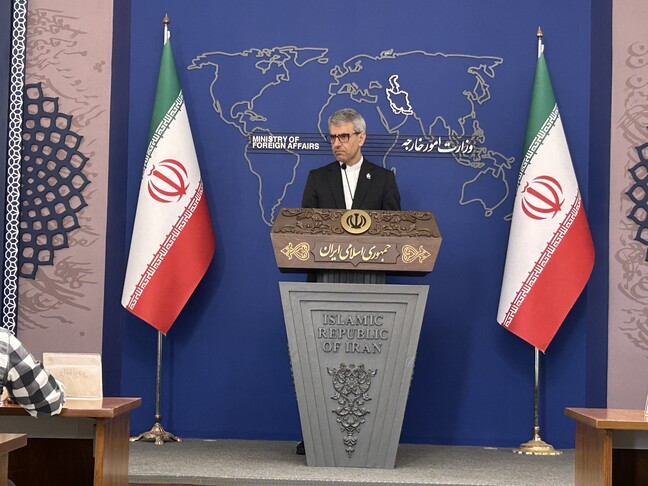
Foreign Ministry spokesperson Esmaeil Baqaei said during a press briefing in Tehran that any pause in fighting would risk allowing Iran’s adversaries to regroup.
“A deadline must not cause us to have even the slightest hesitation in defending our country,” he said.
“A ceasefire means creating a short pause to allow the other side to rebuild its forces and commit crimes again. No rational person would accept such a course of action,” he added.
Baqaei said Iran’s position is to end the conflict entirely, with assurances that it will not resume.
“Our demand is the end of the imposed war, accompanied by guarantees that this vicious cycle will not be repeated,” he said.
He added that such guarantees would have to come through deterrence.
“The guarantee is precisely this: that the enemy must be made to regret its actions in such a way that it no longer has the courage or audacity to act against Iran’s sovereignty,” he said.
Baqaei expressed skepticism about international institutions, saying there are no reliable external guarantees.
“There is no legal or international guarantee. Unfortunately, the United Nations has shown in most cases that it becomes a tool in the hands of the United States and certain powers,” he said.
The spokesperson said Iran must instead ensure its own security through its actions.
“On a matter related to national security and Iran’s sovereignty, we must act in a way that we ourselves can establish a firm and reliable guarantee for our national security,” he said.
Regional tensions have escalated since the US and Israel launched a joint offensive on Iran on Feb. 28, killing so far over 1,340 people, including then-Supreme Leader Ali Khamenei.
Iran has retaliated with drone and missile strikes targeting Israel, along with Jordan, Iraq, and Gulf countries hosting US military assets, causing casualties and damage to infrastructure while disrupting global markets and aviation.