
A sweeping wave of Israeli strikes hit Tehran and other parts of Iran, targeting air force assets, key military infrastructure and one of the country’s largest petrochemical facilities, as Iran responded with sustained missile fire toward Israel’s central cities.
Iranian reports said shipbuilding facilities in Khorramshahr, an airport in Urmia and additional sites in the country’s northwest were also struck.
IDF strikes the Iranian air force
(Video: IDF)


The Israel Defense Forces said the targets included a central Islamic Revolutionary Guard Corps facility in Tehran used by forces responsible for suppressing Iran’s civilian population, as well as additional infrastructure at IRGC headquarters and at the IRGC Air Force command.
The military also struck ballistic missile storage and launch sites intended for attacks on Israel, along with a facility used to manufacture defense systems.
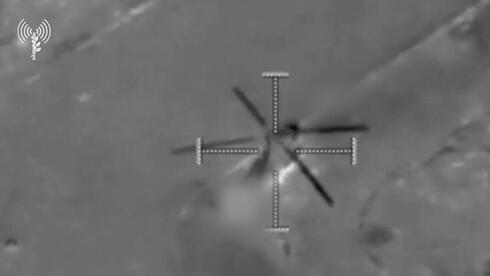
The announcement followed confirmation that overnight, the Israeli Air Force carried out one of its largest strikes of the war against Iran’s air force and the IRGC’s air arm, hitting airfields at Mehrabad, Bahram and Azmayesh in Tehran. Dozens of Iranian aircraft and helicopters were targeted in the operation.
Large fires in Asaluyeh following strikes in the area
Shipyard strike near Khorramshahr bridge in Khuzestan province
Footage released by the IDF showed helicopter strikes captured from a missile’s perspective.
During the nighttime operation, dozens of Israeli fighter jets attacked a wide range of aerial assets as well as infrastructure used by the regime’s armed forces for military purposes.
According to the IDF, Mehrabad Airport, which has been struck multiple times during the war, serves the IRGC’s Quds Force and acts as a central hub for arming and financing the regime’s terrorist proxies across the Middle East.
Earlier in the day, Israel struck Iran’s largest petrochemical facility in Asaluyeh, responsible for about 50% of the country’s petrochemical production, following last week’s strike on Iran’s second-largest facility.
“Both facilities, which together account for about 85% of Iran’s petrochemical exports, have been disabled and are no longer functioning,” Defense Minister Israel Katz said. “This is a severe economic blow worth tens of billions of dollars to the Iranian regime.”
“The petrochemical industry is a central engine for funding IRGC activities and building Iran’s military power,” he added. Prime Minister Benjamin Netanyahu later said the facility had been destroyed.
Military analyst Ron Ben-Yishai said the intensive missile launches toward Israel earlier in the day were likely a response to the strikes that crippled production at the Asaluyeh facilities. They may also be linked to the reported killing of IRGC intelligence chief Majid Khademi and Quds Force Unit 840 commander Asrar Bakri.
From Iran’s perspective, the strikes on petrochemical plants are seen as attacks on national infrastructure, even as the IDF argues the facilities were producing military-grade materials, missile fuel and funding IRGC operations.
The ongoing barrage of missiles, along with drone launches from Yemen and rockets and drones from Lebanon, appears aimed at creating what analysts describe as a “damage and pain equation” — a strategy designed to escalate pressure and deter Israel, but primarily to signal U.S. President Donald Trump.
The goal, according to assessments, is to dissuade Trump from carrying out his threats to strike Iran’s energy and power infrastructure once his ultimatum expires overnight between Tuesday and Wednesday.
Since last night, without formal declarations of escalation, Israel has intensified strikes on dual-use national infrastructure, including airports such as Mehrabad International Airport and other sites expected to be disclosed in the coming days.
These targets share a common characteristic: they serve both civilian and military functions simultaneously.
The pace and scope of the strikes are expected to increase in the coming days, regardless of U.S. actions, as part of an effort to pressure Iran into accepting a ceasefire proposal.
For now, Iran has rejected the offer for a temporary ceasefire.