
 Nasdaq leads markets lower as Iran says ‘restraint is ended’ ahead of Trump deadline Proactive uses images sourced from Shutterstock
Shares of US health insurers surged on Tuesday morning after the Trump administration announced that Medicare Advantage payments will increase more than initially projected.
The Centers for Medicare & Medicaid Services (CMS), which oversees government-funded health programs including Medicare, said it will raise payments to private Medicare insurers by a net average of 2.48% in 2027.
Humana (NYSE:HUM) shares added 6.4% on the announcement, while UnitedHealth Group Inc (NYSE:UNH, XETRA:UNH) was up 8.8% and CVS Health Corp (NYSE:CVS) was up 6.6%.
Axel Rudolph, chief technical analyst at IG, notes that traders are largely adopting a wait‑and‑see approach as Trump’s deadline for possible hard strikes on Iran and its infrastructure draws near.
“Markets remained on edge as the clock ticked down to President Donald Trump’s deadline for Iran to reach an agreement on the Strait of Hormuz, a critical artery for global oil flows,” Rudolph commented.
“Trump warned that failure to secure uninterrupted transit through the waterway by the evening deadline could trigger US strikes on Iranian infrastructure, with rhetoric intensifying as explosions were reported at Iran’s key Kharg Island oil hub. The situation deteriorated further overnight, with Iran launching missiles and drones at Saudi Arabia, while Israel reported additional missile activity, underscoring the increasingly volatile geopolitical backdrop.”
US stocks have fallen in early trading, with the Nasdaq sliding 1.1%, the S&P 500 off 0.8% and the Dow Jones down 0.7%.
Losses on the Nasdaq 100 were led by ARM Holdings, down 4.9%, followed by Axon Enterprise and Alnylam Pharmaceuticals.
Apple and Tesla are next, down 3.8% amd 2.7%, with sizeable drops for other tech such as Microchip Tech, NXP, Micon and Marvel.
Shopify, Walmart and Ross Stores were down between 2.3% and 1.7%, signalling wider risk-off moves.
US stocks are expected to open lower on Tuesday as strikes in the Middle East continued and oil prices swung sharply ahead of the latest deadline set by President Donald Trump for Iran to agree a deal.
Dow Jones futures were down 0.3%, with the S&P 500 and Nasdaq futures down 0.4% and 0.5%, respectively.
This essentially reverses gains at the start of the week when the Nasdaq added 0.5% to close at 21,996 points, the S&P finished up 0.4% at 6,611 points, and the Dow added 0.4% to end at 46,669.
This morning, European stock markets, returning from a four-day Easter weekend break, have been mixed, with the FTSE just below flat in London.
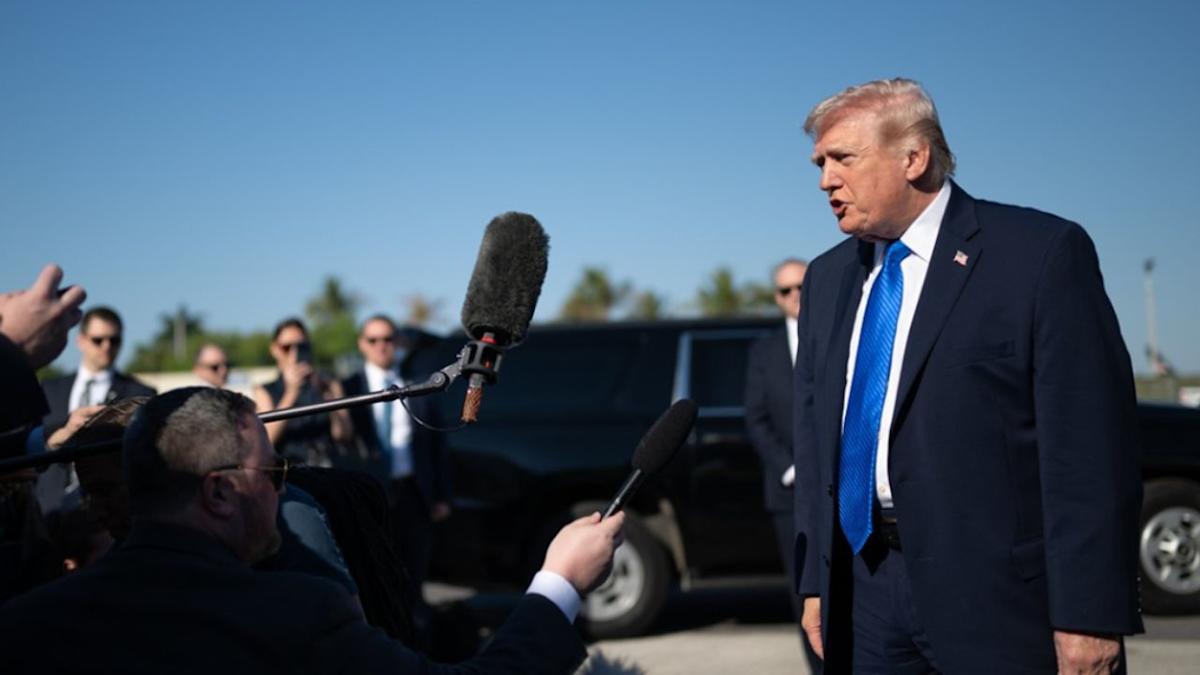
Markets are being driven by developments in the Gulf, where Trump has warned that unless Iran agrees to terms by 8pm Eastern Time, US forces could escalate attacks on civilian infrastructure.
The US President shared the 8pm ET Tuesday deadline on social media on Sunday and later demanded for Iran to strike a deal that “that’s acceptable to me”.
Oil prices have been creeping higher in response, with WTI crude moving from below $110 a barrel on Friday to yesterday to hover around $115 ahead of markets opening in New York.
Recent reports from Iranian sources suggest Tehran has rejected a temporary ceasefire and set strict conditions for talks, including an immediate halt to strikes.
Meanwhile, just before publication, Israel said it had carried out strikes on key infrastructure across Iran, including on bridges and transport links.
A warning from the Islamic Revolutionary Guard Corps was shared on local media, that “America’s regional partners should also know that until now, we exercised great restraint for the sake of good neighborly relations and had several considerations in choosing strike targets, but all those considerations have now been removed,”
“Markets are once again on edge as the US–Iran conflict enters a critical phase, with investors effectively trading against another countdown clock set by the Trump administration,” said analyst Daniel Hathorn at Capital.com.
“The situation has evolved into a near-term binary outcome: either escalation through direct strikes on Iranian infrastructure, or a last-minute de-escalation that could trigger a sharp reversal in risk assets. For now, the absence of a clear path forward is keeping markets volatile and indecisive.”