
This is The Poynter Report, your daily guide to the news about news. Subscribe to get it in your inbox every weekday.
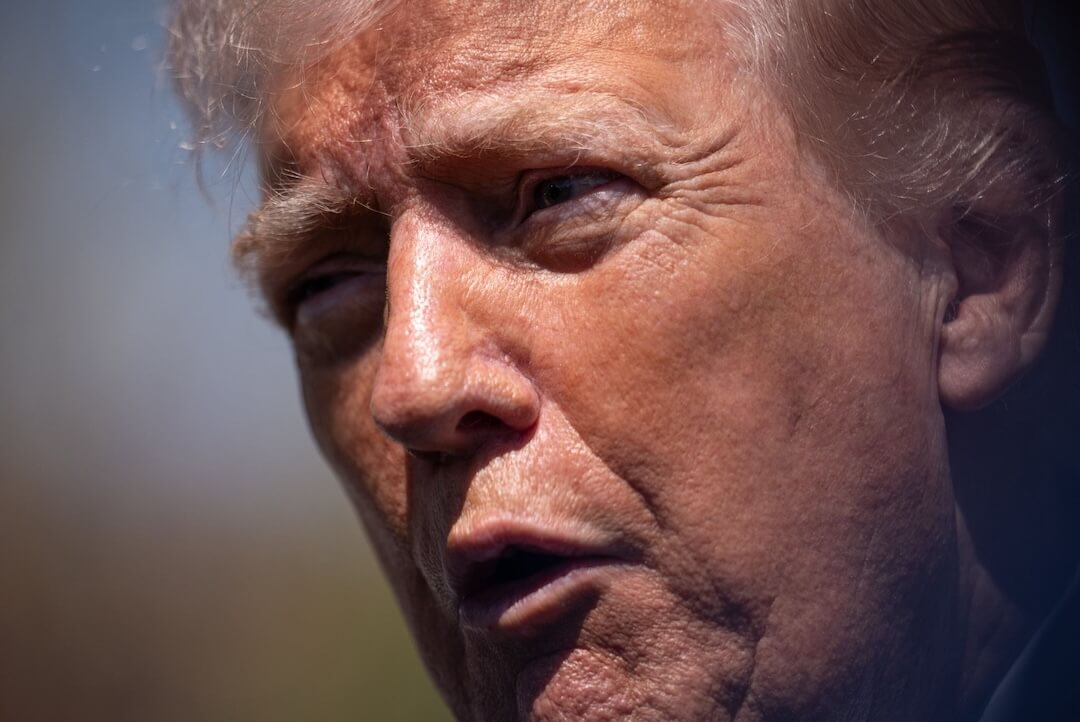
Two of the most knowledgeable journalists covering Donald Trump and the presidency are coming out with a book that is sure to be chock-full of juicy details from the White House.
“Regime Change: Inside the Imperial Presidency of Donald Trump,” by The New York Times’ Maggie Haberman and Jonathan Swan, will be published June 23 by Simon & Schuster. Axios’ Mike Allen reports that the pair spent two years on the book, which includes some 1,000 interviews.
Allen wrote, “It’s the Trump book that even Trump is waiting for.” He added that the book is “causing high anxiety in Trumpworld.”
Then Allen wrote a sentence that was a portent of things to come later in the day Tuesday: “I hear that over the past few weeks, there have been private conversations in the senior ranks of the administration about leaks to Haberman and Swan from meetings in the Oval Office and Situation Room — including from this year.”
Sure enough, shortly after Allen’s story was published on Tuesday, Haberman and Swan dropped this explosive story on the Times website that came about from reporting for their book: “How Trump Took the U.S. to War With Iran.”
Their story was incredibly rich with details of meetings inside the Situation Room as Trump contemplated an attack on Iran. One scene focused on how Israeli Prime Minister Benjamin Netanyahu and his team hard-pitched Trump the idea of attacking Iran. Another scene recounted a meeting with Trump and senior White House officials.
Swan and Haberman had specific details, including who said what and even where everyone was exactly seated in the room.
For example, the Times reporters wrote that the meeting with Netanyahu included some Israeli military leaders on TV screens, as well as U.S. officials inside the room: White House chief of staff Susie Wiles, Secretary of State Marco Rubio, Defense Secretary Pete Hegseth, Gen. Dan Caine (the chairman of the Joint Chiefs of Staff), CIA director John Ratcliffe, Trump’s son-in-law Jared Kushner and special envoy to the Middle East Steve Witkoff. Not included was Vice President JD Vance, who was out of the country and could not make it back in time for a meeting called without much notice.
Swan and Haberman wrote, “The gathering had been kept deliberately small to guard against leaks.”
Apparently, it wasn’t small enough, as details were leaked to the Times.
What followed was a mesmerizing account of how the meetings on whether or not to attack Iran played out. Many in Trump’s world, particularly Vance, appeared opposed to attacking Iran, especially if the goal was regime change. Trump clearly ignored warnings from his inner circle that securing the Strait of Hormuz might prove difficult. It’s also clear that Trump thought that if the U.S. and Israel did attack, it would be a quick war, not unlike the U.S. attack on Venezuela.
Swan and Haberman wrote, “In front of his colleagues, Mr. Vance warned Mr. Trump that a war against Iran could cause regional chaos and untold numbers of casualties. It could also break apart Mr. Trump’s political coalition and would be seen as a betrayal by many voters who had bought into the promise of no new wars.”
And in a particularly concerning account, Swan and Haberman wrote, “Tucker Carlson, the commentator who had emerged as another prominent skeptic of intervention on the right, had come to the Oval Office several times over the previous year to warn Mr. Trump that a war with Iran would destroy his presidency. A couple weeks before the war began, Mr. Trump, who had known Mr. Carlson for years, tried to reassure him over the phone. ‘I know you’re worried about it, but it’s going to be OK,’ the president said. Mr. Carlson asked how he knew. ‘Because it always is,’ Mr. Trump replied.”
The Times story is one you can’t read fast enough, and yet you feel like reading it through the cracks of your fingers because of how disconcerting it all is.
If this one story is any indication, the book by Swan and Haberman is going to be remarkable.
Haberman and Swan also wrote a companion piece to their story: “6 Takeaways From the Story of Trump’s Decision to Go to War With Iran.”
Among the more interesting was that many people inside Trump’s tight circle opposed the war, but only Vance made a forceful case to the president. Those who did push back made it clear that they would support the president’s decision. That included Vance.
Meanwhile, in no surprise, Haberman and Swan wrote, “Defense Secretary Pete Hegseth was the most enthusiastic. We’re going to have to take care of the Iranians eventually, so we might as well do it now, he told the group on Feb. 26, the day before Mr. Trump gave his final order.”
And then there was this takeaway: “Mr. Trump’s decision to take the country to war was not driven by intelligence assessments or a strategic consensus among his advisers, which did not exist. It was driven by instinct — the same instinct his team had watched produce improbable results again and again. Unlike his first-term team, many of whom regarded him as a danger to be managed or obstructed, Mr. Trump in his second term is surrounded by advisers who view him as a great man of history.”
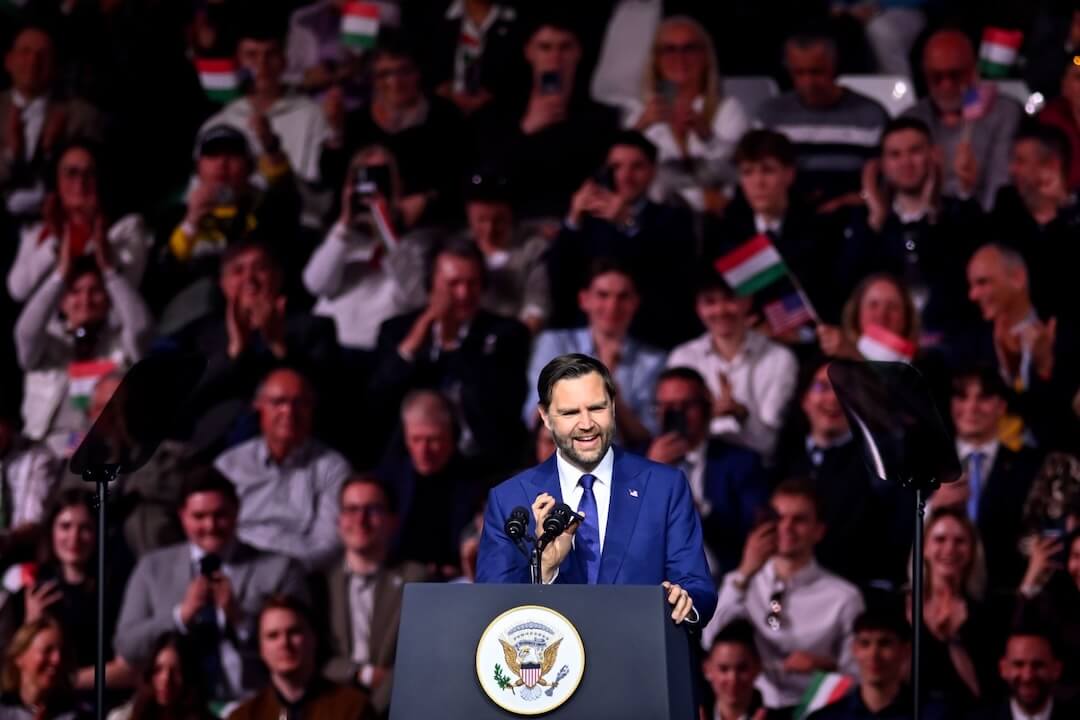
Vice President JD Vance holds a mobile phone to a microphone while on a call with U.S. President Donald Trump during a pre-election rally in Budapest, Hungary on Tuesday. (AP Photo/Denes Erdos)
The vice president was in Hungary on Tuesday, stumping at a rally for Prime Minister Viktor Orbán ahead of Sunday’s election. Orbán is reportedly far behind in the polls. At one point, Vance had Trump on his cellphone, which he held up to the microphone so the crowd could hear.
Vance told the crowd, “Will you stand against the bureaucrats in Brussels? Will you stand for Western civilization? Will you stand for freedom, truth, and the God of our fathers? Then, my friends, go to the polls and stand for Viktor Orbán!”
That led longtime political journalist Chuck Todd to tweet, “This is beyond bizarre. A sitting VP of the USA attacking our close allies in Europe (you know, those bureaucrats in Brussels!) in a stump speech for a self-described illiberal politician that has the support of Putin. The Republican Party I grew up with would cringe at any American politician doing this, let alone a Republican!”
Shelly Kittleson, the American journalist abducted in Iraq a week ago, has been released, according to Iraqi security officials and the militia who kidnapped her. In a statement, the militia — Kataib Hezbollah — said it was releasing Kittleson on the condition that she leave the country immediately.
A security commander for the group named Abu Mujahid Al-Assaf said, “This initiative will not be repeated in the future. We are in a state of war waged by the Zionist-American enemy against Islam and in such situations many considerations are disregarded.”
The Associated Press’ Qassim Abdul-Zahra reported, “Kataib Hezbollah had not previously acknowledged that it was the one responsible for Kittleson’s abduction, although both U.S. and Iraqi officials had pointed fingers at the group. Two officials within the militia, who spoke on condition of anonymity because they were not authorized to comment publicly, told the AP that in exchange for freeing Kittleson, several members of the group who had previously been detained by Iraqi authorities would be released.”
Kittleson is a freelance journalist who has written for such places as Politico, the BBC and Al-Monitor, an independent news outlet based in Washington that covers the Middle East.
She entered Iraq shortly before being abducted on March 31. American officials had warned her of threats made against her and advised her not to travel to Iraq, including as recently as the night before she was abducted.
Immediately after her abduction, Al-Monitor wrote that Kittleson “is known for her courageous reporting from war zones in Afghanistan, Iraq and Syria. Kittleson has no known agenda and has contributed to numerous publications.”
National Press Club president Mark Schoeff Jr. issued a statement that said, in part, “We are relieved to learn that Shelly Kittleson has been released by her captors and hope for her safe departure from Iraq. While we welcome news of her freedom, Ms. Kittleson’s kidnapping should not have occurred in the first place. It happened at a time when traditional protections for the media are under continual attack. Journalism is not a crime, and journalists must not be targeted for their work.”
Just a couple of months ago, Paramount Skydance rocked the media industry by beating out Netflix to buy Warner Bros. Discovery in a deal worth $110 billion.
Initially, Netflix had won the bid to buy WBD, partly because Paramount acknowledged it had brought in investment money from the Middle East to backstop the bid. Eventually, Larry Ellison — the billionaire father of Paramount Skydance CEO David Ellison — stepped in to say he would personally backstop the offer.
Paramount Skydance, ultimately, ended up with WBD.
Now comes word that Middle East money is, indeed, helping fund the purchase of WBD.
The New York Times’ Lauren Hirsch and Benjamin Mullin reported, through sources, that the total investment amount is around $24 billion. They added, “Saudi Arabia’s sovereign wealth fund, the Public Investment Fund, will contribute about $12 billion, and sovereign wealth funds for Abu Dhabi and Qatar will each contribute about $6 billion, the people added.”
Whatever moral conflicts companies — particularly media companies — might have in dealing with Saudi Arabia seem to be put to rest with a big check.
Hirsch and Mullin wrote, “The deal is also the latest sign that U.S. media and technology companies are increasingly willing to do business with Saudi Arabia, whose agents carried out the 2018 killing of the Washington Post opinion columnist Jamal Khashoggi. In September, the video game company Electronic Arts announced plans to go private in a $55 billion deal backed by Saudi Arabia’s investment fund. The private equity firm run by Jared Kushner, President Trump’s son-in-law, was also an investor in the deal. While Saudi investment in the United States had slowed amid public opprobrium after Mr. Khashoggi’s death, it has picked up in recent years. About $36.2 billion worth of deals were made in the United States last year, the most since 2016, according to the data platform Global SWF.”
It also seems concerning that foreign sovereign wealth funds will have money invested in companies that own major news networks such as CBS and CNN.
However, Hirsch and Mullin wrote, “The sovereign wealth funds will have no governance rights in Paramount-Warner Bros., the filing said. And because their investment is small compared with the overall value of the deal, it will not automatically set off a review by the federal government for potential national security issues that can accompany foreign investments in U.S. companies.”
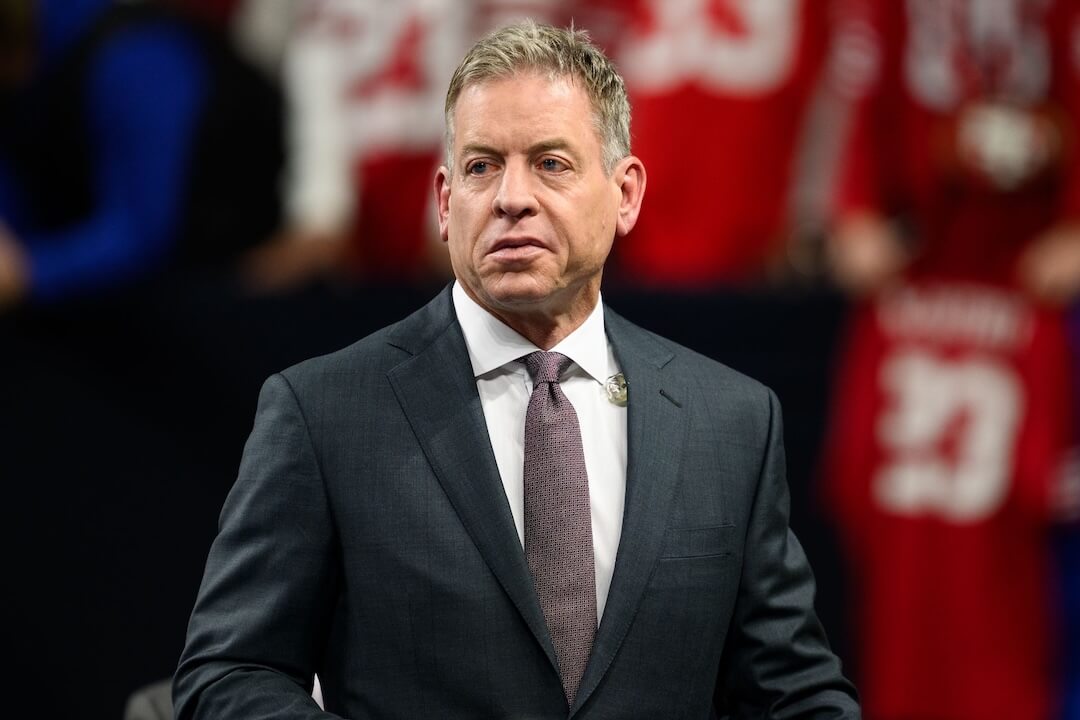
ESPN “Monday Night Football” analyst Troy Aikman, shown here at a game last December. (AP Photo/Zach Bolinger)
Last year, the NFL had a bit of a controversy when former NFL great Tom Brady bought a 5% stake in the Las Vegas Raiders and became a strategic consultant for the organization. The controversy stemmed from the fact that he was also an NFL analyst for Fox Sports. That meant, in preparation for games he was broadcasting, he was meeting with teams and, potentially, gaining inside information that could help the Raiders.
Brady and the NFL downplayed it all. The NFL banned Brady from going to teams’ practice facilities, but Brady still could attend production meetings with teams via Zoom.
But the floodgates were opened, and now the NFL has another potential conflict of interest. Troy Aikman is the lead analyst on ESPN’s “Monday Night Football.” And that means he goes to practices, and has meetings with players and coaches — who often pass along valuable information that Aikman can use to help his broadcasting.
Well, Aikman was recently hired as a consultant to the Miami Dolphins and, in a recent podcast, Aikman admitted that his broadcasting work made him valuable to the Dolphins.
Aikman told the “Dallas Cowboys DLLS Podcast,” “I think the Dolphins were wise in understanding my relationships around the league, and knowing that I have information that they don’t have or can’t get. And I think they were smart in taking advantage of that — whether it was through me or through somebody else.”
Awful Announcing’s Sam Neumann wrote, “There it is. Not a hypothetical. Not a concern raised by us at Awful Announcing. The NFL’s lead ‘Monday Night Football’ analyst, in his own words, confirmed that a franchise hired him specifically because his broadcasting job gives him access to information that normal NFL employees cannot obtain.”
ProFootballTalk’s Mike Florio reached out to the NFL about those comments, but the NFL declined to comment.
Florio added, “If the NFL will allow broadcasters to leverage the things they learn while gaining unique access to teams, players, and coaches (particularly while strolling around the field during pregame warmups), every team should hire a broadcaster.”
Brady and Aikman shouldn’t be blamed here. If some team wants to pay them to consult or help them hire a coach or whatever, of course they’re going to take the money. But if you’re the NFL and the networks, this seems like an obvious conflict of interest that undermines credibility (how can we trust a broadcaster who is on a team’s payroll?) and the league.
Florio wrote, “It’s absolutely an issue, because the NFL has allowed it to become one. There should be a clear rule in situations like this — if a broadcaster has an opportunity to work for a team, the broadcaster must pick one job or the other.”
Reporters and editors with ambition to do investigative journalism: Get guidance from ProPublica’s Alexandra Zayas in this five-week, hands-on seminar. Enroll today. New editors: Get guidance from industry veterans and build the skills you need to become indispensable to your newsroom. Apply now. Learn how to cover ICE enforcement and its impact on children and families. Webinar: April 28 – Enroll now.
Have feedback or a tip? Email Poynter senior media writer Tom Jones at tjones@poynter.org.
The Poynter Report is your daily dive into the world of media, packed with the latest news and insights. Get it delivered to your inbox Monday through Friday by signing up here. And don’t forget to tune into our biweekly podcast for even more.