
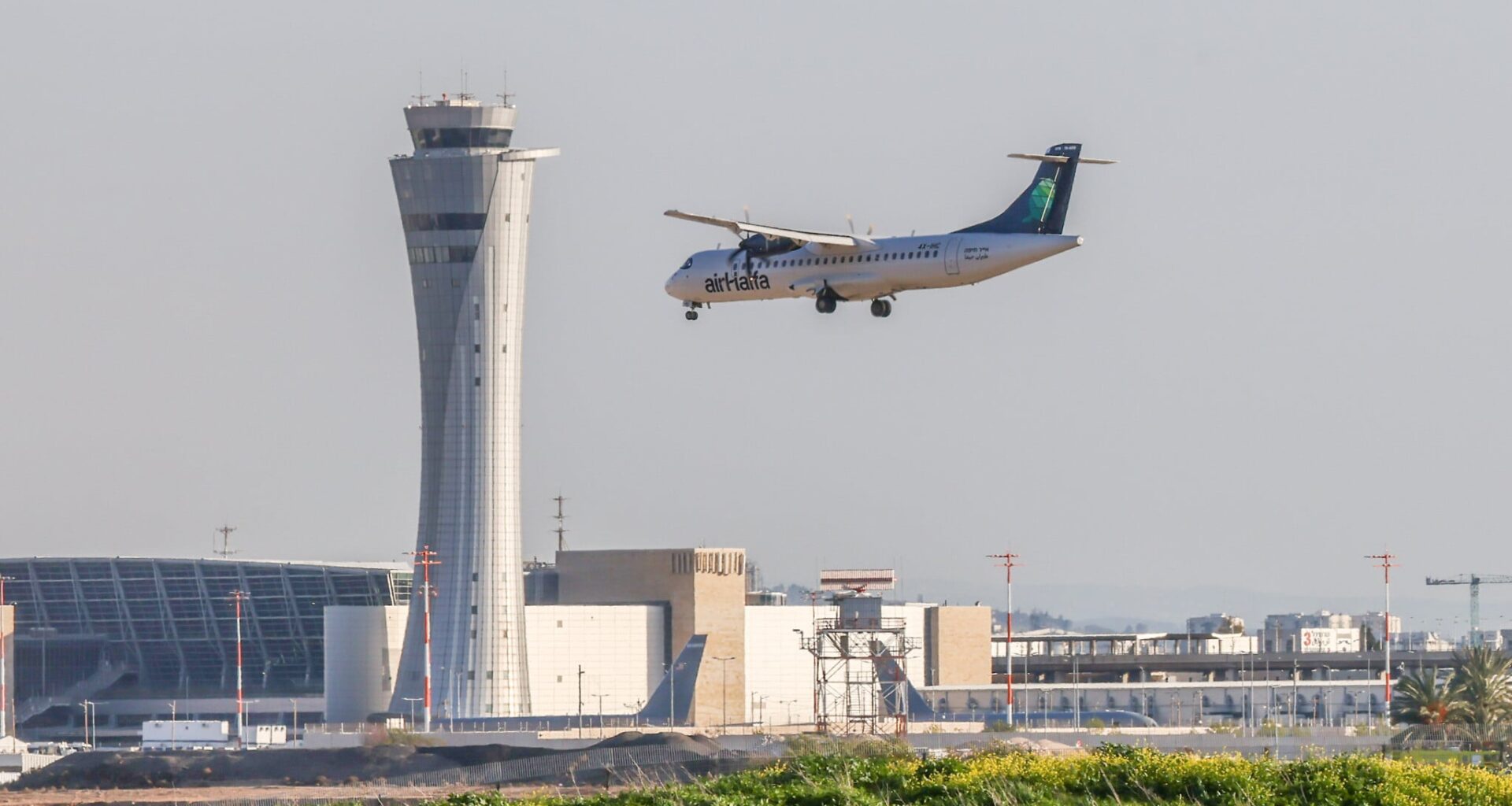
The Transportation Ministry announced that Israel will fully reopen the country’s airspace and resume regular operations at Tel Aviv’s Ben Gurion Airport starting at midnight Wednesday-Thursday, roughly one day after a ceasefire was announced between the US, Israel and Iran.
The Transportation Ministry says it is working with the Israel Airports Authority and the Civil Aviation Authority on returning to full operations at Ben Gurion Airport.
A formal announcement has been issued to foreign airlines and leading regulators regarding the return to normal operations at Ben Gurion Airport, the Transportation Ministry said.
Flight operations will also resume at the Herzliya Airport tomorrow morning, and on Sunday operations will be restarted at Eilat’s Ramon Airport in the country’s south.
The Transportation Ministry says that the return of flight operations at Haifa Airport in the country’s north will be considered toward the end of the week, depending on an assessment of the security situation, given that Israel insists that the Iran ceasefire does not cover Lebanon.
Get The Times of Israel’s Daily Edition
by email and never miss our top stories
By signing up, you agree to the terms
Israel’s airspace has been shut to most foreign airline traffic since the war began on February 28. In early March, Ben Gurion Airport partially reopened for limited inbound and outbound flights operated by Israeli airlines El Al, Arkia, Israir and Air Haifa for the purpose of repatriating Israelis stuck abroad and helping travelers stranded inside the country to leave.
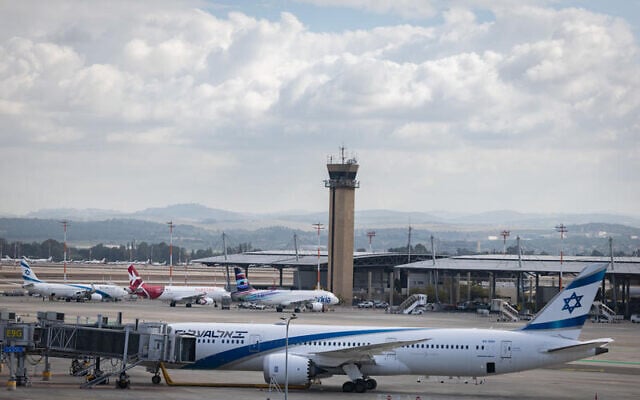
Illustrative: An El Al aircraft is seen at Ben Gurion International Airport near Tel Aviv on February 25, 2026 (Chaim Goldberg/Flash90)
Israir and Arkia announced earlier Wednesday that they were preparing for a gradual expansion of flight operations at Ben Gurion Airport following the ceasefire with Iran that was declared overnight Tuesday-Wednesday.
Both airlines are planning on increasing their flight frequencies and number of passengers on aircraft departing from Israel, subject to the policy and guidelines by the Transportation Ministry and relevant aviation authorities.
Arkia said it will begin operating flights to Athens, Larnaca, Rome, Vienna, London, Amsterdam, Paris, Bangkok, New York and Budapest.
It added that it is giving priority to passengers whose flights were canceled because of the war and that it plans on fully reopening its operations by May 3.
Israir said it expects to operate flights to a variety of destinations, including Athens, Larnaca, Budapest, Tbilisi, Batumi, Rome, Berlin and Rhodes.
El Al was expected to also announce updated operating guidelines after it suspended its regular flight schedule through April 18 on Sunday.
Ben Gurion Airport has been working on infrastructure preparations for the large volume of passengers expected to pass through, Israeli media reported.
Foreign companies were also waiting for final approval to resume their flights to Israel. Most will likely wait to see whether the two-week truce with Iran turns into a permanent agreement before making a decision to resume operations.
Meanwhile, Hungarian low-cost airline giant Wizz Air extended the suspension of flights to and from Israel through April 27. Wizz Air said it is “committed to the Israeli market and to Israeli customers and continues to closely monitor developments.”
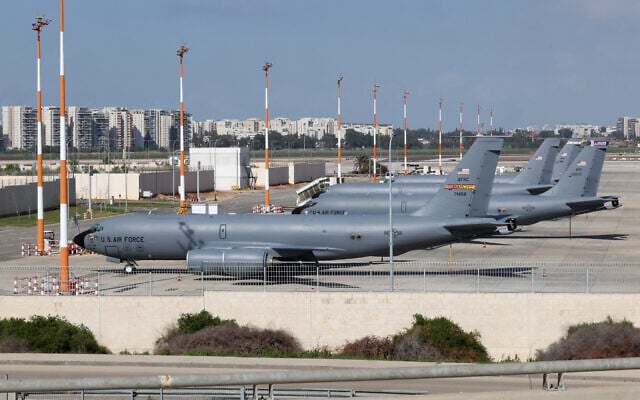
US Air Force refueling aircraft are seen parked on the tarmac of the Ben Gurion airport near Tel Aviv on February 25, 2026. (Jack GUEZ / AFP)
“The flight schedule may be adjusted as the situation evolves,” Wizz Air said in a statement. “The safety and security of the passengers, the crew, and the aircraft remain at the top of the company’s priorities, which is in contact with all the relevant authorities and with the passengers who are affected by the situation.”
Last week, Transportation Minister Miri Regev said that “as soon as we can, we will return and we will do so immediately. We are in constant contact with the foreign companies and will only know when they will return at the end of the war.”
“Those who postponed until September may bring their return forward. We have seen this happen in the past,” she added.
Sharon Kedmi, director general of the Israel Airports Authority, added that airport employees were not put on unpaid leave during the war to prepare for a swift return to work.
During the war with Iran, Israel capped the number of passengers allowed on departing flights at 50 before gradually raising the number. There were no restrictions on passenger numbers for arriving flights. However, the number of takeoffs and landings at Ben Gurion Airport was restricted to one per hour.
You appreciate our wartime journalism

You clearly find our careful reporting of the Iran war valuable, at a time when facts are often distorted and news coverage often lacks context.
Your support is essential to continue our work. We want to continue delivering the professional journalism you value, even as the demands on our newsroom have grown dramatically during this ongoing conflict.
So today, please consider joining our reader support group, The Times of Israel Community. For as little as $6 a month you’ll become our partners while enjoying The Times of Israel AD-FREE, as well as accessing exclusive content available only to Times of Israel Community members.
Thank you,
David Horovitz, Founding Editor of The Times of Israel