
Ceasefire is threatened as Israel expands Lebanon strikes and Iran closes strait again
Before I discuss the ceasefire with Iran, I have *** quick update from the First Lady of the United States. Yesterday marked the very first conviction under the Take It Down Act, landmark legislation that First Lady Melania Trump played an instrumental role in getting passed that protects victims from nonconsensual. Generated sexually explicit images, cyberstalking, and threats of violence. This is *** huge achievement for the First Lady, and I know the president is very proud of his wife’s efforts in getting this critical legislation passed to protect America’s youth. So we thank the First Lady for her efforts, and we hope that others will report on this historic conviction yesterday. With respect to the two week ceasefire announced by President Trump last night, this is *** victory for the United States of America that the president and our incredible military made happen. From the very beginning of Operation Epic Fury, President Trump stated this would be *** 4 to 6 week military operation to dismantle the military threat posed by the radical Islamic Iranian regime. Thanks to the unbelievable capabilities of America’s warfighters, the United States has achieved and exceeded those core military objectives in just 38 days. The US military destroyed Iran’s defense industrial base, crushing the regime’s ability to manufacture weapons that they and their proxies used to maim and kill Americans and terrorize the world. Iran’s ability to build and stockpile ballistic missiles and long-range drones has also been set back by years compared to where it was 6 weeks ago prior to the launch of Operation Epic Fury. We destroyed the vast majority of Iran’s ballistic missiles, launcher vehicles, and long-range attack drones through more than 450 strikes on ballistic missiles and approximately 800 strikes on Iran’s drone launching units and storage facilities. In total, more than 13,000 targets across Iran were struck. Again, this is in *** matter of just 38 days. Meanwhile, the Iranian navy was completely annihilated. The United States destroyed more than 150 naval vessels in total, including 16 entire classes of Iranian warships. Despite once being the largest undersea force in the Middle East, Iran now has 0 submarine vessels. 97% of Iran’s once massive inventory of more than 5000 naval mines has also been targeted and destroyed. Iran’s air forces are functionally and operationally irrelevant at this point after the United States maintained total air dominance over their country for weeks on end. To underscore the significance of this, before Operation Epic Fury, the Iranian Air Force would fly between 30 to 100 flights per day. Today that number is 0. Iran’s ability to fund and support its terrorist proxies has been greatly reduced. At this point, Iran can no longer distribute weapons to its proxies in the region, and most importantly, Iran will not be able to acquire nuclear weapons. Prior to the start of this successful operation, Iran was aggressively expanding its short-range ballistic missile arsenal. Through these weapons and its navy, Iran was attempting to build *** military buildup around their country that would pose an imminent and existential threat to the United States military assets in the Middle East, our allies in the region, and ultimately the free world. Iran was pursuing this dangerous and aggressive strategy for one reason to hold the entire world hostage to its terrorist ambitions. The Iranians aim to use their expanded military capabilities as *** shield around their country to continue achieving their ultimate goal internally, building nuclear bombs, but their murderous and evil plans have been blown up quite literally and figuratively, along with their military, their nuclear program, and most of their senior leadership, including the former Supreme Leader Ayatollah Aah Khamene. Their command and control structures were also massively disrupted after being struck more than 2000 times. Many of their remaining leaders are paralyzed in fear and no longer enjoy the freedom to move around their country freely and meet openly thanks to the unmatched. Excellence of our warriors at the direction of the commander in chief. The world has just witnessed *** historically swift and successful military triumph. President Trump started Operation Epic Fury with strategic military objectives, and the United States has clearly achieved them. As we mark this progress, we also remember and honor the 13 American heroes who laid down their lives in this noble effort. I know President Trump and our grateful nation honors their ultimate sacrifice, and we will never forget them. May God bless their families. The valiant efforts of all of our incredible service members created maximum leverage for the President of the United States, allowing him and his leadership team to engage in tough negotiations over the past couple of weeks that have now created an opening for *** diplomatic solution in long-term peace in the Middle East. The president’s. Maximum pressure and the leverage created by the success of Operation Epic Fury led to the Iranian regime asking for and ultimately agreeing to *** ceasefire proposal with the United States. Iran could no longer tolerate being bombed or taking the gamble of what was to come following President Trump’s 8:00 p.m. deadline last night. Iran has agreed to open the Strait of Hormuz, and as the president said, we have received *** proposal from the Iranians that has been determined to be *** workable basis on which to negotiate. I’ve seen *** lot of inaccurate coverage today from the media about these negotiations and these plans already, so let me be clear and correct the record. The Iranians originally put forward *** 10 point plan that was fundamentally unserious, unacceptable, and completely discarded. It was literally thrown in the garbage by President Trump and his negotiating team. Many outlets in this room have falsely reported on that plan as being acceptable to the United States. States and that is false. With the president’s deadline fast approaching and the United States military completely decimating Iran with each passing hour, the regime acknowledged reality to the negotiating team. They put forward *** more reasonable and entirely different and condensed plan to the president and his team. President Trump and the team determined the new modified plan was *** workable basis on which to negotiate and to align it with our own 15 point proposal. The president’s red lines, namely the end of Iranian enrichment in Iran, have not changed, and the idea that President Trump would ever accept an Iranian wish list as *** deal is completely absurd. The president will only make *** deal that serves in the best interests of the United States of America, and he and *** negotiating team will focus on this effort over the next two weeks, so long as the Strait of Hormuz remains open with no limitations or delays. These extraordinary. sensitive and complex negotiations will take place behind closed doors over the course of the next two weeks. I would strongly advise the media against running with narratives that have no basis in fact. What Iran says publicly or feeds to all of you in the press is much different than what they communicate to the United States, the president, and his team privately. Never underestimate President Trump’s ability to successfully advance America’s interests and broker peace. President Trump has *** proven track record of achieving good deals on behalf of the United States and the American people, and he will only accept one that puts America first. With that, I will take your questions today. I’m sure you have *** lot of them. In our new media seat, we have Shane Harris with the AMA Newsline. Shane, thank you for being here. Why don’t you kick us off? Thanks for having me, Caroline. Two questions for you. First, following the president’s announcement of the ceasefire, if this is indeed the end of hostilities in Iran, what is the president’s message to the American people about what was achieved for our country through Operation Epic Fury? Sure, I think I just laid out *** significant portion of that in my opening remarks. 6 weeks ago, the president looked the American people in the eye directly, and he told them that he launched this operation to take out the. The threat that was posed by Iran, and that threat has now been greatly destroyed. Their navy, their missiles, their defense industrial base, and their desire and their plan to build *** nuclear bomb inside their country is no longer going to be allowed, can no longer happen thanks to the remarkable success of Operation Epic Fury over the course of the last 38 days. That has been absolutely achieved, and now we’re moving into the next phase of this, which is *** negotiating. Period to put some fine points on this and to hopefully broker an agreement that can achieve long term peace in the Middle East. Second, what is the president’s message to American seniors who have *** much higher voter participation rate and they’re likely to be *** key swing vote in the midterm elections? Well, the president loves our seniors across the country, and as you know, the president signed the one big beautiful bill, the working families tax cut last year, which greatly. Taxes on Social Security for our seniors. In fact, thanks to the working families tax cut, nearly 90% of seniors will no longer pay tax on their Social Security. That’s *** huge win for our seniors and also for our middle class and working families across the country with the no tax on tips provision and the no tax on overtime. Next week is tax week. You’ll hear *** lot from the president about how his policies have benefited the American people, and I’m proud to report. That the president will be traveling next week to the great states of Nevada and Arizona to tout this historic accomplishment over the course of the next week. Thank you for being here, Shane. Gabe, Iranian state media is saying that Iran has now closed off the Strait of Hormuz today in response to Israeli attacks on Lebanon. What’s the White House response to that? And you just listed many military successes, I understand that, but strategically. How is the administration arguing that Iran does not have more economic leverage? Sure, well, with respect to the first reporting out of Iranian state media, the president was made aware of those reports before I came to the podium. That is completely unacceptable. And again, this is *** case of what they’re saying publicly is different privately. We have seen an uptick of traffic in the strait today, and I will reiterate the president’s expectation and demand that the Strait of Hormuz is reopened immediately, quickly and safely. That is Expectation, it has been relayed to him privately that that is what’s taking place and these reports publicly are false. The president yesterday threatened that *** whole civilization would die if *** ceasefire deal wasn’t reached, understanding that Iranian leaders have previously said death to America. But why is it appropriate for the president of the United States to use that kind of language when talking about civilian targets? And was the president mocking Islam by signing off his true soldier post over the weekend? Praise be to Allah. Wouldn’t that antagonize Muslim allies across the world? Well, I understand the questions about the president’s rhetoric, but what the president cares most about is results. And in fact, his very tough rhetoric and his tough negotiating style is what has led to the result that you are all witnessing today. Iran publicly acknowledging last night that they have agreed or that they wanted this ceasefire with the United States because they no longer could tolerate being bombed by our very powerful. and lethal military and that they have committed to the reopening of the Strait of Hormuz, which the president will hold them accountable for and it’s something the administration is closely monitoring in real time. Janny, should the world not take his word seriously? The world should take his word very seriously in understanding that the president is always most interested in results, and it was the Iranians who backed down, not President Trump. He said that they would face very grave consequences, as you just laid out by the 8 p.m. deadline if they did not agree. To reopening the Strait of Hormuz. And what did they do last night? They agreed to reopen the Strait of Hormuz. Danny would President Trump like to see Lebanon included in this peace deal, as you know, there have been increased Israeli strikes on Lebanon today with dozens of casualties. Lebanon is not part of the ceasefire that has been relayed to all parties involved in the ceasefire, as you know, Prime Minister Netanyahu put out *** statement last night in support of the ceasefire, in support of the. States’ efforts and he’s also assured the president they’ll continue to be *** helpful partner throughout the course of the next two weeks. Is there any thought that the president might like to see Lebanon included at *** future date, given that it seems to be causing or potentially undermining the Iran ceasefire? Again, this will continue to be discussed, I am sure, between the President and Prime Minister Netanyahu, the United States and Israel, and all of the parties involved, but at this point in time they’re not included in the ceasefire deal. Caroline, will the US take part in talks with Iran in Islamabad on Friday? I can announce that the president is dispatching his negotiating team led by the Vice President of the United States JD Vance, Special Envoy Witkopf, and Mr. Kushner to Islamabad for talks this weekend. The first round of those talks will take place on Saturday morning local time, and we know we look forward to those in-person meetings. What role does the president see for the US in monitoring? For helping with the Strait of Hormu I think the president commented on that this morning. We’re going to continue to monitor it very, very closely. We will be helpful in any way that we can, but we fully expect Iran to do this, and the president has made that quite clear as well. Again, as his statement said last night, the ceasefire is subject to the safe reopening of the Strait of Hormuz. Again, this was just determined last night. We understand things take time, but that’s the president’s expectation, and he will hold everyone to it. Um, sure, in the green blazer. Thank you, thank you. Sure, and then in front of you, but Andrew, you can go ahead. All right, you’re not wearing *** green blazer. I am actually wearing *** blazer. It’s *** little brown to me, but go ahead. Fair, fair enough. Um, so, uh, regarding the president’s rhetoric, when the US invaded Iraq in 2003, George W. Bush said in *** message to the Iraqi people that the military campaign was directed against the lawless men who rule your country and not against you. Yesterday the president threatened to destroy Iran’s civilization, the entire civilization, not the Iranian government, but the Iranian civilization, the Iranian people. The US has been *** moral leader for most of its history by fighting wars against other governments, not against civilizations. How can the president claim that America can ever have the moral high ground if he’s threatening to destroy civilizations and not casting wars as fights against other governments? Andrew, I think you should take *** look at the actions of this president over the course of the past 6 weeks and the actions of our brave men and women in our United States military. Who have taken out essentially taken out the military of *** rogue Islamic regime that has chanted Death to America for 47 years, that has killed and maimed thousands of American soldiers over the course of the last 5 decades. The president absolutely has the moral high ground over the Iranian terrorist regime and for you to even suggest. Otherwise is frankly insulting. Caroline, with all due respect, there is just given what we’ve seen in Lebanon today and the increased attacks from Israel, is there any concern that Netanyahu is trying to kill the ceasefire? The president spoke with Prime Minister Netanyahu last night in that private. Conversation, Prime Minister Netanyahu relayed exactly what he said to the world publicly that he supports the president and Israel remains *** key ally and partner to the United States. They’ve been *** tremendous partner over the course of the past 6 weeks, and we thank them for their heroic efforts as well. And the president had that conversation last night, and that was relayed to the world publicly as well. Reagan, go ahead. Caroline. I have *** question for you on Iran and I have *** question on the Dignity Act as well. On Iran, it’s been reported that the ceasefire was struck after the involvement of two unlikely factors, JD Vance and China. What role did those parties play in striking *** deal? Well, Vice President Vance has played *** very significant and *** key role in this since the very beginning. Of course, he’s the president’s right-hand man. He is the vice president. Of the United States. He’s been involved in all of these discussions and as I just announced he’ll be leading this new phase of negotiations in Islamabad later this week with respect to China. There were conversations that took place between top levels of our government and China’s government. The president has great respect for President Xi and *** great working relationship with him and with that country, and Looks forward to visiting China in just *** few weeks. On the Dignity Act, it’s getting *** fresh push through Congress. It would give some illegal immigrants in the country *** path to citizenship. What’s the White House’s position on this legislation, and would the president sign it if it made it to his desk? Honestly, Reagan, I haven’t spoken to the president about the legislation, but I will have that conversation and we’ll get you our formal position on it as soon as we can. You’re welcome. Go ahead. The president suggested earlier this morning that he would support *** joint US-Iranian venture to charge tolls for ships going through the Strait. Does the president believe that the US should earn revenue from the Strait of Hormuz going forward? It’s something, it’s an idea the president has floated, as you know, and it’s something that will continue to be discussed over the course of the next two weeks. But the immediate priority of the president is the reopening of the strait without any limitations, whether in the form of tolls or otherwise. highly enriched uranium, has Iran given the administration any indication that it would simply turn over the enriched uranium, or is this an expectation that the president has that he would have to send in ground troops? In order to do this is on the top of the priority list for the president and his negotiating team as they head into this next round of discussions, and as I said in my opener, that is *** red line that the president is not going to back away from, and he’s committed to ensuring that takes place. We hope it will be through diplomacy. Have they given any indication that they would turn it over. They have Trevor. The latest news out of Iran is that the air defenses have been activated in several cities. Including Isfahan and that explosions have been heard in Isfahan. Who is bombing Iran right now? Were those reports just as of *** few minutes ago? OK, so obviously I’ll have to go back and check with the national security team. I’m standing out here with all of you, but I will do that and we will get you an answer. OK, on the civilization question that we’ve been talking about, and I would just add to that point again, I haven’t seen these reports. I’m not verifying them, not that I don’t trust you, Trevor, but I want to go back and check with the experts here at the White House. I would just say, and I would echo what the Vice President said this morning, this is *** fragile truce. Ceasefires are fragile by nature. We’ve seen this with respect to the 12-day war with Iran and Israel last year. It takes time sometimes for these ceasefires to be fully effectuated, and one of the results of Operation Epic Fury was we completely dismantled Iran’s command and control center, which makes it difficult for them to pass messages up and down the chain. And so we understand that. I would caution. Little bit of patience, but of course we want to see the ceasefire effectuated and abided by by all parties as quickly as possible. presidential administrations going back to Ronald Reagan have said this formulation about nuclear war, that *** nuclear war cannot be won and must never be fought. Is that still the view of this administration given the president’s comments about civilization? I have no change in our view on that policy, Katie. I’m just given the gravity of what he said yesterday. What was your understanding of what he meant when he said. civilization is going to be eliminated. I think it was *** very, very strong threat from the President of the United States that led the Iranian regime to cave to their knees and ask for *** ceasefire and agree to reopening the Strait of Hormuz. So it was *** very strong threat that led to results. And as the Secretary of War stated at the Pentagon this morning, it was not an empty threat by any means. The Pentagon had *** target list that they were ready to hit go on at 8 p.m. Night if the Iranian regime had not agreed to open the strait, which they did, and I think that’s something we should all be grateful for. The United States is *** moral leader in the world, I was asked this exact same question by your colleague Andrew in the back, and I think again the insinuation by anyone in this room that Iran somehow has the moral high ground over the United States of America is insulting considering the atrocities that they have, considering the atrocities that they have committed against our people and our military over the past 5 decades. John, John, go ahead. Thanks *** lot, Caroline. Two questions for you. One has to do with *** statement, *** joint statement put out this morning by some of America’s European allies, our NATO allies, and in that joint statement they said regarding the Strait of Hormuz, our governments will contribute to ensuring freedom. Of navigation in the Strait of Hormuz. What’s the administration’s reaction to that joint statement? Does that smooth things over when the president meets with NATO Secretary General *** little bit later this afternoon? I have *** direct quote from the President of the United States on NATO, and I will share it with all of you. They were tested and they failed, and I would add it’s quite sad that NATO turned their backs on the American people over the course of the last 6 weeks when it’s the American people who have been defunding. Their defense, as you know, President Trump will be meeting with Secretary Rutte in *** couple of hours here at the White House, and I know he looks forward to having *** very frank and candid conversation with him. And then secondly, in regards to this conflict, 38 days, as you pointed out, President Trump has said that there’s been regime change. Has that regime change led to more freedoms for the Iranian people? I think that’s *** question that’s being asked *** little bit too early, John, and we hope that is the case, but it’s something that has yet to be seen. tolling by the Iranians in the Strait of Hormuz. I’ve heard you talk about *** number of red lines that the president has in this negotiation, but I haven’t heard you say that Iranian tolling in the Strait of Hormuz is *** red line. Would it be acceptable to the United States at the end of all this if the Iranians are Able to charge tolls in the Strait of Hormu. I think the president was very clear and simplistic in his language last night in his Truth Social post where he said that this ceasefire is subject to the free, safe, and immediate reopening of the Strait of Hormuz. That’s very plain language and it should be taken at face value. Carrie, go ahead without limitation, including tolls. Yes, why would the US allow Iran to collect tolls? From the Strait of Hormuz, it’s not something that we’ve opposed for *** number of years now. Again, that’s not something we’ve said that we’ve definitively accepted. The joint venture is something that was proposed by the president, but he was very clear in his statement last night. He wants to see the strait reopened immediately without limitation, and that’s something we’re going to hold them to. Second question on family and friends in Iran. I myself am Iranian, and I’ve been talking to them through the blackout. One of my family members yesterday said goodbye to me. So what message should we be sending Iranians when they message me saying what should they be doing right now? How should they stay safe, because they really don’t know what to do. I think the president’s main priority and my main priority as his spokeswoman is to make sure that clear messages are sent to the American people, of course, which is my job today with respect to the Iranian people. The president has taken out the imminent threat that was posed by their military to the United States, to our allies in the region, to our forces in the region, and of course, as the president has long said, he hopes that Iran will be *** country of peace, of prosperity, and we’re moving into this next. negotiations to hopefully come to an agreement with this new regime that will create long term stability in the Middle East. They should stay inside of their homes and also take back their country. So there’s *** contradiction there. So how do you address that again? We’re moving into this next round of negotiations with the remnants of the regime and those that we are speaking with now to hopefully reach *** place of peace long term for the region, and that includes the Iranian people as well. In the, go ahead. The White House issued posted the statement from the Iranian government that passage in the strait will be coordinated with Iran’s armed forces. As of today, who controls the state of the Strait of Hormuz? Again, these statements were put out 12 hours ago. We expect that the strait will be opened immediately, as I said earlier, we have seen an uptick in traffic in the strait, and it’s something that we are monitoring minute by minute, hour by hour as the days go on. Who controls the strait one on the deportations of Iranian officials and then on the negotiations. Are there still security concerns about? Being part of these peace talks, Steve Witkoff, Jared Kushner, and then 2, given the ongoing deportation of General Soleimani’s niece, does the Trump administration plan to deport more relatives or people in the families of Iranian officials that are in the US? Certainly anyone who is here fraudulently, I understand one of the individuals who their visa was revoked by Secretary Rubio and they were deported by ICE. They had *** fraudulent asylum claim. That’s against the laws of the United States. Anyone who is here illegally or fraudulently is subject to our nation’s immigration laws and will be removed from our country, and I know this continues to be *** top priority for the State Department, working in conjunction with the Department of Homeland Security with respect to the safety of the Vice President. We fully trust the United States Secret Service to do their job to keep the Vice President and the President’s negotiating team safe. They do *** tremendous job, and we fully trust them to do that. Go ahead. The president said Cuba is next. What’s the message to the American people regarding Cuba and what can Cubans expect in relation to this? Well, look, I think when President Trump said that, and he later clarified after making that statement that he meant the Cuban regime is bound to fall. The country is very weak. They’re in *** very weak position economically, obviously, financially. The Cuban people are fed up. With their government as they should be, and these talks and discussions continue to happen at the highest level of our government. I don’t have any updates or announcements for you with respect to Cuba policy today. Thank you, Caroline. Secretary Hexas said this morning that US troops would be sticking around. Can you expound upon that, what we should expect from US troops in theater for the next two weeks and beyond? I would defer you to the Pentagon for any specifics on assets that have been in place in the Middle East, but take the Secretary at his word. And also the president has reiterated this as well in his own words that we’re not going to move anything immediately. Again, this is *** two week ceasefire where we hope at the end and we expect at the end we’ll have *** good agreement between the United States and Iran, but in the meantime, we’re going to ensure that our military is always at the ready of the commander in chief. I’ll take *** couple more in the back on NATO. I’ll take your question. Thank you, Caroline. On NATO, can you tell me, is the United States still considering withdrawing from NATO? Is that still *** possibility? It’s something the president has discussed, and I think it’s something the president will be discussing in *** couple of hours with Secretary General Rutte, and perhaps you’ll hear directly from the president following that meeting later this afternoon. Thank you everyone.
By BASSEM MROUE, JON GAMBRELL, SAMY MAGDY and SAM METZ Associated Press
The U.S. demanded Wednesday that Iran reopen the Strait of Hormuz after the Islamic Republic closed the waterway in response to Israeli attacks against the Hezbollah militant group in Lebanon. Iran’s move cast doubt over whether an already precarious ceasefire to end more than a month of war would hold.The United States and Iran both claimed victory after reaching the agreement, and world leaders expressed relief, even as more drones and missiles hit Iran and Gulf Arab countries. Israel intensified its attacks in Lebanon, hitting several commercial and residential areas in Beirut without warning. At least 112 people were killed and hundreds were wounded in one of the deadliest days in the latest Israel-Hezbollah war.The fresh violence threatened to scuttle what U.S. Vice President JD Vance called a “fragile” deal.”Aggression towards Lebanon is aggression towards Iran,” Gen. Seyed Majid Mousavi, aerospace commander of Iran’s Revolutionary Guard, wrote on X. He warned that Iranian forces were preparing a “heavy response” without revealing details.Iran accused the U.S. of violating three clauses of its framework for a deal.Iranian Foreign Minister Abbas Araghchi insisted that an end to the war in Lebanon was part of the ceasefire agreement with the U.S. Israeli Prime Minister Benjamin Netanyahu and U.S. President Donald Trump said the truce did not cover Lebanon.”The world sees the massacres in Lebanon,” he said in a post on X. “The ball is in the U.S. court, and the world is watching whether it will act on its commitments.”White House press secretary Karoline Leavitt said the closing reported in Iranian state media was “completely unacceptable.” She repeated President Donald Trump’s “expectation and demand” that the strait be reopened.U.S. Defense Secretary Pete Hegseth said American and Israeli forces had achieved a “capital V military victory” and that the Iranian military no longer posed a significant threat to U.S. forces or the region. The Iranian military said the country forced Israel and the U.S. to accept its “proposed conditions and surrender.”Much about the agreement was unclear as the sides presented vastly different visions of the terms.Iran said the deal would allow it to formalize its new practice of charging ships passing through the strait, a crucial transit lane for oil. But the details were not clear, nor was it known whether vessels would feel safe using the channel or whether ship traffic had resumed. It also was unclear whether any other country agreed to this condition. The White House said Trump is opposed to tolls for ship passage through the strait.Pakistan, which helped to mediate the deal, and others said fighting would pause in Lebanon, where Israel has launched a ground invasion against the Iran-backed Hezbollah militant group. Israel said it would not, and strikes hit Beirut on Wednesday.The fate of Iran’s missile and nuclear programs — the elimination of which were major objectives for the U.S. and Israel in going to war — also remained unclear. Trump said the U.S. would work with Iran to remove buried enriched uranium, though Iran did not confirm that.Ceasefire terms are murkyTrump initially said Iran proposed a “workable” 10-point plan that could help end the war the U.S. and Israel launched on Feb. 28. But when a version in Farsi emerged that indicated Iran would be allowed to continue enriching uranium — which is key to building a nuclear weapon — Trump called it fraudulent without elaborating.Vance later said the deal was being misrepresented within Iran, though he did not offer details. Leavitt said Iran’s original, 10-point plan was “fundamentally unserious, unacceptable and completely discarded.” But a new, 15-point plan Iran presented Tuesday could now “align with our own” proposal for peace, she said.The White House also said Vance would lead the American negotiating team in talks in Pakistan aimed at finding a permanent end to the war. Pakistan said the talks could begin in Islamabad as soon as Friday.Iran’s demands for ending the war include a withdrawal of U.S. combat forces from the region, the lifting of sanctions and the release of its frozen assets.United Nations Secretary General Antonio Guterres’s personal envoy arrived in Iran for talks on “the way forward.”Israeli Chief of Staff Lt. Gen. Eyal Zamir said Israel will continue to “utilize every operational opportunity” to strike Hezbollah. The Israeli military said it struck more than 100 targets within 10 minutes Wednesday across Lebanon, the largest wave of strikes since March 1.Lebanese President Joseph Aoun condemned the Israeli attacks as “barbaric.” Arab League chief Ahmed Aboul Gheit accused Israel of “persistently seeking to sabotage” the Iran ceasefire deal.Hezbollah has not confirmed if it will abide by the ceasefire, though the group has said it was open to giving mediators a chance to secure an agreement. An official, speaking on condition of anonymity because he was not authorized to comment publicly, said the group would not stop firing at Israel unless Israel agreed to do the same.Iran and Oman will collect shipping fees in Strait of HormuzIranian attacks and threats deterred many commercial ships from using the strait, through which 20% of all traded oil and natural gas passes in peacetime. That roiled the world economy and raised the pressure on Trump both at home and abroad to find a way out of the standoff.The ceasefire may formalize a system of charging fees in the strait that Iran instituted — and give it a new source of revenue.The plan allows for both Iran and Oman to charge ships, according to a regional official who spoke on condition of anonymity to discuss negotiations they were directly involved in. The official said Iran would use the money it raised for reconstruction.That would upend decades of precedent treating the strait as an international waterway that was free to transit and will likely not be acceptable to the Gulf Arab states, which also need to rebuild after repeated Iranian attacks targeting their oil fields.W2lmcmFtZSBzcmM9Imh0dHBzOi8vaGVhcnN0dGVsZXZpc2lvbmRhdGFqb3VybmFsaXNtLmh0dmFwcHMuY29tL2p1eHRhcG9zZS1pbWFnZS9zdHJhaXQtb2YtaG9ybXV6LzIwMjYwNDA4L2p1eHRhcG9zZS5odG1sIiBmcmFtZWJvcmRlcj0iMCIgaGVpZ2h0PSI3MDBweCIgd2lkdGg9IjEwMCUiIHNjcm9sbGluZyA9ICJubyJdWy9pZnJhbWVdIran’s nuclear and missile threats surviveU.S.-Israeli strikes have battered Iran and its leadership, but they have not entirely eliminated the threats posed by Tehran’s nuclear program, its ballistic missiles or its support for regional proxies, like Hezbollah. The U.S. and Israel said addressing those threats was a key justification for going to war.Trump said the U.S. would work with Iran to “dig up and remove” enriched uranium that was buried under joint U.S-Israeli strikes in June. He added that none of the material had been touched since. There was no confirmation from Iran.Hegseth told a Pentagon briefing Wednesday that the U.S. would do “something like” last June’s joint strikes with Israel on Iranian nuclear sites if the country refuses to surrender its enriched uranium voluntarily.Netanyahu warned in a televised address that his country was “ready to return to fighting at any time. Our finger is on the trigger.”Tehran insisted for years that its nuclear program was peaceful, although it enriched uranium up to 60% purity, a short, technical step from weapons-grade levels.Airstrikes reported after ceasefire announcementShortly after the ceasefire announcement, Bahrain, Israel, Kuwait, Saudi Arabia and the United Arab Emirates all issued warnings about incoming missiles from Iran. That fire stopped for a time, then hostilities appeared to restart.An oil refinery on Iran’s Lavan Island came under attack, according to Iranian state television. The island is home to one of the terminals that Iran uses to export oil and gas.A short time later, the United Arab Emirates’ air defenses fired at an incoming Iranian missile barrage. Kuwait said three power and water desalination plants were badly damaged after 28 Iranian drones were launched at the country. Saudi Arabia said it intercepted nine drones.More than 1,900 people had been killed in Iran as of late March, but the government has not updated the war’s toll for days.In Lebanon, where Israel is fighting Iran-backed Hezbollah militants, more than 1,500 people have been killed, and 1 million people have been displaced. Eleven Israeli soldiers have died.In Gulf Arab states and the occupied West Bank, more than two dozen people have died, while 23 have been reported dead in Israel, and 13 U.S. service members have been killed.___Gambrell reported from Dubai, United Arab Emirates, Magdy from Cairo and Metz from Ramallah, West Bank. Associated Press writers Edie Lederer at the United Nations, Natalie Melzer in Jerusalem, Abby Sewell and Sarah El Deeb in Beirut, Mike Catalini in Trenton, N.J., and Michelle L. Price, Aamer Madhani and Joshua Bloak in Washington contributed to this report.
TEHRAN, Iran —
The U.S. demanded Wednesday that Iran reopen the Strait of Hormuz after the Islamic Republic closed the waterway in response to Israeli attacks against the Hezbollah militant group in Lebanon. Iran’s move cast doubt over whether an already precarious ceasefire to end more than a month of war would hold.
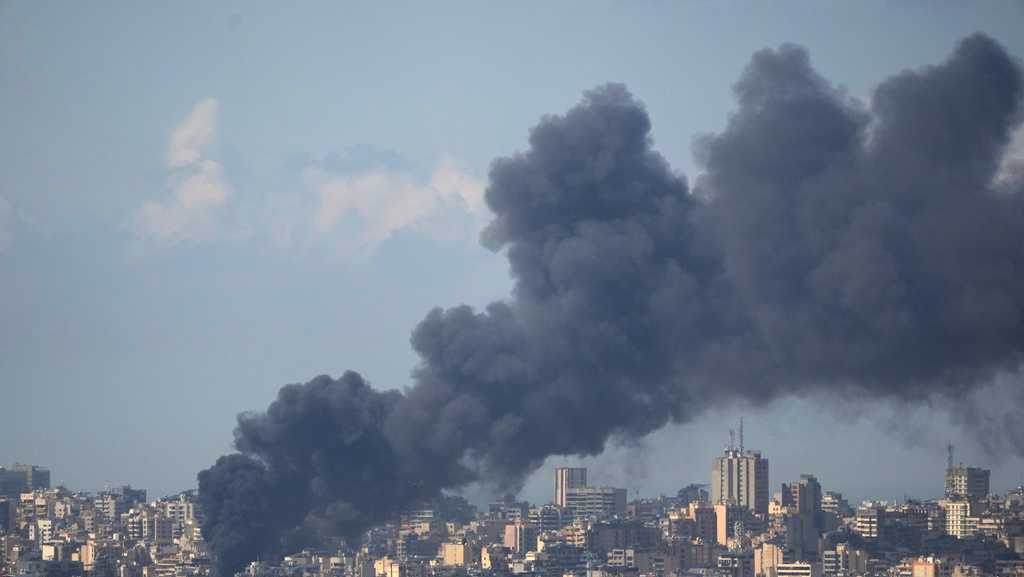
The United States and Iran both claimed victory after reaching the agreement, and world leaders expressed relief, even as more drones and missiles hit Iran and Gulf Arab countries. Israel intensified its attacks in Lebanon, hitting several commercial and residential areas in Beirut without warning. At least 112 people were killed and hundreds were wounded in one of the deadliest days in the latest Israel-Hezbollah war.
The fresh violence threatened to scuttle what U.S. Vice President JD Vance called a “fragile” deal.
“Aggression towards Lebanon is aggression towards Iran,” Gen. Seyed Majid Mousavi, aerospace commander of Iran’s Revolutionary Guard, wrote on X. He warned that Iranian forces were preparing a “heavy response” without revealing details.
Iran accused the U.S. of violating three clauses of its framework for a deal.
Iranian Foreign Minister Abbas Araghchi insisted that an end to the war in Lebanon was part of the ceasefire agreement with the U.S. Israeli Prime Minister Benjamin Netanyahu and U.S. President Donald Trump said the truce did not cover Lebanon.
“The world sees the massacres in Lebanon,” he said in a post on X. “The ball is in the U.S. court, and the world is watching whether it will act on its commitments.”
White House press secretary Karoline Leavitt said the closing reported in Iranian state media was “completely unacceptable.” She repeated President Donald Trump’s “expectation and demand” that the strait be reopened.
U.S. Defense Secretary Pete Hegseth said American and Israeli forces had achieved a “capital V military victory” and that the Iranian military no longer posed a significant threat to U.S. forces or the region. The Iranian military said the country forced Israel and the U.S. to accept its “proposed conditions and surrender.”
Much about the agreement was unclear as the sides presented vastly different visions of the terms.
Iran said the deal would allow it to formalize its new practice of charging ships passing through the strait, a crucial transit lane for oil. But the details were not clear, nor was it known whether vessels would feel safe using the channel or whether ship traffic had resumed. It also was unclear whether any other country agreed to this condition. The White House said Trump is opposed to tolls for ship passage through the strait.Pakistan, which helped to mediate the deal, and others said fighting would pause in Lebanon, where Israel has launched a ground invasion against the Iran-backed Hezbollah militant group. Israel said it would not, and strikes hit Beirut on Wednesday.The fate of Iran’s missile and nuclear programs — the elimination of which were major objectives for the U.S. and Israel in going to war — also remained unclear. Trump said the U.S. would work with Iran to remove buried enriched uranium, though Iran did not confirm that.Ceasefire terms are murky
Trump initially said Iran proposed a “workable” 10-point plan that could help end the war the U.S. and Israel launched on Feb. 28. But when a version in Farsi emerged that indicated Iran would be allowed to continue enriching uranium — which is key to building a nuclear weapon — Trump called it fraudulent without elaborating.
Vance later said the deal was being misrepresented within Iran, though he did not offer details.
Leavitt said Iran’s original, 10-point plan was “fundamentally unserious, unacceptable and completely discarded.” But a new, 15-point plan Iran presented Tuesday could now “align with our own” proposal for peace, she said.
The White House also said Vance would lead the American negotiating team in talks in Pakistan aimed at finding a permanent end to the war. Pakistan said the talks could begin in Islamabad as soon as Friday.
Iran’s demands for ending the war include a withdrawal of U.S. combat forces from the region, the lifting of sanctions and the release of its frozen assets.
United Nations Secretary General Antonio Guterres’s personal envoy arrived in Iran for talks on “the way forward.”
Israeli Chief of Staff Lt. Gen. Eyal Zamir said Israel will continue to “utilize every operational opportunity” to strike Hezbollah. The Israeli military said it struck more than 100 targets within 10 minutes Wednesday across Lebanon, the largest wave of strikes since March 1.
Lebanese President Joseph Aoun condemned the Israeli attacks as “barbaric.” Arab League chief Ahmed Aboul Gheit accused Israel of “persistently seeking to sabotage” the Iran ceasefire deal.
Hezbollah has not confirmed if it will abide by the ceasefire, though the group has said it was open to giving mediators a chance to secure an agreement. An official, speaking on condition of anonymity because he was not authorized to comment publicly, said the group would not stop firing at Israel unless Israel agreed to do the same.
Iran and Oman will collect shipping fees in Strait of Hormuz
Iranian attacks and threats deterred many commercial ships from using the strait, through which 20% of all traded oil and natural gas passes in peacetime. That roiled the world economy and raised the pressure on Trump both at home and abroad to find a way out of the standoff.
The ceasefire may formalize a system of charging fees in the strait that Iran instituted — and give it a new source of revenue.
The plan allows for both Iran and Oman to charge ships, according to a regional official who spoke on condition of anonymity to discuss negotiations they were directly involved in. The official said Iran would use the money it raised for reconstruction.
That would upend decades of precedent treating the strait as an international waterway that was free to transit and will likely not be acceptable to the Gulf Arab states, which also need to rebuild after repeated Iranian attacks targeting their oil fields.
Iran’s nuclear and missile threats survive
U.S.-Israeli strikes have battered Iran and its leadership, but they have not entirely eliminated the threats posed by Tehran’s nuclear program, its ballistic missiles or its support for regional proxies, like Hezbollah. The U.S. and Israel said addressing those threats was a key justification for going to war.
Trump said the U.S. would work with Iran to “dig up and remove” enriched uranium that was buried under joint U.S-Israeli strikes in June. He added that none of the material had been touched since. There was no confirmation from Iran.
Hegseth told a Pentagon briefing Wednesday that the U.S. would do “something like” last June’s joint strikes with Israel on Iranian nuclear sites if the country refuses to surrender its enriched uranium voluntarily.
Netanyahu warned in a televised address that his country was “ready to return to fighting at any time. Our finger is on the trigger.”
Tehran insisted for years that its nuclear program was peaceful, although it enriched uranium up to 60% purity, a short, technical step from weapons-grade levels.
Airstrikes reported after ceasefire announcement
Shortly after the ceasefire announcement, Bahrain, Israel, Kuwait, Saudi Arabia and the United Arab Emirates all issued warnings about incoming missiles from Iran. That fire stopped for a time, then hostilities appeared to restart.
An oil refinery on Iran’s Lavan Island came under attack, according to Iranian state television. The island is home to one of the terminals that Iran uses to export oil and gas.
A short time later, the United Arab Emirates’ air defenses fired at an incoming Iranian missile barrage. Kuwait said three power and water desalination plants were badly damaged after 28 Iranian drones were launched at the country. Saudi Arabia said it intercepted nine drones.
More than 1,900 people had been killed in Iran as of late March, but the government has not updated the war’s toll for days.
In Lebanon, where Israel is fighting Iran-backed Hezbollah militants, more than 1,500 people have been killed, and 1 million people have been displaced. Eleven Israeli soldiers have died.
In Gulf Arab states and the occupied West Bank, more than two dozen people have died, while 23 have been reported dead in Israel, and 13 U.S. service members have been killed.
___
Gambrell reported from Dubai, United Arab Emirates, Magdy from Cairo and Metz from Ramallah, West Bank. Associated Press writers Edie Lederer at the United Nations, Natalie Melzer in Jerusalem, Abby Sewell and Sarah El Deeb in Beirut, Mike Catalini in Trenton, N.J., and Michelle L. Price, Aamer Madhani and Joshua Bloak in Washington contributed to this report.