

Listen to this article
Estimated 4 minutes
The audio version of this article is generated by AI-based technology. Mispronunciations can occur. We are working with our partners to continually review and improve the results.
A former deputy minister of health is welcoming a decision by the provincial government to introduce legislation empowering the College of Physicians and Surgeons of Saskatchewan to investigate the “unlawful practice of medicine.”
The Medical Profession Amendment Act, 2026, was among a list of bills referenced in the provincial budget.
Details on the legislation are limited but the budget described the act as expanding “the College of Physicians and Surgeons of Saskatchewan’s investigative capacity to formally investigate individuals engaged in the unlawful practice of medicine.”
“This certainly has been an area historically where there’s been a lack of clarity,” said Dan Florizone, an executive-in-residence at the Johnson Shoyama Graduate School of Public Policy.
Florizone also served as the deputy minister of health from 2008 to 2013.
In an interview, Florizone described the state of the Medical Profession Act as a longstanding source of tension between the Ministry of Health and the College of Physicians and Surgeons of Saskatchewan (CPSS).
WATCH | Sask. to empower physicians college to investigate ‘unlawful practice of medicine’: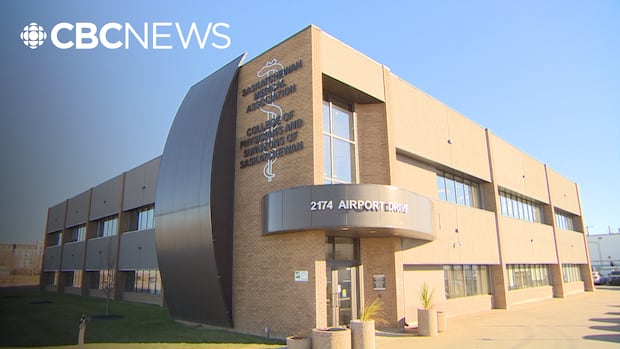
Sask. to empower physicians college to investigate ‘unlawful practice of medicine’
The provincial government is planning to give the College of Physicians and Surgeons of Saskatchewan more power. The CBC’s Alexander Quon reports.
“Where the confusion arises is in who is to administer that act, who in a sense polices that practice? So if there is a complaint and concern, who would go into collecting the data, the information, doing the investigation?” he said.
Florizone said he’s “pleased” to see the government take the initiative and move to modernize the act, clarify some of the language and as part of the budget and provide funding to CPSS.
WATCH | Founder of controversial Moose Jaw facility threatens NDP MLA with legal action:
Founder of a controversial Moose Jaw facility threatens NDP MLA with legal action
Dayan Goodenowe has issued a legal letter to NDP MLA Jared Clarke, and filed a separate lawsuit in California, claiming defamation.
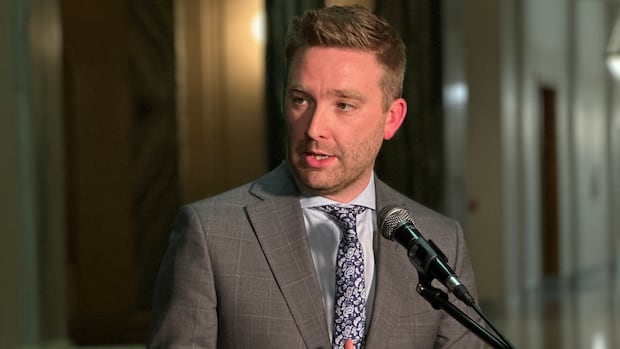
Health Minister Jeremy Cockrill remained tight-lipped about the legislation when asked after the budget’s introduction on March 18.
“I don’t want to speak too much about the contents of the bill before it’s tabled, but obviously looking at how we can enhance the ability of the [CPSS] to do what they need to do,” Cockrill said.
Why now?
The legislation comes after CBC published multiple stories investigating the Dr. Goodenowe Restorative Health Center in Moose Jaw, Sask.
The private, unregulated facility has claimed it has a 100 per cent success rate in halting and reversing the progress of ALS — a fatal degenerative disease that causes gradual muscle loss.
The centre is run by Dayan Goodenowe, who is not a medical doctor. He does have a PhD in medical science, with a focus on psychiatry from the University of Alberta.
Goodenowe has sued CBC over those stories, alleging they are defamatory. Goodenowe has also issued a legal threat against an NDP MLA and filed a separate defamation lawsuit against a former patient-turned-critic in California.
After the stories were published the Moose Jaw Police Service confirmed it was investigating the controversial health facility.
The standoff between CPSS and the Ministry of Health has largely played out behind the scenes, but a letter obtained by CBC News shows the dynamics at play between the college and the ministry.
The letter was sent by Deputy Minister of Health Tracey Smith to Grant Stoneham, registrar of the college.
“Following various media reports on Dr. Goodenowe, and in particular, reports made by alleged patients, the Ministry is concerned about this individual and private business engaging in what appears to be the unauthorized practice of medicine,” the letter reads.
“The Ministry is very concerned about the harm this may be causing patients and others in Saskatchewan.”
WATCH | This scientist claims his program can beat ALS. Many patients say otherwise:
This scientist claims his program can beat ALS. Many patients say otherwise
While some ALS patients say they feel better, others say they’ve wasted tens of thousands of dollars and some of their last months on a Moose Jaw-based treatment program that failed to deliver what it promised. CBC’s Geoff Leo investigates Dayan Goodenowe’s program and what the treatment claims to offer.
Florizone says the COVID-19 pandemic only reinforced the need for the CPSS to have investigative funding and enforcement powers.
He believes that the risks have “grown significantly” and people are taking medical advice from individuals who may be offering advice that sounds clinical but has no basis in science, he said.
“I would say 20 years ago this was a gap in Saskatchewan, but we didn’t have the kind of incidents that we have today,” Florizone said.
“This is really timely in terms of dealing with this high-risk situation for the public.”