
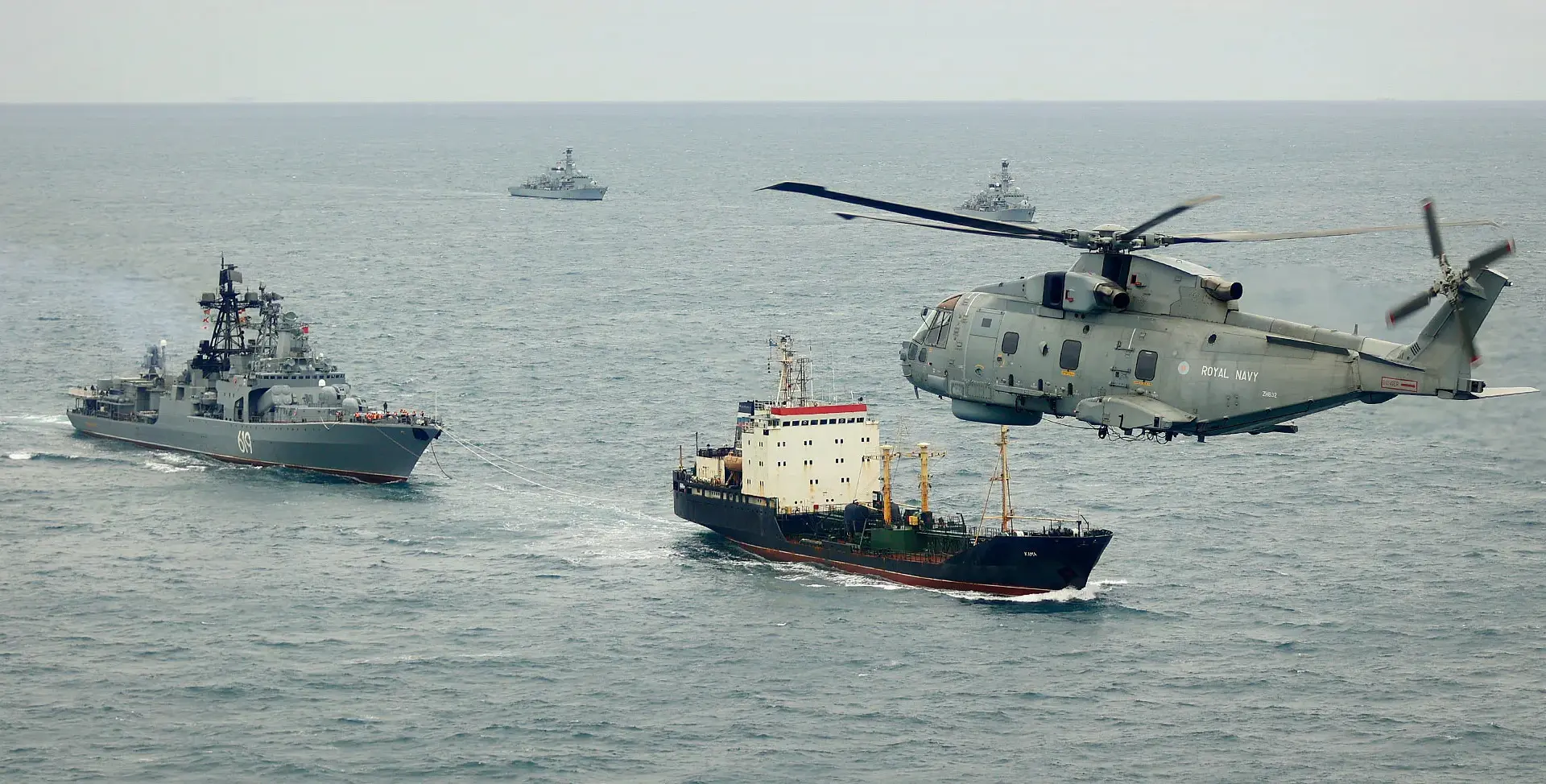
Royal Navy warships and aircraft have been activated repeatedly in recent days to monitor Russian naval activity in UK waters, reflecting a sustained increase in traffic through the Channel and North Sea at a time of heightened tension over sanctions enforcement.
HMS Mersey, supported by a Wildcat helicopter from 815 Naval Air Squadron and RFA Tideforce, was tasked on three occasions between 29 March and 7 April to track multiple Russian units. These included the frigate RFS Admiral Grigorovich, landing ship RFS Aleksandr Shabalin and the Kilo-class submarine RFS Krasnodar, which was tranisting on the surface. Working primarily near Ushant and the Dover Strait, the RN coordinated with allied aircraft and ships to maintain continuous awareness as the group transited eastbound through the Channel.
The activity has coincided with the continued movement of sanctioned Russian oil tankers through UK waters, in some cases accompanied by naval escorts. This has sharpened the operational context, as the Government has indicated a willingness to take more direct action against vessels linked to Russia’s shadow fleet.
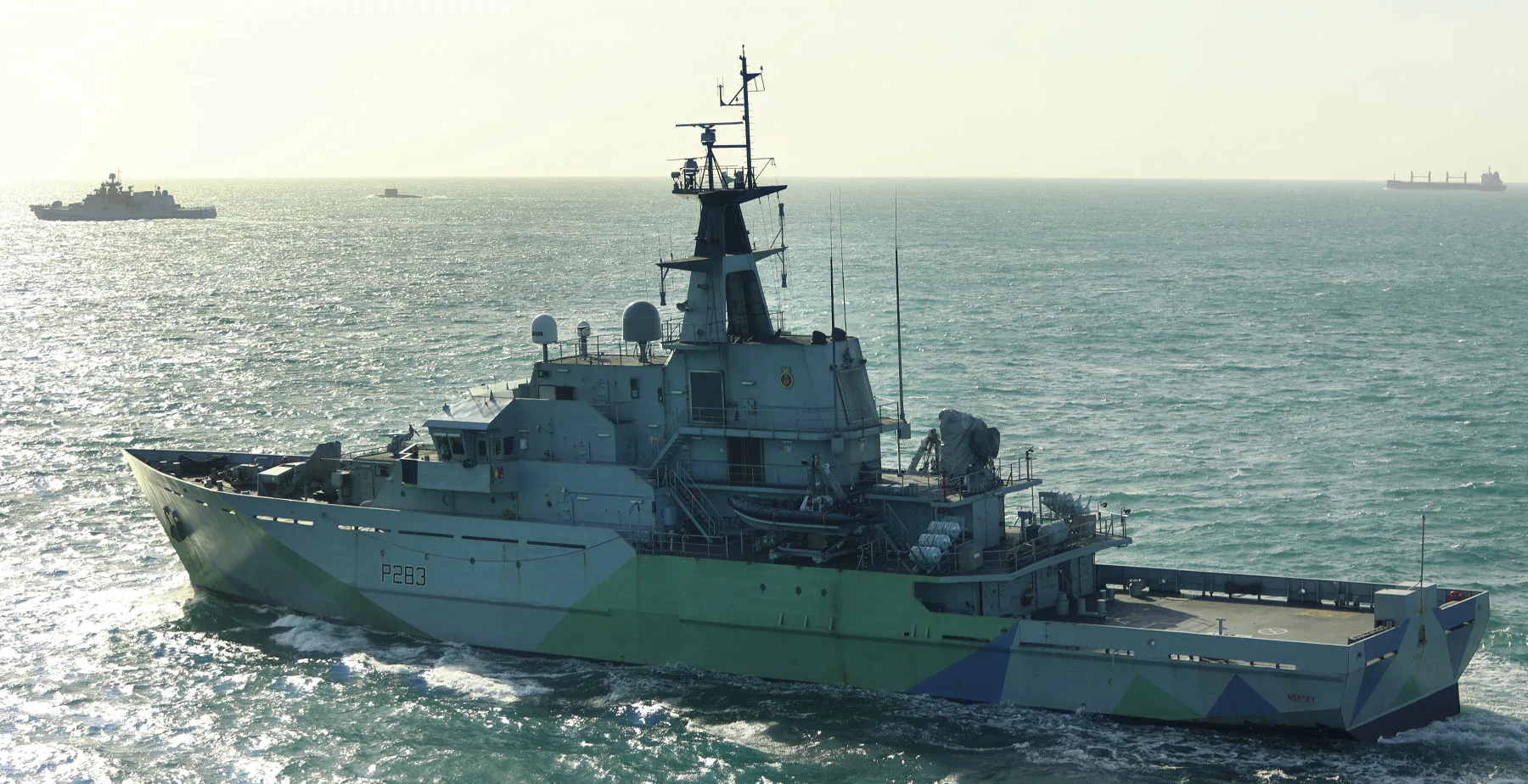 HMS Mersey watches RFS Admiral Grigorovich and the Kilo-class submarine RFS Krasnodar.
Under measures announced in March, UK authorities could use powers derived from sanctions legislation to detain or seize vessels suspected of transporting Russian oil. In practice, this could involve boarding operations conducted by Royal Marines or specialist units, supported by RN warships and other agencies. However, the practical and legal challenges are significant. Many of these vessels operate close to international boundaries or under flags of convenience, while the presence of Russian warships nearby introduces clear escalation risks.
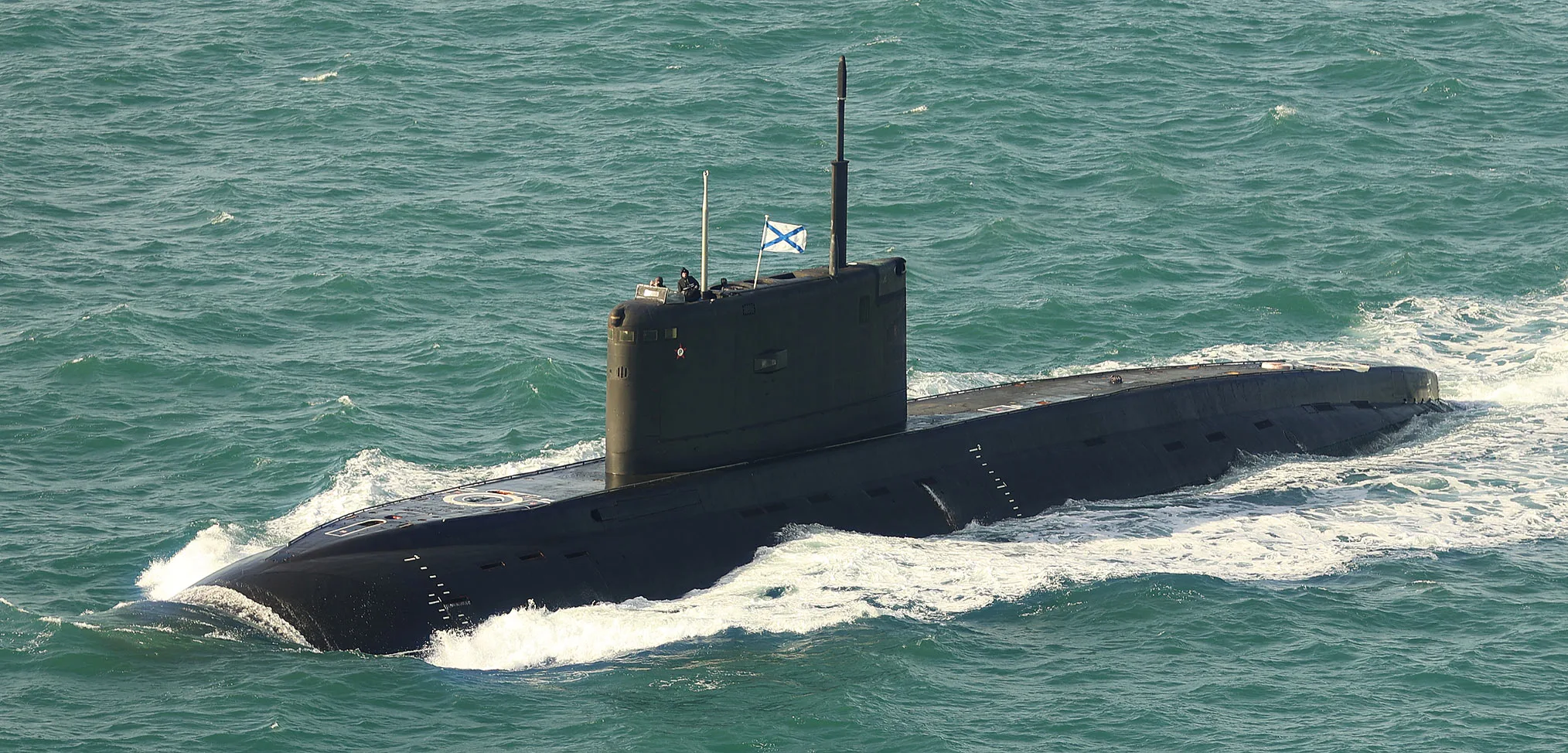 Kilo-class SSK, RFS Krasnodar on her way to the Mediterranean. Her homeward passage from a previous Mediterranean deployment was monitored by HMS Iron Duke in October 2025 and was the subject of the Channel 5 documentary broadcast on 2nd April.
While a significant number of shadow fleet vessels have diverted around the top of Scotland and west of Ireland, Russian warships have been observed escorting tankers through the Channel, effectively providing a form of armed overwatch. Prevously, Russian naval units rarely escorted merchant vessels, other than those engaged in supporting their military directly. This response was predictable, complicating any attempt to intervene and limiting the scope for enforcement without a deliberate decision to accept greater risk.
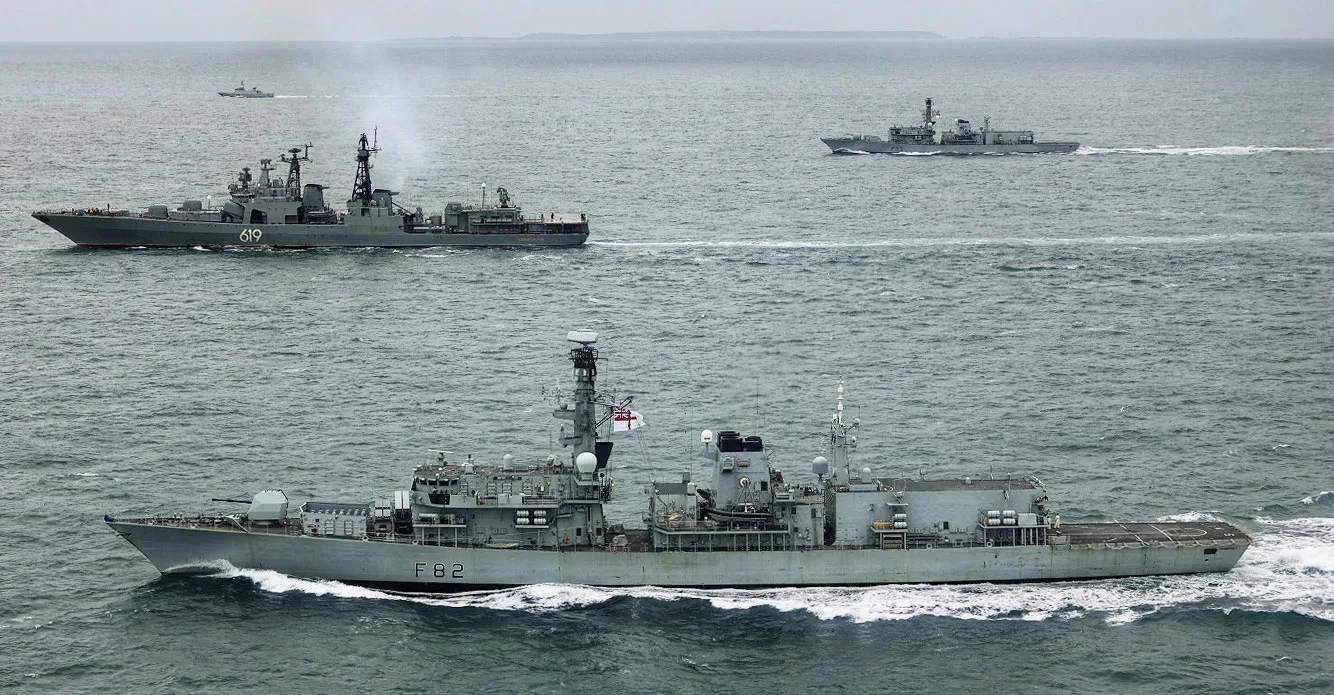 HMS St Albans and HMS Somerset. Pictured here while closely escorting RFS Severomorsk in company with a French OPV.
Separately, HMS Somerset intercepted the Udaloy-class destroyer RFS Severomorsk and fleet oiler Kama off the coast of Brittany, tracking their passage through the Channel and into the North Sea supported by a Merlin helicopter from 814 Naval Air Squadron. HMS St Albans later joined Somerset to conduct a formal handover as the latter began a four-month deployment under Operation CETO, the UK’s standing task focused on protecting the continuous at-sea deterrent and monitoring submarine activity in the North Atlantic.
The tempo of Russian naval and associated commercial movements through UK waters has increased noticeably in recent months, with hundreds of shadow fleet vessels believed to have transited near or through the Channel since the start of the year. For the RN, this has translated into sustained demand on high-readiness units. Offshore patrol vessels such as HMS Mersey are being used alongside frigates and fleet auxiliaries to provide a persistent presence and tracking, often in coordination with NATO allies.
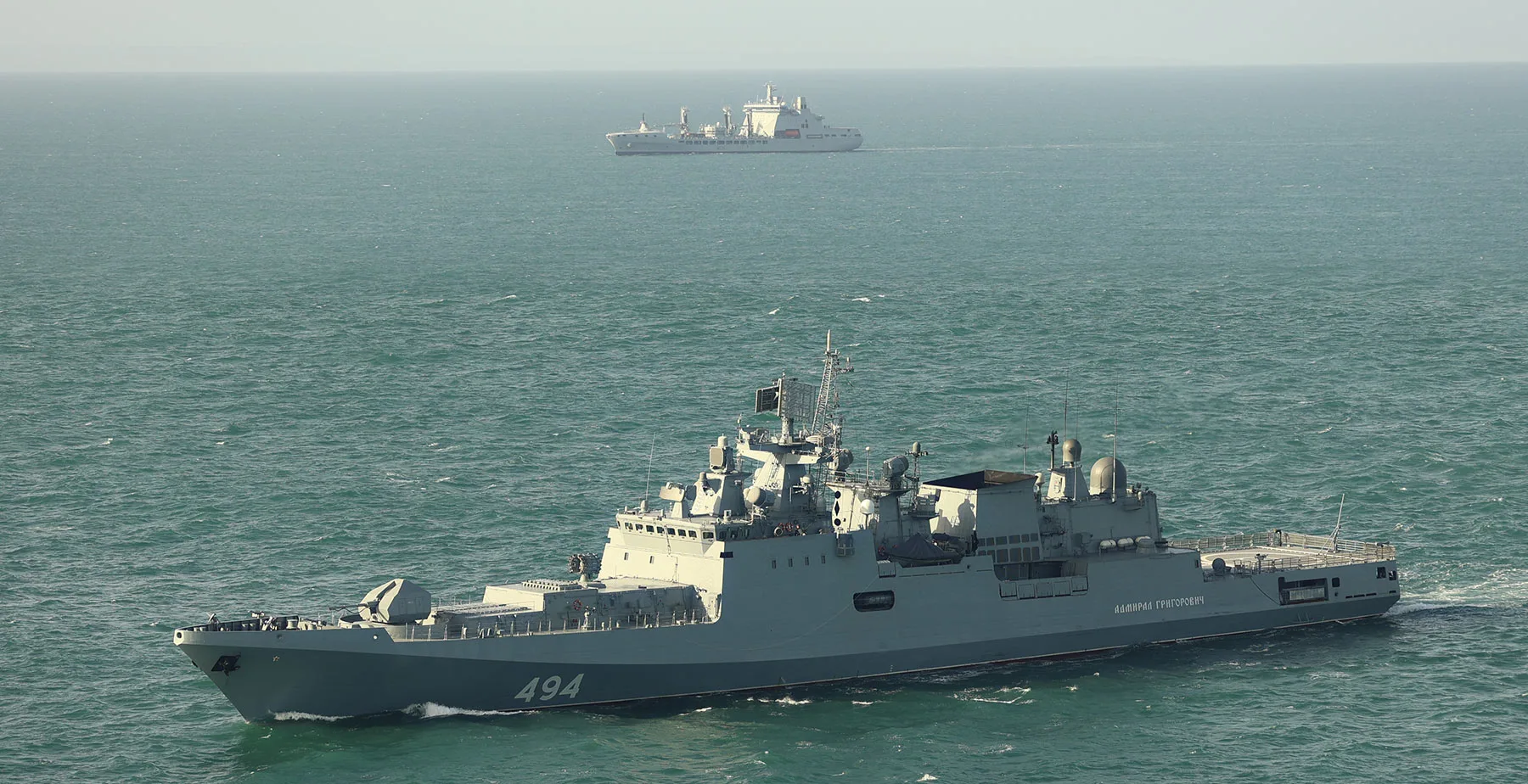 RFA Tideforce monitored two Russian shadow fleet tankers, MV Enigma and MV Universal, escorted by frigate FS Admiral Grigorovich as they transited westwards through the English Channel on 8th April.
While these operations demonstrate effective surveillance and responsiveness, they also highlight the constraints imposed by a finite number of escorts and competing global commitments. The RN can monitor and shadow activity closely, but sustained enforcement at scale would require additional resources and clear political direction.
For now, the approach remains one of observation and deterrence through presence. The interaction between sanctions policy, maritime law and the visible presence of Russian naval escorts has created a complex operating environment in which the threshold between monitoring and intervention remains finely balanced.
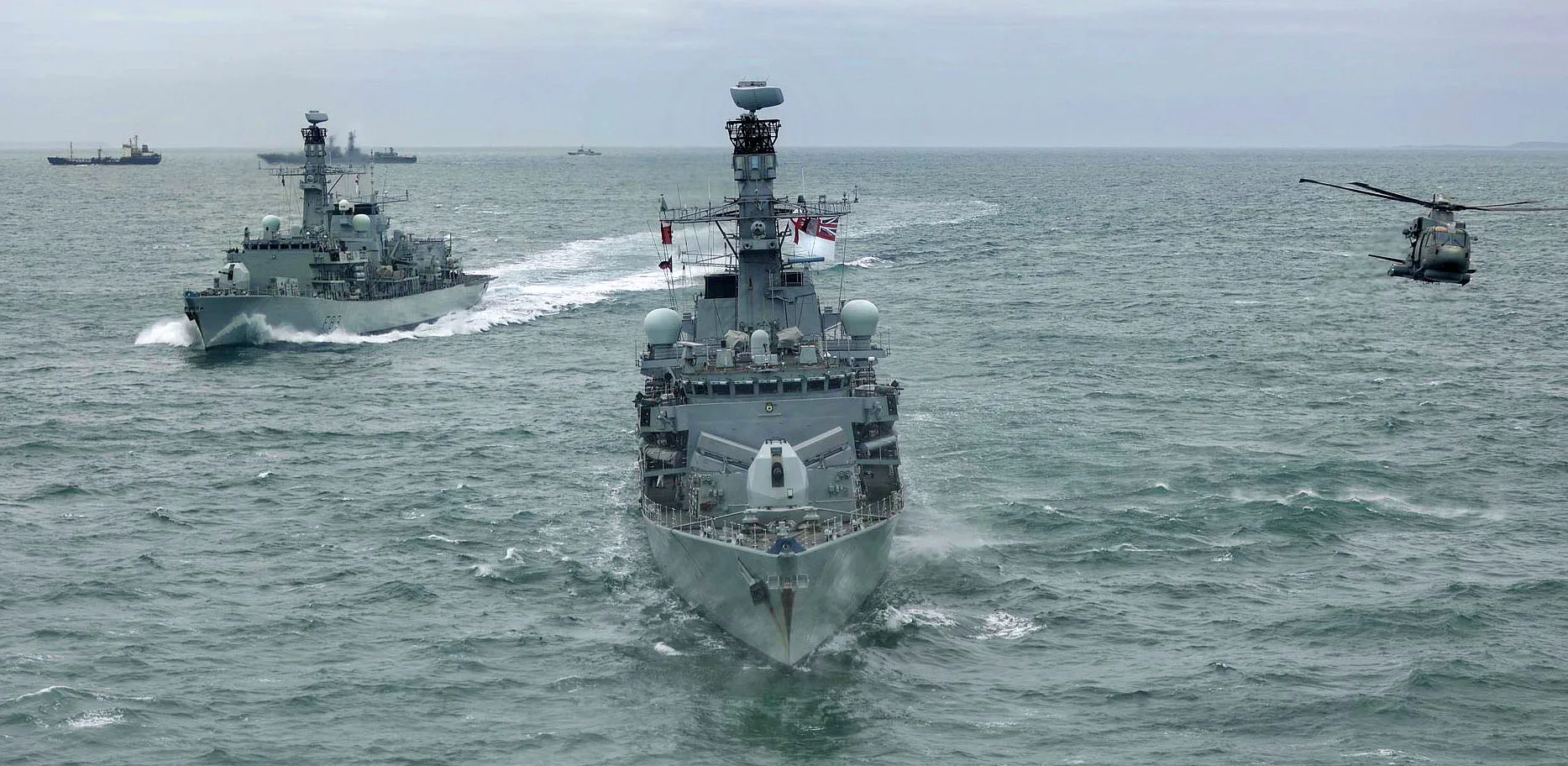 Handing over in style… HMS St Albans completed 3 months on TAPS duty at the end of March and was relieved by HMS Somerset.