
 Play Brightcove video
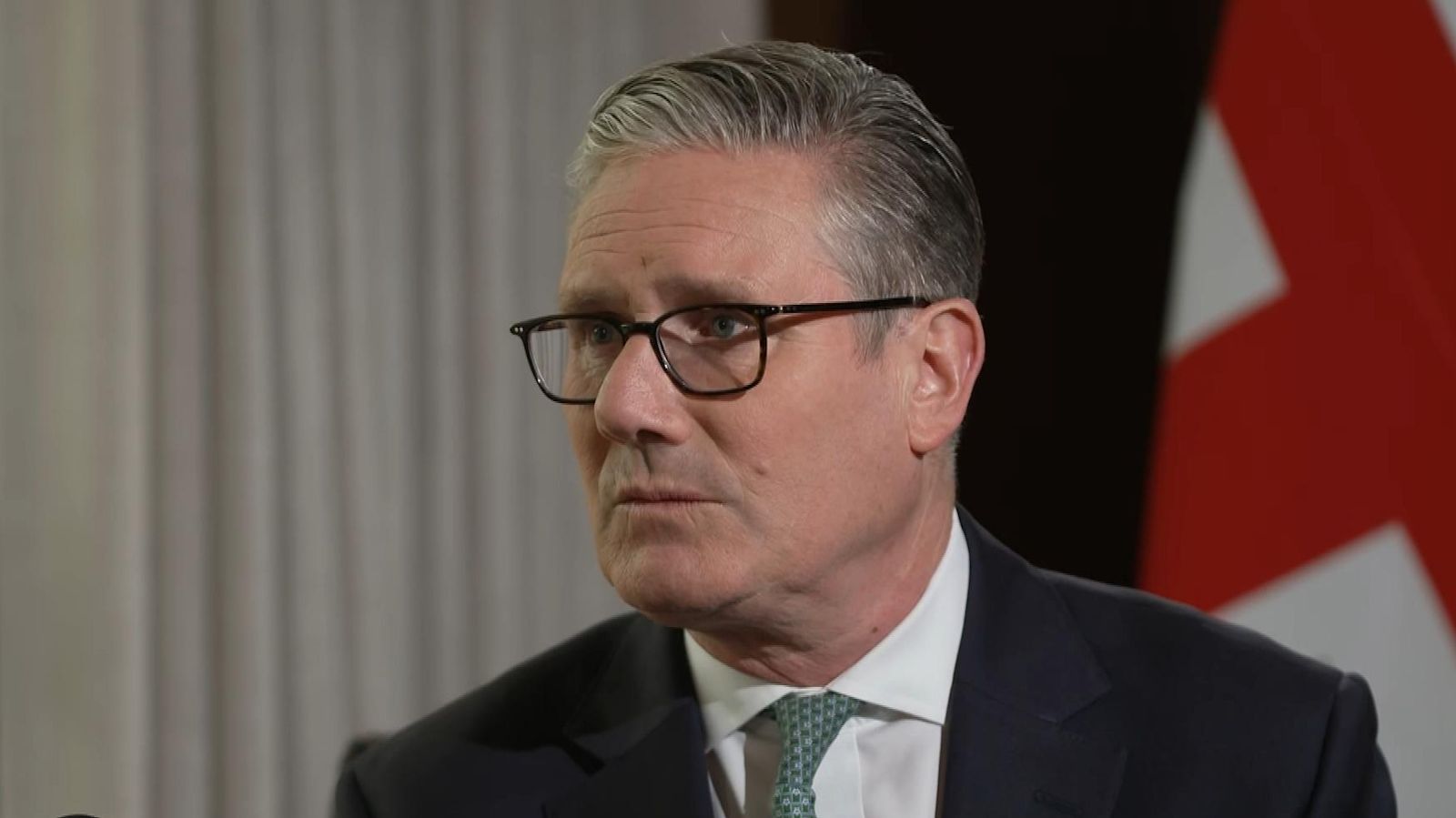
Sir Keir Starmer joins ITV News’ Political Editor Robert Peston for the Talking Politics podcast, as the prime minister travels to the Gulf following the US-Iran ceasefire
Prime Minister Sir Keir Starmer has told ITV News’ Talking Politics podcast that Israel is “wrong” to continue its strikes on Lebanon amid a ceasefire with Iran, saying it “should stop” as a “matter of principle”.
The exclusive interview with ITV News’ Political Editor Robert Peston is the prime minister’s first since the establishment of a fragile two-week ceasefire deal made between the US and Iran.
Despite the deal, Israel has continued its strikes on Lebanon – which on Wednesday saw its deadliest day – threatening the stability of the ceasefire.
It comes as Israeli Prime Minister Benjamin Netanyahu said his cabinet will hold talks with Lebanon “as soon as possible.”
When asked whether the strikes were a breach of the ceasefire, the prime minister said: “It’s hard to say that there is a breach when we haven’t all got access to all the details of the ceasefire.
Prime Minister Keir Starmer said that a cessation of strikes on Lebanon should be part of the US-Iran ceasefire agreement.
“But let me be really clear about it. They’re wrong. That shouldn’t be happening. That should stop.”
Starmer added: “The question isn’t a technical one of whether it’s a breach of the agreement or not. The question is actually a matter of principles.”
Starmer also addressed the “reopening” of the Strait of Hormuz, a vital waterway which remained effectively closed up until the deal was struck on Tuesday evening.
Iran’s deputy foreign minister told ITV News’ International Editor Emma Murphy earlier on Thursday that the Strait “is open”, but the prime minister said that needs to be “tested”.
“Our position is ‘open means open’ for safe navigation. That means toll-free navigation and vessels can get through.”
However, Starmer said the world will have to “wait and see” whether the Strait’s opening fully materialises.
Reports have suggested that part of the ceasefire agreement could be the right for Iran to impose tolls on ships passing through the Strait of Hormuz.
“Some of the discussions in the last couple of days have been, let’s see what happens in two, three, four days.
“That’ll begin to be the test. So it’s not what people say on day one or day two.”
The closure of the Strait has caused stock markets to plummet worldwide and oil prices to sharply increase.In the interview, Starmer emphasised the need for increased energy resilience and independence, warning that “the impact on our economy” is “clear to see”.
“I’m fed up with the fact that families across the country see their bills go up and down on energy businesses bills go up and down on energy because of the actions of Putin or Trump across the world,” he said.
On Trump’s comments
The ceasefire was forged as a result of a deadline US President Donald Trump imposed on Iran to open the Strait, or “a whole civilisation will die.”
The prime minister did not go as far as condemning the president’s language, but said it was “not language I would use.”
“I’m clear that for the United Kingdom, we have our principles, we have our values, we will be guided by them in everything that we do.”
It is these principles that the prime minister has echoed for his reasoning behind not joining the war in Iran, instead only allowing the US to use British air bases for defensive actions.
“I’m not going to waver or yield to any pressure”: Keir Starmer says he won’t be pushed into the war despite the criticism his decisions drew.
Subscribe free to our weekly newsletter for exclusive and original coverage from ITV News. Direct to your inbox every Friday morning.
UK will not be “dragged” in to war
The Iranian deputy foreign minister, however, accused the UK of allowing the US to launch B2 bombers for offensive strikes.
The prime minister firmly disputed this, saying “our bases will not be and are not being used for wider offensive and particularly for offensive on civilians”.
“From the get-go, we’ve been monitoring this situation. So I’m pretty clear in my own mind about what we’ve agreed and what the use of the bases are.”
“I’ve been saying we are not going to be dragged into this war because I say there must be a lawful basis. That matters if you’re going to commit our service personnel to risk their lives.”
Keir Starmer is welcomed by Khaldoon Khalifa Al Mubarak, chairman of the Executive Affairs Authority, as he arrives in Abu Dhabi. Credit: PA
The prime minister will continue to meet Gulf leaders on Thursday, after already having met Saudi Crown Prince Mohammed Bin Salman and UAE President Sheikh Mohamed bin Zayed Al Nahyan.
Israeli Prime Minister Benjamin Netanyahu said he had ordered his cabinet to begin direct negotiations with Lebanon. Talks between the two countries are expected to be held next week in Washington.
Talks between the US and Iran are due to take place in Pakistan this weekend, with Vance and envoy Steve Witkoff to attend from the Trump administration.
From Westminster to Washington DC – our political experts are across all the latest key talking points. Listen to the latest episode below…