
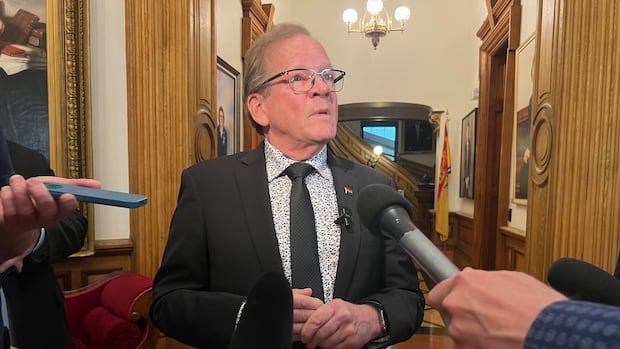
When the province abruptly changed a policy to prevent mechanics from replacing broken down school buses on their routes, a minister promised that no schoolchildren would be left behind.
“We’re certainly not going to leave any children stranded on the side of the road,” Transportation Minister Chuck Chiasson told reporters in November as the school bus saga unravelled.
Documents uncovered by CBC News reveal officials saying that’s exactly what happened.
Through a right to information request, CBC News found several instances of Department of Transportation and Infrastructure and school district officials expressing concern, shock and annoyance both with the new policy and a lack of communication beforehand.
The emails also show the saga worsened relationships between school districts and DTI, with accusations of lying, employees swearing at each other and threatening to go to the media and threats to quit over how the bus episode was mismanaged.
All of that is on top of examples of students being left stranded in broken down school buses on the side of the road.
“As you can see below from [Anglophone School District South] we had a bus filled with kids stranded on the side of the road today without a clear plan to get them going again because of this sudden change,” wrote François Godin, the director of educational facilities and pupil transportation with the Department of Education and Early Childhood Development in an email to a DTI official on Sep. 29.
Department officials discovered a clause in the Motor Vehicle Act that said mechanics are only allowed to drive buses before or after servicing them. While they sought a legal opinion, the department briefly ordered mechanics to stop driving buses to breakdowns starting in September because they believed it would be illegal. In early December, the department said the problem was fixed and the practice could continue.
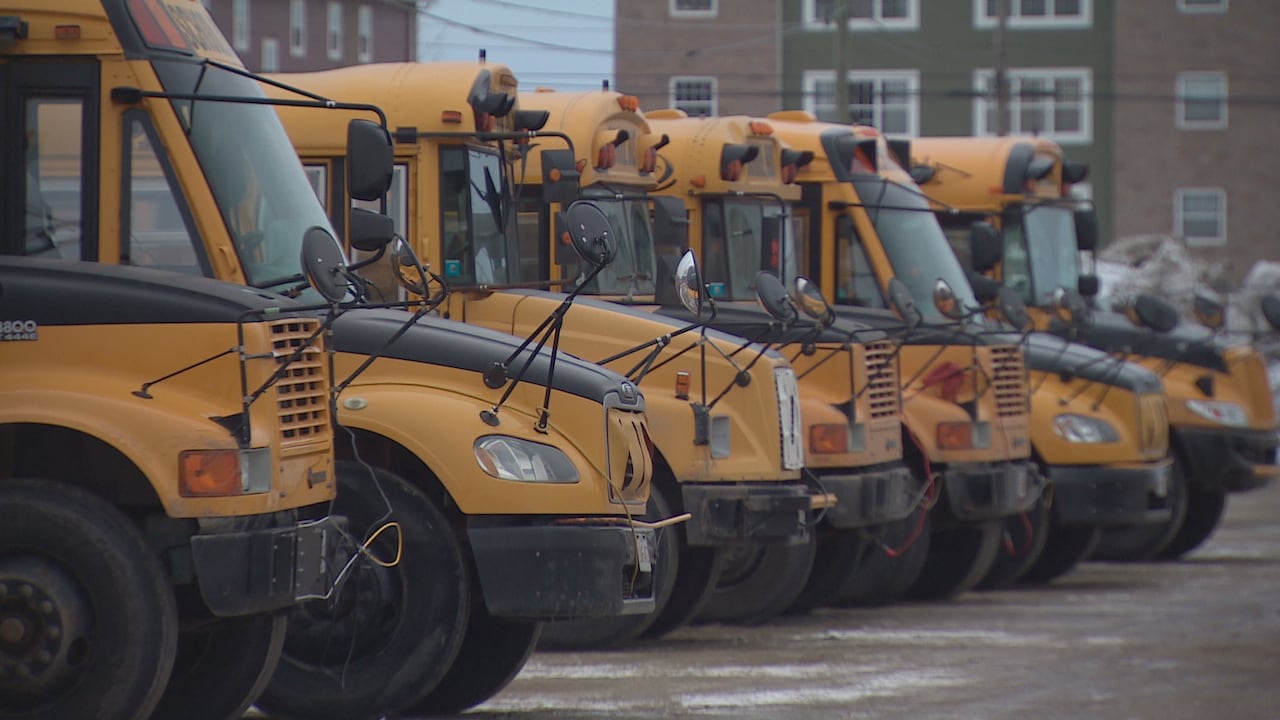 School district officials voiced concern in the emails over how sudden the rule change caught them. (CBC)
Godin said the change had a “major impact” on our operations and that “changing things overnight without notice” was not conducive to a good partnership.
Godin’s email was in reference to another from Jamie Tait, a transportation official with Anglophone South School District, who described a bus on the side of the road “loaded with students and the garage has a bus but ‘no way of getting it to them.’”
“Imagine this scenario in the middle of winter at -20,” Tait wrote.
Another email from Tait said that he had received word of the change in an email sent on a Friday afternoon.
In the same email chain, Gaston Richard, the transportation manager for Anglophone North School District, wrote that he had not been informed of the policy change and that he hoped “this is just another garage going rogue.”
“For this to be dropped on us effective immediately with no prior communication is another perfect example of why this partnership is no longer working,” Richard wrote.
“If true, this is total disregard on their side for our operations,” he wrote, adding that it would cause more delays and “risk leaving buses full of students stranded” for extended periods of time.
The next week, on Oct. 3, Godin wrote another email to DTI officials to say the change was already affecting operations and that more buses had been left stranded.
“Already this week we have had two such breakdowns without a plan in place to get a spare bus to them because of the suddenness of the change,” Godin wrote.
The same day, another department official wrote that someone whose name is redacted called looking for a spare bus after one broke down.
“He was swearing at Matt and said he was going to take this to the media,” wrote James West, the automotive shop superintendent for the Fredericton district.
Later in October, David McCormick, the transportation manager for Anglophone East, wrote to DTI officials to express concern over the change to their daily operations, which he said have “remained consistent for over 30 years.”
“These adjustments appear to significantly affect the safety and well-being of students, and I believe they warrant immediate attention and transparency,” McCormick wrote.
On Nov. 18, a DTI official, Randy LeBlanc, shared an email that the Francophone South School District Supt. Monique Boudreau had sent to all parents, accusing her of lying.
“They also say that there is NO service offered for broke down buses before 8am, which is a lie, because we have guys here in Rexton ready to go at 6am especially for buses,” LeBlanc wrote.
Boudreau’s email said in French that the late and cancelled school bus trips were “frustrating and demanding” for families.
“Even though we are working tirelessly, the service we are currently offering does not meet your expectations or ours,” Boudreau wrote.
The Francophone South district said that the changes to school bus repair policies had resulted in three routes being cancelled, affecting about 200 students. Boudreau went on to ask parents to monitor notices of late buses but also to plan to take their kids to school themselves if buses were not available.
Boudreau said the situation would “remain unstable for some time” and that it was “out of their control,” explaining that both DTI and the education department were responsible.
When officials were discussing solutions to the problem, one mentioned a DTI official at the bus depot in Edmundston who “was on the verge of quitting” over the situation.
The department had also been offering changing messages to the public about the situation.
The emails received by CBC News in the right to information request show that DTI official Justin Sherriff notified Anglophone South officials at 3:32 p.m. on Sept. 26 that taking a spare bus to a service call must “stop immediately.”
“It has been brought to our attention that most of our mechanics do not possess the proper licensing to provide this service any longer,” Sheriff wrote.
The department had first told reporters in November that a lack of licensed mechanics meant backup buses would not be brought to broken down school buses and the shortage also would mean repairs would only take place during normal business hours.
The next month, Chiasson said it was because mechanics were not legally allowed to drive school buses without a proper licence, and the department needed to get a legal opinion to confirm. After that opinion was received, the situation reverted back to how it was, with mechanics allowed to drive buses after all.
CBC News requested an interview with Chiasson on Wednesday morning but one has not been provided.