
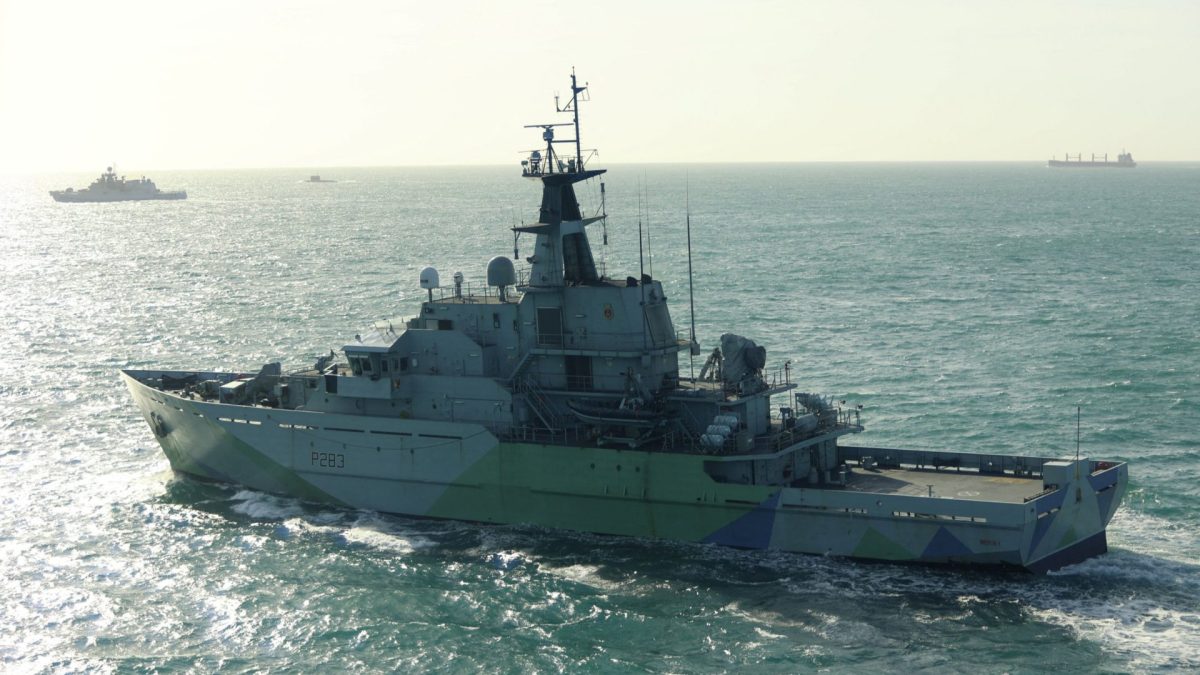
Oil, supplies and spare parts for Vladimir Putin’s armed forces are believed to have been taken through the English Channel on sanctioned Russian tankers, escorted by a Kremlin warship.
Despite the UK threatening to seize shadow fleet ships that help fund Moscow’s war with Ukraine, the Universal sailed past the English coast carrying “military relevant” cargo for the direct use of Russia’s army, a senior maritime security source told The i Paper.
The blacklisted tanker passed through the Channel on Wednesday, followed closely by the Admiral Grigorovich, a Russian frigate armed with cruise and surface-to-air missiles, along with a second sanctioned Russian tanker sailing under a suspected false Cameroon flag.
New FeatureIn ShortQuick Stories. Same trusted journalism.
While Putin’s network of illicit vessels is charged with funding Russia’s war in Ukraine by conducting clandestine oil trades across the globe, these escorted tankers are understood to be performing shipments for the direct use of Moscow’s military.
The tanker, first spotted in the Channel by The Daily Telegraph, marks at least the sixth incident of a “militarily relevant” Russian tanker sailing through the Channel with a Kremlin warship escort in the past twelve months, a Nato maritime source said.
In announcing new powers for the military to seize suspect vessels, Keir Starmer said Putin should be in “no doubt” that “we’re going after his shadow fleet even harder”.
Since then, dozens of sanctioned ships – many forming part of Russia’s Shadow Fleet – have traversed through the Channel without challenge. Last month, four vessels sanctioned by the Foreign Office loitered near undersea cables and pipelines just outside the UK’s waters.
Running scared
The Universal abruptly left a Russian port in Leningrad at the end of last month, as Ukrainian drones struck at least three key oil ports in the region.
The tanker picked up its Russian warship escort in the Baltic Sea on 2 April after fleeing Russian ports hit by Ukrainian drone strikes last month, according to data provided by Starboard Maritime Intelligence.
The Foreign Office sanctioned the ship in September for attempting to “undermine or threaten” Ukraine by exporting oil from Russia to fund its invasion.
But its purpose, and its military escort, suggest something more nefarious, according to a senior Nato source.
The vessel is believed to be carrying fuel, food, and spare parts for Russian military ships “operating at a distance”, the source said, adding that they use the Channel for deliveries “frequently”.
Pictures of the Universal traversing the Channel suggest she was not fully laden after leaving Russia, which experts say may indicate the vessel was forced to depart prematurely due to Ukrainian strikes on Russian oil ports.
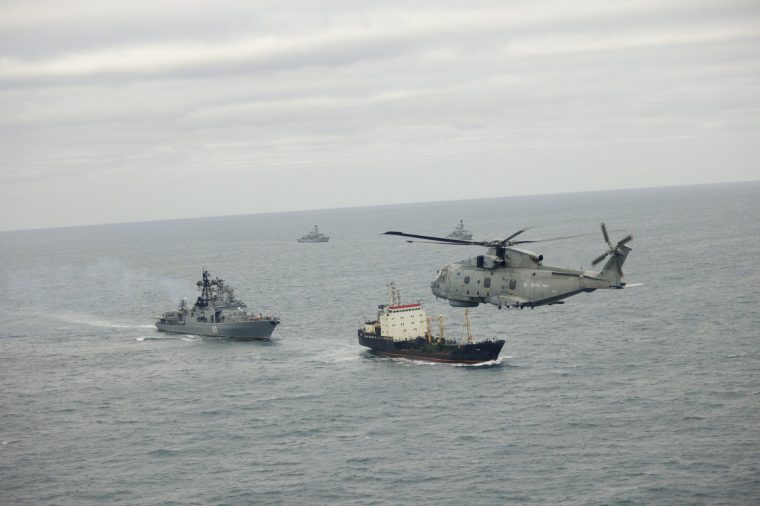 The Universal and its warship escort were accompanied by the RFA Tideforce, a tanker supplying water and stores to Royal Navy and Nato warships (Photo: Ministry of Defence/PA)
The ship had returned home in March after conducting a suspected ship-to-ship transfer with another sanctioned Russian vessel, Jupiter, in February, according to maritime data. Moscow’s clandestine vessels conduct such transfers to avoid entering ports, helping obfuscate the origin of the cargo.
Mark Douglas of Starboard Maritime Intelligence said the incident comes at a time of “unprecedented disruption in the global fuel market”, which has seen Russian oil being sold at a premium.
“Ukraine has struck Russian oil terminals, including those in the Baltic Sea, making it harder for Russia to load tankers and demonstrating that Ukraine can attack ports, and possibly tankers, far from the Black Sea,” he said.
“It’s not surprising Russia is escorting these vessels. But escort duties will put further pressure on the Russian Navy, already under pressure.”
As Europe’s waters become hostile, Putin’s vessels head to the Channel
In its escape from Ukrainian action across the Baltic, the Universal traversed the Channel – a route which Downing Street had previously vowed to shut Putin’s vessels out of.
For months, officials in Whitehall and the Armed Forces have worked to establish the legal framework required to intercept vessels suspected of fueling Moscow’s war in Ukraine.
Behind the scenes, naval units and special forces teams are on standby with the capability to rapidly intercept and secure vessels. Yet, no seizures have taken place, while European allies have taken their own action against the Shadow Fleet.
The Universal and its warship escort were accompanied by the RFA Tideforce, a tanker supplying water and stores to Royal Navy and Nato warships. However, the latest provocation by Moscow shows that as European waters become increasingly hostile for the Kremlin’s fleet, the Channel is still considered a risk worth taking.
Elizabeth Braw, a senior fellow at the American Enterprise Institute in Washington, said: “Baltic Sea coastal states, as well as France and Belgium, are becoming more assertive. The parallel we are seeing is that Russian vessels are becoming more assertive themselves. They behave as if they don’t care anymore that they are violating maritime rules, becoming more brazen and emboldened.”
On Thursday, at least four sanctioned Russian tankers were sailing through the Channel, the same day that Defence Secretary John Healey said a month-long Russian submarine operation was detected in and around British waters.
He said the Akula attack submarine and two Gugi spy submarines spent time over “critical infrastructure relevant to us and our allies” before heading north out of UK waters.
Healey added there was “no evidence that there has been any damage” to UK cables and pipelines, but that any attempt to damage the infrastructure would not be tolerated and would have “serious consequences”.
In response to the warship in the Channel, Healey said that the fact that Russia feels the need to send a warship to escort its shadow fleet vessels has shown the new UK policy is “having an impact” because it is making it much more difficult for Putin to sell oil using these tankers.
“We are ready to take further action with allies to interdict shadow fleet vessels,” he said, adding: “We aim with others to put more pressure in the coming weeks and months on Putin.”
Moscow has returned the warning, saying it would retaliate if the UK seized any Russian ships.