
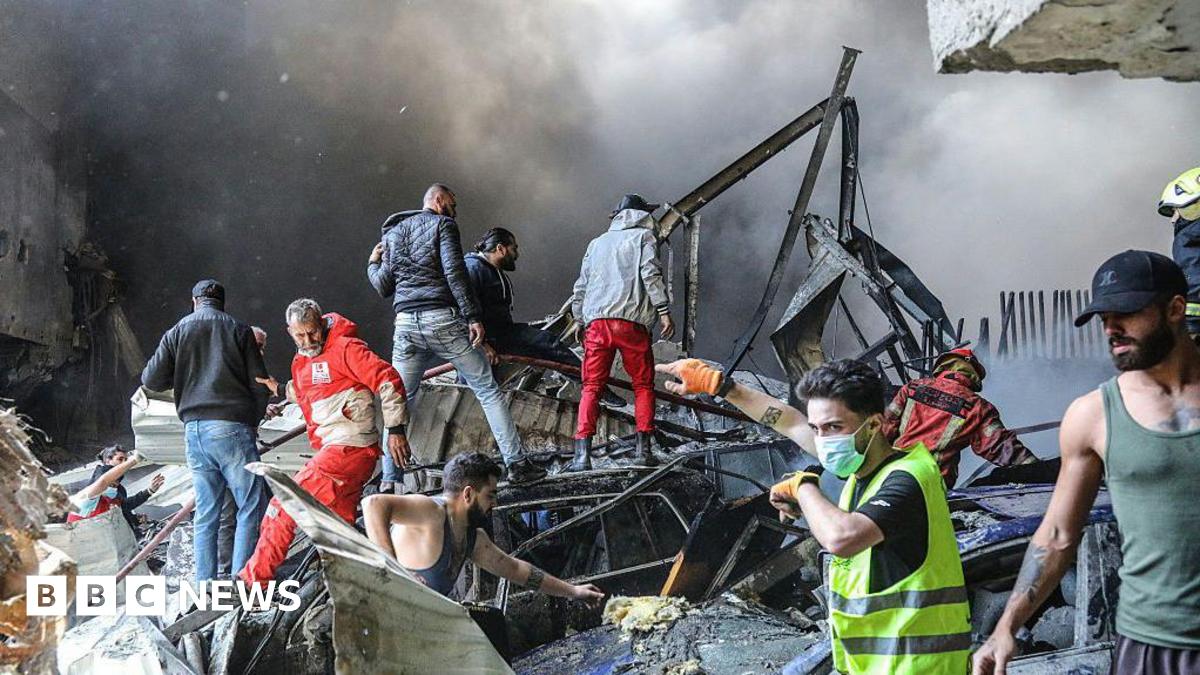
On Thursday, Lebanon’s cabinet instructed government security forces to restrict weapons in Beirut exclusively to state institutions.
“The army and security forces are requested to immediately begin reinforcing the full imposition of state authority over Beirut Governorate,” Prime Minister Nawaf Salam said at the end of a cabinet meeting.
Netanyahu’s office said Israel “appreciates today’s call by the Prime Minister of Lebanon to demilitarise Beirut”.
It said negotiations between the two countries would focus on “disarming Hezbollah and establishing peace relations between Israel and Lebanon”.
According to US outlet Axios, Netanyahu’s statement came after he held calls with US President Donald Trump and White House envoy Steve Witkoff, and that senior US officials had asked Netanyahu to “calm down” Israeli strikes and open negotiations.
The publication quoted a senior Israeli official who said the direct negotiations will begin next week in Washington.
Lebanese President Joseph Aoun earlier said that a ceasefire was “the only solution” to the situation in Lebanon.
Aoun had called for direct negotiations with Israel a month ago as part of a proposal to end the escalating conflict with Hezbollah, while sharply criticising the Iran-backed group.
The latest escalation in the decades-long conflict between Hezbollah and Israel erupted when the group fired rockets into Israel in retaliation for the killing of Iran’s supreme leader Ayatollah Ali Khamenei in the opening stages of the war, and in response to the near-daily Israeli attacks on Lebanon that have continued despite a ceasefire agreed in November 2024.
More than 1,800 people have been killed, including at least 130 children, so far as a result of the war, the Lebanese health ministry says, without distinguishing combatants from civilians.
Israel says it has killed around 1,100 Hezbollah fighters.
More than 1.2 million people have been displaced, or one in five of the population, most of them from Shia Muslim communities.