
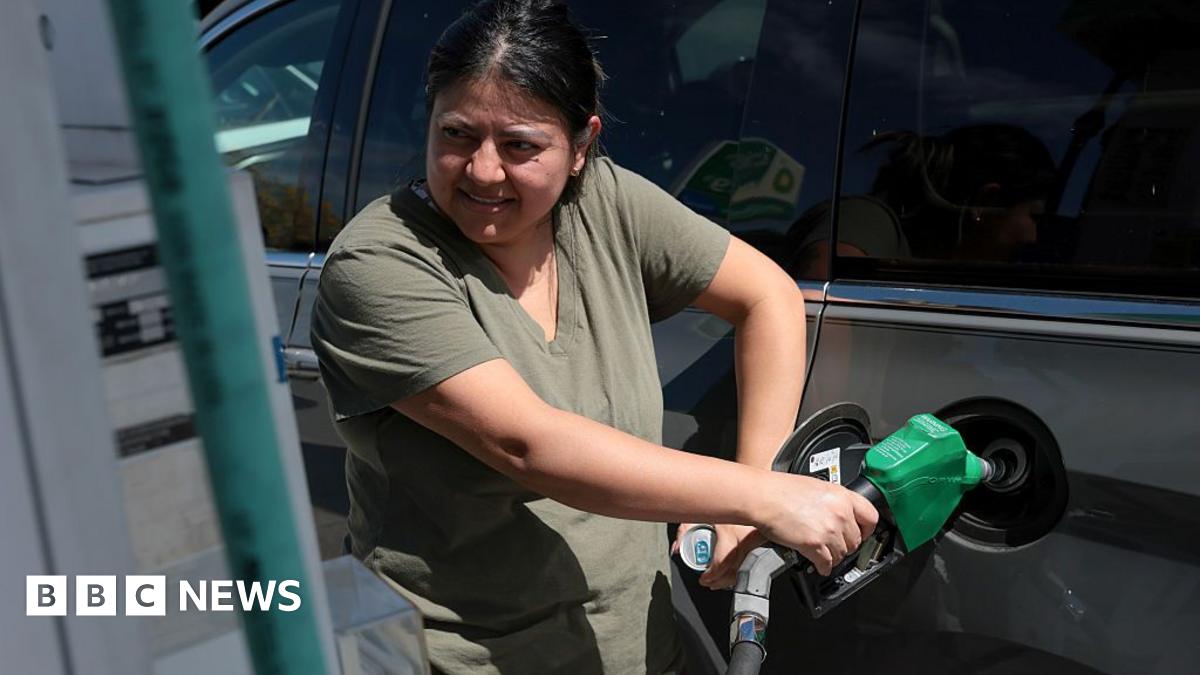
The spike in gas prices accounted for nearly three quarters of the rise in inflation from February to March.
Prices for airline tickets and clothing also increased over the month, which analysts said reflected a mix of higher energy prices and the lingering impact of tariffs, as firms continue to pass those costs onto customers.
Food prices were unchanged from February to March, but analysts said those may rise in the months ahead, as the impact of higher transportation and fertiliser costs starts to be felt.
The Strait of Hormuz is a critical passage for commodities such as natural gas, fertiliser, aluminium and helium, as well as oil.
While talks between the US and Iran have raised hopes that the waterway could re-open to ship traffic, analysts have warned that it may take time for energy supplies to normalise. Oil prices have retreated from their recent highs, but remain significantly higher than before the conflict.
The situation has dashed the hopes of many on Wall Street that the US central bank might lower interest rates this year.
“Transitory is the hope, but Fed officials will think twice before telling the public they expect inflation to be transitory, after having misjudged post-pandemic inflation and mislabelled it as such,” Atakan Bakiskan, US Economist at Berenberg said.