
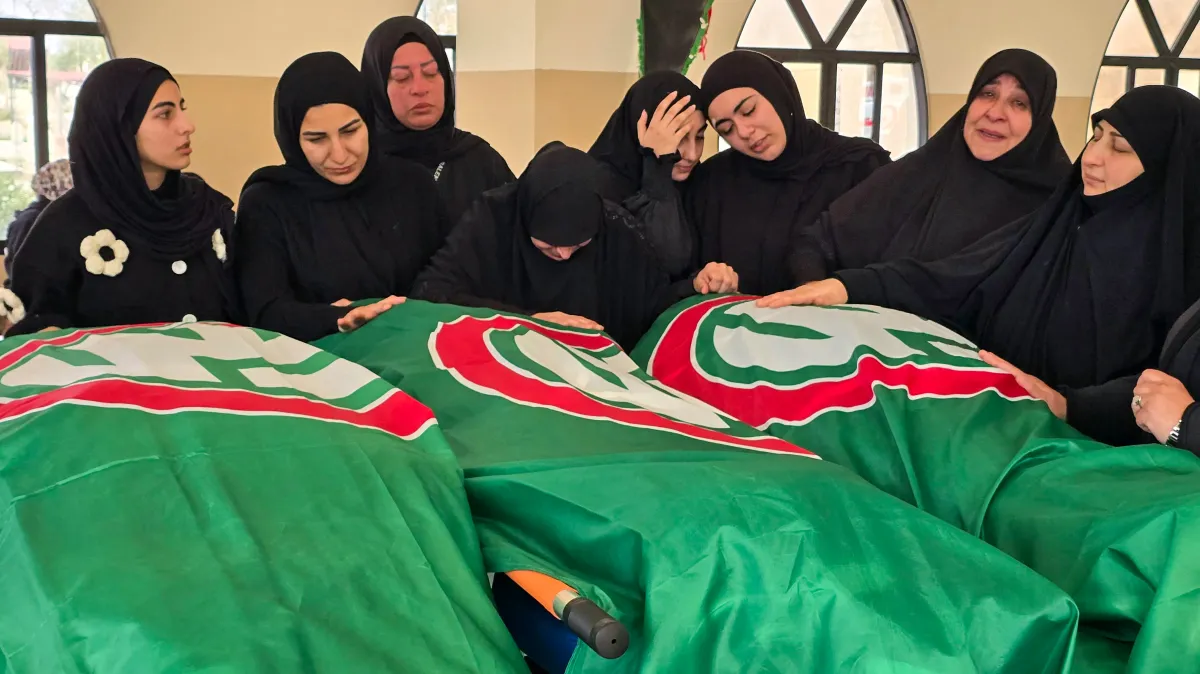
7.26pm
Pakistan PM: US-Iran talks are make or break for ceasefire
The prime minister of Pakistan, Shehbaz Sharif, said on Friday that the US-Iran talks in Islamabad slated to begin on Saturday were “make or break” to achieve a permanent ceasefire in the weeks-long Middle East conflict.
7.18pm
Kuwait National guard members injured by drones
Kuwait’s defence ministry said several members of its National Guard have been wounded, after the country’s air defences responded to a drone attack the previous day.
In a statement on Friday, the ministry said that “Iranian aggression” had targeted several vital installations belonging to the National Guard, injuring some members. They were said to be in a stable condition and receiving treatment.
The statement added that the armed forces had “detected and intercepted, over the past 24 hours, seven hostile drones in Kuwaiti airspace”.
The National Guard specified on X that some of its members had been wounded “in the line of duty at one of their sites” while others were wounded “while taking part in extinguishing a fire started by the drone attack”.
6.48pm
Pro-Hezbollah protestors take to streets of Beirut
Dozens of Hezbollah supporters took to the streets in central Beirut on Friday afternoon to protest the plans for direct talks with Israel.
Protesters gathered outside the office of the Lebanese prime minister Nawaf Salam. Some waved flags depicting Hassan Nasrallah, the former leader of the Iran-backed group killed by Israel in 2024.
6.04pm
‘I feel like someone on death row’
It was 2am and Fatemah was unable to fall asleep. If the end of civilisation was coming, as President Trump had warned, the 39-year-old human resources manager living in northern Iran would not be unprepared for the dying of the light.
She had bought supplies of drinking water and candles, charged her mobile phone and electronic devices and had taken the precaution of fleeing Tehran, the scene of the most savage destruction, with her three-year-old son. And yet Fatemeh still could not sleep.
What happened next should have left her jubilant. Trump’s reprieve, 90 minutes before his deadline to agree terms for a ceasefire, had spared Iranians yet another round of suffering. Relief, though, was soon replaced by a realisation for many Iranians: the future may not be so bright after all.
“I feel like someone on death row who has been taken back to her cell at dawn and does not know when the noose will be put around her neck,” Fatemeh said.
5.38pm
Iran has no cards in negotiations, says Trump
President Trump has said that Iran had “no cards” in the negotiations with the US except its control of the Strait of Hormuz.
In two Truth Social posts in quick succession, he wrote: “The Iranians don’t seem to realize they have no cards, other than a short term extortion of the World by using International Waterways. The only reason they are alive today is to negotiate!
“The Iranians are better at handling the Fake News Media, and ‘Public Relations’, than they are at fighting!”
5.34pm
Trump: Our ships will strike Iran if no deal is made
US warships were being reloaded with weaponry to strike Iran if talks in Pakistan failed to produce a deal, President Trump told the New York Post on Friday.
“We have a reset going. We’re loading up the ships with the best ammunition, the best weapons ever made — even better than what we did previously and we blew them apart,” Trump said.
“And if we don’t have a deal, we will be using them, and we will be using them very effectively.”
5.24pm
Hezbollah fires on northern Israel
Hezbollah, the Shia militant group backed by Iran, fired some 30 projectiles from Lebanon into Israel on Friday, the Israeli military said.
Air raid sirens were activated across northern Israel, near the Lebanese border, where Israeli forces and militants have continued to exchange fire despite a truce in the broader conflict involving Iran.
Israeli emergency services reported a strike in Safed, where a direct hit damaged several vehicles.
The emergency services reported strikes in the Galilee region, including in Baana and Deir al-Asad, where a building was hit.
Clashes between Hezbollah and Israeli forces began on March 2, two days after the militants fired rockets over the border in retaliation for US-Israeli strikes on Iran.
Israel, which said Lebanon was not covered by the truce agreed this week between Washington and Tehran, carried out strikes on Wednesday that killed more than 300 people in Lebanon.
5.12pm
Netanyahu asks to postpone trial testimony
Binyamin Netanyahu has asked to postpone giving testimony in his corruption trial citing the security situation in the region, his lawyer said in a court filing.
The trial was set to resume on Sunday after Israel lifted a state of emergency it had imposed owing to its war with Iran following Wednesday’s ceasefire announcement.
“Due to classified security and diplomatic reasons connected … to the dramatic events that have taken place in the State of Israel and throughout the Middle East, the prime minister will not be able to testify in the proceeding for at least the next two weeks,” the filing to the Jerusalem district court said.
Netanyahu, the first sitting Israeli prime minister to be charged with a crime, denies charges of bribery, fraud and breach of trust brought in 2019.
His trial, which began in 2020 and could lead to jail sentences, has been repeatedly delayed because of his official commitments, with no end date.
4.56pm
‘Start creating a European army tomorrow at the latest’
Pedro Sanchez, Spain’s prime minister, has called for the formation of a European army. “We are ready to make progress toward the creation of a unified European army as soon as possible,” he said. “Not in ten years or two years, but now. Starting tomorrow at the latest.”
The US has criticised Spain frequently over its response to the Iran war and contributions to the Nato budget.
4.40pm
EU ministers: Tax energy windfall profits
The EU has been urged to levy a windfall tax on energy companies’ profits to ease the burden on consumers as the Iran war causes prices to surge.
The finance ministers of Spain, Austria, Germany, Italy and Portugal put their concerns in in a letter published last week.
Paula Pinho, spokeswoman for the European Commission, said on Friday that “a whole range of measures” were on the table, including some that had been adopted in the past.
“We need to see what were the efficient, effective measures that were taken and that would still be suitable, what were those which maybe we should adjust, make more targeted, more limited in time,” she said.
A similar emergency tax was implemented in 2022 to address soaring energy prices after Russia invaded Ukraine.
4.35pm
Israeli strike kills 13 in Lebanon
 Israel strikes the city of Nabatieh in Lebanon
The death toll in an Israeli strike on a governmental building in the southern Lebanese city of Nabatieh has risen to 13, President Aoun has said.
He condemned continued Israeli attacks and said targeting state institutions would not deter Lebanon in the defence of its sovereignty.
4.03pm
Lebanon ceasefire before talks, Iran says
Mohammad Bagher Ghalibaf, Iran’s parliamentary Speaker, has set a ceasefire in Lebanon and the “release of Iran’s blocked assets” as preconditions for the start of negotiations with the United States.
“Two of the measures mutually agreed upon between the parties have yet to be implemented: a ceasefire in Lebanon and the release of Iran’s blocked assets prior to the commencement of negotiations,” he wrote, in English, on X. “These two matters must be fulfilled before negotiations begin.”
3.50pm
Britons are flocking back to Dubai
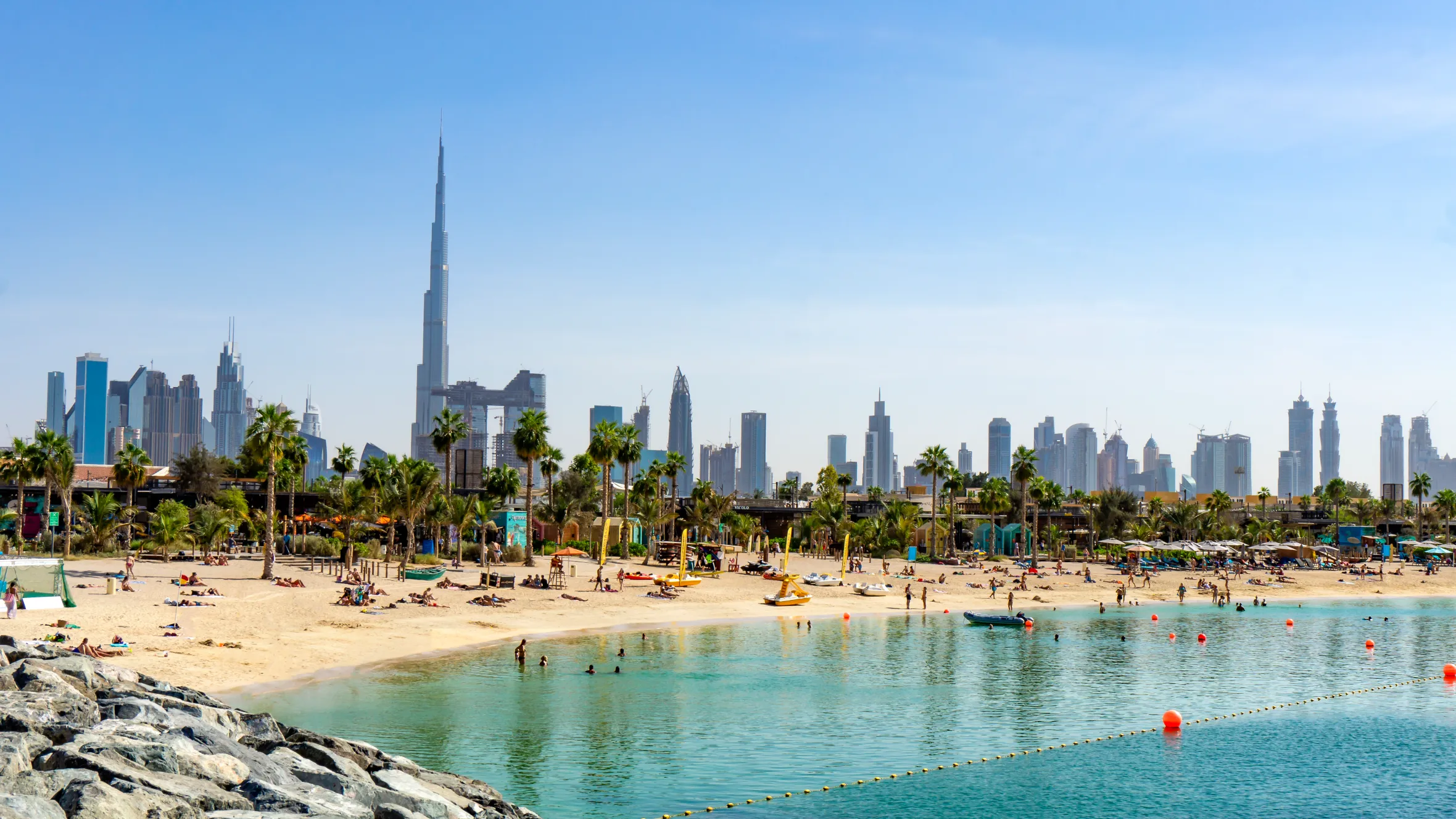 Dubai remains a tax-free havenGetty images
When the former Manchester United footballer Rio Ferdinand and his influencer wife, Kate, decided to move to Dubai, they settled on a £6.5 million mansion in the lush community of Al Barari, a popular destination for British millionaires and self-help gurus.
That was in August 2025. A few months later, the couple packed their bags and fled the “happy and vibrant” city, as Rio Ferdinand had described it, to escape the sounds of missiles and drones that Iran began launching at its neighbour.
Now in the Maldives, Kate Ferdinand, who had previously expressed misgivings about moving to Dubai, said that the trip was a “nervous system reset”.
The couple, who left Dubai alongside thousands of other Britons, are in no hurry to return to the city. Others, however, are starting to head back after sitting out the war, saying they had grown too used to the ease of life among the riches and sunshine.
3.31pm
Trump: WORLD’S MOST POWERFUL RESET!!!
President Trump has taken to social media for the first time today to claim on Truth Social, somewhat opaquely, “WORLD’S MOST POWERFUL RESET!!!”. There were no further details in the message he posted before the peace talks in Pakistan.
3.25pm
Netanyahu: Spain has chosen to stand against Israel
Binyamin Netanyahu, Israel’s prime minister, has accused Spain of waging a diplomatic campaign against Israel after he barred Madrid from taking part in the work of a US-led centre created to help stabilise postwar Gaza.
Relations between Israel and Spain have deteriorated significantly since Madrid recognised a Palestinian state in 2024. Both countries have withdrawn since their ambassadors.
“I have instructed today to remove Spain’s representatives from the coordination centre in Kiryat Gat, after Spain has chosen repeatedly to stand against Israel,” Netanyahu said in a video statement.
“Those who attack the State of Israel instead of confronting terrorist regimes will not be our partners in shaping the region’s future.”
3.21pm
US to ask for release of detainees in Iran
US negotiators intend to request the release of Americans detained in Iran as part of talks aimed at ending the war, the Washington Post reported.
At least four Americans are thought to have been detained. They include Kamran Hekmati, 61, and Reza Valizadeh, 49, who are thought to have been held in the notorious Evin Prison, the same facility where the British couple Lindsay and Craig Foreman have spent 15 months.
3.05pm
Airports ‘face fuel shortages within weeks’
European airports could experience fuel shortages within weeks, an industry body has warned.
ACI Europe, which represents airports within the EU, wrote in a letter to the bloc’s transport commissioner that: “If the passage through the Strait of Hormuz does not resume in any significant and stable way within the next three weeks, systemic jet fuel shortage is set to become a reality.”
That, it said, would “severely disrupt airport operations and connectivity”.
2.50pm
Fact or fiction? The CIA ‘Ghost Murmur’ tool that found US airman
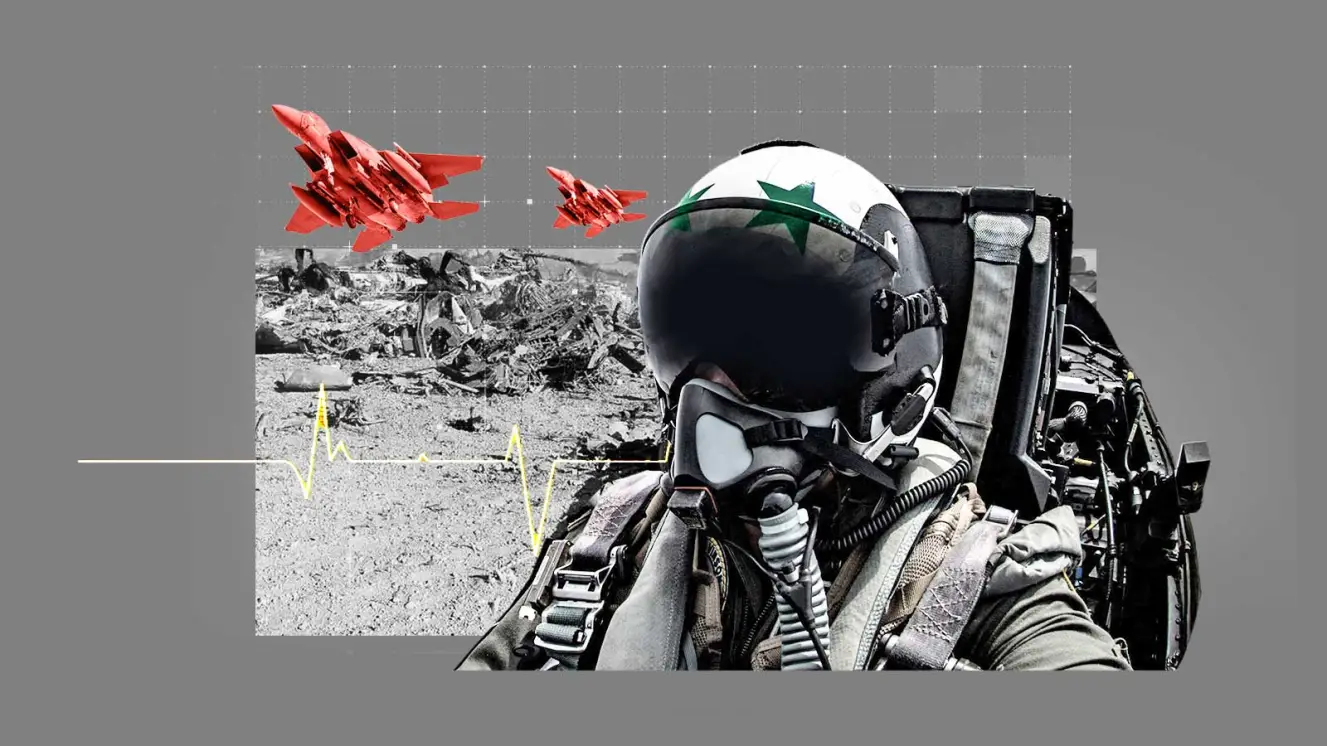
The colonel, one of a two-man crew of an F-15E Strike Eagle shot down by an Iranian shoulder-launched missile, had spent two days trying to conceal his location from enemy search parties, while letting his would-be rescuers know where he was.
Apart from intermittent radio contact, all he had was his personal “come-and-get-me” beacon signal. And he dared switch that on only occasionally, for the Iranians would surely be monitoring the conventional means of rescuing him.
What ultimately led to salvation, however, was far from conventional. One of the most intriguing secrets of Operation Epic Fury is how, using an “exquisite” piece of classified technology, the CIA succeeded in finding the injured airman in Iran by detecting his heartbeat, the tiniest evidence of human life concealed in a narrow crevice up a 7,000ft mountain ridge.
2.47pm
Israeli strikes ‘kill Lebanese state security members’
Lebanese official media said Israeli strikes on Friday in the southern city of Nabatieh killed eight members of the country’s state security agency.
The state-run National News Agency said “enemy warplanes launched a series of heavy strikes” on the city, including one in the vicinity of the Nabatieh government building that hit the nearby state security office.
2.42pm
Pope Leo: God does not bless any conflict
“Anyone who is a disciple of Christ, the Prince of Peace, is never on the side of those who once wielded the sword and today drop bombs,” the Pope has written on X. “Military action will not create space for freedom or times of #Peace, which comes only from the patient promotion of coexistence and dialogue among peoples.”
The Pope, who was born in the US, has clashed with the President Trump and there were reports this week that he would not return home while he remained in the Oval Office.
Trump has been asked if God approved of the war in Iran, answering: “I do, because God is good — because God is good and God wants to see people taken care of.”
2.29pm
‘Don’t underestimate Iran in peace talks’
Iran are “tough negotiators” and “it would be wrong to underestimate them”, Sir Simon Fraser, a former Foreign Office chief, told BBC Radio 4’s The World at One.
As peace talks are expected in Islamabad between Iranian and US delegations, Fraser said: “The Iranians are … very experienced in negotiation and they have a lot of expertise, and they are tough negotiators, so it would be wrong to underestimate them, and I think that you need to engage in such a negotiation with a lot of seriousness.”
Fraser, who negotiated with Iran in 2011, said issues such as Iran’s nuclear programme, sanctions and control of the Strait of Hormuz were technical and could not “be decided on the back of an envelope”.
“I do think the signs are that both sides would prefer this negotiation to get under way, and that is a cause for cautious optimism,” he added.
2.20pm
US inflation surges to 3.3%
Inflation in the US has jumped to 3.3 per cent because of the surge in energy costs caused by the war in Iran, the Bureau of Labor Statistics said on Friday, putting pressure on President Trump to find a way to open up the Strait of Hormuz and reverse elevated oil prices.
The Consumer Price Index for March was up 0.9 points on February’s 2.4 per cent annualised inflation rate, the highest monthly increase since the peak of the post-pandemic inflation surge in June 2022.
Americans are paying 40 per cent more for a gallon of petrol than they were in late February, and in Thursday prices at the pump hit an average of $4.15 (about £3). Fuel increases have caused price rises across the economy from airlines to food delivery companies.
2.15pm
Israel-Lebanon talks to take place next week
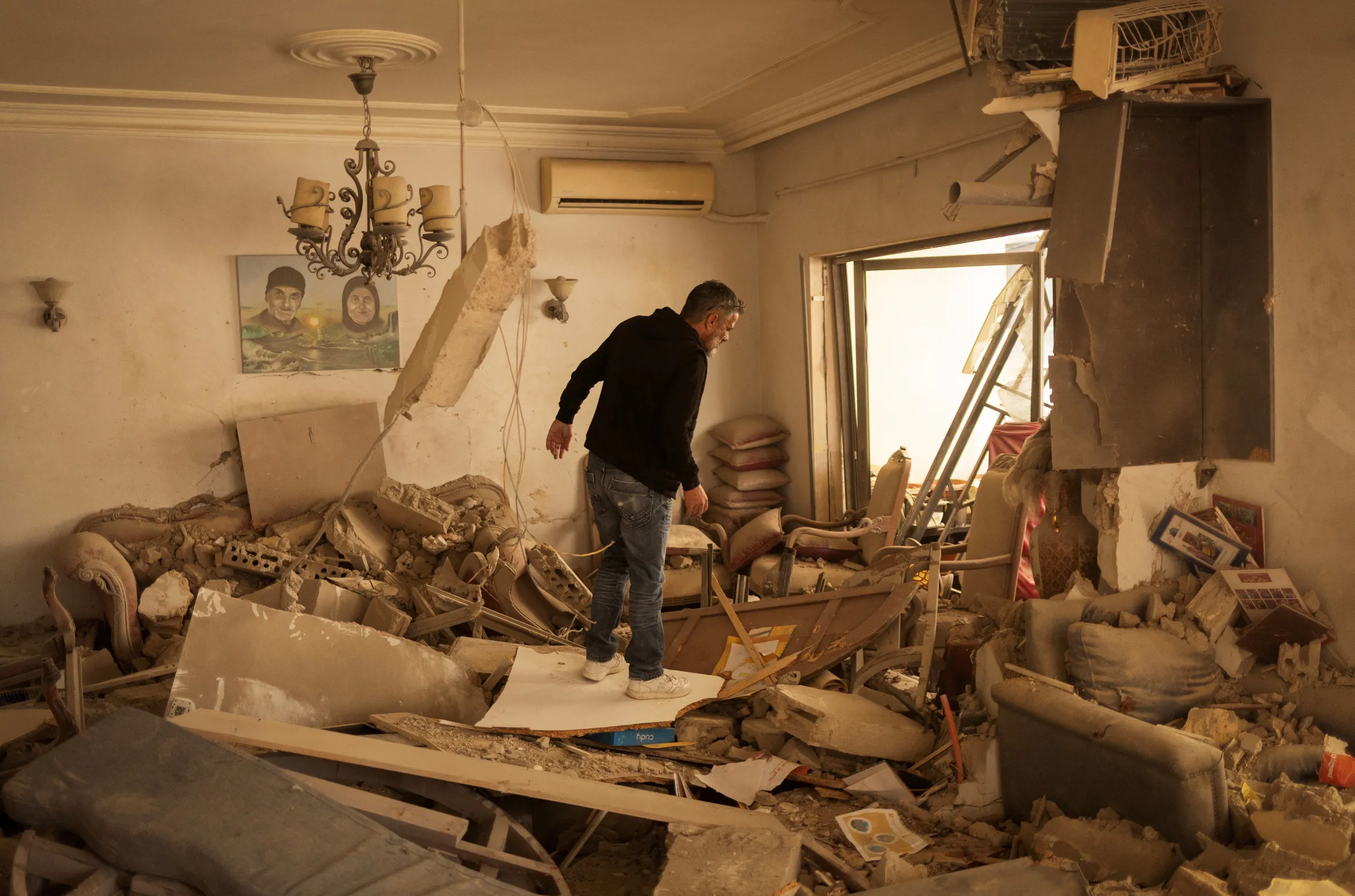 A house damaged during Israeli strikes in BeirutAdnan Abidi/Reuters
Talks between Israel and Lebanon are set to take place in Washington next week between Yechiel Leiter, the Israeli ambassador to the US, and his Lebanese counterpart, Nada Hamadeh Moawad.
Binyamin Netanyahu, Israel’s prime minister, said on Thursday he had authorised direct negotiations with Lebanon “as soon as possible”.
That prompted a warning from Naim Qassem, the Hezbollah chief, who told the Lebanese government to stop giving “free concessions” to Israel.
“We will not accept a return to the previous situation, and we call on officials to stop offering free concessions,” Qassem said in a written message broadcast on the party’s Al-Manar TV, in which he also denounced the “bloody criminality” when Israeli strikes killed more than 300 people in Lebanon.
2.10pm
UK has ‘done more than any other European nation’
The UK has done more to help the US during the Iran war than any other European nation, Lord Darroch of Kew, a former UK ambassador to the US, told Times Radio.
Darroch, who worked with both the Trump and Obama administrations, said President Trump’s threat to audit Nato allies remained “ominous”.
“We have actually done more than any other European [nation]… We’ve deployed planes to the region, we’re shooting down drones, or assisting our Gulf partners to shoot down drones,” he said.
However, he warned that the Trump administration could take a different view, and that its “weird” audit was likely to be more “impressionistic” than “forensic”.
2.00pm
Vance warns Iran not to ‘play’ US in talks
JD Vance, the US vice-president, said he was looking forward to negotiations but warned Iran not to “play us”.
Speaking before leaving Washington for Pakistan, he said: “As the president of the United States said, if the Iranians are willing to negotiate in good faith, we’re certainly willing to extend the open hand.”
He added: “If they’re going to try to play us, then they’re going to find the negotiating team is not that receptive.”
1.35pm
The oil price in Europe isn’t a big concern, investment firm boss says
Global markets have shown “perspective” in the face of the Middle East energy crisis, an investment firm boss told Times Radio.
Ben Kumar, the head of equity strategy at Seven Investment Management, said European oil constraints “[aren’t] really a big concern” for tech investors.
Kumar said that “year-to-date, the FTSE 100’s up 7 per cent… the US market is about flat for the year, European markets are doing OK.”
He added that “as long as oil stays below… $100 or $110 a barrel, it’s not existential for most of the main companies, the big companies around the world.”
“It’s not too big a problem, especially if you’re investing for the next ten or fifteen years in a company like Microsoft, for example. The oil price in Europe isn’t really a big concern.”
1.19pm
UAE to assess regional allies it can rely on
A senior diplomatic figure in the UAE has said that after the war, the Emirati government will study future international ties and “determine who can be relied upon”.
“With the confidence of one who has triumphed over a perfidious assault, we will scrutinise the map of our regional and international relations with precision, and determine who can be relied upon, including the structuring of an economy and financial system that bolsters the resilience of our model,” Anwar Gargash said on X.
The UAE has come under constant ballistic missile and drone attack from Iran during the war.
1.03pm
UN warns of rising food insecurity in Lebanon
The United Nations has warned that food insecurity was on the rise in Lebanon. As Israel has continued military strikes on the country, prices have been surging and supply chains disrupted.
The UN’s World Food Programme (WFP) said the entire food system in Lebanon was reeling from the conflict, especially since Israel launched its heaviest strikes on the country this week. More than a million people have been displaced in Lebanon by the conflict, and Israel has launched a ground invasion in the south.
“What we’re witnessing is not just a displacement crisis: it is rapidly becoming a food security crisis,” Allison Oman, the WFP’s country director in Lebanon, said. “We’re already seeing clear signs of rising food prices across Lebanon. In just one month, the price of vegetables has surged by more than 20 per cent, bread prices have increased by 17 per cent.
12.50pm
Hezbollah targets Israeli naval base
Hezbollah has said it fired missiles at Israel’s Ashdod naval base, two days after more than 300 people died in Israeli airstrikes on Beirut.
“In response to the enemy’s violation of the ceasefire and its repeated attacks on Beirut, and after the Resistance adhered to the ceasefire while the enemy did not, the fighters of the Islamic Resistance targeted… the naval base in the port of Ashdod with missiles,” the group said.
12.35pm
‘No ceasefire with Hezbollah’, Israelis say
Binyamin Netanyahu’s chief foreign policy adviser refused to say that Israel was scaling back its military operation in Lebanon despite President Trump’s directive to keep it more “low-key”.
Ophir Falk told NBC that Trump and Netanyahu are in “complete agreement”, but added: “There was no real need to ask Israel to scale back because the hit yesterday was the hardest hit since the pager operation. We took out hundreds of Hezbollah fighters. Clearly we’re going to be hitting different places. As the prime minister said, there is no ceasefire with Hezbollah.”
In a phone call on Wednesday, Trump asked Netanyahu to pull back on the strikes to help ensure the success of the negotiations. Trump confirmed that conversation in his interview with NBC News on Thursday, saying the Israelis were “scaling back” operations in Lebanon.
“I spoke with Bibi and he’s going to low-key it. I just think we have to be sort of a little more low-key,” Trump said. Falk said late on Thursday: “Well the president and prime minister have great cooperation. We’re partners in war and partners in peace.”
12.20pm
Ex-British ambassador to Israel: Iran unlikely to give up nuclear programme
Iran is “trying it on” with its demand to levy tolls on Strait of Hormuz tankers, a former British ambassador to Israel has said.
Matthew Gould told Times Radio that Iran were “extremely tough negotiators” who “always put maximalist demands on the table”.
But he told the presenter Rosie Wright that the regime would not see the issue as “existential”.
The nuclear programme, on the other hand, is paramount.
He said: “The Iranian regime will be looking at the events of the last few weeks and thinking, actually, one of the lessons they draw from it is their best guarantee of survival into the future is precisely to allow themselves room to continue a nuclear programme.”
12.10pm
Peace talks to create ‘gaps between Washington and Jerusalem’
US-Iran peace talks will create “enormous tension” between Washington and Israel, a former British ambassador to Israel has said.
Matthew Gould told Times Radio that Binyamin Netanyahu will be “straining every sinew” to ensure that Trump does not leave him in a “difficult position”.
“That’s where you start to see some really serious gaps opening up between Washington and Jerusalem,” he said, pointing to discussions around Iran’s nuclear enrichment programme. “Netanyahu is very clear that you cannot trust the Iranian regime. So he wanted to see the nuclear programme completely obliterated.
“I don’t think President Trump had the same clarity of objective… so I think that question is going to be a source of enormous tension between the two governments as the peace talks unfold.”
12.05pm
More than 125,000 civilians ‘damaged’, according to Iranian organisation
A total of 125,630 civilian units have been damaged across Iran in US-Israeli attacks, including 857 schools, according to the Iranian Red Crescent Society (IRCS).
Its head, Pirhossein Kolivand, said 23,500 of the damaged sites are commercial centres and places of business, in comments to Iran’s IRNA news agency.
The IRCS said 857 schools and 32 universities sustained damage during the 39-day period before the truce. He added that 339 medical facilities were also struck — these include hospitals, pharmacies, laboratories, health centres and emergency rooms.
The IRCS did not provide casualty figures.
12.02pm
Escort missions in Strait would not help, editor says
Naval escorts would do little to unplug the “paralysis” in the Strait of Hormuz, a maritime publication editor has told Times Radio.
Richard Meade estimated that, even if western allies led escort missions to help stranded tankers, transport would remain 90 per cent below normal levels.
“The reality is, if you were doing this on an escort basis with convoys of five to ten vessels, because that is realistically what you could squeeze through to offer the maximum security, that doesn’t help,” he said.
“Prior to the conflict, you were looking at around 120 to 150 vessels transiting the strait today. You would essentially be getting barely 10 per cent of that if you were doing that under a naval escort system.”
11.59am
Starmer: Ceasefire has to involve Gulf states
Sir Keir Starmer has said he used his call with President Trump to lay out the views of the Gulf states.
Starmer spoke to Trump yesterday, and they mainly discussed a “practical plan” to reopen the Strait of Hormuz.
The prime minister today shed more light on their discussions, telling broadcasters: “[I] set out to him the views of the region here, these Gulf states are the neighbours of Iran, and therefore, if the ceasefire is to hold — and we hope it will — it has to involve them.
“They have very strong views on the Strait of Hormuz. We spent most of the time on the call talking about the practical plan that’s going to be needed to get navigation through the strait and the role that the UK is playing.”
11.55am
Ceasefire remains fragile, Starmer says
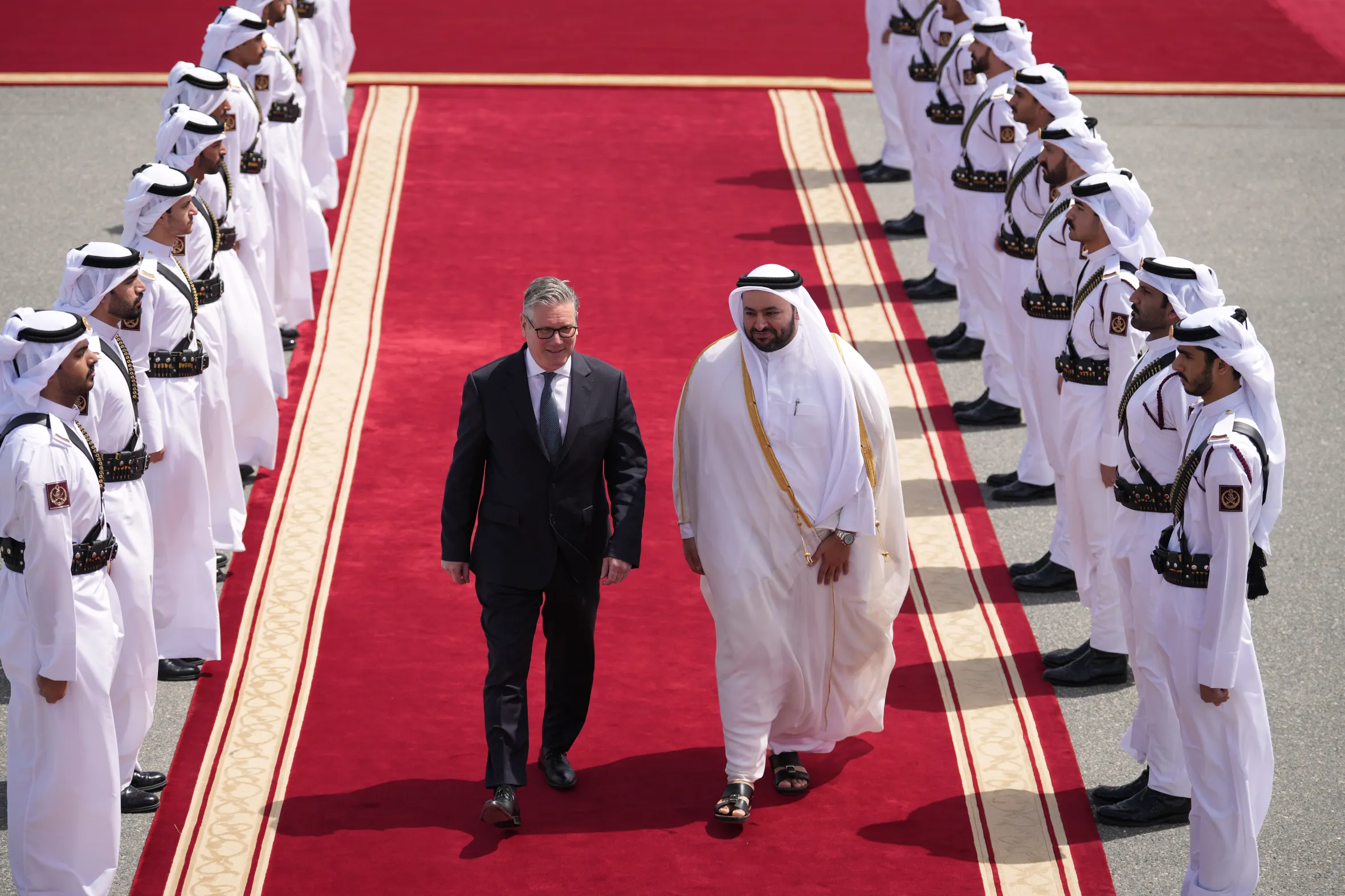 Sir Keir Starmer leaving QatarAlastair Grant/Getty Images
Sir Keir Starmer said that the ceasefire in the Middle East remains “fragile”, as he left Qatar at the end of his trip to the region.
The prime minister said: “Obviously, the discussion moved very quickly to the ceasefire, a sense that it’s fragile, that more work is needed, that the Strait of Hormuz has to be part of the solution, a very strong sense that there can’t be tolling or restrictions on that navigation.
“And so we come away from here with a real desire on their part to work more closely with us on defence resilience, on economic resilience — that’s really important to us, because this is impacting us back at home, on our economy… It’s a big opportunity as well for the United Kingdom.”
He added that the “conflict is going to define us for a generation and we must respond, and we will respond, with strength”.
11.45am
Zelensky urges UK to reconsider EU exit
President Zelensky has called on Britain to rejoin the European Union and play a central role in the continent’s security.
Speaking to The Rest is Politics podcast, the Ukrainian leader said Britain should reconsider its position given America could potentially withdraw from Nato — and said other countries, including his own, should also sign up to the EU.
“If the United States truly thinks about withdrawing from Nato, then European security will be based solely on the European Union,” he said. “But not in its current form. I think that the EU is in a situation where it needs more countries. The UK, Ukraine, Turkey, and Norway. These are four strong countries, which are part of Europe.
Together, the UK, Ukraine, and Turkey have armies that are stronger than Russia’s army. Without Ukraine and Turkey, Europe can’t match Russia. With the four countries on board you can wrest control of the seas, have secure skies and the largest land forces.”
He added that “Europe has to think about security and how to preserve its independence”.
11.37am
Starmer: We need to do more in Nato
Sir Keir Starmer has said European allies must “do more” in Nato after President Trump stepped up threats to quit the alliance.
The prime minister said: “We’re very strong supporters of Nato and I’ve been making the argument for some considerable time that we need to do more. It’s the single most effective military alliance the world has ever known.
“Do we Europeans need to do more? Yes, I’ve been making that argument for the best part of two years, to our European partners as much as anybody else.”
He added: “It is in America’s interests, it’s in European interests. Nato is a defensive alliance, which for decades has kept us much safer than we would otherwise have been… We’ll always be strong supporters of Nato. Do I think this will be a stronger European element to Nato? Yes, and I think we should step into that space.”
11.29am
Iran charging $2 million to pass through Strait, editor says
Iran is already charging tankers $2 million to pass through the Strait of Hormuz and proceeds are going straight to the Iranian Revolutionary Guard Corps, according to the editor of a major shipping publication.
Richard Meade, editor-in-chief at Lloyd’s List, told Times Radio: “There is effectively this informal Tehran tollbooth system in place, where essentially ships are being asked to part with around $100 a barrel, so in the region of around $2 million for a large tanker, in cryptocurrency or settle in yuan. And that’s going via the Iranian Revolutionary Guard Corps, and the payments are being made direct.”
He added that while the “majority of ships have stopped moving due to the security risks”, countries with “negotiated diplomatic settlements with Tehran” were avoiding the levies.
“India, Pakistan, Malaysia, they have all had ships move in without necessarily having to pay direct fees,” he said.
11.23am
John Healey not worried about potential Trump punishment
The defence secretary does not expect Trump to punish the UK for disappointing him with its position on the Iran war.
There have been reports that the US president will audit allies’ levels of co-operation during the conflict, amid concerns that Washington could withdraw its troops from British bases.
Asked if he was worried, John Healey told Sky News: “No, I’m not for two reasons. One, this is rightly, consistent with what President Trump and US have been saying, which is that they want to see each and every Nato member stepping up and doing more in Nato, on Ukraine, on defence spending.
“Secondly, our actions in support of our forces, our allies, and in some of the operations [such as] the US strikes on Iranian missile sites, have been an important part of seeing this conflict reach this point.”
Healey says US ‘absolutely locked’ into Nato
11.13am
Israel tells WHO it will not target Beirut hospitals
The World Health Organisation says it has received assurances that two hospitals in Beirut featured in an Israeli evacuation order will not be targeted.
The estimated 450 patients inside the Rafik Hariri University Hospital and Al Zahraa Hospital in Beirut have not been evacuated because it was not feasible, Abdinasir Abubakar, the WHO’s representative in Lebanon, said.
11.03am
Close to 600 children killed or injured in Lebanon
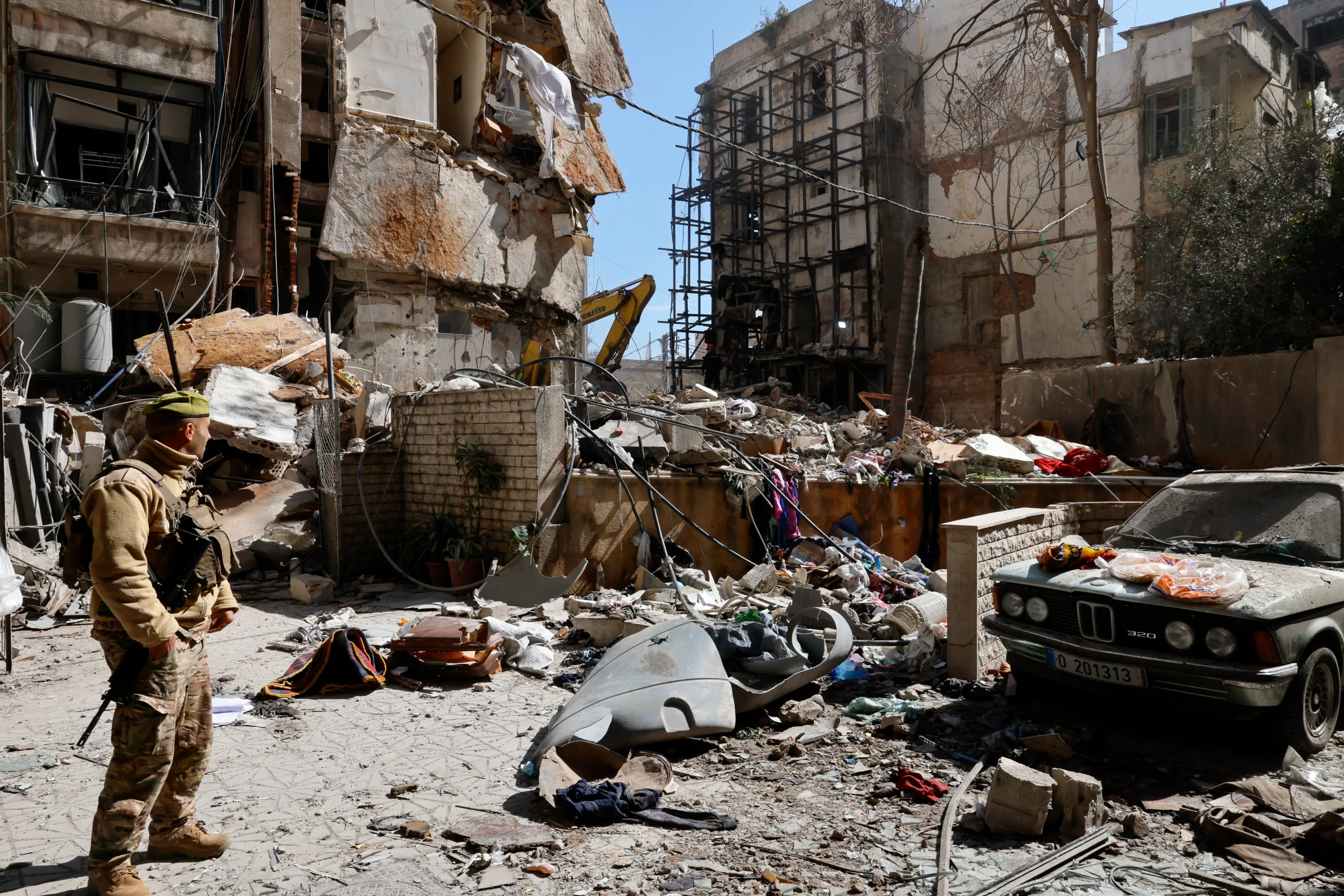 A Lebanese soldier after an Israeli airstrike in BeirutWael Hamzeh/EPA
Nearly 600 children have been killed or injured in Lebanon since the outbreak of the latest Israel and Hezbollah war in a little more than a month, Unicef has said.
The death toll increased as 33 children were killed in a barrage of Israeli attacks on Wednesday, the UN’s children’s agency said.
“Unicef is receiving reports of children being pulled from under the rubble, while others remain missing and separated from their families. Many are experiencing trauma, having lost loved ones, their homes, and any sense of safety,” Unicef said.
It called on all parties to respect international law. “International humanitarian law is clear: civilians, including children, must be protected at all times,” it added.
10.48am
How far is the US willing to concede?
Analysis by Samer Al-Atrush
The war that was meant to push Iran over the edge instead has restored its deterrence power in the region, while disabusing the US and Israel of any hopes for a military victory against the regime.
But if it were to think past the short term, Tehran still has every reason to reach an agreement with the US that would lift the crippling sanctions on the country, which guarantee continued domestic unrest and opposition to the regime.
What terms it will accept remains to be seen, but given its performance over the war, it is unlikely to budge on its missile arsenal, or what it calls its “right” to enrich uranium. The question now is how far the US is willing to concede.
10.39am
Iran will seek to cement its gains in talks
Analysis by Samer Al-Atrush
The last time American negotiators faced off with their Iranian counterparts, the threat of war loomed over Tehran, which was then led by a zealous yet careful despot.
More than five weeks later, the US faces a very different Iran, one emboldened by having stood up to a combined US and Israeli attack while remaining in control of one of the world’s key oil trade routes. This time, it is led by a new, and more radicalised, government, headed by Ayatollah Khamenei’s vengeful son. It is difficult to imagine why Iran would attend today’s talks in Pakistan in the mood for compromise.
Instead, Iran will be seeking to cement the gains it made during the war. For three years, Tehran and its regional allies have been decimated by Israeli and American airstrikes, and it appeared ready to collapse after a nationwide uprising in January.
10.31am
John Healey warns increased defence spending means cuts elsewhere
The government must persuade the British public to accept that increased defence spending will mean cuts elsewhere, the defence secretary has said.
John Healey told the London Defence Conference: “Fundamentally, if we want to see this increasing in government, in public investment, in what we do and what we believe is needed, then we’ve got a job to be able to gain the acceptance — maintain the acceptance and understanding — of the public to support investments in defence.
“Because to some extent, they will always come at the expense of other areas that people would like to see action.”
10.25am
‘I came back after five minutes and the building was not there’
At a site in west Beirut where an entire building had been razed to the ground in the wave of attacks on Wednesday morning, locals say the building was used as a storage centre with aid for displaced people from the south of the country (Jack Clover writes).
At least nine were killed in the strike. Israel claims it was linked to Hezbollah.
Nappies and tins of fish lie strewn on the floor, smoke and dust rises. Cars are overturned.
“I was eating with them, I left for five minutes, I came back and the building is not there” a 62-year-old man, who was a supervisor at the centre, said.
10.21am
Iran war will define us for a generation, Starmer says
Sir Keir Starmer has said that the Iran war is a “line in the sand” that “will define us for a generation”.
Writing in The Guardian, the prime minister outlined his foreign policy approach, including pushing for de-escalation, defensive actions against Iranian military capabilities and “sustained” defence investment.
He also acknowledged war’s domestic impact, writing: “The same instability that threatens global security drives up energy prices, disrupts supply chains and puts pressure on family finances here in Britain.”
10.13am
Spain condemns ‘unacceptable’ Israeli strikes on Lebanon
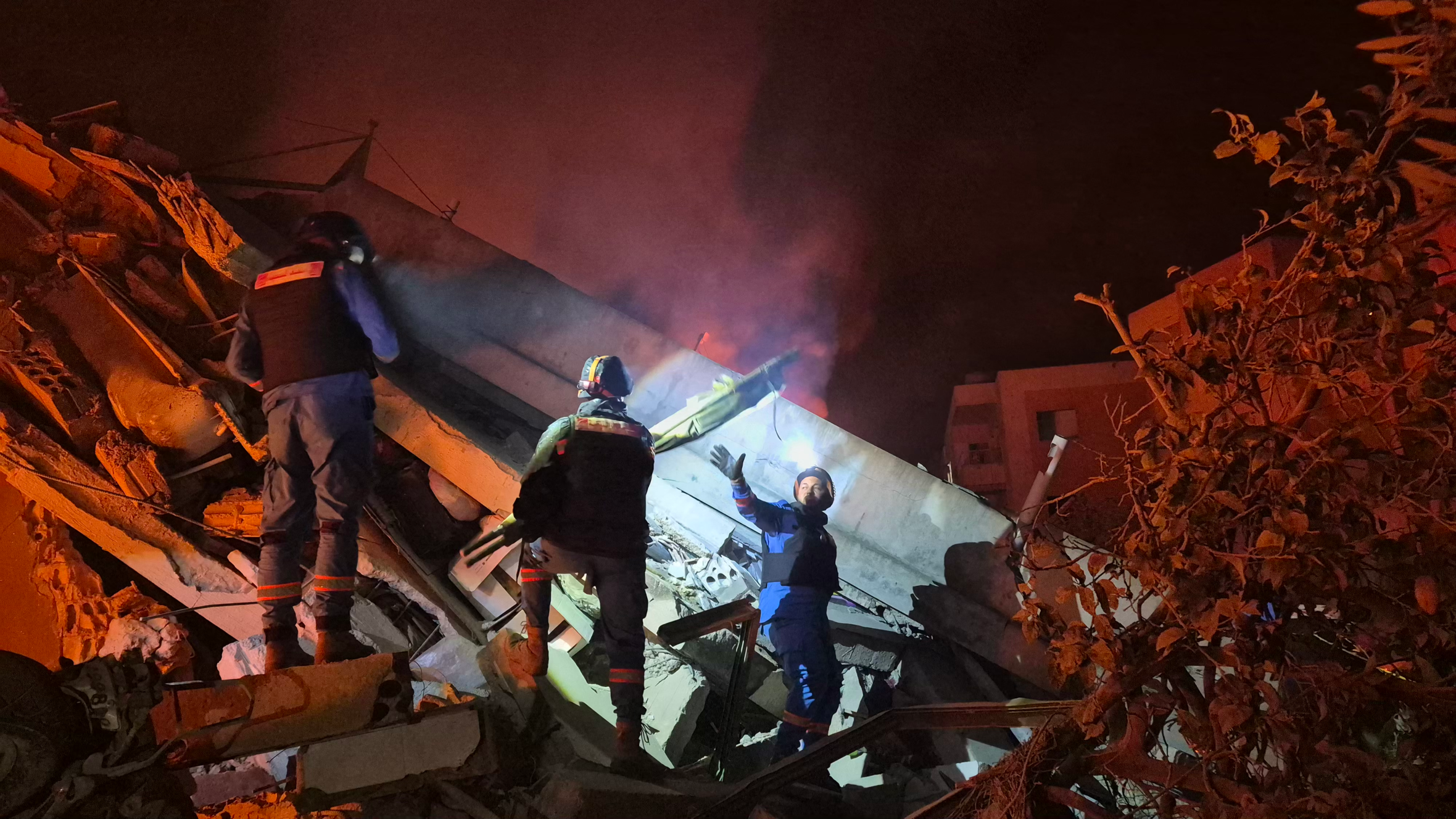 The site of an Israeli airstrike in the village of Habbouch, southern LebanonAbbas FAKIH/Getty Images
Spain’s foreign minister Jose Manuel Albares has described Israel’s attacks on Lebanon as “a disgrace on the conscience of humanity”.
“[The offensive against] Lebanon is a disgrace on the conscience of humanity. The level of violence, the violation of international law and international humanitarian law by Israel is unacceptable,” Albares said.
It is the latest criticism from Madrid of Israel. Earlier this week, Spain’s prime minister, Pedro Sanchez, said Binyamin Netanyahu’s “contempt for life and international law is intolerable”, after attacks on Beirut which left hundreds dead.
10.07am
John Healey: Judge the UK on its actions, not Trump’s words
The UK should be judged on its actions in the Middle East rather than President Trump’s social media posts, the defence secretary said.
John Healey told the London Defence Conference: “In the end I’d rather our actions spoke for themselves. And if you look, even in this current conflict, the basing permissions that we in the UK have agreed with the US have been invaluable to their military operations.”
After it was put to him that Trump was furious that the UK did not give permission to use British bases earlier, Healey said “sure”, but added: “In northern Iraq, our RAF regiment has been, almost daily, taking down drones and jointly protecting US forces and that joint base we’ve got with them.
“If we focus on our actions rather than just simply the exchange of words and social media posts, then the fundamentals for me remain.”
10.05am
Defence minister praises Royal Navy
Luke Pollard, a defence minister, has denied President Trump’s claims that the Royal Navy is made up of “old” aircraft carriers that “don’t work” and are “toys”.
Asked on BBC Breakfast whether there is “an element of truth in that”, Pollard said: “No. No, we’ve got a strong Royal Navy. HMS Sutherland, the Type-23 frigate behind me here, is crewed by brilliant men and women. We’ve got a globally deployed navy at the moment. We’re adding to that navy with new autonomous capabilities, creating a hybrid navy.”
He added: “So our Royal Navy is working, it is deployed, and yes, we are also dealing with the hollowing out and the underfunding of the navy that we inherited from the previous government. That’s why the shipyards in Glasgow and in Rosyth are building the brand new Royal Navy frigates.”
9.58am
UK’s survival depends on freedom of seas, foreign secretary says
Yvette Cooper stated that Britain’s survival depends on maritime freedoms, in a speech yesterday.
The foreign secretary, speaking at the annual Easter banquet in Mansion House, central London, said: “Here in Britain, the importance of this runs deep in our history. Because we’re an island nation, a maritime economy. 95 per cent of our trade is carried by sea, 40 per cent of our food is imported, and it was Victorian Britain that pioneered the freedom of the seas, the maritime law made piracy a crime of universal jurisdiction.
“And today we know, more than ever, that freedom of navigation is the underpinning of global trade, and it matters for every sea, every ocean, every strait, every country has a stake in this.”
9.53am
‘Turbulence is now the new normal’
The foreign secretary yesterday warned Britons that “instability and volatility” are “the new normal”.
“Events in the Middle East weigh heavily on us, and it might be tempting or even comforting to think that the Iran crisis is a once in a generation shock,” Yvette Cooper said at her Mansion House speech to the City of London.
“But this is the third time in six years that international events have sent economic tidal waves around the globe, hitting Britain’s shores. The Covid pandemic, the invasion of Ukraine, and now the Iran conflict.
“Instability and volatility are becoming increasingly chronic, and turbulence is now the new normal.”
9.48am
Yvette Cooper says closer ties with Europe are needed
The UK is emerging from “an era of complacency” and must forge deeper ties with Europe, the foreign secretary has said.
Yvette Cooper said yesterday: “For too long, the UK clung to the prevailing security assumptions of the last two decades. Our country had planned for a post-Cold War peace dividend. Instead, we have an aggressive expansionist Russia that menaces our continent. Instead, we’ve seen instability, inequality and rising protectionism threaten economic security.”
Addressing, the increasing pressure on Nato, she said the US remained “indispensable”, but that closer ties with Europe are also needed.
She hailed foreign policy moves including “a landmark bilateral treaty with Germany”, “deeper nuclear security co-operation with France”, and closer ties with the European Union on defence and trade.
9.42am
Israel ‘not in a ceasefire’ with Lebanon
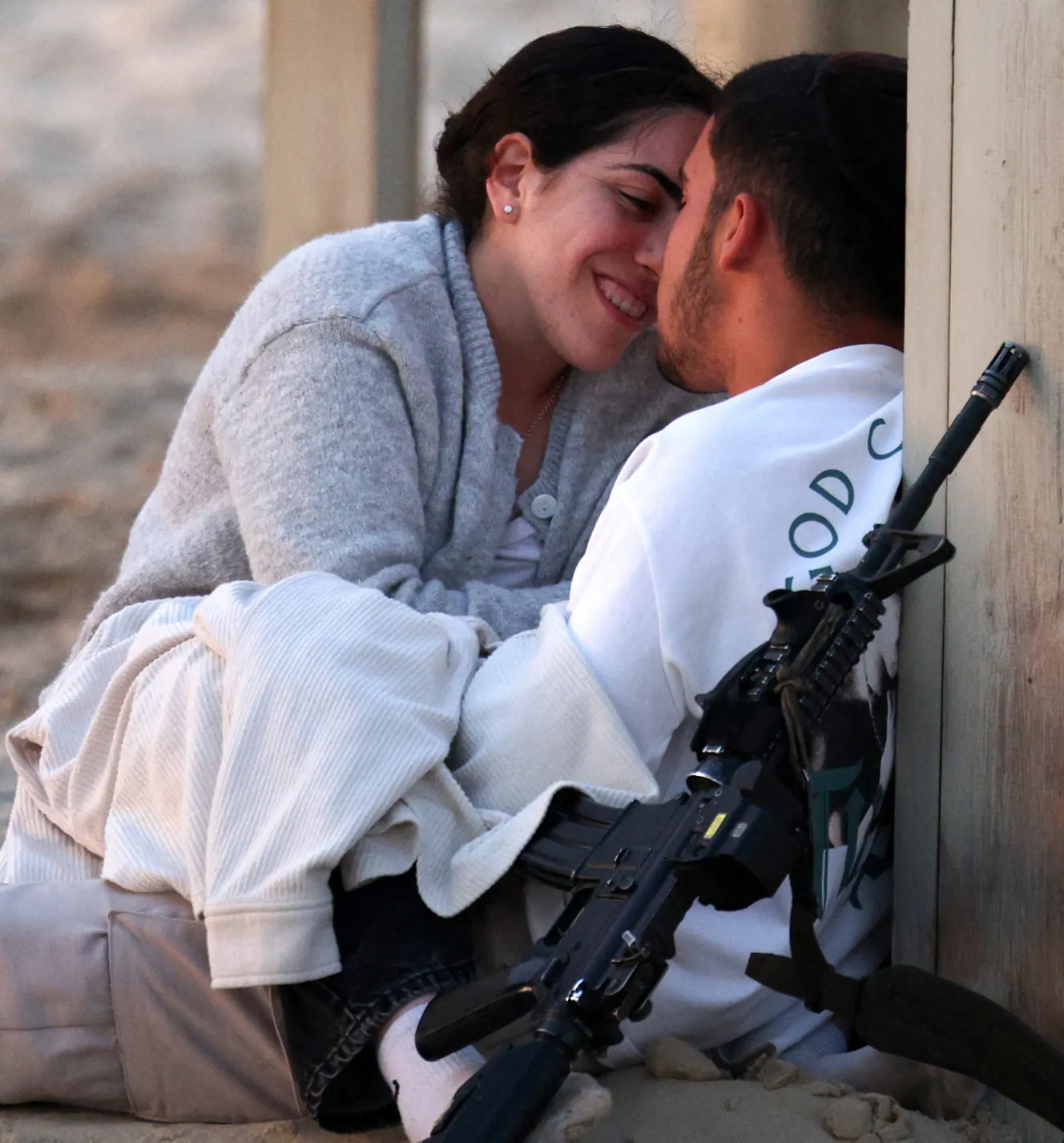 An Israeli couple hangs out by the Mediterranean after the U.S. and Iran agreed to a two-week ceasefire that was later endorsed by Israel, in Tel Aviv, Israel April 9, 2026. REUTERS/Florion GogaReuters
Israel’s military is in a “state of war and not in a ceasefire”, its chief of staff has said.
Eyal Zamir added in a video released this morning while meeting troops that Israeli forces are continuing their combat operations in southern Lebanon.
During a visit near Bint Jbeil in southern Lebanon, Zamir said: “We continue to fight here in this sector, this is our main fighting sector. In Iran, we are in a ceasefire, and we can return to fighting there at any moment, and in a very powerful way,” the Times of Israel reported.
9.28am
Islamabad holds its breath ahead of talks
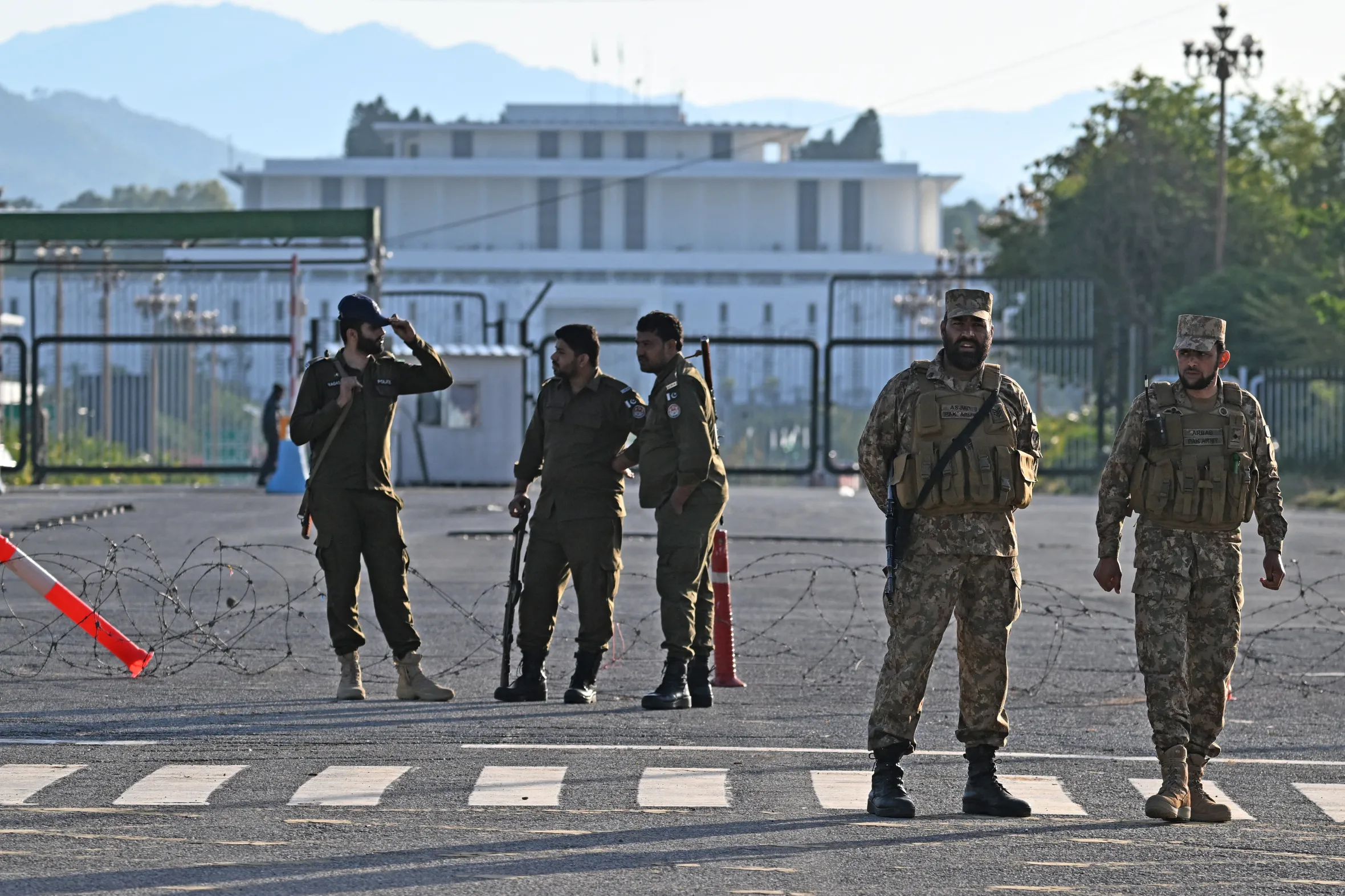 Pakistani soldiers in Islamabad’s diplomatic and administrative sector, the Red ZoneAamir QURESHI/Getty Images
Pavements in Islamabad are receiving fresh coats of paint, a strong security presence is being intensified, and a sense of anticipation fills the air as the Pakistani capital prepares for the meeting between US and Iranian negotiators (Haroon Janjua writes).
The city is on high alert with large convoys of black SUVs driving through the streets. Police and military roadblocks have sprung up on key roads. Paramilitary rangers guard government buildings, and shipping containers have been used to block roads.
There is increased security around Islamabad’s diplomatic and administrative sector, the Red Zone. Several highways have been shut, surrounding schools have switched to remote learning, and critical government agencies have declared temporary closures to facilitate traffic.
“It feels like the city is holding its breath,” Osama Malik, a resident, said. “This is a major event hosted by Pakistan, but I am not sure the war will end anytime soon.”
9.21am
Yvette Cooper: No place for tolls on international waterway
Yvette Cooper says reopening Strait won’t end global turbulence
Yvette Cooper has said that passage through the Strait of Hormuz must not be “sold off to individual bidders”.
The foreign secretary, making an annual policy speech in the City of London yesterday, said: “Freedoms of the seas must not be unilaterally withdrawn or sold off to individual bidders. And nor can there be any place for tolls on an international waterway. Freedom of navigation means navigation must be free.”
Her comments came following reports that Iran could levy $2 million per vessel, to be shared with Oman.
On Monday, Trump suggested that the US could charge tolls too, telling reporters: “What about us charging tolls… I’d rather do that then let them have them, right?”
9.14am
Oil heads for biggest weekly fall in nine months
The oil price is on track for its biggest weekly fall in nine months ahead of US-Iran ceasefire talks despite rising in early trading in London.
The price has fallen by about 11 per cent so far this week, after dropping as much as 16 per cent on Tuesday after President Trump’s surprise ceasefire announcement. It is the biggest weekly decline since June 2025, when the previous Israeli-US strikes on Iran were halted.
Brent crude was up 1.5 per cent at $97.42 a barrel this morning with analysts saying that even if there is a permanent ceasefire and the Strait of Hormuz reopens, the damage to oil and gas infrastructure will keep supply tight and prices high for months.
9.11am
Russian shadow fleet taking ‘long way round the UK’
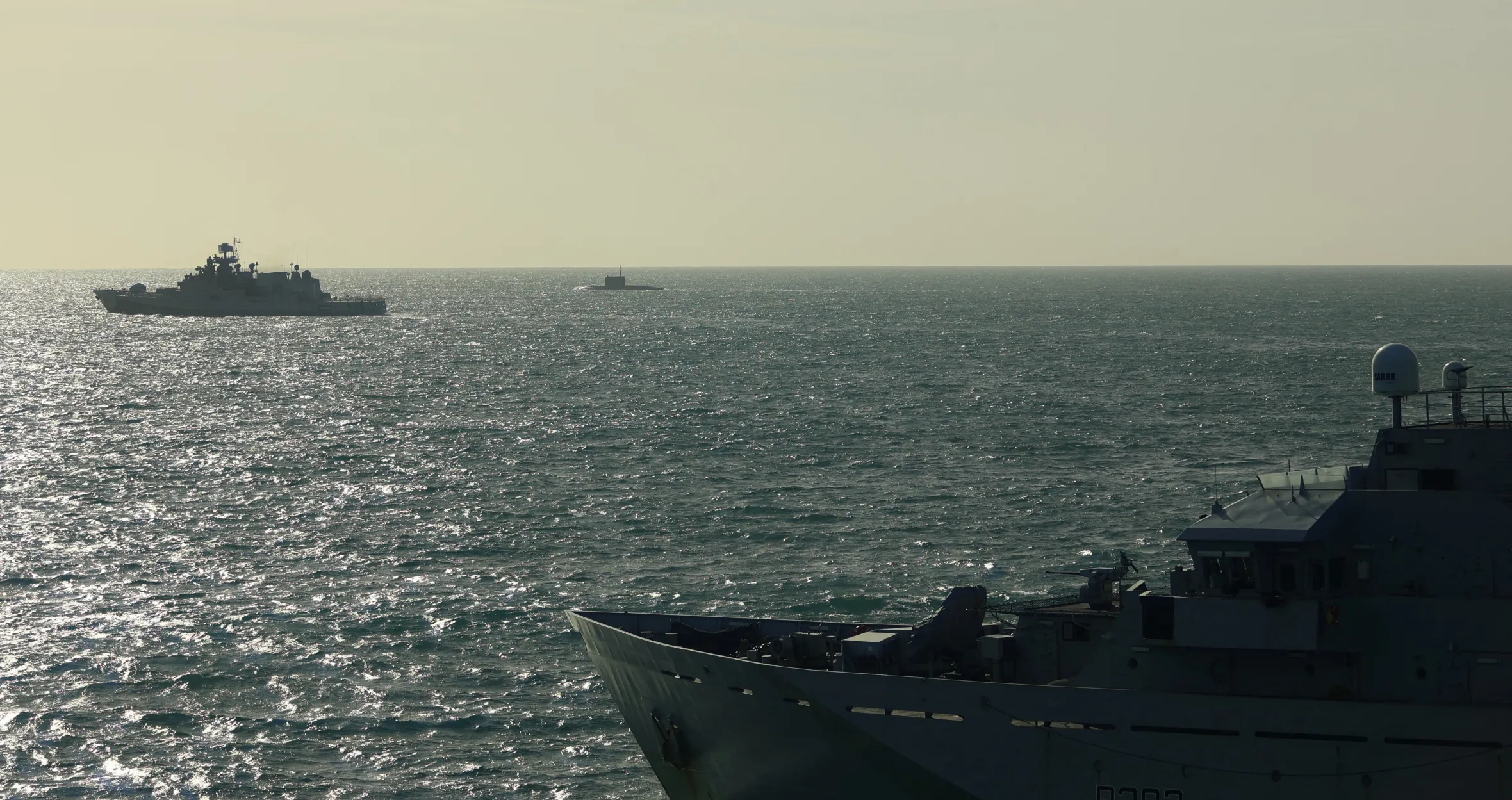 HMS Mersey, right, tracking the Russian frigate Admiral Grigorovich, left, and the Kilo-class submarine Krasnodargetty images
Luke Pollard, the defence minister, has said that Russian shadow tankers are “taking the long way round the UK” thanks to the actions of Britain’s armed forces.
The UK has authorised the Royal Navy to board sanctioned ships if they enter British waters and Putin responded by enlisting a warship to escort sanctioned vessels through the Channel.
Pollard told Sky News: “Having to have a Russian frigate escort one of their vessels shows how vulnerable they now are.”
He added: “We now know they’re taking the long way round the United Kingdom because of the actions that we are taking and, thanks to the new powers that the UK armed forces have, we reserve the right, at a time of our choosing, to interdict a Russian vessel ourselves.”
The Telegraph, however, has reported that the UK has not been seizing sanctioned Russian vessels over fears of breaching maritime law.
9.04am
We don’t know what Trump wants, German politician says
A senior German politician has criticised President Trump’s rhetoric in the Iran war and said it wasn’t clear what goals he was pursuing.
Armin Laschet, the Christian Democrat chair of the Bundestag’s foreign affairs committee, told Deutschlandfunk radio: “Germany has made clear we will not be part of his war. We don’t know what he wants. We don’t know what he’s negotiating. We do not even know why, a few days ago, he backed down from his ultimatum at 2am to wipe out Iranian civilisation. Just imagine that language.
“I cannot see what actually led him, one hour before the ultimatum expired, to back down from this annihilation of the civilisation. We are unaware of any concessions Iran has made. The Strait of Hormuz is still not as open as it should be. The missile programme has not ended, the nuclear programme has not ended, and regime change has not taken place.”
9.01am
Iranian foreign minister urged to participate in peace talks in good faith
Spain’s foreign minister said he had spoken with his Iranian counterpart and urged him to negotiate in good faith during talks with the United States in Islamabad.
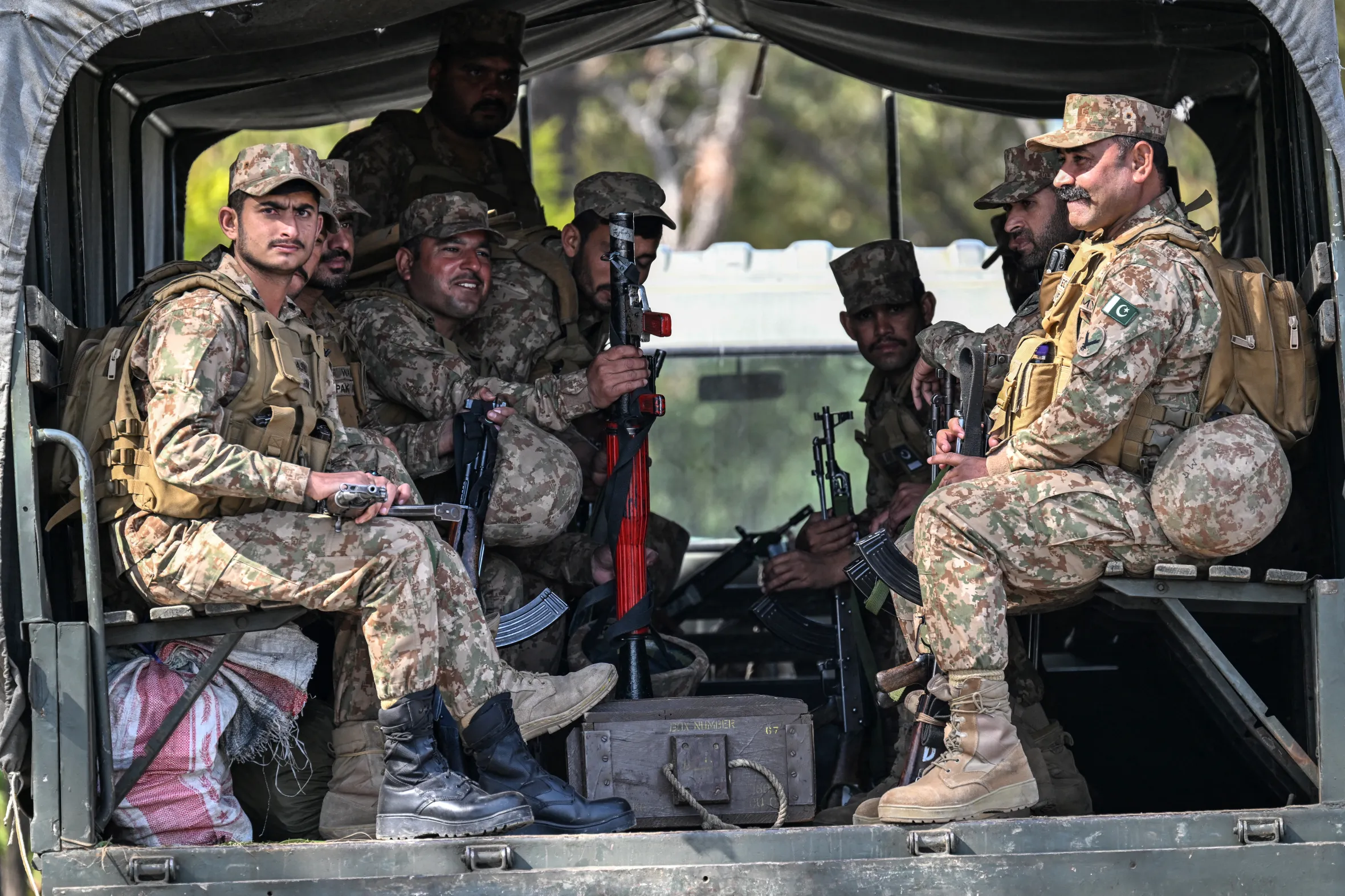 Pakistani soldiers in Islamabad ahead of the US-Iran talksAamir QURESHI/Getty Images
“I encourage Iran — this is what I conveyed to the Iranian foreign minister — to take part in those negotiations and to participate in good faith,” Jose Manuel Albares told the press, adding that he had spoken with his Iranian counterpart, Abbas Araghchi, “the day before yesterday” and had also asked him to halt “all missile and drone launches”.
8.53am
Defence minister downplays Trump’s Nato audit comments
Luke Pollard sought to downplay reports that Trump was set to punish Nato allies who had disappointed him during the Iran war.
The minister for defence readiness and industry told Times Radio that it was “not an activity that we recognise”, adding: “We’ve been very clear that the war in Iran is not our war.”
8.39am
UK to announce multi-million-pound missile contract today
The government will announce a multi-million-pound missile contract for drone interceptors today, the defence minister Luke Pollard has said.
“Today, we’re announcing a new multi-million-pound missile contract for drone interceptors to help shoot down Iranian drones and other threats to our forces,” Pollard told Sky News.
Asked whether the UK would send military assets to help reopen the Strait of Hormuz, he said Britain has already “pre-deployed” autonomous Royal Navy minehunters.
He added that reopening the strait “means a freedom of navigation for all vessels and no tolls to pay, as Iran may be hinting at”.
8.31am
Starmer’s strongest criticism of Trump yet
Sir Keir Starmer’s high-stakes call with President Trump yesterday came shortly after the prime minister told the media that he was “fed up” with the US leader’s actions.
The prime minister made his strongest criticism yet of Trump, before calling the president to discuss the Strait of Hormuz blockage.
Moments earlier, Starmer had said: “I’m fed up with the fact that families across the country see their bills go up and down on energy, businesses’ bills go up and down on energy because of the actions of Putin or Trump.”
8.20am
UK declassifies Putin’s secrets to ‘deny his deniability’
Britain’s minister for defence readiness and industry has told Times Radio that the Ministry of Defence has decided to “declassify” Russia’s covert operations.
The MoD yesterday took the unusual step of sharing details, and photos of, Russian submarines that loitered over critical national infrastructure in the North Atlantic for a month before they finally retreated.
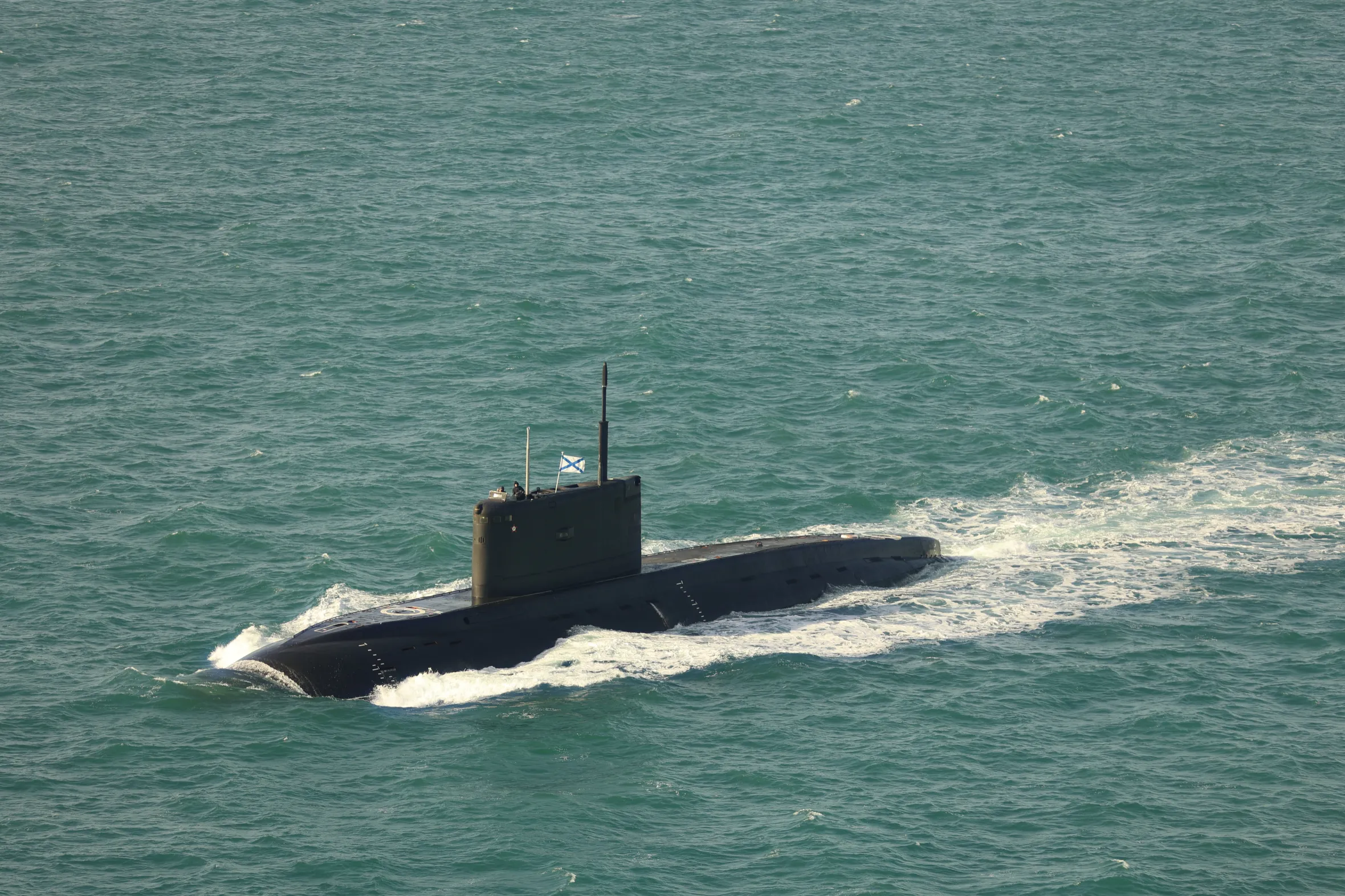 A photo issued by the MoD of the Russian Kilo-class submarine KrasnodarPA
Luke Pollard said: “We have taken the decision to declassify covert Russian activities that Putin wanted to be kept secret.
“It’s key to his hybrid warfare, not just in the Atlantic, but in the Baltic Sea as well, that when Russians disrupt undersea cables or pipelines, they deny that they’ve done it. By declaring the Russian activity, putting it in the public domain, we’re denying their deniability, as the military phrase goes for it.”
He continued: “What that means is Putin can’t say it wasn’t him, and that’s precisely why we’ve done it, to reduce his options to say that we see your activity, we’re calling it out.
“And by me being on the radio calling him out, in doing so, by the defence secretary setting that out in Downing Street yesterday, we’re deterring that aggression against our undersea cables.”
8.13am
‘Not our war’: UK minister defends role in Iran
A defence minister has told Times Radio that Britain is “responding to the challenge” set out by President Trump.
The US president has told Downing Street that Britain and Nato allies’ roles in the Iran war will be audited, leading to possible punishments for those who have disappointed him.
Luke Pollard, the minister for defence readiness and industry, said this morning: “We’ve been very clear that the war in Iran is not our war, but we have stepped up in support of defending our allies from the reckless Iranian attacks on not only British and coalition bases but also our allies in the Gulf.”
He added: “We’re very clear that Nato is stronger with the United States in it… And we are responding to the challenge that President Trump has set us in the Atlantic of stepping up and spending more.”
8.01am
Zelensky calls for sanctions on Russian oil to be reimposed
President Zelensky has said he wants energy sanctions to be reinstated on Russia after the US-Iran ceasefire agreement.
“Now a ceasefire is beginning in the Middle East and the Gulf. And I am waiting for sanctions on Russian oil to be fully reimposed, as they were before,” Zelensky told journalists.
The United States eased some oil sanctions on Russia last month to tackle surging energy costs caused by the Middle East war. Kyiv and its allies warned the move could help fund Moscow’s war against Ukraine.
The US waiver allowed countries to purchase Russian oil that was already at sea until April 11. The general surge in oil prices since the start of the war in the Middle East has helped to replenish Russia’s coffers, depleted by more than four years of war against Ukraine and international sanctions.
7.51am
US prepares to punish Nato states for Iran rift
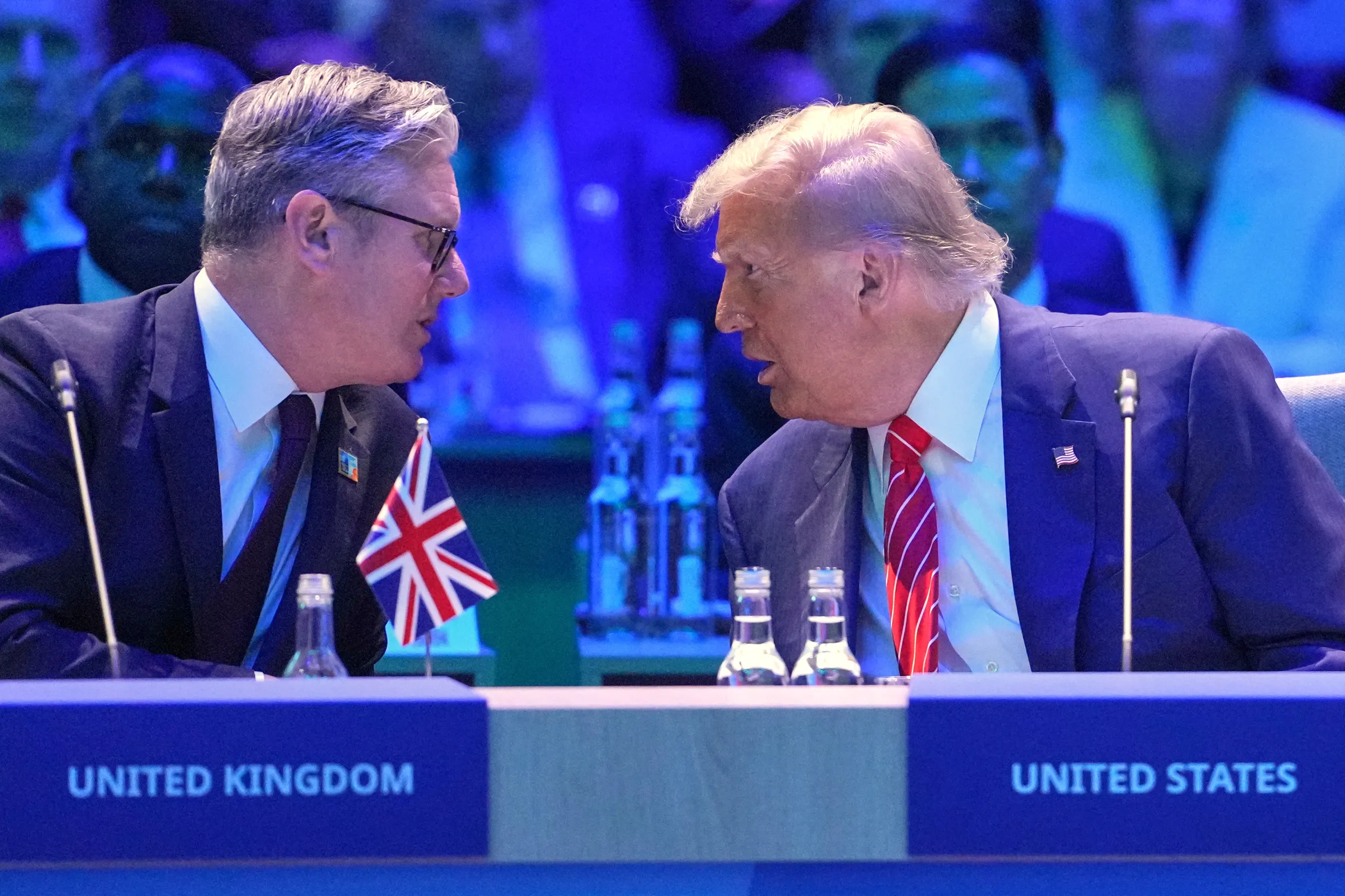 President Trump with Sir Keir Starmer at last summer’s Nato summit in the NetherlandsKin Cheung/AP
Britain has been told by the Trump administration that it will be audited along with other Nato members to decide which should be punished for disappointing the president during the war in Iran, The Times understands.
The UK is also facing pressure along with Nato allies to step up military support to secure the Strait of Hormuz, and there will be consequences for those countries that fail to assist.
The growing pressure from Washington comes as Sir Keir Starmer voiced his strongest criticism yet of President Trump, saying he was “fed up” with the effect the US leader’s actions had on pushing up energy bills for households and businesses.
7.39am
Japan to release 20 days of oil reserves
Japan plans to release 20 days’ worth of oil reserves from May to ensure stable domestic supply while searching for non-Middle East suppliers, Sanae Takaichi, the prime minister, told a cabinet meeting.
The US and Iran have agreed on a two-week ceasefire to the war that began in late February, but there is no sign of Iran lifting its near-total blockade of the Strait of Hormuz, which has caused what has been called the worst-ever disruption to global energy supplies.
Japan is dependent on the Middle East for some 95 per cent of its oil.
It began releasing reserves on March 16 unilaterally and in co-ordination with other nations under a plan to make available enough oil to last 50 days. The 20 days’ worth is additional. As of April 7, Japan had enough oil for 228 days in its reserves, including 143 days in its public stockpile. The new release would come from the public stockpile, Takaichi said.
6.50am
Iran’s new supreme leader vows to take revenge
Despite a fragile ceasefire and the possibility of talks in Islamabad, Iran’s supreme leader, Mojtaba Khamenei, has vowed to “take revenge” for his father and those killed in the country’s war with the US.
In a written statement, read out on Iranian state TV, Khamenei said Iran would “seek compensation for every damage inflicted, as well as blood money for the martyrs and compensation for the wounded”.
Khamenei, 56, has not been seen in public since a strike killed his father 40 days ago and there have been reports that he was wounded in the strike.
Iranian officials say he remains both “in control of everything” and in “full health” despite the speculation over his condition.
5.31am
Trump warns Iran against Hormuz tolls
President Trump accused Iran of doing a “very poor job” of allowing oil through the Strait of Hormuz and of breaching the terms of their fragile two-week ceasefire agreement.
“Iran is doing a very poor job, dishonorable some would say, of allowing Oil to go through the Strait of Hormuz,” Trump said on his Truth Social platform. “That is not the agreement we have!”
In a second message, Trump added: “Very quickly, you’ll see Oil start flowing, with or without the help of Iran.”
4.48am
Air raid sirens across Israel after rocket launches from Lebanon
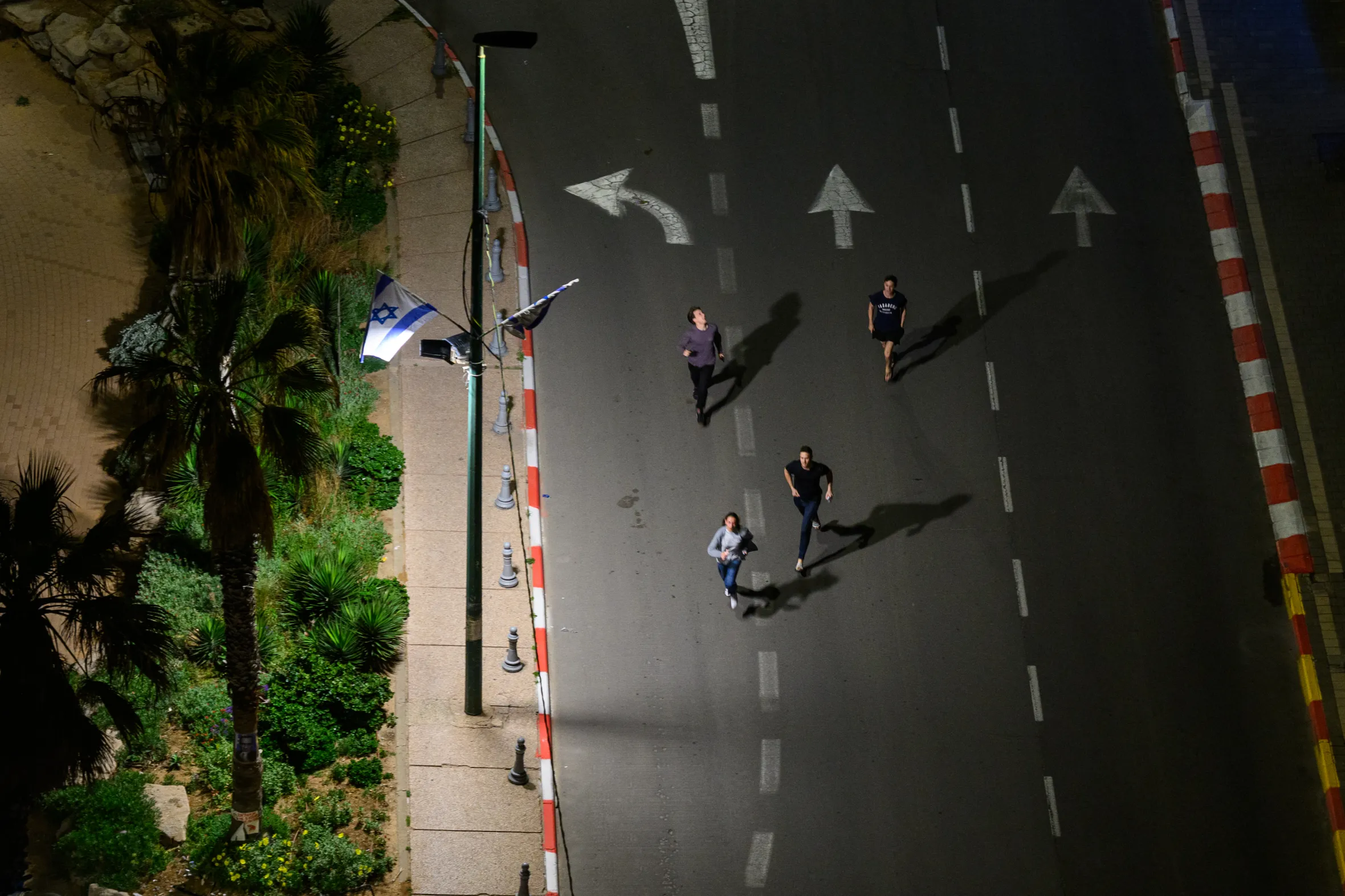 People run to take shelter as sirens sound in Tel AvivAlexi Rosenfeld/Getty Images
Air raid alerts sounded across Israel early on Friday morning after rocket fire from Lebanon.
There were no immediate reports of casualties, but Israeli media reported that air defence systems had intercepted at least one incoming rocket.
The Israeli army’s home front command issued alerts for several areas, including the Tel Aviv region and southern communities far from the Lebanon border, as well as the southern coastal city of Ashdod.
Hezbollah said it had launched three waves of rocket and drone strikes in the early hours of the morning against Israeli soldiers on both sides of the border and a town in northern Israel.
4.04am
Death toll in Lebanon continues to rise
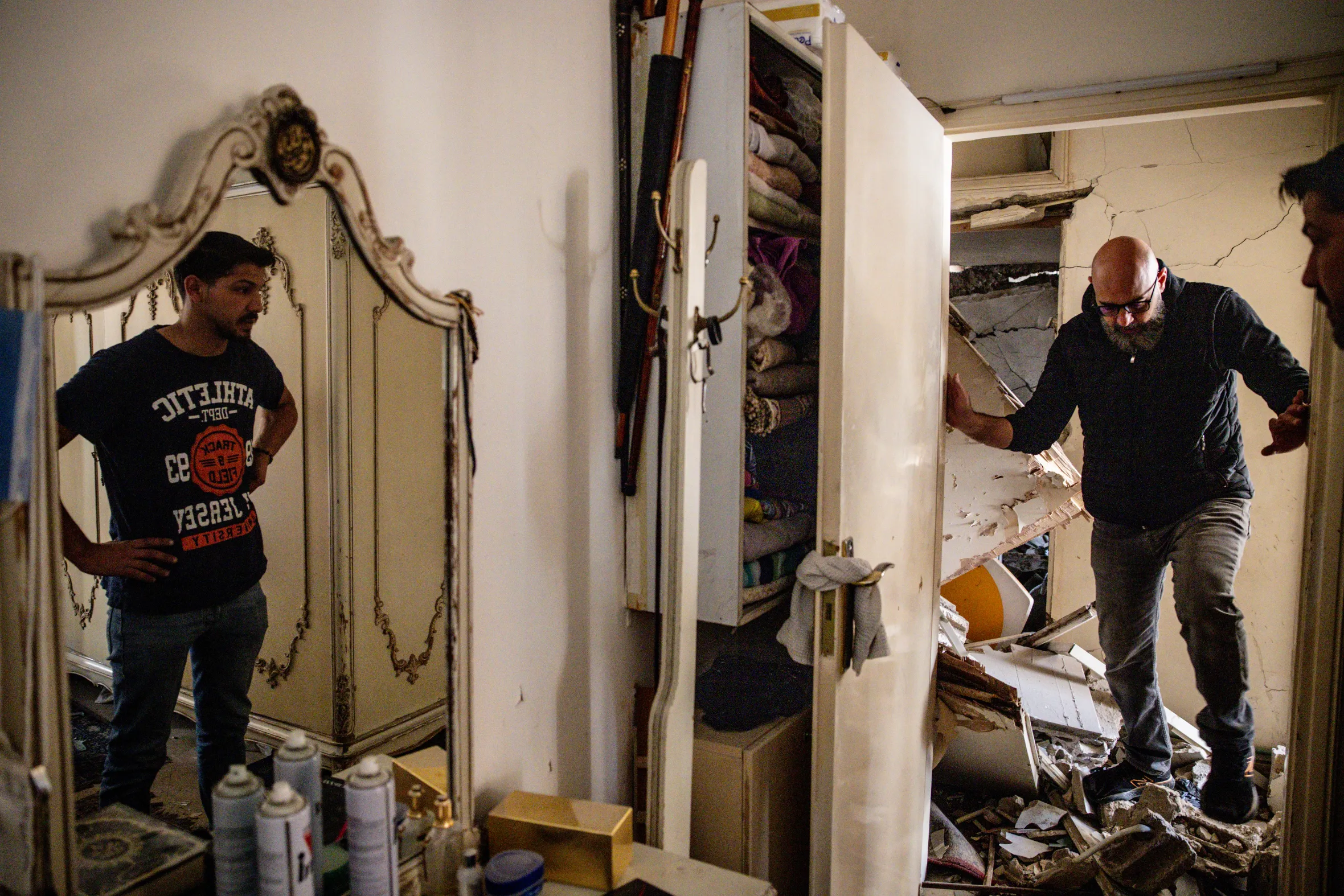 An apartment that was destroyed in an Israeli airstrike in BeirutChris McGrath/Getty Images
Lebanon’s health ministry said on Thursday that 303 people had been killed in Israel’s strikes on Wednesday.
It said the toll was not final and was expected to rise further as rescue teams were still removing bodies from under the rubble.
The ministry added that the total toll since March 2 was 1,888 dead and more than 6,000 wounded.
3.45am
Trump: It is victory
President Trump took issue with an editorial in The Wall Street Journal which said he “declared premature victory in Iran”.
Writing on his Truth Social platform on Thursday, Trump posted: “Actually, it is a Victory, and there’s nothing ‘premature’ about it!
“Because of me, IRAN WILL NEVER HAVE A NUCLEAR WEAPON and, very quickly, you’ll see Oil start flowing, with or without the help of Iran and, to me, it makes no difference, either way.”
3.18am
Iran denies launching attacks on Gulf states
Iran’s Revolutionary Guard in a statement carried by the state-run IRNA news agency denied launching attacks on Persian Gulf states on Thursday after Kuwait’s announcement.
Kuwait earlier said it came under a drone attack which caused significant damage, although no one was injured.
“If these reports published by the media are true, without a doubt it is the work of the Zionist enemy or America,” the IRGC said.
3.16am
Ship-tracking data shows movement in the Strait of Hormuz
Underlining Iran’s continued control of the Strait of Hormuz, a Botswana-flagged liquified natural gas tanker called the Nidi attempted to travel out of the Persian Gulf via a route ordered by Iran’s Revolutionary Guard but suddenly turned around and headed back early Friday, ship-tracking data showed.
On Thursday, four tankers and three bulk carriers crossed through the Strait of Hormuz, bringing the total number of ships passing through since the ceasefire to at least 12, according to the data firm Kpler.
However, other ships not transmitting their locations may have passed through as well. More than 100 ships passed through the strait daily before the war.
2.56am
World leaders criticise Trump and Israel
Several heads of state condemned President Trump for his handling of the Iran conflict on Thursday.
Giorgia Meloni, the Italian prime minister, delivered a thinly-veiled criticism — the strongest rebuke yet from the self-styled European “Trump whisperer”.
“You tell allies clearly when you do not agree,” she told the lower house of the Italian parliament, before listing points of disagreement including recent American policies on Ukraine, Greenland and tariffs.
The US-Israel military campaign in Iran, she added, was “an operation that Italy did not share or participate in”.
Meanwhile Canada criticised Israel’s bombing of Lebanon. Anita Anand, the foreign minister, said the country was calling on Israel to “respect Lebanon’s territorial integrity”.
“We strongly condemn the airstrikes launched by Israel across Lebanon, including in Beirut, which killed civilians and targeted civilian infrastructure,” she said.
Sir Keir Starmer said he was “fed up” with President Trump’s actions pushing up energy bills for households and businesses as he compared the US-Israeli war with Iran to Vladimir Putin’s decision to invade Ukraine.
2.42am
Israeli adviser refuses to say Lebanon strikes are ceasing
A high-ranking Israeli official refused to say that the country was winding down its military operations in Lebanon despite fears that the conflict may jeopardise the fragile US-Iran ceasefire.
President Trump said he had told the Israelis to be more “low-key” as global outrage over its bombing of Lebanon grew.
However Ophir Falk, the chief foreign policy adviser to the Israeli prime minister, Binyamin Netanyahu, did not say that Israel was scaling back the attacks on Lebanon, which have killed hundreds of civilians since the ceasefire was struck.
He told NBC’s Meet The Press NOW that Trump and Netanyahu are in “complete agreement”.
2.20am
Former Australian PM calls for offensive role in Iran war
Australia’s acting prime minister has rejected calls for the country’s air force to take an offensive role in the Iran war.
Tony Abbott, a former prime minister, wrote in a newspaper column that Australia should have supported the US with fighter jets.
Richard Marles, the defence minister and acting prime minister while Anthony Albanese is overseas, said Australia had sent the United Arab Emirates a surveillance jet but was “not part of this conflict against Iran”.
“We will act in our national interest and we respectfully disagree with the position of Mr Abbott,” Marles told Australian Broadcasting Corp.
President Trump has criticised allies including Australia for not playing a more direct role in the conflict.
1.55am
What did Iran’s new leader say today?
Ayatollah Mojtaba Khamenei released a statement on Thursday, his first since the ceasefire was announced on Tuesday. He has yet to be pictured or seen in public since the strikes on Iran that killed his father, the late supreme leader, in February.
State media delivered the message which, among other points, promised to “avenge the blood of [the leader] and all those killed”, in the conflict so far.
It also said Iran would take control of the Strait of Hormuz into a “new phase”, although specifics were not given. There have been reports that Iran plans to charge ships a fee for passing through.
Khamenei also claimed that Iran “never sought war”, but would go on to protect itself and its regional proxies which include the militant group Hezbollah, based in Lebanon.
The statement also urged Iranians to take to the streets in the hope that their voices would impact ongoing negotiations.
1.34am
Iranian politician ‘killed in Israeli strike’
Kamal Kharazi, a former Iranian foreign minister targeted in an Israeli airstrike on April 1, has died having spent more than a week in a coma, state media announced.
Kharazi was the head of Iran’s foreign policy council and was reportedly involved in potential talks between the US and Tehran.
His wife was also killed in the strike on their home in the Iranian capital, according to reports.
The death of Kharazi, 81, was announced on Thursday by the IRNA news agency.
1.25am
White House ‘warned staff not to place bets on Iran’
The White House is said to have warned staff against using inside knowledge to place bets on prediction markets.
Anonymous accounts made significant sums of money in correctly predicting a ceasefire would be announced in the Iran war on Tuesday.
Last month more than $760 million worth of oil futures contracts were traded about 15 minutes before President Trump suddenly announced a pause in strikes on Iran.
There is no evidence linking anyone inside the White House to the activity.
However, The Wall Street Journal warned that the White House Management Office sent a staff-wide email on March 24, telling workers to not abuse their positions.
Prediction market websites have seen a sharp rise in users making money from correctly anticipating world events in recent months.
Senators from both major parties have introduced legislation that would broaden the definition of insider trading to include prediction markets.
12.56am
April 10
Starmer ‘fed up’ with Trump’s actions on Iran
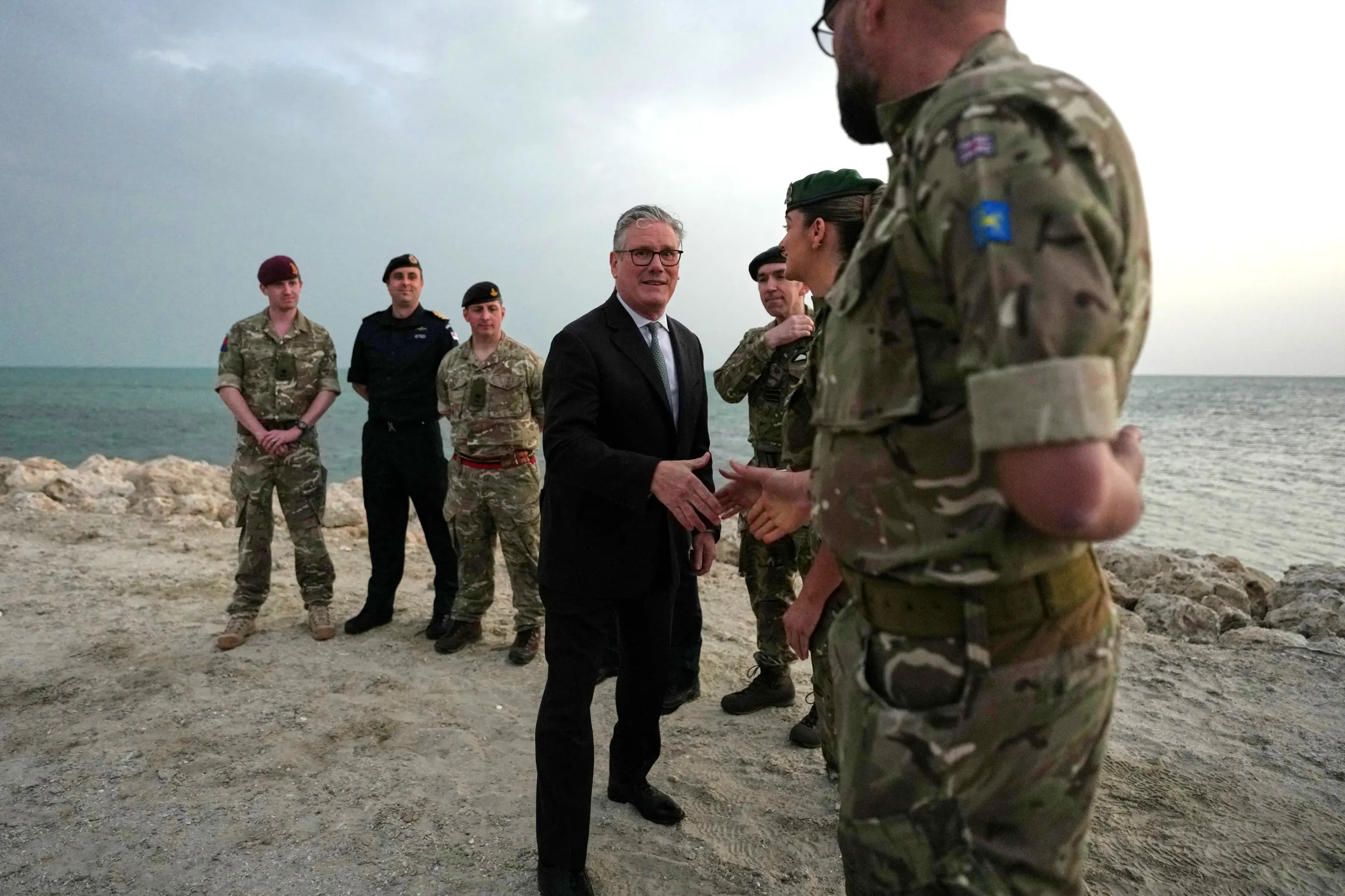 Sir Keir Starmer meets military personnel in Bahrain Alastair Grant/Getty Images
Sir Keir Starmer said he is “fed up” with President Trump’s actions during the ongoing war because they have pushed up energy bills for households and businesses across the UK.
He compared the US-Israeli war with Iran to Vladimir Putin’s decision to invade Ukraine.
Speaking during a trip to Bahrain, he also said that Israeli airstrikes on Lebanon are wrong and “should stop”. He criticised Trump’s threat to obliterate civilisation in Iran, saying it was not language that he would ever use.
The prime minister said: “I’m fed up with the fact that families across the country see their bills go up and down on energy, businesses’ bills go up and down on energy because of the actions of Putin or Trump.
“We need energy independence, and the only way to get energy independence is to go even more quickly to renewables because we’re not going to get it on the international market.”
12.28am
April 10
Trump warns Iran not to charge Strait fees
President Trump warned Iran earlier on Thursday that it should not be charging fees for tankers travelling through the Strait of Hormuz.
After a ceasefire was declared on Tuesday, reports surfaced that Tehran was planning to charge a toll to vessels passing through the vital waterway.
No fees were applied before the war broke out in late February.
Trump wrote on Truth Social on Thursday evening: “There are reports that Iran is charging fees to tankers going through the Hormuz Strait — They better not be and, if they are, they better stop now!”
12.21am
April 10
Iran’s Hormuz Strait blockade
President Trump appeared to accuse Iran of violating the two-week ceasefire agreement after Tehran kept traffic through the Strait of Hormuz at a standstill.
About a fifth of the world’s oil supply flows through the passage.
Iran has effectively wielded its control of the strait as an economic weapon since the war with the US and Israel began in late February.
As a condition of the ceasefire agreement announced on Tuesday, the strait was supposed to be fully reopened.
However ship traffic remained at well below 10 per cent of normal volumes on Thursday. Hundreds of tankers are stuck inside the Persian Gulf.
“Iran is doing a very poor job, dishonorable some would say, of allowing Oil to go through the Strait of Hormuz,” Trump wrote on Truth Social. “That is not the agreement we have!”
12.05am
April 9
Trump demands European action to secure Strait
President Trump has issued an ultimatum to European allies, demanding concrete military support in the Strait of Hormuz within days, the German news magazine Der Spiegel has reported.
The Nato secretary general, Mark Rutte, has informed European capitals that Trump expected the commitments to be made within the next few days regarding the deployment of warships or other military capabilities from Europe, the news magazine reported, citing unnamed sources.
Trump’s demand amounts to an ultimatum, said several European diplomats who were briefed following Rutte’s meeting with Trump on Wednesday, according to Der Spiegel.
12.04am
April 9
Netanyahu to open ‘direct negotiations’ with Lebanon
Israel’s prime minister Binyamin Netanyahu has said he has instructed his cabinet to open “direct negotiations” with Lebanon.
In a post on X, the Israeli leader said he had made the order yesterday.
“In light of Lebanon’s repeated calls to begin direct negotiations with Israel, I instructed the Cabinet yesterday to open direct negotiations with Lebanon as soon as possible,” he wrote.
“The negotiations will focus on disarming Hezbollah and establishing peaceful relations between Israel and Lebanon. Israel appreciates today’s call by the Lebanese Prime Minister to demilitarize Beirut.”
Israel has come under pressure to halt attacks on Lebanon — following attacks across the country on Wednesday — with many countries claiming the ceasefire struck with Iran, includes an end to hostilities in Lebanon.
Israel has denied the Iran ceasefire extends to Lebanon.
12.02am
April 9
Supreme leader demands ‘blood money’ from ‘aggressors’
Iran’s supreme leader demanded “blood money” for his country’s casualties of the war and denounced the US and Israel as “criminal aggressors” in a statement on Thursday.
The state-run ISNA news agency translated Mojtaba Khamenei’s statement into English: “By the grace of God, we will certainly not let go of the criminal aggressors who attacked our country. We will undoubtedly demand compensation for every single damage inflicted, the blood money of the martyrs, and the diyah of the war-wounded.”
Diyah in Islamic law is the financial compensation paid to the victim or heirs of a victim.
Khamenei’s statement added: “We will certainly usher the management of the Strait of Hormuz into a new phase.”
At least 3,600 Iranians were killed in the 38-day conflict before President Trump declared a ceasefire earlier this week, according to a US-based monitor.
12.01am
April 9
Trump condemns ‘dishonourable’ Iran
President Trump criticised Iran on Thursday for not honouring their agreement about reopening the Strait of Hormuz.
He wrote on Truth Social: “Iran is doing a very poor job, dishonourable some would say, of allowing Oil to go through the Strait of Hormuz.
“That is not the agreement we have! President DONALD J. TRUMP.”
Ending Iran’s blockade on the vital waterway was a crucial part of ceasefire negotiations earlier this week.