
The class of prospects in the 2026 NFL Draft features a rock-solid collection of playmakers and key contributors. While the group lacks some sizzle at the marquee positions (quarterback and running back), scouts will find plenty of talent available throughout.
As the presumed No. 1 overall pick, Indiana’s Fernando Mendoza is the headliner of the quarterback class. The reigning Heisman Trophy-winner is a clutch competitor who shines in big moments as a pinpoint passer. Although he lacks the superpowers typically associated with a QB1, his winning habits and championship standards should translate into long-term success as a pro.
Alabama’s Ty Simpson is the most polarizing quarterback prospect in the class. On one hand, he boasts flawless footwork and mechanics; on the other, his limited experience (15 college starts) and substandard physical dimensions (6-foot-1, 211 pounds) make him an outlier as a potential franchise quarterback. LSU’s Garrett Nussmeier and Miami’s Carson Beck will garner plenty of attention as developmental prospects with starting potential.
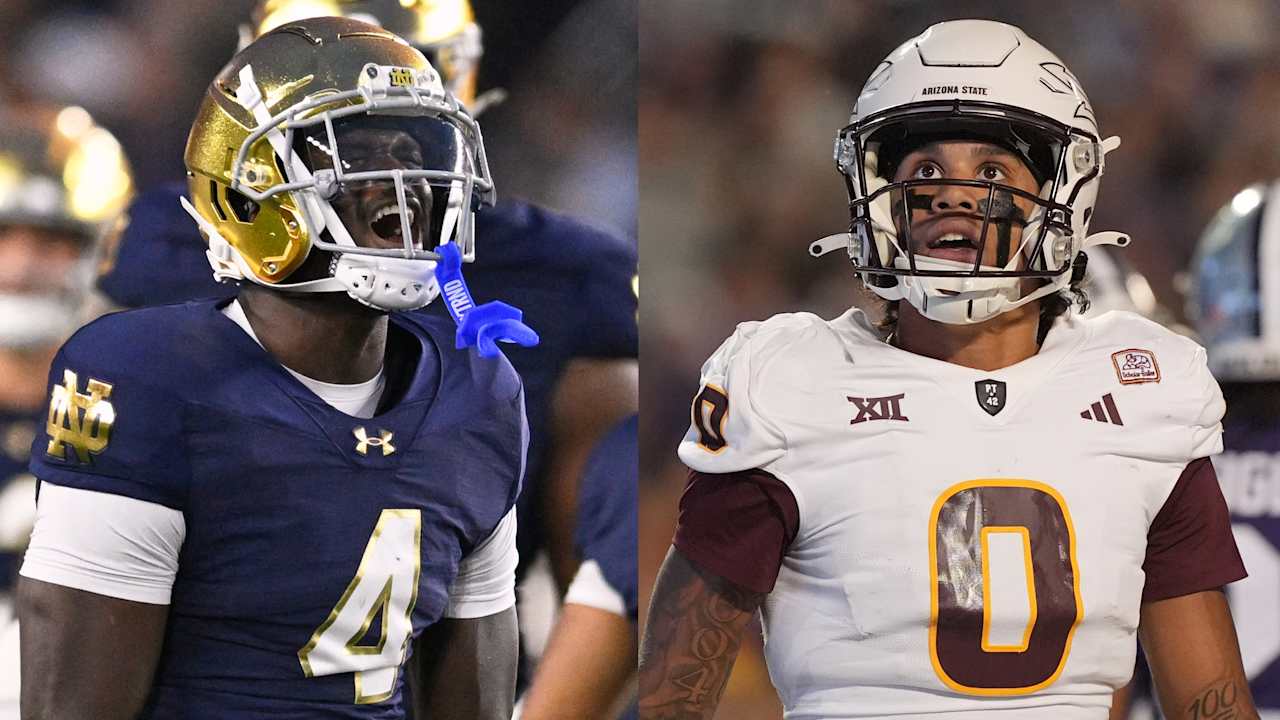
The 2026 running back class features a potential gold-jacket candidate in Notre Dame’s Jeremiyah Love, who ranks as the No. 1 player on my draft board. The electric playmaker is joined by his college teammate, Jadarian Price, and Nebraska’s Emmett Johnson as possible feature backs. With Arkansas’ Mike Washington and Washington’s Jonah Coleman likely slated for key roles as rotational runners, teams could find plenty of hidden gems among this crop of ball-carriers.
The wide receiver class is loaded with polished pass-catchers and shifty slot receivers. Ohio State’s Carnell Tate, Arizona State’s Jordyn Tyson and USC’s Makai Lemon are impact players who should make their mark from Day 1. The trio is joined by Indiana’s Omar Cooper, Texas A&M’s KC Concepcion and Washington’s Denzel Boston as role players who could become difference-makers within systems that accentuate their unique skills.
Teams seeking playmaking tight ends will have plenty to choose from. Although there are not many traditional tight ends within the group, Oregon’s Kenyon Sadiq, Ohio State’s Max Klare, Cincinnati’s Joe Royer and Vanderbilt’s Eli Stowers could make their mark as “flex” tight ends utilized in various ways to create and exploit mismatches on the perimeter. Utah’s Dallen Bentley flashes intriguing potential as a “Y” tight end due to his size (6-4, 253 pounds), length and skills.
The talent and depth of the offensive tackle class could lead to a run at the end of the first round. Miami’s Francis Mauigoa, and Utah products Spencer Fano and Caleb Lomu are joined by Georgia’s Monroe Freeling and Alabama’s Kadyn Proctor as likely first-round locks. Clemson’s Blake Miller and Arizona State’s Max Iheanachor could join the party, with teams salivating over their potential as long-term starters.
On the interior, Penn State’s Vega Ioane is a special player worthy of top-10 consideration, based on his dominance at the line of scrimmage. Texas A&M’s Chase Bisontis, Oregon’s Emmanuel Pregnon and Georgia Tech’s Keylan Rutledge are plug-and-play starters who could sneak into the Day 1 conversation by the end of the process.
Defensively, the 2026 class features a collection of pass rushers and edge defenders that are best suited for complementary roles. Ohio State’s Arvell Reese and Texas Tech’s David Bailey are explosive defenders with disruptive playmaking potential. Each displays a superpower that could make them a perennial Pro Bowler, but they will need to round out their games to get the most out of their NFL careers. Miami’s Rueben Bain and Akheem Mesidor are relentless competitors with rugged games, making them ideal complementary pass rushers on front lines that already feature a dominant defender. With Auburn’s Keldric Faulk, Missouri’s Zion Young, Clemson’s T.J. Parker and Illinois’ Gabe Jacas piquing scouts’ interest with their disruptive potential, the performance of the 2026 class could exceed expectations.
The defensive tackle class lacks depth, particularly among interior pass rushers, but teams in the market for run-stoppers could find a diamond in the rough on Day 2. Florida’s Caleb Banks, Ohio State’s Kayden McDonald and Texas Tech’s Lee Hunter are fringe first-rounders who could deliver strong results as run-first defenders. Keep an eye on Clemson’s Peter Woods as a surprise Day 1 pick, due to his talent and traits as an inside pass rusher.
The 2026 linebacker class is loaded with a mix of downhill head-bangers and hit, run and chase defenders with a knack for producing splash plays against the run and pass. Ohio State’s Sonny Styles, Georgia’s CJ Allen and Texas’ Anthony Hill have surged to the top of the charts as difference-makers; Texas Tech’s Jacob Rodriguez, meanwhile, could come off the board sooner than previously expected, due to his big-play production (13 forced fumbles, 25.5 tackles for loss, six interceptions).
The cornerbacks in the class are highly regarded, due to their versatility and polish on the perimeter. Although there is not a “can’t miss” prospect in the group, the buzz around LSU’s Mansoor Delane and Tennessee’s Jermod McCoy among NFL scouts suggests each ball-hawking defender would be viewed as a rock-solid CB1 in any class. South Carolina’s Brandon Cisse and San Diego State’s Chris Johnson are on the radar as Day 1 outside cornerback possibilities, with Clemson’s Avieon Terrell, Miami’s Keionte Scott and Indiana’s D’Angelo Ponds generating significant interest as slot defenders.
The 2026 collection of safeties features several ballhawks with versatile skills that enable them to play in the deep middle or near the box as run-pass defenders. Ohio State’s Caleb Downs flashes star potential as a high-IQ defender with game-changing skills; he could be joined by Oregon’s Dillon Thieneman and Toledo’s Emmanuel McNeill-Warren as Round 1 selections.