
8.30am
Is this America’s Suez Crisis? It could turn out to be worse
For more than five weeks, President Trump bombarded Iran with missiles and bombs — and the American public with contradictory messaging about the aims and duration of this conflict. On Tuesday, having previously threatened to destroy “a whole civilisation”, he agreed instead to a two-week ceasefire.
History provides a useful point of comparison here. Consider an interview given by Vice-President Vance to UnHerd on April 15, 2025. “Just going back through history, I think — frankly — the British and the French were certainly right in their disagreements with Eisenhower about the Suez Canal,” he said.
It will be a richly ironic development if the vice-president of the United States one day finds himself in the position of Harold Macmillan, who succeeded Anthony Eden as prime minister after the Suez Crisis of 1956. That year, after Egypt nationalised the Suez Canal, Britain, along with France and Israel, attempted to seize the waterway and topple the regime of Gamal Abdel Nasser. President Eisenhower refused to back the operation.
8.10am
Tribute paid to Iranian schoolgirls
 Iranian Ministry of Foreign Affairs/AFP/Getty Images
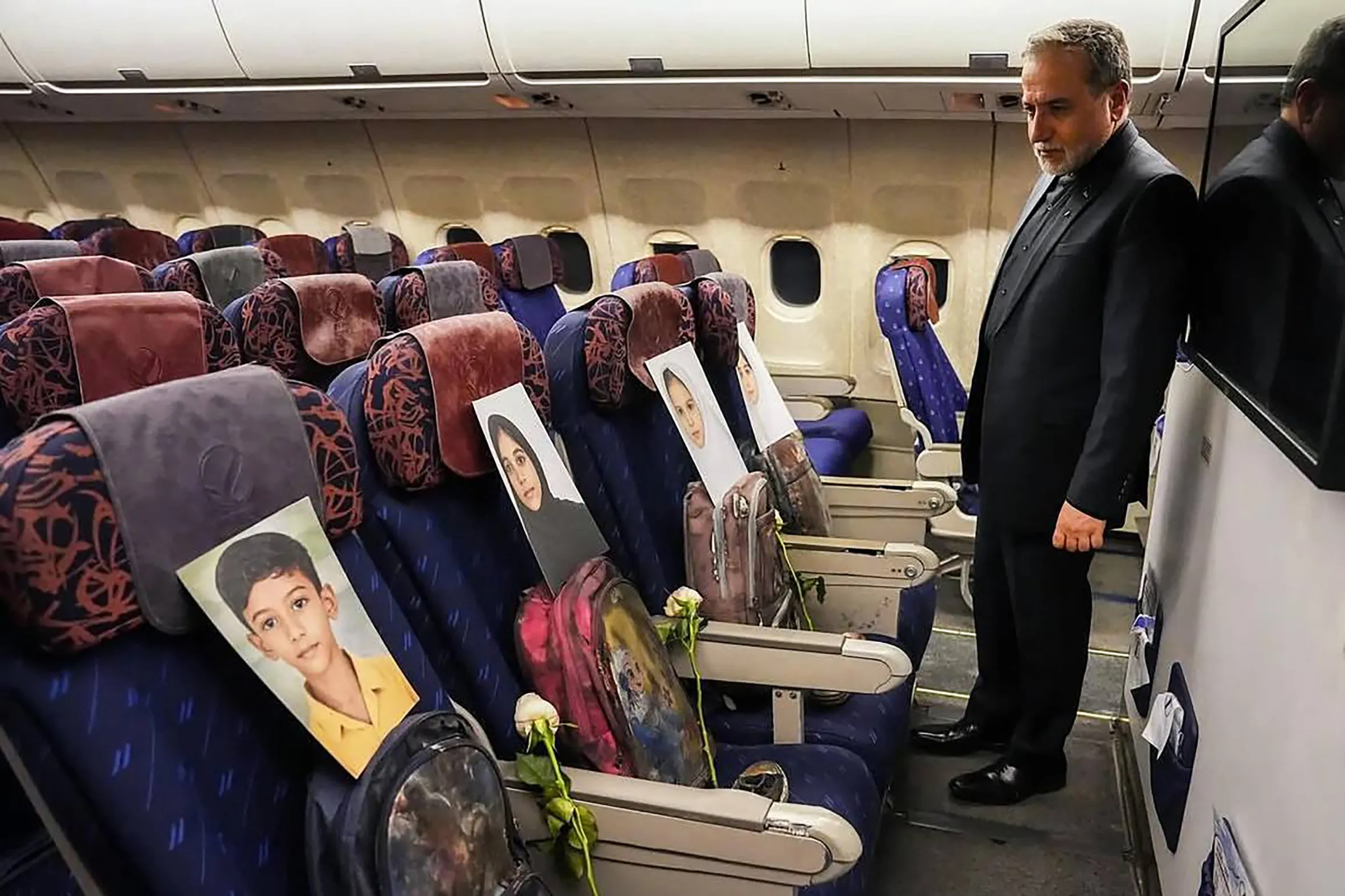
Mohammad Bagher Ghalibaf, Iran’s parliamentary Speaker, paid tribute to schoolgirls killed in a US missile strike before crucial talks between the countries.
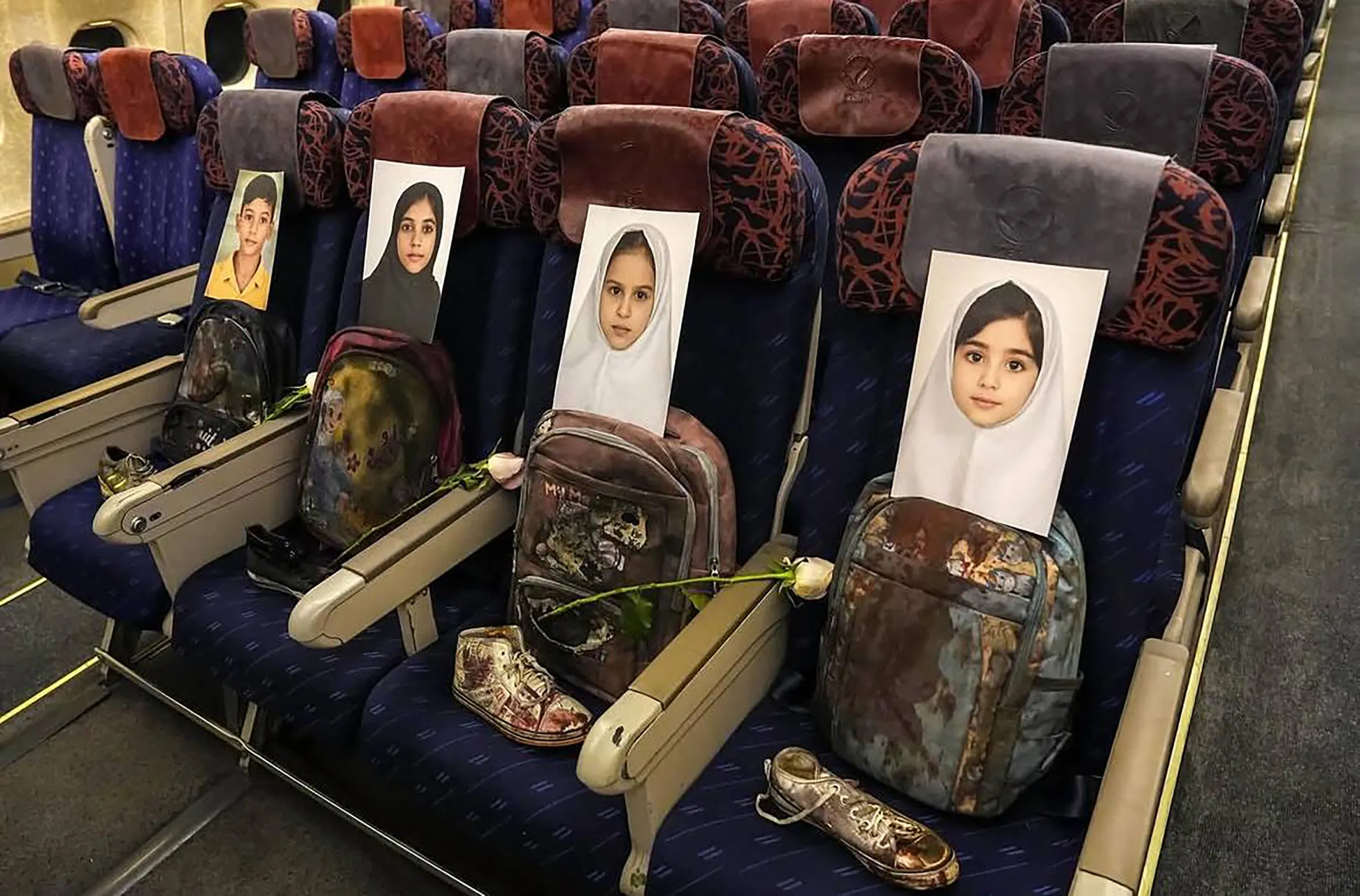
Ghalibaf posted a picture on X showing him on board an airplane looking at portraits of four children killed in the strike in February during the opening stages of the war. He said that the children were his companions on a flight to Pakistan for peace talks. Iran said 168 people, many of them children, were killed when a school was targeted.
A preliminary US military investigation said outdated intelligence likely led to the school attack.
 Iranian Ministry of Foreign Affairs/AFP/Getty Images
7.32am
Supreme leader’s face ‘disfigured’ and legs ‘significantly injured’
The supreme leader of Iran’s face is disfigured and one or both of his legs significantly injured, according to reports.
Mojtaba Khamenei is known to have been injured in the attack which killed his father, Ayatollah Ali Khamenei, and many of his family members on the first day of the Iran war, but has not been seen since.
Three people close to Khamenei’s inner circle told Reuters that he was recovering from his wounds and remained mentally sharp.
They claimed he was taking part in meetings with senior officials via audio conferencing and was engaged in decision-making on major issues including the war and negotiations with Washington.
A source familiar with US intelligence assessments told Reuters that Khamenei was believed to have lost a leg.
Last month, Pete Hegseth, the US secretary of war, said that Khamenei was “wounded and likely disfigured”.
7.05am
War shattered Dubai’s safe-haven image. Yet Britons are flocking back
About 30,000 expats have left the UAE during the Iran war, but for many its allure endures. After the ceasefire was declared, they are returning.
That was in August 2025. A few months later, the couple packed their bags and fled the “happy and vibrant” city, as Rio Ferdinand had described it, to escape the sounds of missiles and drones that Iran began launching at its neighbour.
Now in the Maldives, Kate Ferdinand, who had previously expressed misgivings about moving to Dubai, said that the trip was a “nervous system reset”.
6.40am
US delegation lands in Pakistan
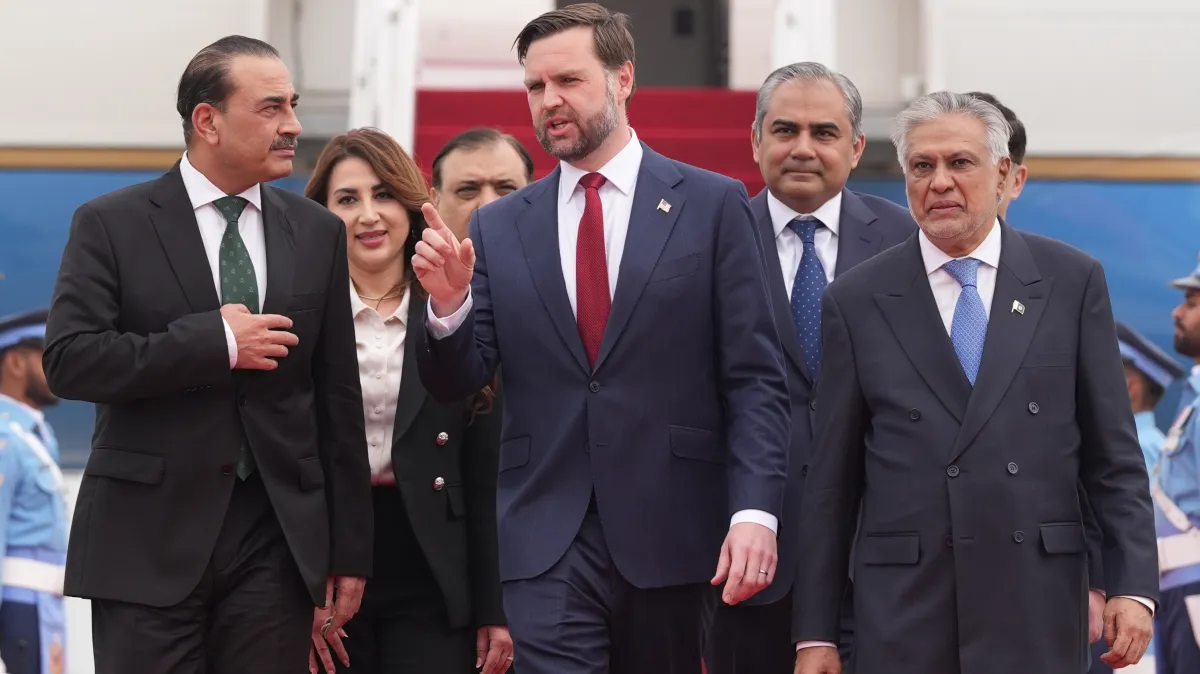
A US government plane carrying top US officials arrived in the Pakistani capital Islamabad for peace talks with Iran, two Pakistani sources told Reuters. Two US air force planes landed at an airbase where they were received by Pakistan’s army chief, Field Marshal Asim Munir, and the foreign minister Ishaq Dar.
The American delegation is led by JD Vance, the vice-president, and also includes the special envoy to the Middle East Steve Witkoff and President Trump’s son-in-law, Jared Kushner.
The Iranians arrived on Friday. Their delegation is led by Mohammad Baqer Qalibaf, the parliamentary Speaker, and includes Abbas Araqchi, the foreign minister.
6.27am
China ‘preparing to deliver air defence systems to Iran’
China is preparing to deliver air defence systems to Iran within the next few weeks, US intelligence reportedly suggests.
Three people familiar with intelligence assessments told CNN that Beijing is preparing to transfer shoulder-fired anti-air missile systems known as MANPADs.
The sources said Chinese companies had continued to sell Iranians sanctioned dual-use technology that helps Iran build weapons and enhance its navigation systems, but the transfer of weapon systems would be new.
A spokesperson for the Chinese embassy in Washington said: “China has never provided weapons to any party to the conflict; the information in question is untrue.”
China, the biggest purchaser of Iranian oil, is said to have played a part in encouraging Iran to agree to the ceasefire. President Trump is set to visit China next month.
6.00am
In the ruins and rubble, bombarded Beirut wants peace
As families search for loved ones in the razed buildings of the Lebanese capital, there is a deep sense of anger towards both Israel and Hezbollah (Jack Clover writes).
Read in full: In the ruins and rubble, bombarded Beirut wants peace
5.30am
Holidays at risk of cancellation as airlines face fuel crisis
Half-term breaks and summer holidays are at risk of cancellation from the fuel crisis caused by the Iran war.
Airports in Europe have warned they will run out of jet fuel within weeks unless supplies from the Middle East increase dramatically.
In a letter to the EU, they said that the continent could face a “systemic” jet fuel shortage if the Strait of Hormuz did not open within the next three weeks.
Read in full: Holidays at risk of cancellation as airlines face fuel crisis
4.55am
600 vessels in Strait of Hormuz ‘will take weeks to clear’
More than 600 vessels are trapped in the Middle East by the Iran conflict and clearing them will take “several weeks” even if traffic through the Strait of Hormuz returns to normal levels, shipping analysts have warned.
The strait remains effectively closed to most shipping traffic. The vast majority of transits that have taken place are linked to Iran “either through trade, ownership, sanctions or historic trade”, Lloyd’s List, a provider of shipping data and analysis, said.
Read in full: 600 vessels in Strait of Hormuz ‘will take weeks to clear’.
4.25am
Iran still has ‘thousands of ballistic missiles’
US intelligence has assessed that Iran still has thousands of ballistic missiles it could use by retrieving launchers from underground storage depots, The Wall Street Journal reported.
The assessment clashes with what Pete Hegseth, the war secretary, told reporters this week.
He said that Iran’s missile programme is “functionally destroyed” with launchers and missiles “depleted and decimated and almost completely ineffective”. If Iran retains significant strike capabilities it adds to Tehran’s leverage during negotiations over a permanent ceasefire.
3.50am
Starmer: We need to do more in Nato
Sir Keir Starmer has said European allies must “do more” in Nato after President Trump stepped up threats to quit the alliance.
The prime minister said: “We’re very strong supporters of Nato and I’ve been making the argument for some considerable time that we need to do more. It’s the single most effective military alliance the world has ever known.
“Do we Europeans need to do more? Yes, I’ve been making that argument for the best part of two years, to our European partners as much as anybody else.”
He added: “It is in America’s interests, it’s in European interests. Nato is a defensive alliance, which for decades has kept us much safer than we would otherwise have been… We’ll always be strong supporters of Nato. Do I think this will be a stronger European element to Nato? Yes, and I think we should step into that space.”
3.47am
Negotiations will begin after US accepts preconditions, Iran says
An Iranian negotiating delegation led by the parliament Speaker Mohammad Bagher Ghalibaf arrived in Islamabad on Friday for peace talks with the US, Iranian media reported, adding that negotiations would begin if Washington accepted Tehran’s “preconditions”.
The delegation included senior political, military and economic officials, including the Iranian foreign minister, defence council secretary, central bank governor and several members of parliament.
3.46am
Vance warns Iran not to ‘play’ US in talks
JD Vance, the US vice-president, said he was looking forward to negotiations but warned Iran not to “play us”.
Speaking before leaving Washington for Pakistan, he said: “As the president of the United States said, if the Iranians are willing to negotiate in good faith, we’re certainly willing to extend the open hand.”
He added: “If they’re going to try to play us, then they’re going to find the negotiating team is not that receptive.”
Vance is joined by special envoy to the Middle East Steve Witkoff and President Trump’s son-in-law Jared Kushner.
3.45am
Trump: US will not allow Iran to toll Strait of Hormuz
President Trump told reporters the United States will have the Strait of Hormuz “open fairly soon”.
Speaking to reporters before boarding Air Force One, Trump said the strait would open “automatically”.
“We’re going to open up the gulf with or without them … or the strait as they call it. I think it’s going to go pretty quickly, and if it doesn’t, we’ll be able to finish it off,” he said.
“We don’t use the strait, other countries use the strait,” he added.
Trump went on to say he would not allow Iran to charge passing ships a toll fee. “We’re not going to let that [happen] … it’s international waters”
Trump also wished JD Vance luck ahead of the ceasefire talks in Pakistan. “I wish him well,” he said.
3.44am
Israel refuses to discuss Hezbollah truce despite ‘pressure from US’
Israel refused to discuss a ceasefire with Hezbollah, but has agreed to begin formal peace negotiations with Lebanon on Tuesday, Israel’s ambassador to the US said.
Meanwhile, the Lebanese government and the Trump administration have asked Israel for a “pause” in its attacks against Hezbollah before direct negotiations between Israel and Lebanon begin next week, Axios reported.
The White House did not immediately respond to a request for comment on the report.