
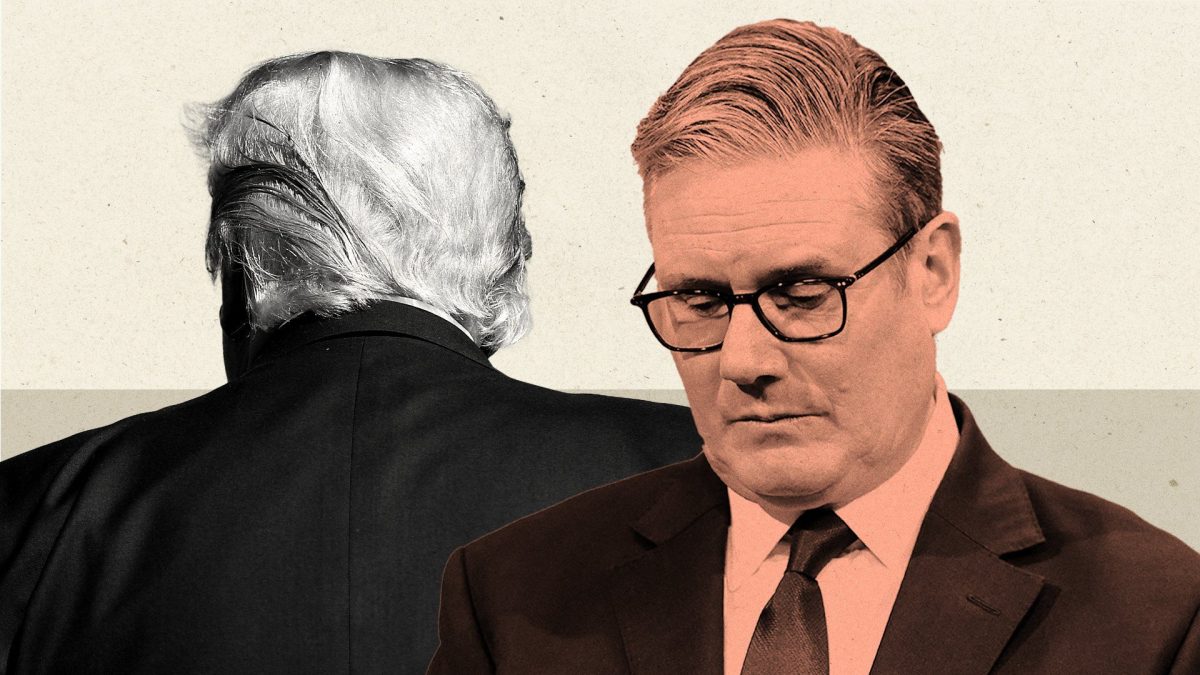
In a pared-back Labour Party election video this week, Sir Keir Starmer broadcast directly into the homes of voters across the country and told them that in “uncertain times” it was up to him, the Prime Minister, to provide “answers”.
Ahead of May’s council elections, would such answers be about local government funding, refuse collection, housing shortages or crippling social care costs? Or even national talking points such as the cost of living, the NHS or potholes.
No, not this time.
“I judged that it is not in Britain’s national interest to get dragged into the war in Iran. This is not our war and no matter the pressure I am not going to change my mind about that,” he told the public.
New FeatureIn ShortQuick Stories. Same trusted journalism.
His team is clearly acutely aware that, in the short term at least, Starmer’s decision not to back the US in launching an offensive against Iran has won him public support – potentially even enough to boost Labour’s hopes ahead of the difficult set of elections in a month’s time on 7 May.
Trump gives Starmer a bounce
Nor has it been lost on his advisors that standing up to Trump is also a popular position. During a visit to the Gulf, the Prime Minister all but abandoned his “Trump-whispering” policy of keeping on the right side of the erratic US President.
He was, he said, “fed up” with the actions of Trump and Putin and the impact they were having on energy bills. Starmer was attempting to hit two targets here – distancing himself from Trump and recognising the overwhelming concern of British voters a month before millions go to the polls in local elections – the cost of living.
But while standing firm on Iran might have offered the Prime Minister some short-term gain, it does little to temper the long-term pain and economic turmoil coming down the tracks, even if he can see that coming.
Voters have generally always responded well to Starmer acting on the world stage, and polling suggests an increase in support for the Prime Minister “standing up to Trump”, Louis O’Geran, senior associate at More in Common, said.
“There has been a real shift in attitudes and Starmer’s approach has reflected that change in public perception,” he said, although he added that “returns are diminishing” for him.
While it may have only changed public perception marginally – Starmer’s approval rating stands at -42, higher than before the war in Iran but as low as former prime minister Rishi Sunak when he left office – O’Geran said the Prime Minister “has fallen on the right side of public opinion here”.
It is fair to assume some of this will be reflected in the local elections, but any significant impact seems minimal, with O’Geran pointing out there had not been any increase in Labour’s national vote share yet.
‘Low bar’ for the King’s state visit to the US
And there is a longer-term cost to this geopolitical instability.
The upcoming state visit of King Charles and Queen Camilla to Washington is going ahead despite public fractures in the special relationship, particularly over No 10’s refusal to let the US use British airbases for attacks on Iran.
While Trump is known to hold the Royal Family in high esteem, there is now little expectation of any tangible wins for the UK.
Despite much hope being placed on the King’s visit, a source familiar with US thinking said it was not clear there’s any significant deals coming out of this trip – adding “all that can be achieved really is that relations are not ruined even more than they previously had been, which is a pretty low bar”.
Trump would not deliberately humiliate the King. But for a leader like him, diplomatic relationships are always personal, and no matter how long you appease him, once you stop, the goodwill evaporates.
So the deference with which Starmer has, until recently, treated Trump has done little to protect him from the wrath of the US President now.
The source said that Starmer’s attempts to justify the decision to allow the US to use UK bases for defensive operations only were lost on the Trump administration.
“Starmer, or No 10, can apply all the legalistic arguments they want when it comes to the justification for what support they are or are not offering to the US in Iran, but all Washington hears is ‘we aren’t going to back you on this’,” they said.
And it appears there is little motivation for the US to offer Starmer a helping hand economically by offering any further trade concessions.
The source said the US administration is “okay with allowing Starmer to be politically wounded” but said they do not want it to be fatally so because “none of the Labour Government alternatives are favourable” from the US administration’s perspective.
Iran has ‘damaged UK’s international standing’
Critics of Starmer say his position on Iran has done nothing but expose the UK’s lack of military readiness – amid increased pressure for the Government to speed up the Defence Investment Review and for the Treasury to unlock more money.
Conservative MP and former army officer Ben Obese-Jecty said the conflict had “undoubtedly damaged the UK’s international standing”.
“Unprepared for conflict, lacking the agility to respond in a timely fashion, our allies in Cyprus and the Gulf states have been left with question marks over our ability to defend our bases in their countries. Our lack of naval presence in the region will have not gone unnoticed,” he said.
There has also been criticism over the failure to publish the UK’s Defence Investment Plan (DIP).
Labour Party Chair and minister Anna Turley insisted the DIP is “coming soon” and dismissed the suggestion that the breakup of Nato is now inevitable following Trump’s anger over its failure to help him in Iran. She stressed that dialogue with the US and other allies is crucial to this.
Speaking to The i Paper, she insisted the Prime Minister’s decision to stand up to Trump had been “widely respected”.
“There is a recognition this is an extremely volatile world and I’m so relieved – when you look particularly at the other leaders in other parties and the poor positions they’ve taken wanting to recklessly follow America into action – I’m really proud that we’ve had a steadfast, calm leader who’s been level headed and measured,” she said.
Turley insisted the state visit remained an “important part” of building and maintaining the UK-US special relations “for many years, whoever’s in charge”.
Economic pressure is not letting up
But, warm words aside, it’s hard to avoid the reality that the lack of prospect of any real economic win from the US adds to the strain of a government looking down the barrel of yet more economic pressure, caused by the conflict and subsequent blocking of the Strait of Hormuz and its impact on food and petrol prices.
Just as Starmer and Chancellor Rachel Reeves were setting out the argument for why 2026 would mark the start of change in people’s finances, they have been hit with this economic curveball – the extent of which is still not really known.
Some in Labour believe it provides the Chancellor and Prime Minister with an opportunity to rewrite their policy platform.
But there are concerns that without Starmer’s former chief of staff, Morgan McSweeney, there is a political vacuum in No 10 with no one able to step up and take the mantle.
Mark McVitie – chair of the Labour Growth Group, formed by MPs to offer ideas for political strategy – suggested the Government needs to move away from an incremental approach to change and actually identify the voters they want to work for.
The group has been circulating proposals for the Government to focus more on identifying who it is working for – arguing it should be acting for “the grafters” and taking down “the grifters” with a short and long-term focus on supporting people with high living costs.
“The Government came in promising a ten-year renewal. The problem isn’t the timescale, it’s that without a clear sense of whose side you’re on, you end up splitting the difference on the hard decisions,” he explained.
A focus on the cost of living ‘the only way out’ for Labour
“The Iran crisis should be a moment to stop doing that. It’s laid bare how exposed we are in a world where these shocks are now the norm. The public are ready for us to make an argument about why putting in the work and doing the right thing doesn’t mean a better life anymore, and what bold changes we’re going to make to fix it.”
More in Common data supports the argument that the only way the Government can move beyond this political malaise is through a laser focus on the cost of living and ever-rising prices.
“When we ask people what they are most worried about related to the Iran war, it is the price of petrol and energy and that is the big metric of how the Government will be judged in the end,” O’Geran said. “I think the only way out for the Government is a big refocus on the cost of living.”
“If there is a silver lining for Labour, it is that the sense of apathy is beginning to dispel because they have been talking about it so much and that is cutting through. The first step is actually showing they are taking the issue seriously.”