
The United States and Iran held historic face-to-face talks this weekend but failed to reach a peace deal after 21 hours of “substantive” negotiations.The White House didn’t immediately weigh in on next steps for negotiations, but President Donald Trump promised to immediately start a blockade to prevent ships from entering or leaving the Strait of Hormuz in an apparent attempt to undermine Iran’s economic leverage. Tehran has largely shut down the Strait, a major waterway for oil shipments, since the war started.”I have also instructed our Navy to seek and interdict every vessel in International Waters that has paid a toll to Iran. No one who pays an illegal toll will have safe passage on the high seas,” Trump added in a social media post on Sunday morning. “We will also begin destroying the mines the Iranians laid in the Straits. Any Iranian who fires at us, or at peaceful vessels, will be BLOWN TO HELL!”Trump said that the US and Iran agreed on many points during this weekend’s negotiations, but reached an impasse on the fate of Iran’s nuclear program. “The simple fact is we need to see an affirmative commitment that they will not seek a nuclear weapon, and they will not seek the tools that would enable them to quickly achieve a nuclear weapon,” said Vice President JD Vance, who led the American delegation in Islamabad. “That is the core goal of the president of the United States, and that’s what we’ve tried to achieve through these negotiations.”Iran’s parliament speaker, Mohammad Bagher Qalibaf, blamed the United States for the breakdown. Qalibaf, who led Iran in the negotiations, didn’t identify specific sticking points in his initial reaction on social media. He said they raised “forward-looking initiatives,” but “the opposing side ultimately failed to gain the trust of the Iranian delegation in this round of negotiations.”The next steps were still unclear as of Sunday morning. The White House didn’t respond when asked if the Trump administration would remain committed to the two-week ceasefire or whether there are plans to resume fighting after that agreement expires. Trump said on social media that the US military would “finish up the little that is left of Iran” at “an appropriate moment.”Pakistani mediators urged both sides to stick to the ceasefire as the country works to facilitate more talks in the coming days. Earlier Saturday, President Donald Trump seemed to downplay the need for a diplomatic solution. “Whether we make a deal or not makes no difference to me. The reason is because we’ve won,” Trump said, citing existing damage to Iran’s military capabilities. During a press conference last week, Defense Secretary Pete Hegseth said that the Trump administration still has military options to address Iran’s nuclear program. He said they could launch another operation targeting nuclear facilities, similar to the strikes launched last year. The Trump administration has yet to rule out sending American ground troops to seize Iran’s enriched uranium, which could be used to build a nuclear weapon, although Iran insists its program is for peaceful purposes. After the ceasefire was initially announced, Trump said on social media that the United States would work with Iran to “dig up and remove all of the deeply buried (B-2 Bombers) Nuclear ‘Dust.'” Iran has not publicly committed to that. Iran’s First Vice President Reza Aref said on Sunday that Tehran is seeking compensation for damage caused during the war, as well as U.S. recognition of its control of transit through the Strait of Hormuz. Trump told reporters on Friday that he’s opposed to Iran charging tolls in the strait. He said that the U.S. would open the waterway with or without Iran’s help. On Saturday, the U.S. military said it had taken steps to start clearing a safe pathway through the strait so that normal trade can ultimately resume, including critical oil shipments. U.S. Central Command said it was able to move two destroyers through the strait, but Iran denied that.
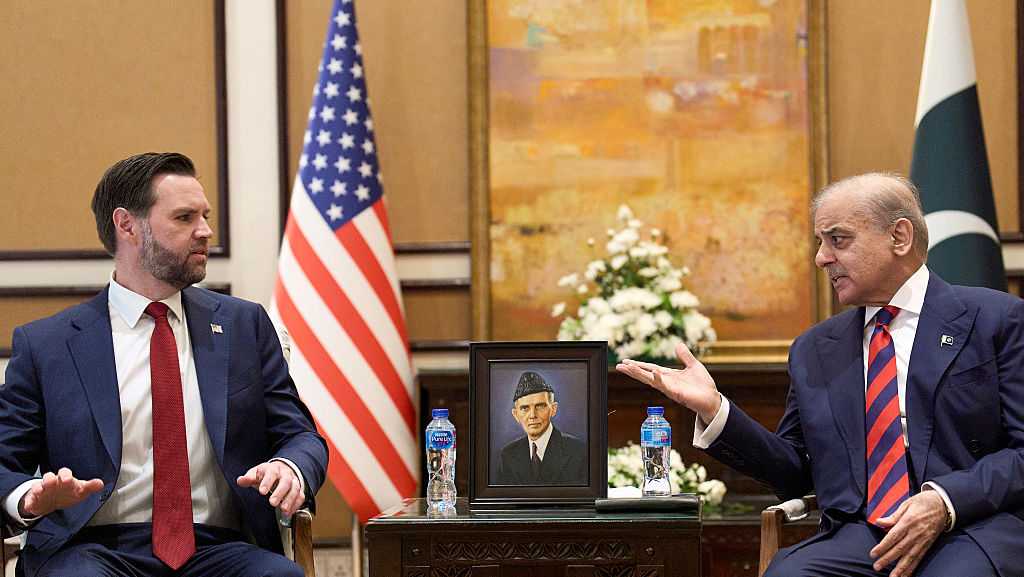
The United States and Iran held historic face-to-face talks this weekend but failed to reach a peace deal after 21 hours of “substantive” negotiations.
The White House didn’t immediately weigh in on next steps for negotiations, but President Donald Trump promised to immediately start a blockade to prevent ships from entering or leaving the Strait of Hormuz in an apparent attempt to undermine Iran’s economic leverage. Tehran has largely shut down the Strait, a major waterway for oil shipments, since the war started.
“I have also instructed our Navy to seek and interdict every vessel in International Waters that has paid a toll to Iran. No one who pays an illegal toll will have safe passage on the high seas,” Trump added in a social media post on Sunday morning. “We will also begin destroying the mines the Iranians laid in the Straits. Any Iranian who fires at us, or at peaceful vessels, will be BLOWN TO HELL!”
Trump said that the US and Iran agreed on many points during this weekend’s negotiations, but reached an impasse on the fate of Iran’s nuclear program.
“The simple fact is we need to see an affirmative commitment that they will not seek a nuclear weapon, and they will not seek the tools that would enable them to quickly achieve a nuclear weapon,” said Vice President JD Vance, who led the American delegation in Islamabad. “That is the core goal of the president of the United States, and that’s what we’ve tried to achieve through these negotiations.”
Iran’s parliament speaker, Mohammad Bagher Qalibaf, blamed the United States for the breakdown.
Qalibaf, who led Iran in the negotiations, didn’t identify specific sticking points in his initial reaction on social media. He said they raised “forward-looking initiatives,” but “the opposing side ultimately failed to gain the trust of the Iranian delegation in this round of negotiations.”
The next steps were still unclear as of Sunday morning. The White House didn’t respond when asked if the Trump administration would remain committed to the two-week ceasefire or whether there are plans to resume fighting after that agreement expires.
Trump said on social media that the US military would “finish up the little that is left of Iran” at “an appropriate moment.”
Pakistani mediators urged both sides to stick to the ceasefire as the country works to facilitate more talks in the coming days.
Earlier Saturday, President Donald Trump seemed to downplay the need for a diplomatic solution.
“Whether we make a deal or not makes no difference to me. The reason is because we’ve won,” Trump said, citing existing damage to Iran’s military capabilities.
During a press conference last week, Defense Secretary Pete Hegseth said that the Trump administration still has military options to address Iran’s nuclear program. He said they could launch another operation targeting nuclear facilities, similar to the strikes launched last year.
The Trump administration has yet to rule out sending American ground troops to seize Iran’s enriched uranium, which could be used to build a nuclear weapon, although Iran insists its program is for peaceful purposes.
After the ceasefire was initially announced, Trump said on social media that the United States would work with Iran to “dig up and remove all of the deeply buried (B-2 Bombers) Nuclear ‘Dust.'” Iran has not publicly committed to that.
Iran’s First Vice President Reza Aref said on Sunday that Tehran is seeking compensation for damage caused during the war, as well as U.S. recognition of its control of transit through the Strait of Hormuz.
Trump told reporters on Friday that he’s opposed to Iran charging tolls in the strait. He said that the U.S. would open the waterway with or without Iran’s help.
On Saturday, the U.S. military said it had taken steps to start clearing a safe pathway through the strait so that normal trade can ultimately resume, including critical oil shipments. U.S. Central Command said it was able to move two destroyers through the strait, but Iran denied that.