
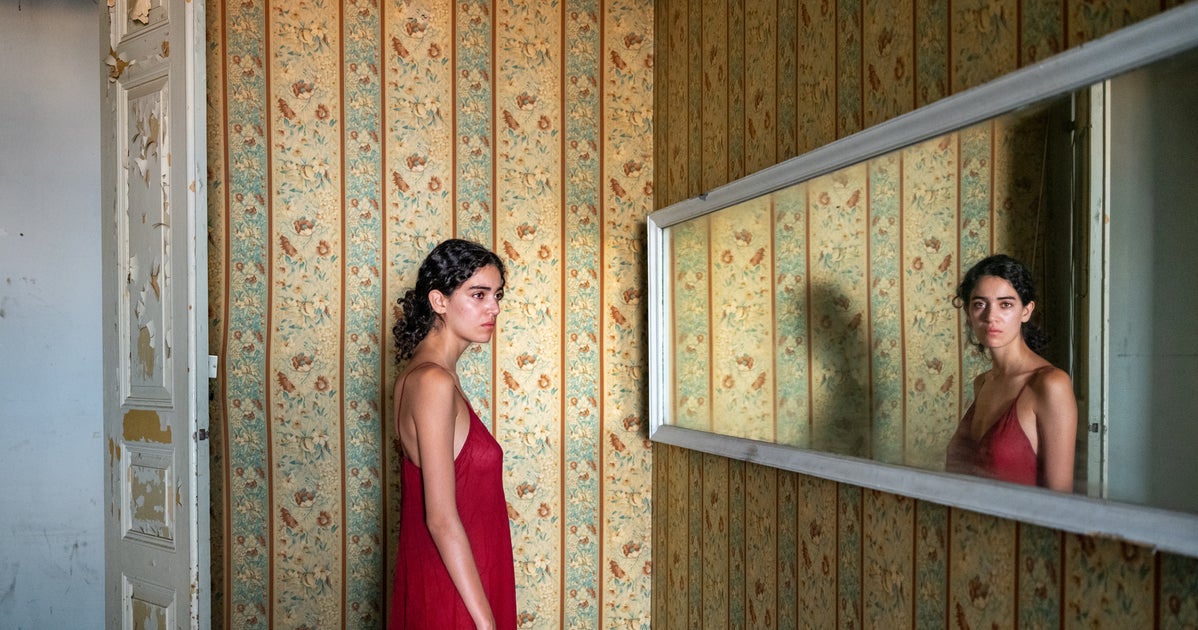
There’s no easy way to look at images shaped by war, memory and inheritance without also thinking about the lives still unfolding inside them. Photographer Rania Matar turns her focus toward young women coming of age in her home country of Lebanon, where uncertainty has become a constant. Photographed in the years following the 2020 Beirut port explosion, the lingering effects of Lebanon’s protracted unrest, the work lives at the intersection of the personal and the collective in her new book ”Where Do I Go?”
Matar doesn’t center spectacle or destruction in her work. Instead, the photographs move subtly. A body against a crumbling wall, a gesture held just a moment longer than expected, a landscape that feels both picturesque and unsettled. The women in these images aren’t simply being observed; they’re shaping the process, bringing their own stories, instincts and boundaries into the frame. What builds over time is a sense of trust, and with it, a kind of shared authorship.
“Where Do I Go?” is a body of work that seeks to intimately reflect a generation navigating seemingly impossible choices: whether to stay, whether to leave, how to imagine a future when the past keeps circling back.
In the conversation that follows, Matar reflects on collaboration, vulnerability, and the quiet ways resilience takes form, even in the most uncertain conditions. The following images offer a glimpse into that process.
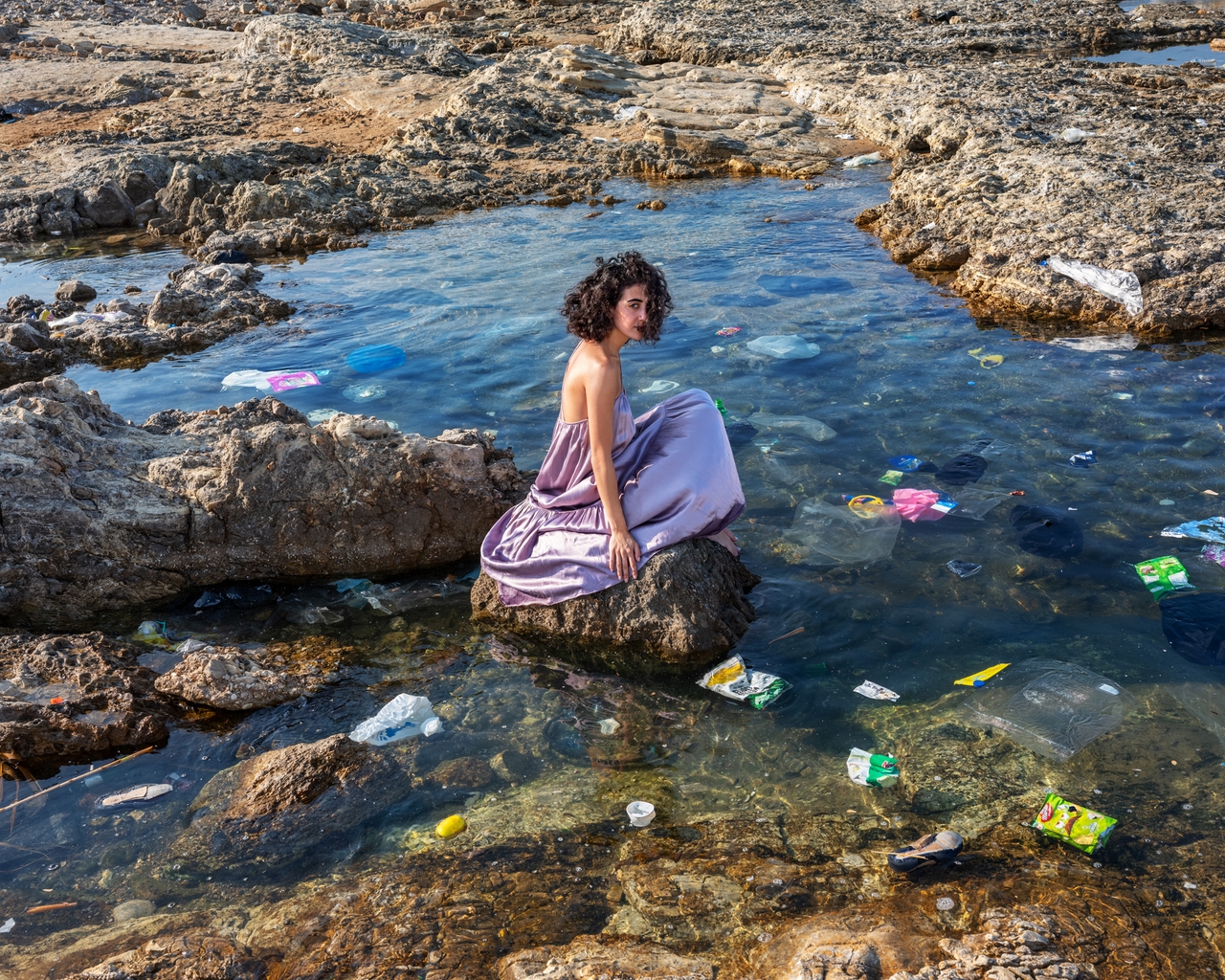 “Tara (Trash in the Water),” Raouche, Beirut, Lebanon, 2022
Throughout the project, the women take on real physical risks, from climbing to trespassing to entering the water. How do you create an environment where emotional and physical vulnerability becomes a source of agency?
My goal has always been to collaborate with any woman willing to work with me. We typically begin with a phone call to get acquainted and come up with a plan. I always try to start with their personal story and their individual relationship to Lebanon. Most often we build a shoot around exactly that. Sometimes, though, we drift toward collective history and shared memory rather than the personal. I never ask for photos in advance or anything of that nature. For me, any woman willing to put herself out there and collaborate is, by definition, someone worth working with.
When we first meet, there is an inevitable tentativeness on both sides, but the session unfolds organically as we grow comfortable with each other. I consider that early hesitation valuable. It creates space for experimentation, and I try to protect it rather than rush past it.
I often start the shoot with places they are comfortable with and clothes of their choosing. As the session evolves, they start feeling more comfortable — and so do I. We gradually develop an unspoken understanding, and we bounce ideas off each other. I always make sure to make them feel welcome to offer their suggestions, and to offer positive reinforcement. When I have suggestions myself, I learned to know the limits of their comfort zone before I ask anything from them. I guess there is a mutual respect and trust that must develop to make the shoot a success.
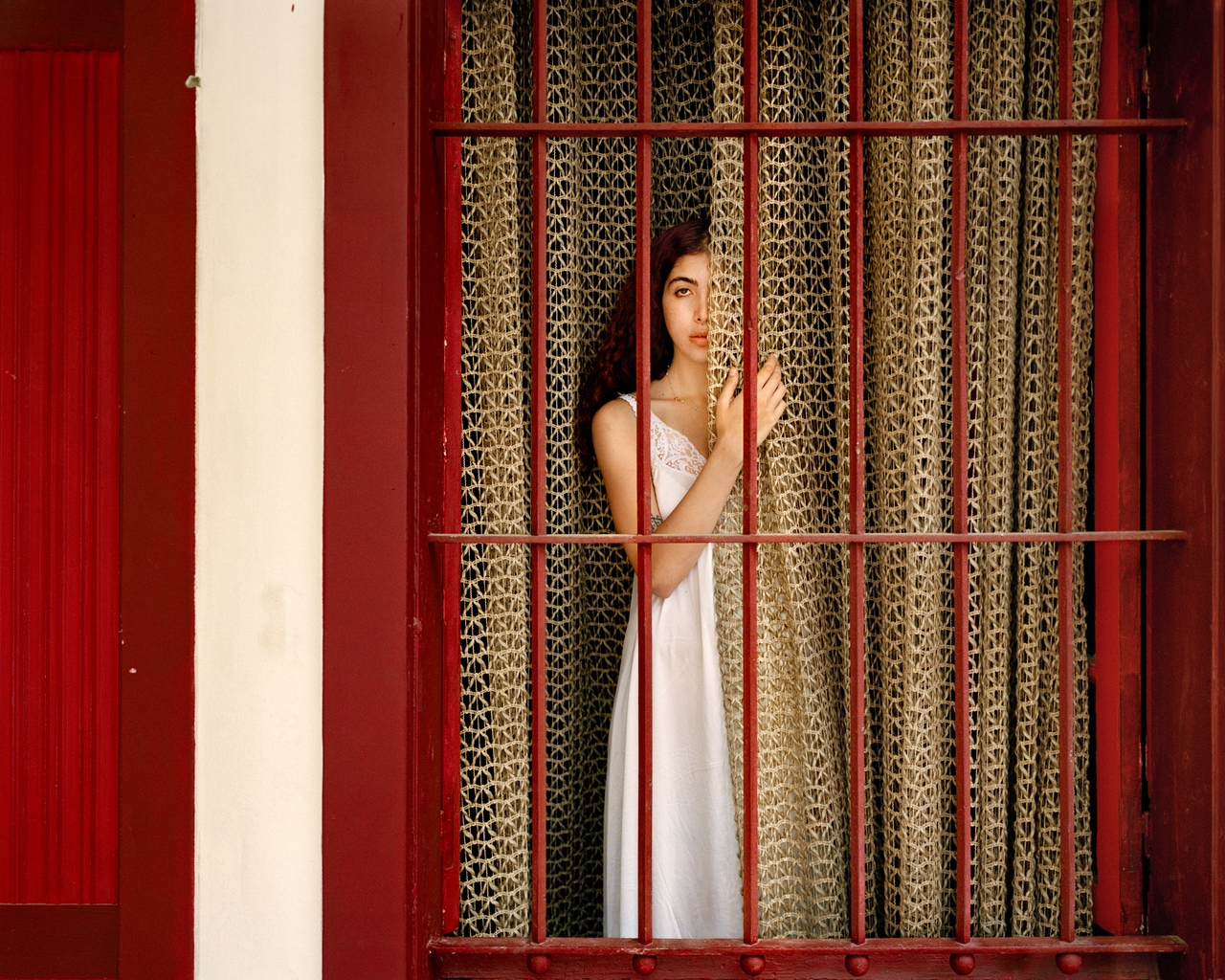 “Yasmina, Forn Shubbak,” Beirut, Lebanon, 2021
When you’re working with young women who are also shaping the image, how do you know when you’ve reached “the shot”? Is it a mutual collaboration, or do you ultimately decide the final image?
During the process, I am usually very much in the moment. I am always telling them (and I mean it) how beautiful this or that moment or expression is, to please hold it, etc. It is wonderful to see how as the session evolves, we start feeling in sync and bouncing ideas off each other.
I never ask them to do anything out of their comfort zone, but I am also fascinated at how they often do get out of their comfort zone on their own as we spend more time together. At that moment, I am not thinking of the results. If I get a great picture at the end, it is the ultimate reward — the icing on top of the cake.
I send the women a selection of my favorites, but I ultimately decide on the final image. And often, it is not the one I would have expected during the shoot.
I always come back to this beautiful quote by Graciela Iturbide: ”For me, there are two decisive moments: One is when you take the photograph and the other is when you discover what it is that you actually photographed.”
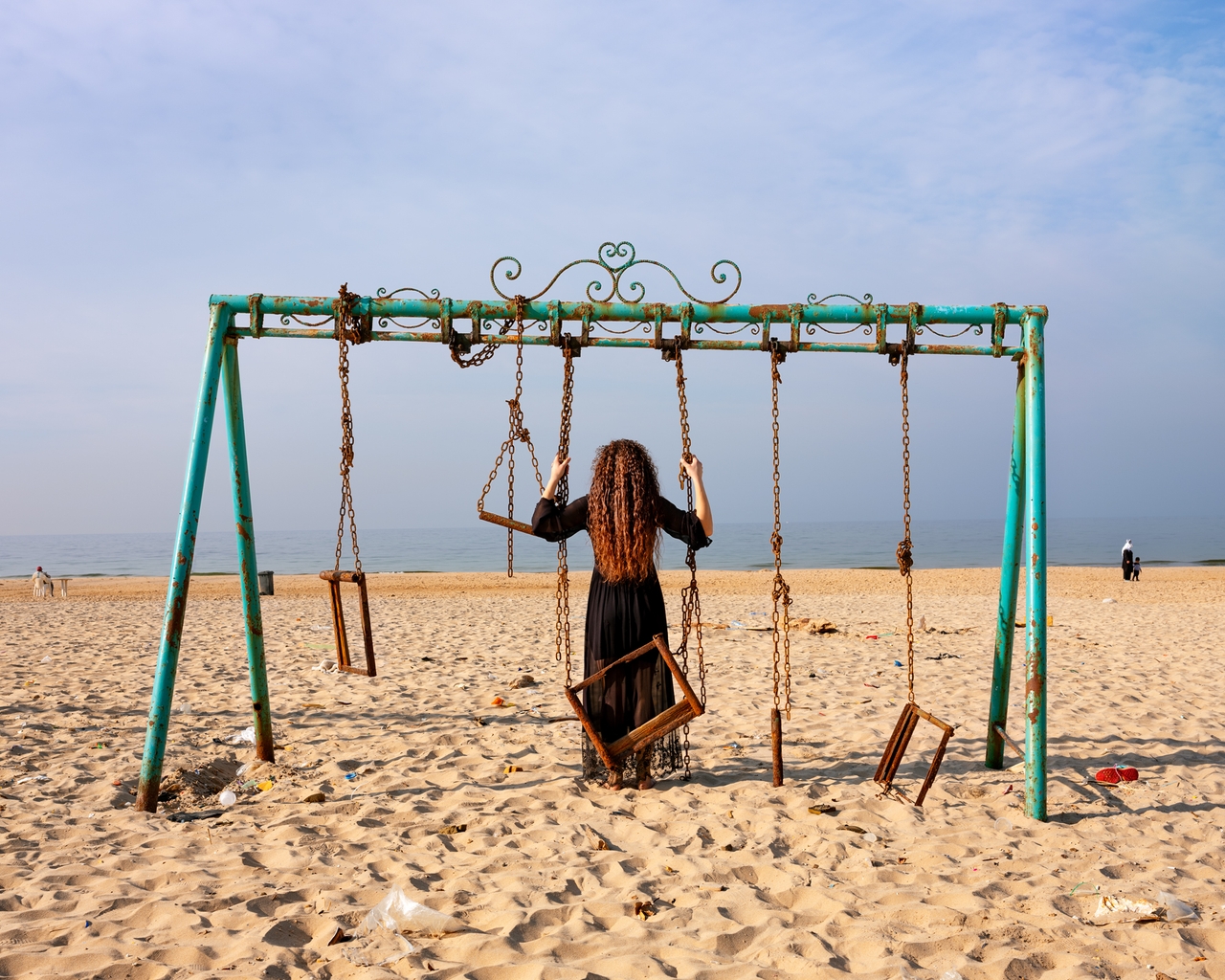 “Mariam (Swing Set),” Ramlet Al-Bayda, Beirut, Lebanon, 2021
What initially drew you to focus on collaborating with young women?
I lost my mother when I was 3, so questions of female lineage — what gets passed down, what gets lost — have shaped me from the very beginning. Becoming a mother myself, and watching my own daughters move through childhood, puberty, their teenage years and into young adulthood only deepened that focus.
But with this particular project, something else clicked into place. I left Lebanon when I was roughly the same age as these young women. I watched a situation I thought might resolve itself instead repeating itself, decade after decade. And here they were, at the same crossroads I once stood at: trying to figure out where to go, what kind of future was even possible, and where would that be. I was these women.
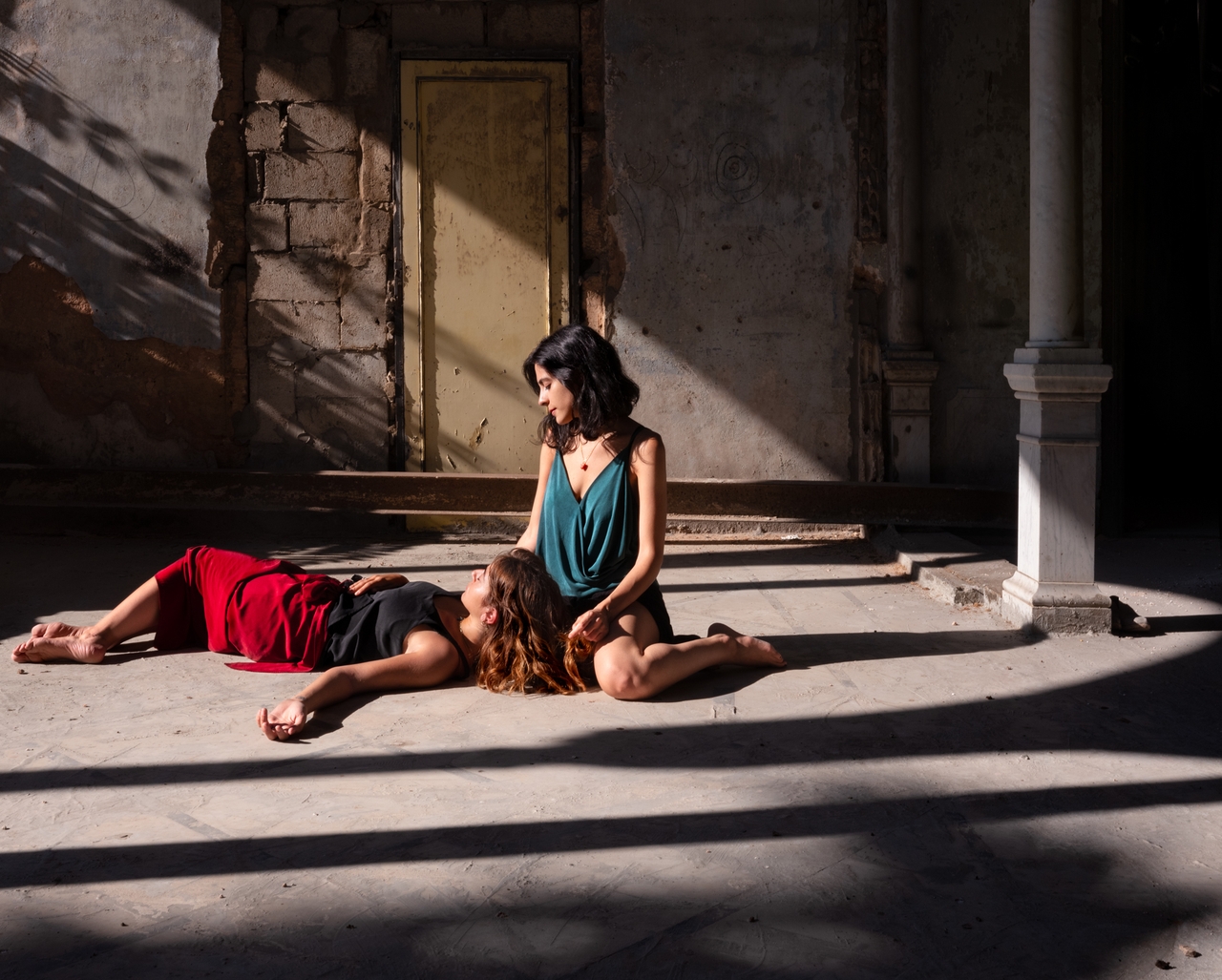 “Jana and Joanna,” Bechara Al-Khoury Palace, Beirut, Lebanon, 2021
You left Lebanon in 1984. How does that experience shape the way you approach this project? Does photographing this generation allow you to revisit or reframe that departure?
I grew up during the Lebanese Civil War. In 1984, I was 20 and studying architecture at the American University of Beirut. The situation in Lebanon had gotten really bad then, and it felt that the war was getting even closer to home. I transferred to Cornell University thinking I would be gone for 3-4 years just to finish university, but here I am, over 40 years later, still residing in the US, and raising a family here.
In 2020, after the Port of Beirut explosions, many young people seemed to be at that same juncture: Do they stay or do they leave? This project began when I returned to Beirut at that moment and started working closely with women across the country. They inspired me. They were working on the reconstruction, cleaning the debris, etc. I started collaborating with them to tell their stories, and I recognized my own experience in many of them.
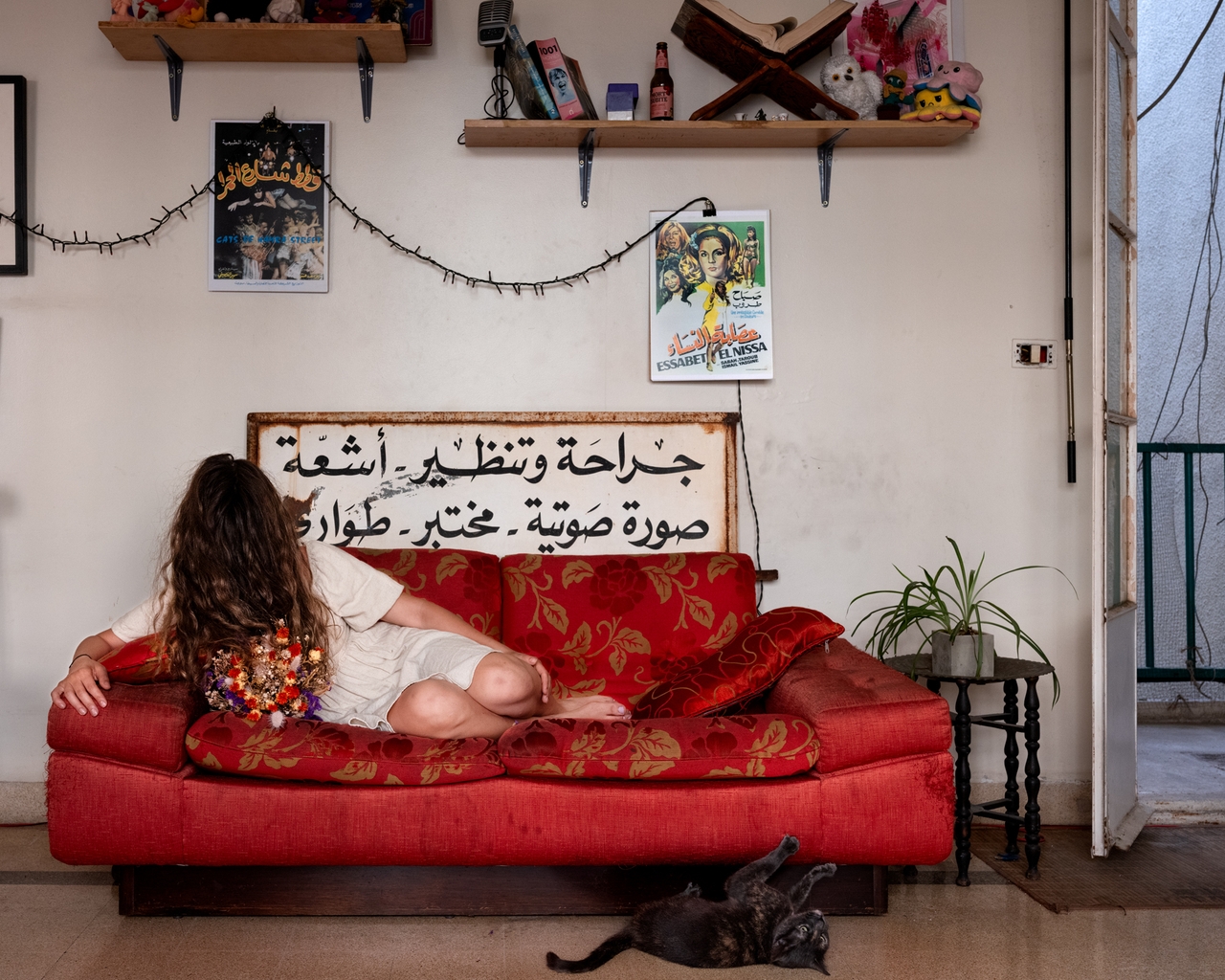 “Maya (Odalisque With Cat),” Beirut, Lebanon, 2024 (The sign says: Surgery, Endoscopy, X-ray, Ultrasound, Lab, Emergency)
They were now faced with the same painful decision of whether to stay or leave: One road leading to separation from family, home, and life as they know it, the other staying despite the fraught conditions in the country, always holding on to hope for better days. I knew exactly how they felt all these years later.
I saw myself in them, in a painful realization that history keeps repeating itself.
“That is what I wanted the photographs to hold. Not the wound itself, but the person who continues to exist within it.”
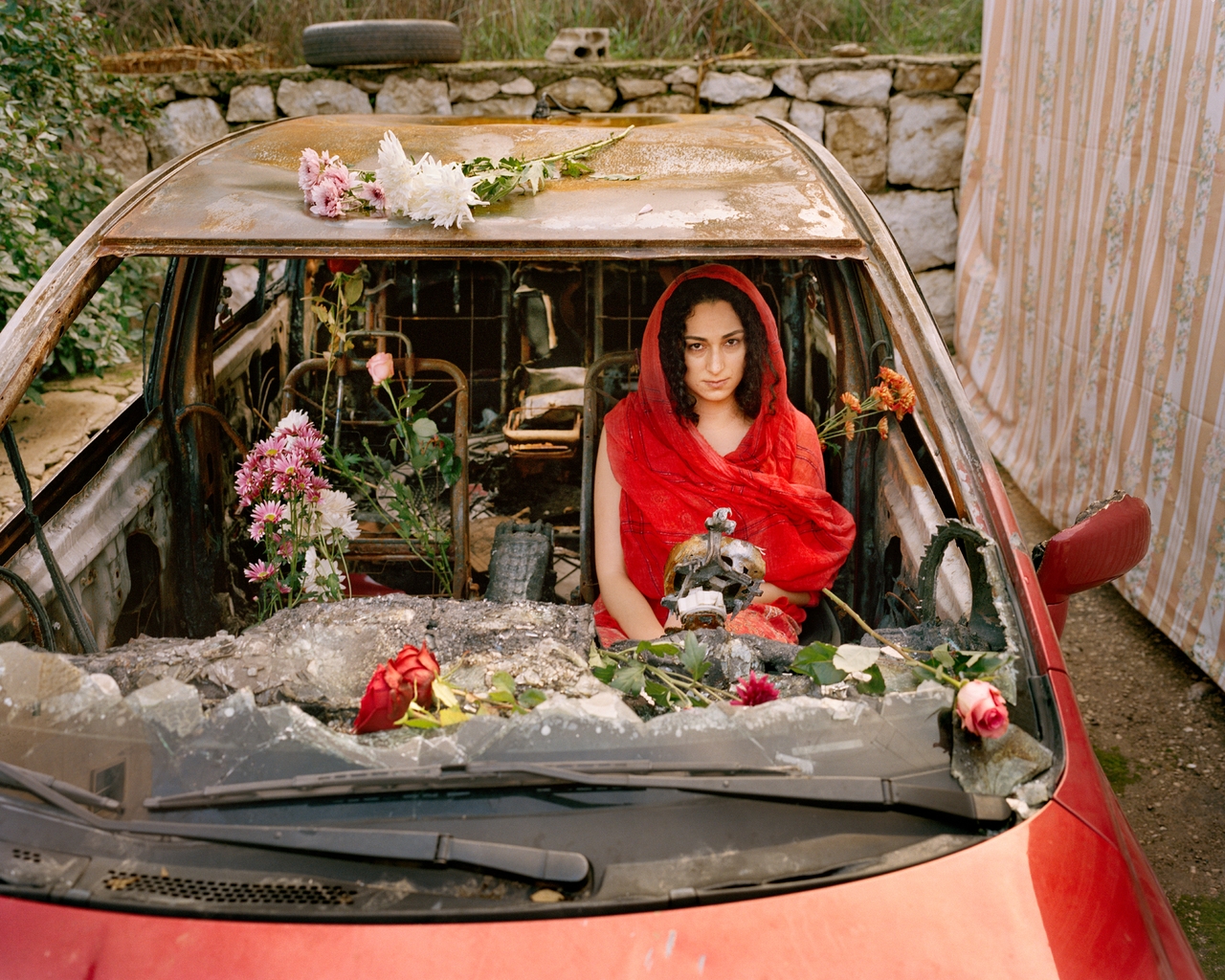 “Farah (In Her Burnt Car),” Abey, Lebanon, 2020
Many backgrounds show layered destruction. How do you balance documenting harsh realities with your intention to also reveal beauty and hope?
Lebanon has many varied and layered textures. The country survived years of war. Its geography is between the beautiful Mediterranean with the very blue sky, and the Lebanese mountain chains. Women, land, and architecture are all intertwined. These spaces are part of our individual but also collective memories. They bear witness to our stories and our histories. Beauty and decay are always side by side.
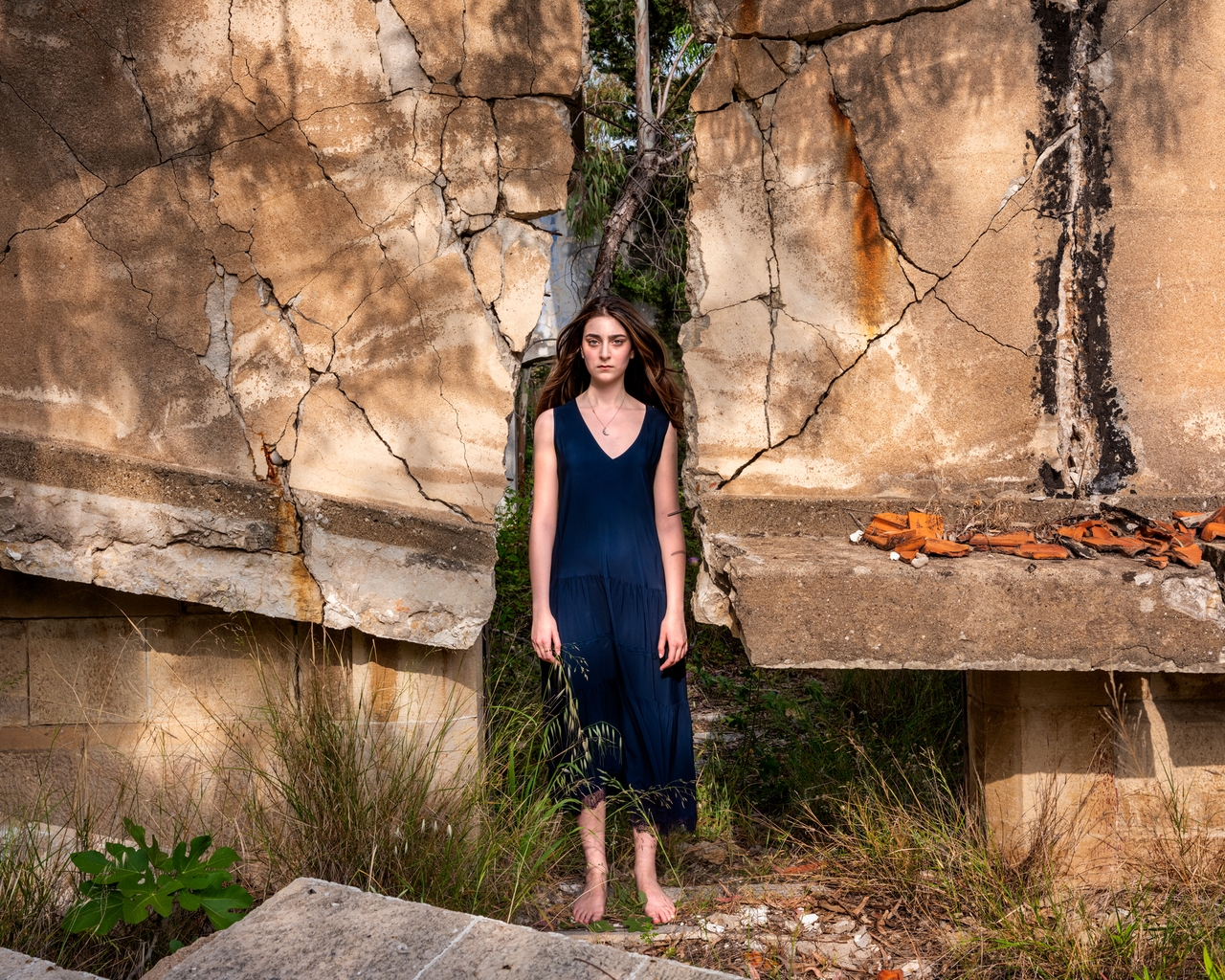 “Alex,” Asfourieh, Baabda, Lebanon, 2023
Did any moment during the project surprise you or shift your understanding of what you were making?
I originally started this work thinking I was documenting the relationships of the women to Lebanon after the port explosions, but the project turned into a long-term project as conditions kept deteriorating in Lebanon: total economic meltdown, COVID-19 pandemic, and yet another war in 2024. And then, of course, I realized that 2025 was the 50th anniversary of the outbreak of the Lebanese Civil War. It felt like that it was the natural progression of the project to end the work for the book in 2025. Sadly, we are now in 2026. Soon we will celebrate the 51st anniversary since the outbreak of the war. And, here we are again.
I will mention one image that defined what I was doing and provided me with the title: On the crumbling wall of an abandoned building, I saw graffiti scrawled in Arabic: لوين روح (Where do I go?). I was with Perla, a young woman who suddenly threw herself against that wall. In that fleeting moment, that question became the title of this body of work.
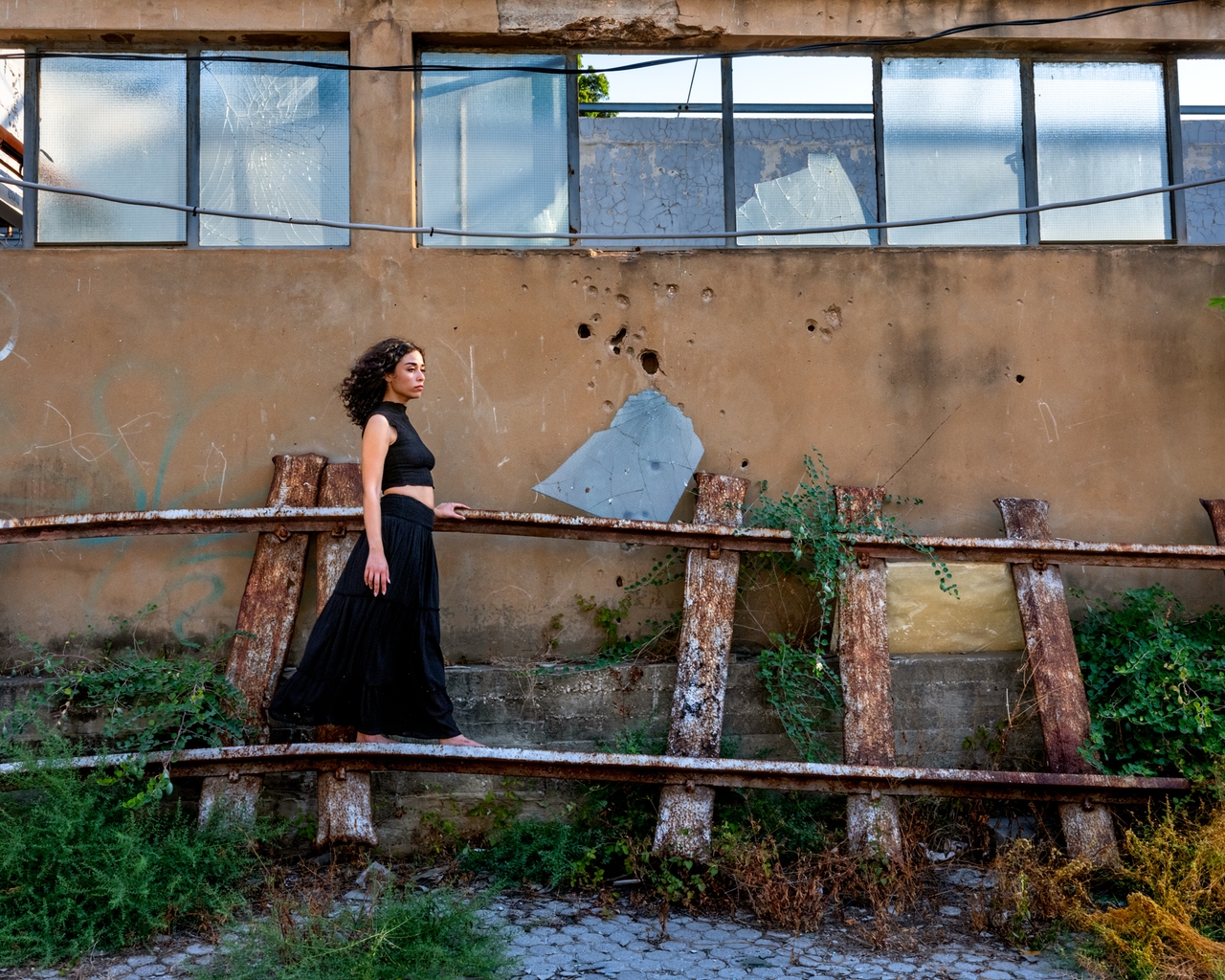 “Aya A. (Remains from the Old Coastal Railroad Tracks),” Mar Mikhael, Beirut, Lebanon, 2024
With a war that has stretched across decades, do you grapple with audiences becoming desensitized to images of violence? How does your work respond?
Desensitization is something I think about constantly. I worry myself about getting desensitized after all the horror we have been witnessing coming out of Gaza for the past 2.5 years, as we casually scroll on our phones. Trying to stay away from similar images shaped many editing decisions I made in this book.
I did travel to cities and villages in South Lebanon after the 2024 ceasefire, and I photographed the destruction. It was utter and horrifying. But I made a deliberate choice to leave every one of those images out of the book. We are already drowning in photographs of devastation. I didn’t want to contribute to that numbing. I wanted to push through it.
I hope that the work reaches, instead, for the metaphorical. For the enduring. It turns toward womanhood, toward strength and creativity and resilience; toward the layers of individual and collective memory that no bombardment can erase. These are the things that persist. These are also the things that images of rubble cannot show you. Don’t take me wrong; these images of utter suffering and destruction are important. They bear witness to what is unfolding and to the truth. I just wanted this book to also tell a different story: a story of overcoming.
The young women I collaborated with gave me that counter-narrative. Working with them, I found not just a subject but an argument: that complexity, interiority, and life pressing forward exist alongside — and eventually outlast — destruction. That is what I wanted the photographs to hold. Not the wound itself, but the person who continues to exist within it.
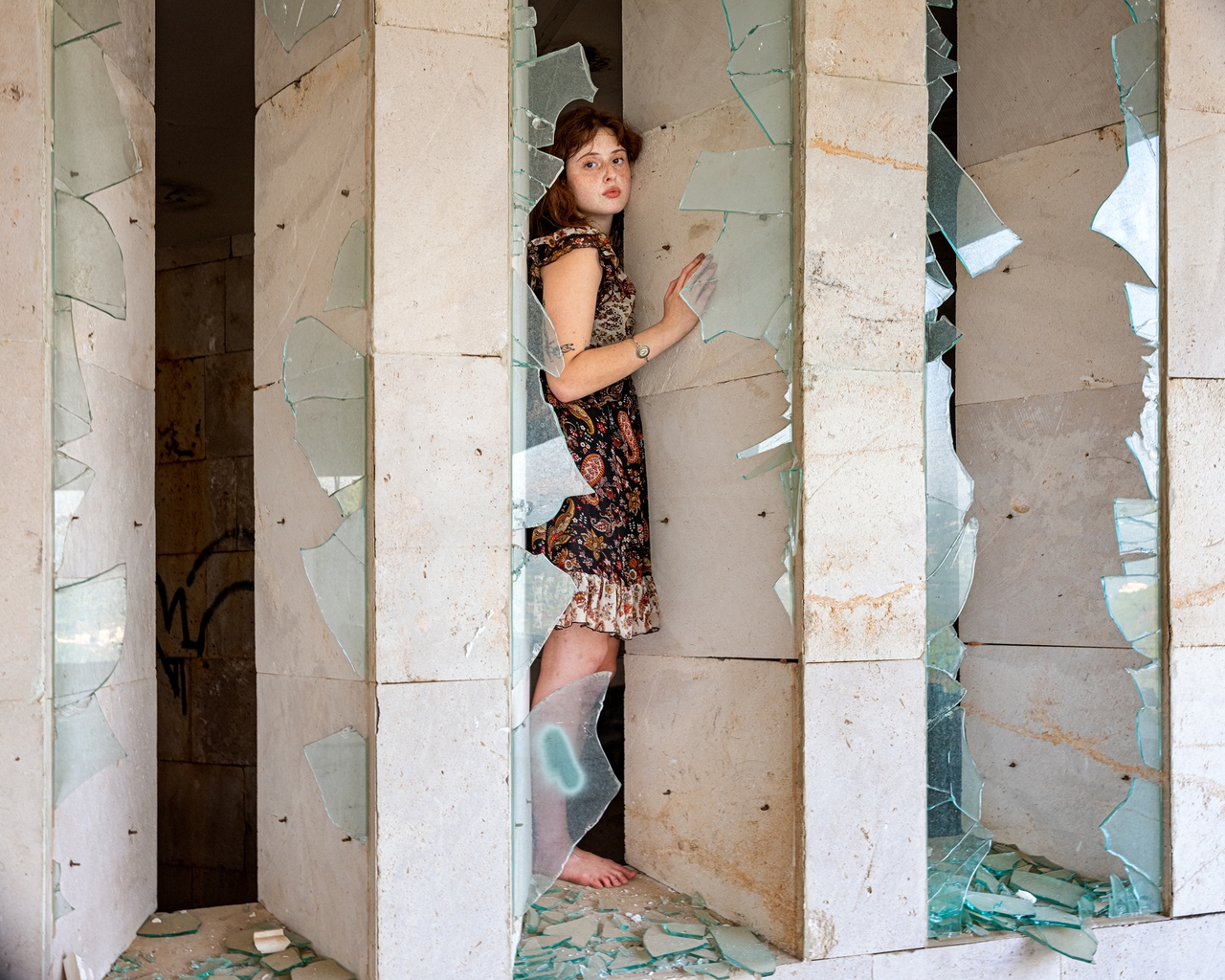 “Demi (Broken Glass—One Year After Port of Beirut Explosions),” Brummana, Lebanon, 2021
How did the title ”Where Do I Go?” come to represent the whole body of work? What is your hope for Lebanon’s future?
Where Do I Go? That question seems to keep recurring. Lebanon is in a state of war again. It is being heavily bombed as I write this, and one million people have been displaced and made homeless. This 20% of the population of Lebanon. Where do they go? It’s relentless. It is a country that has been shaped by conflicts and wars for decades — almost my whole life, and that question keeps coming back, keeps staying relevant.
“We are already drowning in photographs of devastation. I didn’t want to contribute to that numbing. I wanted to push through it.”
It is pretty tragic, really. Young people are especially torn. Do they stay and invest in this country they love? Do they leave, looking for better opportunities? It is not easy and there are no obvious answers.
Some leave and keep going back, like I do. Others left and came back to stay — they didn’t like life abroad. Some never left. There was hope in and for Lebanon up to about a few weeks ago — before this last war. Beirut was picking up again, and many of the women started a business or created something. It was so refreshing to witness.
Yasmina, whom I had photographed after the Port Explosion, had a tattoo that said قوة (strength) on her back. It was meant as a message to herself to stay strong. When I saw her this past fall (2025), she had covered that tattoo with a flower. She said, “I am in a much better place now.”
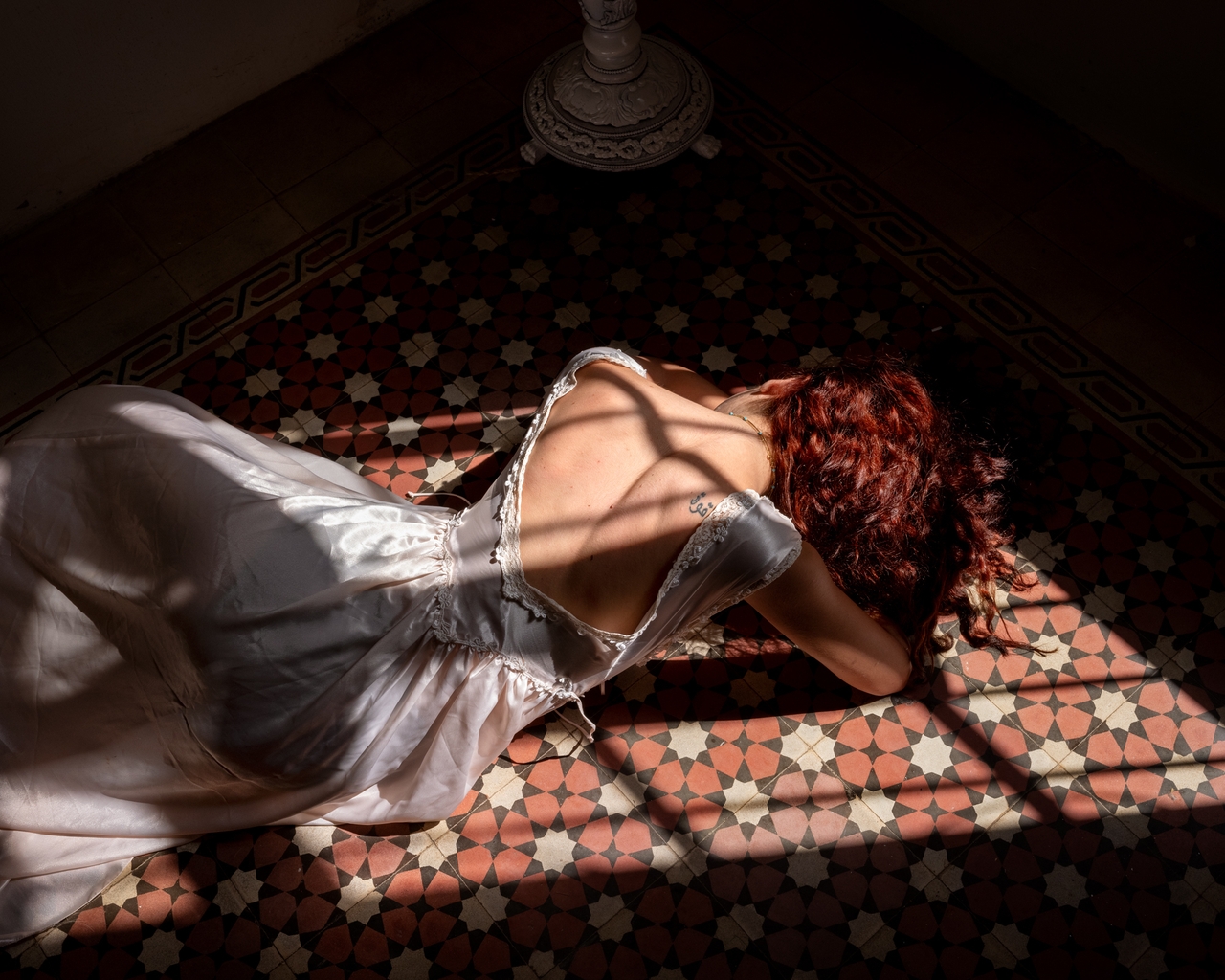 “Yasmina, قوة (strength),” Beirut, Lebanon, 2021
I keep thinking of her now, stuck again under the bombs. The question — the title — ”Where Do I Go?” seems to be achingly relevant again. As for Lebanon’s future, it is hard to be optimistic today as we are witnessing the war brutally unfolding — yet again, the south of the country in the process of being occupied — yet again, a civil war looming — yet again.
The women I collaborated with give me hope for the future of Lebanon. I want to tell them to please not give up, to stay strong, beautiful, idealistic and creative. They will make Lebanon, and I hope the world, a better place, I am sure!
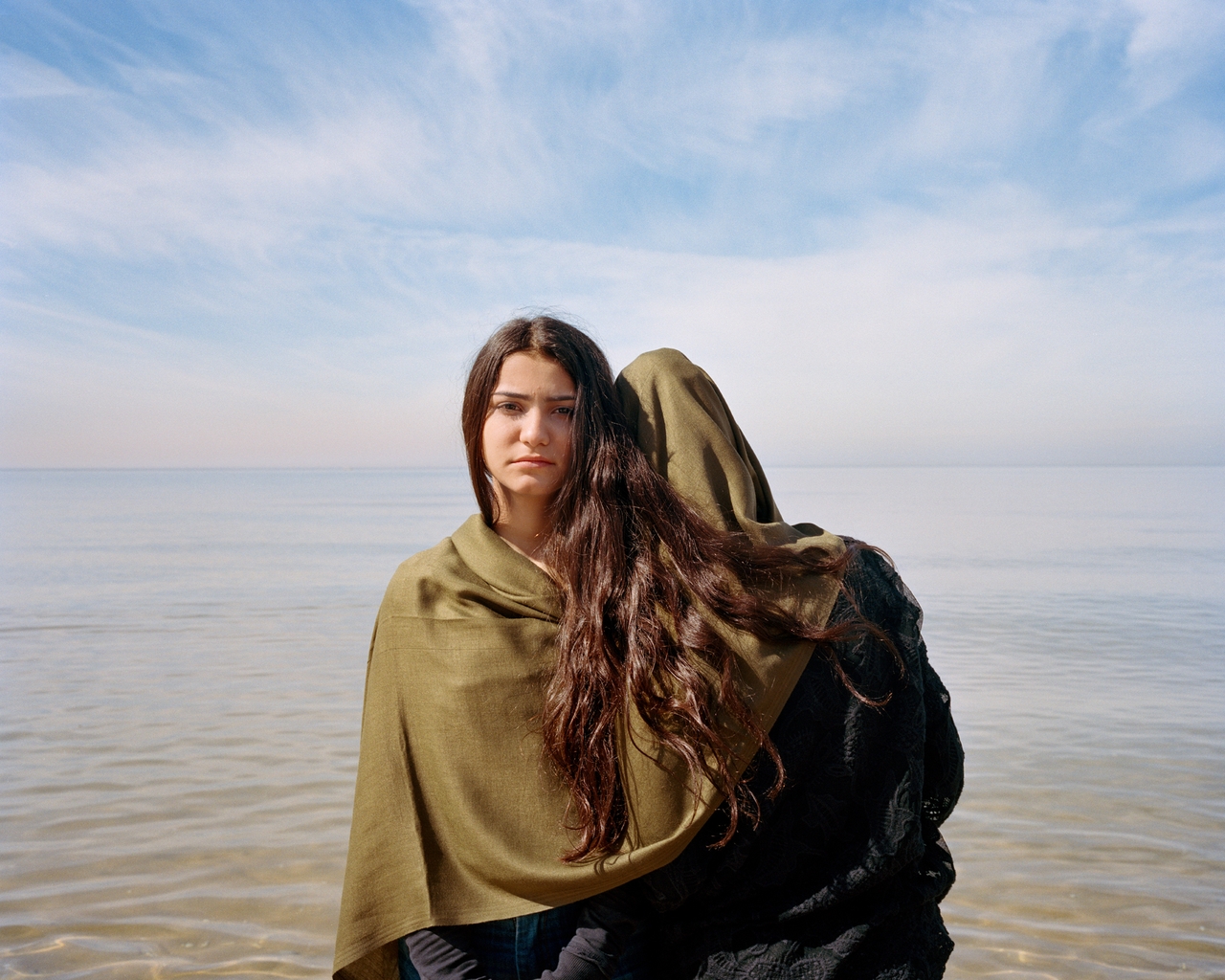 “Sara and Hasna, Sisters (Third-Generation Palestinian Refugees),” Ramlet Al Bayda, Beirut, Lebanon, 2021
After spending years immersed in this work, what’s stayed with you the most?
What has stayed with me most is the importance of remembering our shared humanity, and the extraordinary strength of the women, their refusal to give up. Their love of country and their deep, almost sacred, attachment to the land. It’s an attachment that many people struggle to understand from the outside, but once you witness it, it never leaves you.
And above all, the hope. The unshakeable belief that Lebanon will always rise again — no matter what it endures.
The women are the witnesses. They are the memory keepers. And in that role, they carry something far more lasting than any act of war ever could.
This interview has been edited for length and clarity.