

 Close
Close
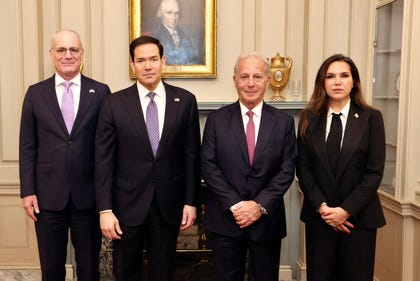
Left to right: Israeli Ambassador to the United States Yechiel Leiter, U.S. Secretary of State Marco Rubio, U.S. Ambassador to Lebanon Michel Issa and Lebanese Ambassador to the United States Nada Hamadeh Moawad, in Washington, on Tuesday. Credit: Shmulik Almani / Israeli Embassy in the United States
Left to right: Israeli Ambassador to the United States Yechiel Leiter, U.S. Secretary of State Marco Rubio, U.S. Ambassador to Lebanon Michel Issa and Lebanese Ambassador to the United States Nada Hamadeh Moawad, in Washington, on Tuesday. Credit: Shmulik Almani / Israeli Embassy in the United States
Israel and Lebanon began direct negotiations in the U.S. State Department in Washington. As part of the talks, Israel’s ambassador to the United States, Yechiel Leiter, is meeting Lebanon’s ambassador, Nada Hamadeh Moawad.
U.S. Ambassador to Lebanon Michel Issa is mediating in the talks, while U.S. Secretary of State Marco Rubio is attending the meeting.
Sources who spoke to Haaretz estimated that Prime Minister Benjamin Netanyahu is using the talks to buy time for the fighting in Lebanon, while displaying goodwill to the Trump administration. The sources said they doubt they talks will lead to progress.
This is the first time since the 1980s that the two sides have held open negotiations with the stated goal of reaching a diplomatic arrangement, with Netanyahu saying the goal of the talks is a peace agreement.
In 1983, the countries signed an agreement meant to formally end the state of war between them, but was never implemented, in part due to opposition from Syria, which at the time controlled large parts of Lebanon and was the dominant power there.