
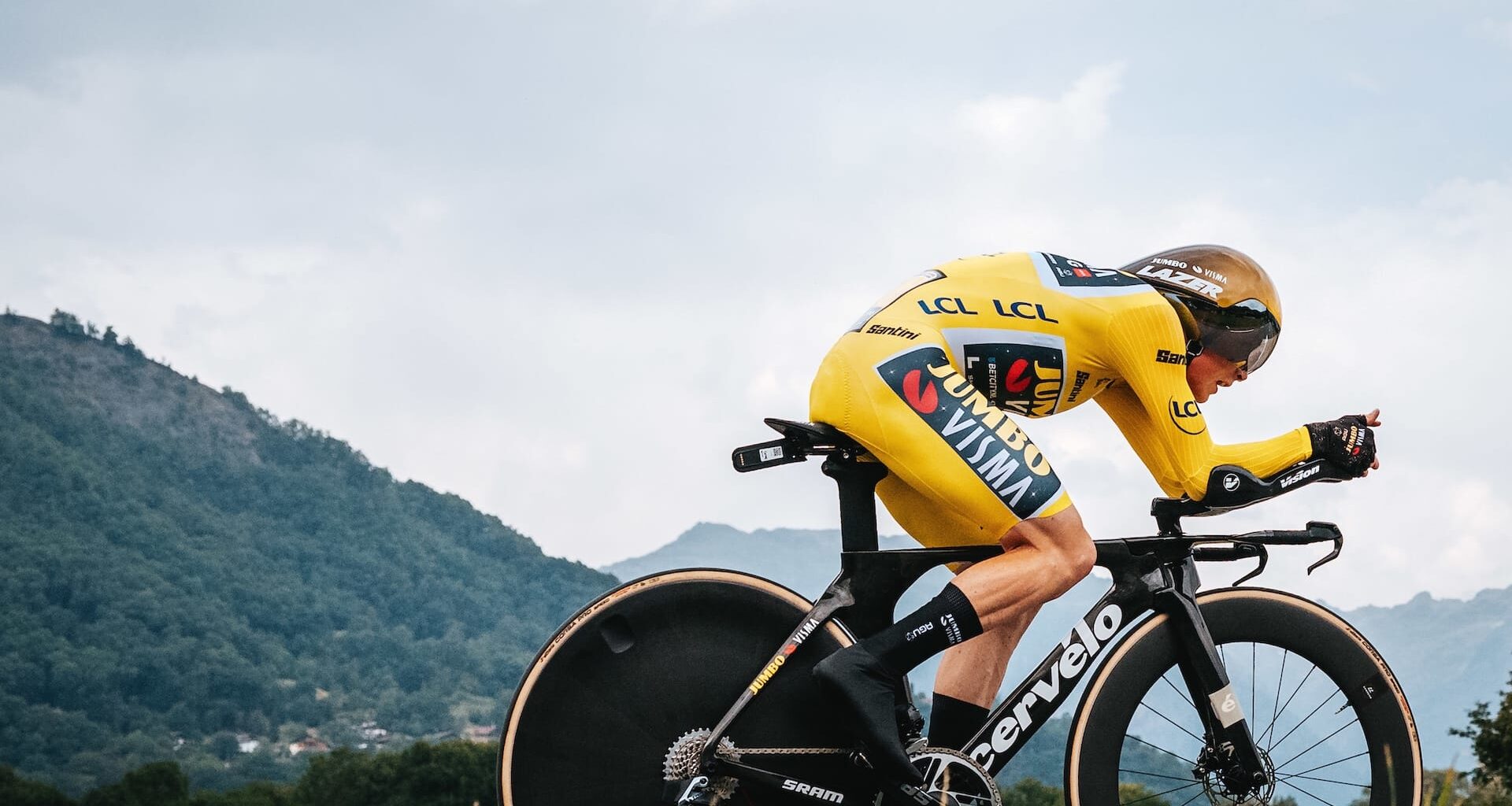
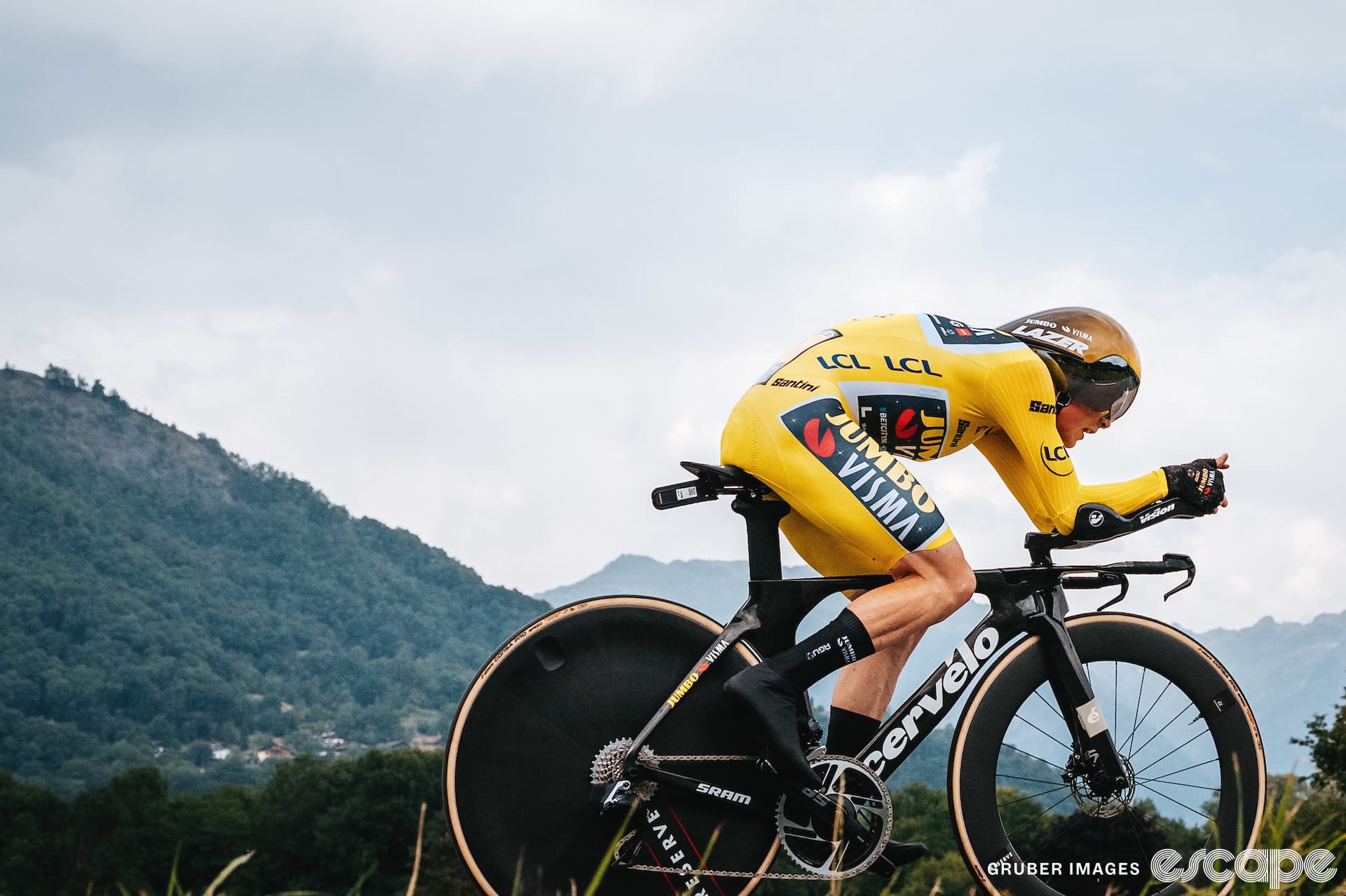
Why a TT bike is fastest, but only for two riders, and why a front disc wheel is optimal, yet we won’t see one used.

Gruber Images, Kristof Ramon
Tour de France time trials were once a contest of watts, willpower, and who could suffer the most. But in the modern Tour, things are now far more complicated. A time trial is no longer simply about who has the strongest legs; it’s about the countless marginal decisions layered beneath the headline performances. Equipment won’t win a time trial outright but, to the frustration of many, not having the optimal setup in both position and technology could cost even the strongest rider a win.
At first glance, a mountain time trial appears to tilt the equation back towards raw strength. Aero is kind in regular time trials, but as the road tilts upwards and the speeds drop, science dictates that gravity should take over. Even then, though, the same optimisation problems persist, and given the speeds the GC contenders now climb at, aero is still incredibly important.
Stage 13 of this year’s Tour isn’t just another mountain TT. It’s one of the most complex equipment challenges performance engineers will face all year. The results sheet will be shaped by an intricate web of equipment choices, aerodynamic trade-offs, weight penalties, and terrain-specific strategies. This isn’t simply about pacing or physiology; it’s also about who gets the details right.
From the choice of skinsuit and socks to whether a rider opts for a lightweight road bike with aero tweaks or a heavier full TT setup, every decision feeds into a delicate balancing act between aerodynamic efficiency on the flat opening 3 km and the brutal reality of gravity on the 8% climb that follows. Simply put, these details help maximise the rider’s potential.
Crucially, while this is still a race against the clock, it couldn’t be more different to the relatively flat stage 5 time trial, both in the type of rider it suits and in the equipment that will prove most optimal. The rider question is simple: this is likely a race between Jonas Vingegaard and Tadej Pogačar. The equipment question? That’s where things get very complicated, very quickly.
This post is for paying subscribers only
Subscribe now
Already have an account? Sign in
Did we do a good job with this story?
👍Yep
👎Nope