
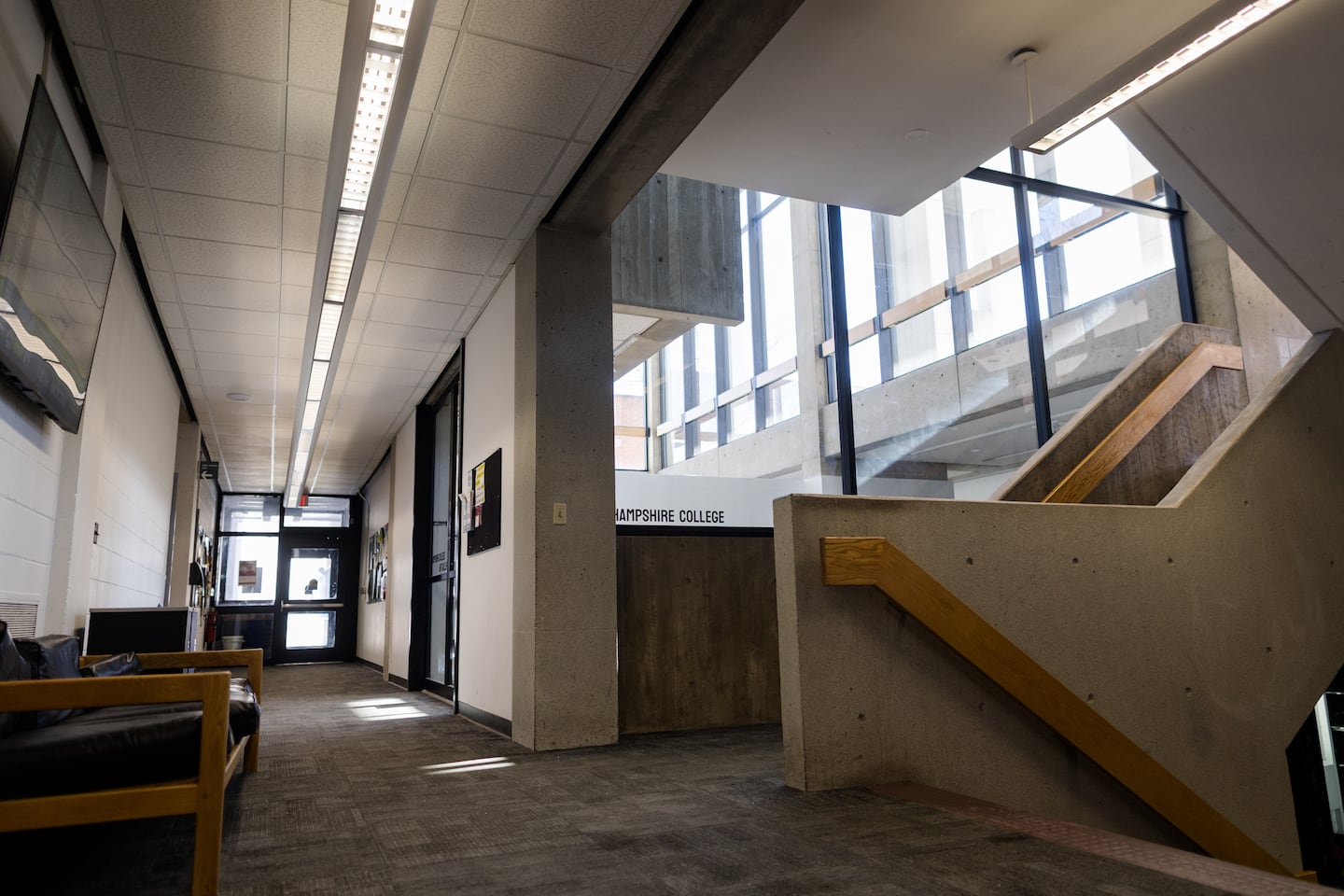
“Despite this herculean effort, the financial pressures on the College’s operations have become increasingly complex, compounded by shifting external factors,” president Jennifer Chrisler wrote in an email to the Hampshire community. “We are faced with the clear, heartbreaking reality that progress . . . has fallen far short of what we had hoped.”
Located on approximately 800 acres, Hampshire is the smallest and quirkiest institution in the Five College Consortium, which includes the University of Massachusetts, as well as Amherst, Mount Holyoke, and Smith colleges. The school’s unconventional model broke away from traditional majors and mandated instead that each student created a self-directed course of study. Its current total cost of attendance is $62,928 per year.
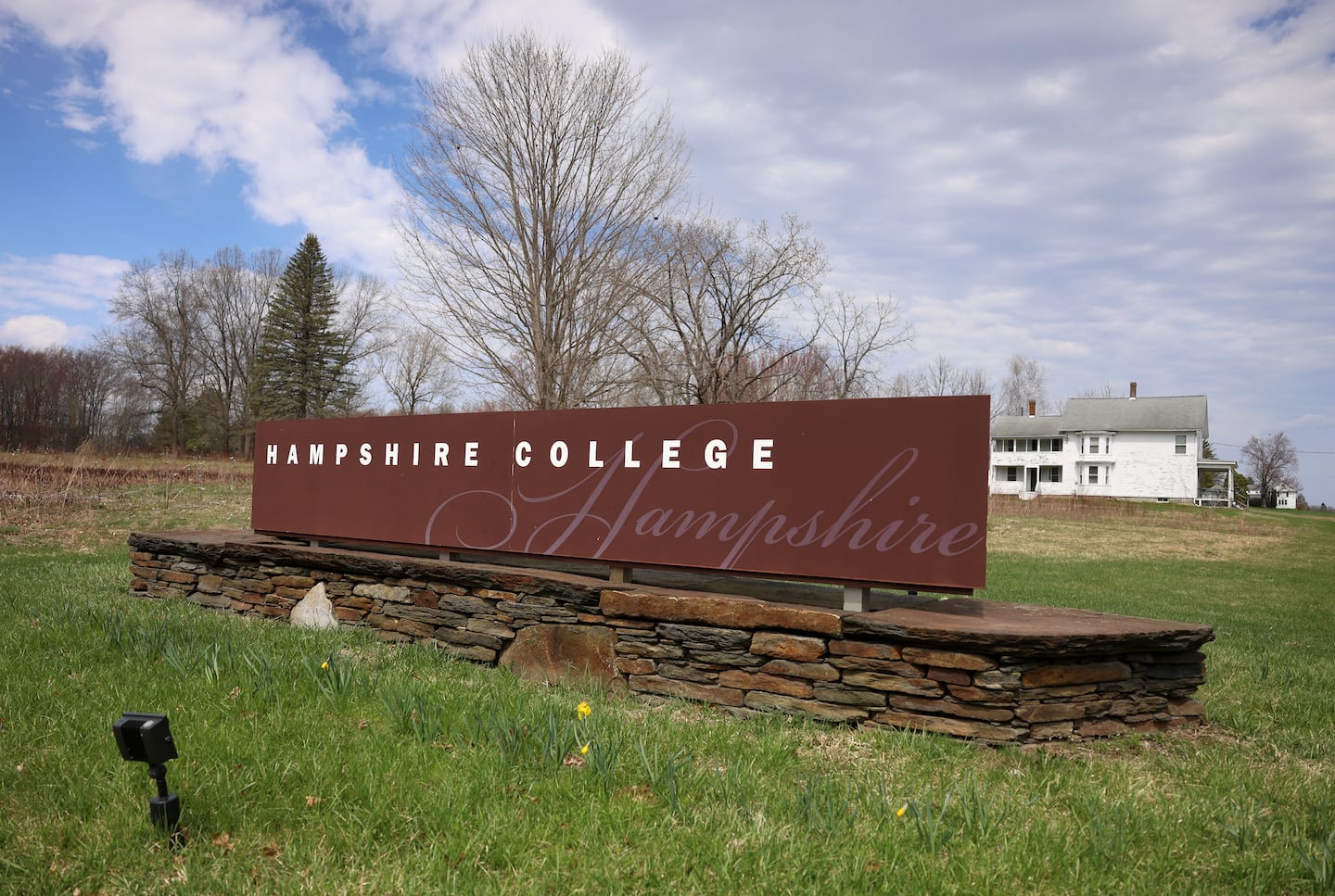 Hampshire was founded as an “experimenting college” in 1965.Jessica Rinaldi/Globe Staff
Its closing is part of a broader trend within higher education, in which smaller private colleges in particular have struggled, while the soaring costs of tuition have prompted more families to question the value of a four-year degree. By one new estimate, more than one-quarter of all private colleges in the US could close or be forced to merge within the next 10 years, and just last week, Anna Maria College in Paxton, Mass. was flagged as being at risk of closure by state officials.
Founded as an “experimenting college” in 1965, Hampshire has a history of contending with instability due to its relatively small size and limited resources. But its loyal alumni base — which includes documentary filmmaker Ken Burns, actress Lupita Nyong’o, and author Jon Krakauer — has rallied time and time again to try and keep the college going.
In a statement, Burns said the college “is woven into the very fabric of who I am.”
“It’s where I learned that there is freedom in searching, and even in failure,” he continued. “I learned to use that freedom to question everything, and ultimately to find my voice as a storyteller in a way that would have been inconceivable at a conventional institution.”
The college neared closure before and in 2019 developed a five-year outlook for the future. The goal was to increase enrollment, raise $60 million, and leverage the school’s land, among other assets. It met most of its fund-raising goal and briefly had a bump in enrollment.
But in its final months, Hampshire faced one too many hurdles: Its student population dropped to 747 in fall 2025, a sale of land fell through, it struggled to refinance its debt, and its endowment could not support school operations for much longer.
In March, the New England Commission of Higher Education threatened to withdraw accreditation over concerns the college may no longer be meeting the organization’s institutional resources standard.
Ultimately, the college announced its closure before the next June meeting with the accreditor, after missing its enrollment target last fall by around half — 168 new students instead of 300. Chrisler said Hampshire never considered a merger because it wanted to preserve Hampshire’s “independence,” she said.
In an interview Tuesday, Chrisler added: “The education we offer to our students is exemplary and desperately needed, frankly. But at some point we have to — as leaders of the college — make a decision about what is the most responsible thing we can do in the face of pretty significant financial headwinds.”
Hampshire students who have not finished their degrees will be eligible to transfer to partner institutions, including Amherst, Bennington College, Massachusetts College of Art and Design, Massachusetts College of the Liberal Arts, Mount Holyoke, Prescott College, Smith, and UMass Amherst.
UMass extended its transfer deadline for Hampshire students by two weeks to May 1 and waived application fees, according to a campus-wide email from chancellor Javier Reyes. The university will house all of Hampshire’s student records going forward.
At Hampshire Tuesday, students around campus were hugging and crying. Senior Josie Mitchell said students were “stressed out” by the news.
“There have been struggles, so it’s not the biggest surprise in the world,” Mitchell said. “But we definitely didn’t know it was happening” today.
Rae Salvatoriello, a second-year student from Vermont, was sitting in an experimental music class at nearby Smith on Tuesday and overheard students talking about the Hampshire news.
For months, “there’s been talk of cutting certain departments and potentially laying off certain staff members,” Salvatoriello said. “It was more just a matter of when, rather than if.”
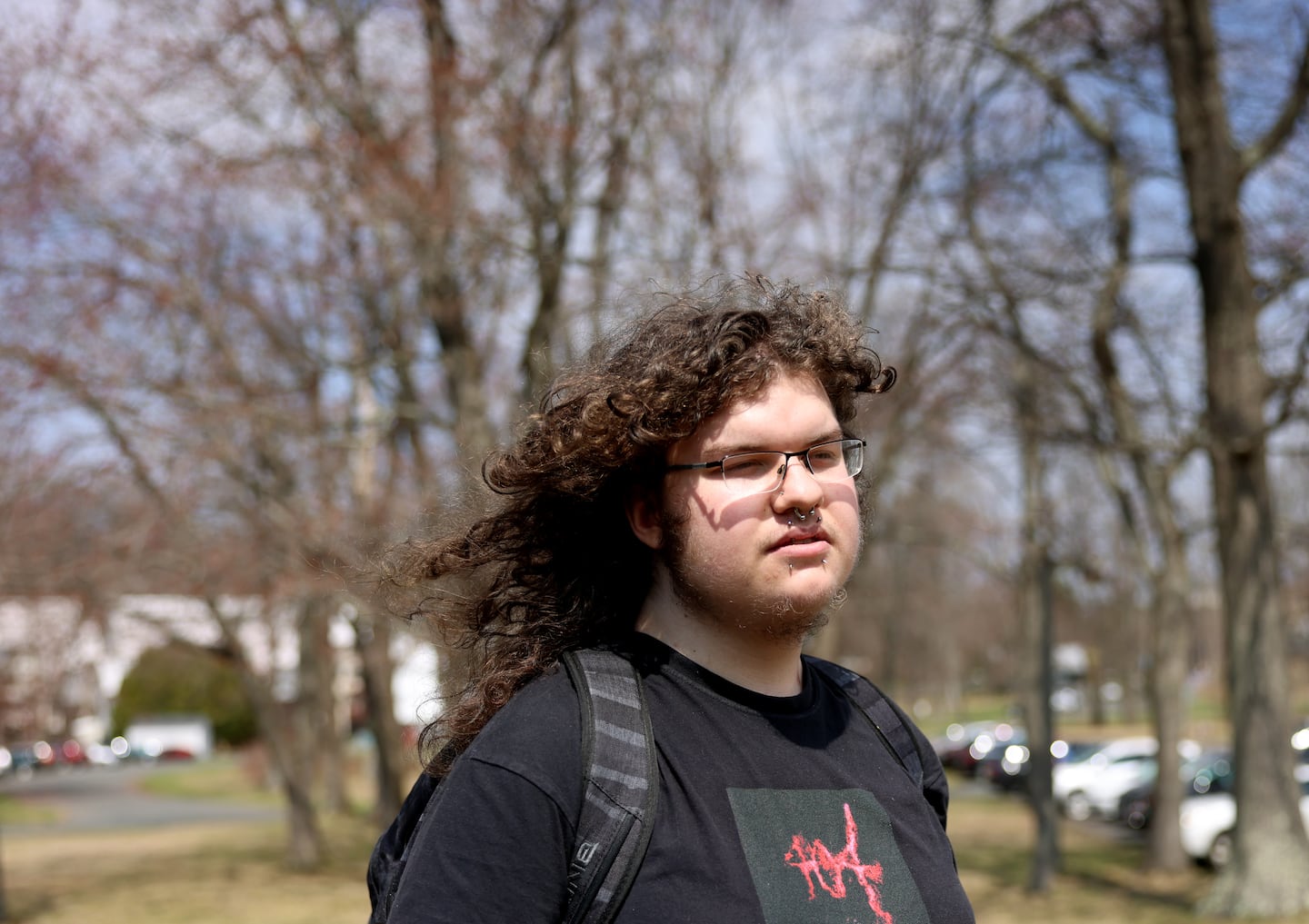 Hampshire College student Rae Salvatoriello.Jessica Rinaldi/Globe Staff
“I just hoped it would happen after I graduated,” Salvatoriello said.
A notification from the Massachusetts Department of Higher Education on Tuesday reiterated that state officials “cannot confirm” Hampshire has “sufficient resources” to operate through the next academic year.
Hampshire “made the announcement while they still had enough money to take care of the students,” said Larry Schall, the NECHE president. “It’s evidence that schools are taking their obligation more seriously and that we are monitoring them more closely.”
It is unclear where Hampshire’s faculty — around 50 professors in all — will land.
“Hampshire’s board made this decision only after exploring every possible alternative,” board of trustees chair Jose Fuentes said in a statement. “Nearly every trustee is an alum, and we share in the community’s heartbreak.”
Brooke Hauser can be reached at brooke.hauser@globe.com. Follow her @brookehauser. Diti Kohli can be reached at diti.kohli@globe.com. Follow her @ditikohli_.