
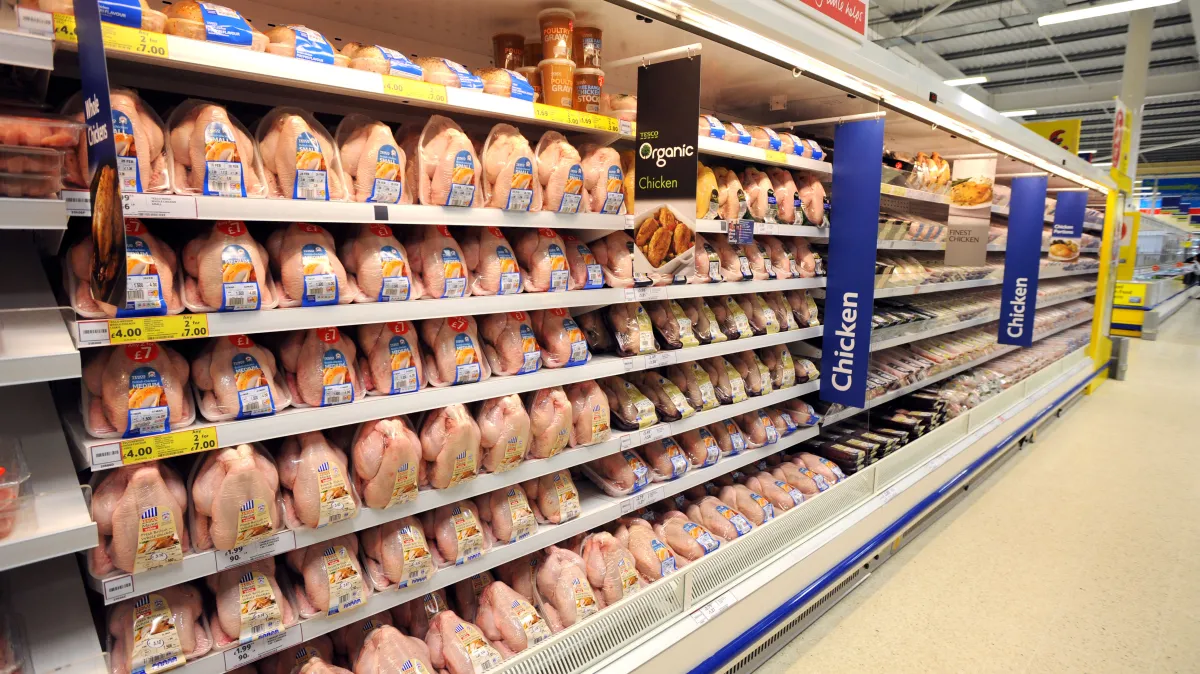
Britain could face shortages of chicken, pork and other supermarket goods this summer if the war in Iran continues, a secret government analysis has found.
Officials have drawn up contingency plans for a “reasonable worst-case scenario” amid fears that the closure of the Strait of Hormuz will lead to shortages of carbon dioxide, which is critical to the food industry.
Senior officials — including from No 10, the Treasury and Ministry of Defence — have secretly rehearsed scenarios looking at the potential impact on British industry in an event codenamed “Exercise Turnstone”.
The Times has been told the reasonable worst-case scenario prepared for the session, run by the government’s emergency committee, Cobra, was set in June 2026 and assumed that the strait had not reopened and a permanent peace deal had not been reached.
Farming and hospitality would likely be hit earliest and hardest, given CO2 is used to help increase the shelf life of food such as salad, packaged meats and baked goods.
CO2 is used in the process of slaughtering nearly all pigs and more than two thirds of chickens and the sector is not thought to have much by way of surplus supplies. While the government does have stockpiles, this was said to not be a long-term solution.
Breweries would also be hit because the gas is used to make drinks fizzy. Concerns were raised about the shortages coinciding with the Fifa World Cup, which begins on June 11.
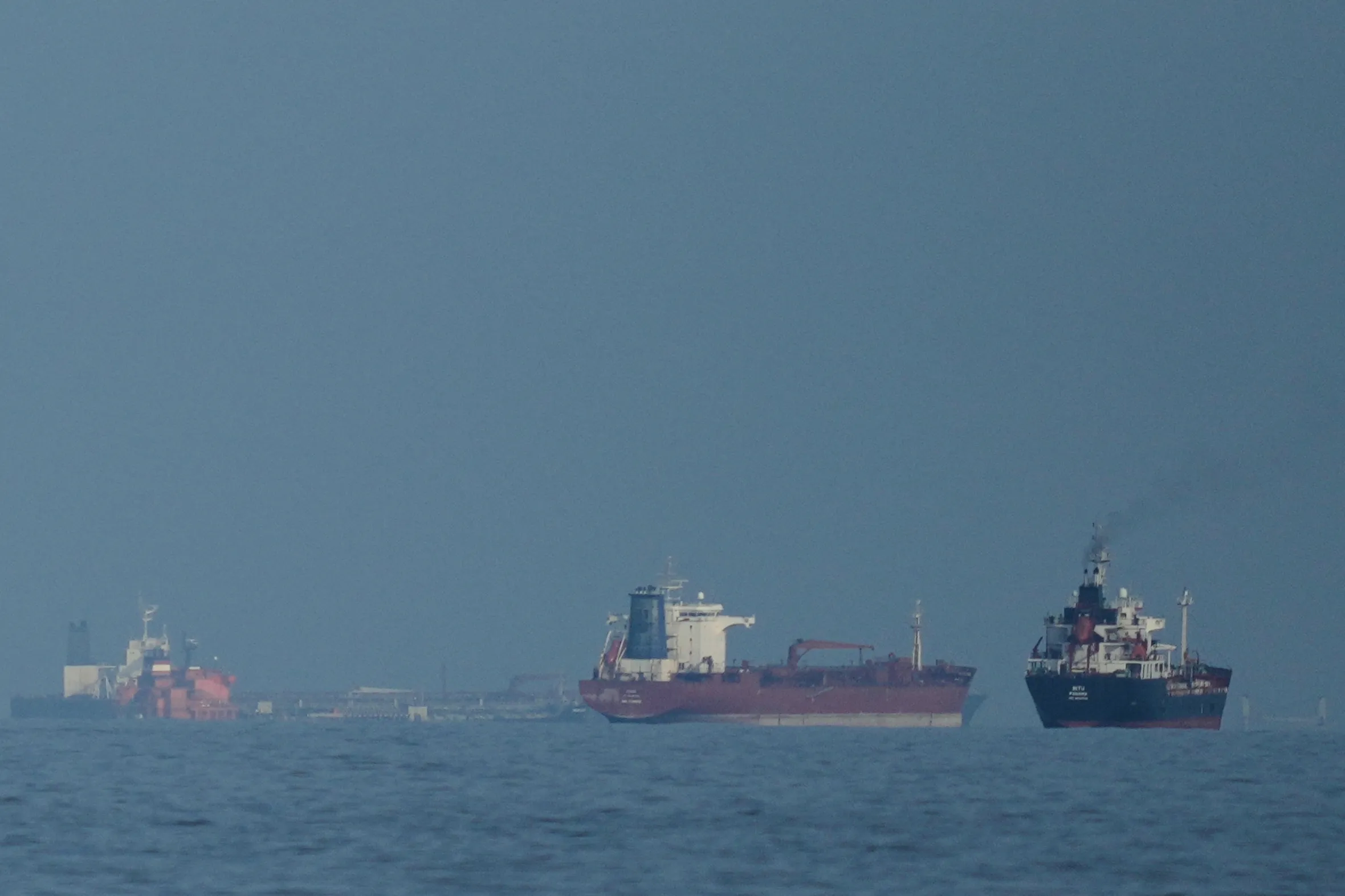 Oil tankers and cargo ships line up in the Strait of HormuzAltaf Qadri/AP
While there are not expected to be critical food supply shortages, officials expect there could be a lack of product variety in shops. Officials discussed unease that the impact would be highly visible and risk undermining wider government campaigns stressing security of supplies in other areas.
Officials plan to prioritise healthcare and civil nuclear disruption, believing that a collapse in CO2 supplies could cause a risk to life through a lack of dry ice to cool blood supplies, organs and vaccines, as well as to Britain’s national electricity supply.
It is the biggest revelation of the behind-the-scenes work to prepare Britain for prolonged hostilities and the impact on supplies and energy costs. Sir Keir Starmer asked Cobra to examine the potential impact of the war lasting into summer. The exercise was attended by civil servants from the departments for health, defence, business, the environment, energy, housing and communities, as well as the Treasury, No 10 and the Food Standards Agency.
The reasonable worst-case scenario warned that supplies of CO2 could fall to just 18 per cent of present levels. This was predicated on a key UK plant suffering a mechanical error, and high gas costs leading to a fall in production across Europe of ammonia and fertiliser which make CO2 as a by-product.
Politics newsletter
Get our daily insider’s guide to Westminster, plus a rundown of PMQs every Wednesday.
Sign up with one click
To militate against the scenario, plans have been drawn up to ask factories to increase CO2 production to 100 per cent by ceasing other manufacturing. Emergency legislation has been discussed to compel the factories to co-operate, which could be passed in only a few days in parliamentary time.
Competition law may also be relaxed to allow prioritisation of more limited CO2 supplies to key areas, including healthcare, as part of the preparations.
The Civil Contingencies Act, which gives ministers temporary but far-reaching powers to respond to national emergencies, could be invoked instead. Government lawyers have been told to prepare advice on activating the legislation.
Plans were also discussed for compensation to be paid to suppliers for ceasing production of their main products to focus on CO2. Officials estimated that the move would cost tens of millions of pounds.
In March, ministers announced that the Ensus plant, in Teesside, would be restarted for a three-month period to maintain a resilient supply of CO2.
Government insiders stressed that the reasonable worst-case scenario was not a prediction, but a part of normal Whitehall planning. In 2022, energy price shocks also caused some shortages of CO2 as higher operating costs pushed down manufacturing in plants that primarily produced the gas.
Starmer sought to assuage concerns about the cost of living on Wednesday after forecasts from the International Monetary Fund showed that the UK was set for the biggest hit to growth of G7 countries due to the Iran war.
The prime minister told MPs that fuel duty remained frozen until September and energy bills had been reduced by 6.6 per cent under the most recent price cap, which lasts until June.
He said in the House of Commons: “The most important thing we can do is to de-escalate the conflict and get the Strait of Hormuz open.”
Starmer is co-hosting a meeting on Friday of more than 40 nations who are working to unblock the waterway, which President Trump has tried to blockade using the US navy in retaliation to similar attempts by Iran.
The ceasefire between the US and Iran is due to expire on Tuesday but there were reports on Wednesday evening that it could be extended. The White House said plans to resume peace negotiations were still “productive and ongoing”.
A government spokesperson said: “We took decisive action last month to shore up the UK’s critical supplies of CO2 by temporarily restarting the Ensus bioethanol plant in Teesside and are continuing to work closely with business groups to tackle the impacts of events in the Middle East.
“Reasonable worst case scenarios are a planning tool used by experts and are not a prediction of future events.”