
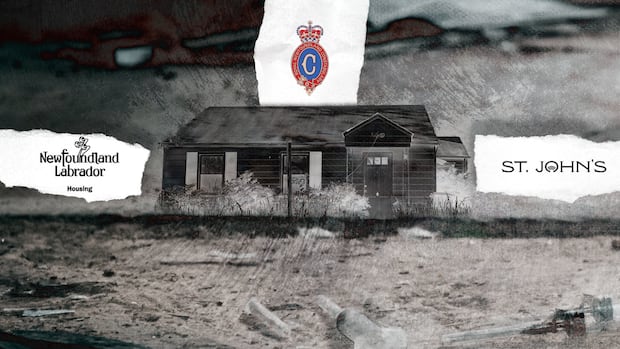
The neighbour next to you has people coming and going all hours of the night. Sometimes the screaming from next door spills out into a street fight. A case of mistaken identity brings a hooded woman with a knife to your doorstep. She wants drugs you don’t have. The smell of cooking crack wafts through your kitchen vent into the house where you live with your children.
Those are some scenarios detailed in emails sent to the Newfoundland and Labrador Housing Corporation (NLHC) over the last year. They were obtained by CBC News through access to information.
“If you don’t start doing something about this matter immediately residents may start taking matters into their own hands,” one person wrote in an email to Joedy Wall, the minister responsible for the housing corporation.
“Please do something before someone gets hurt or killed there.”
But who exactly is responsible when a drug house opens up for business in a neighbourhood?
If it’s a housing corporation-owned unit, the minister said it’s up to NLHC to shut it down — but Wall told CBC News that’s not always straightforward.
“We’ve taken a very strong approach when it comes to our housing corporation with respect to our units, the eviction process, the repair process,” Wall said in an interview Tuesday.
“It’s one that we’re taking very seriously and people in those areas should not feel that frustration to be calling repeated times.”
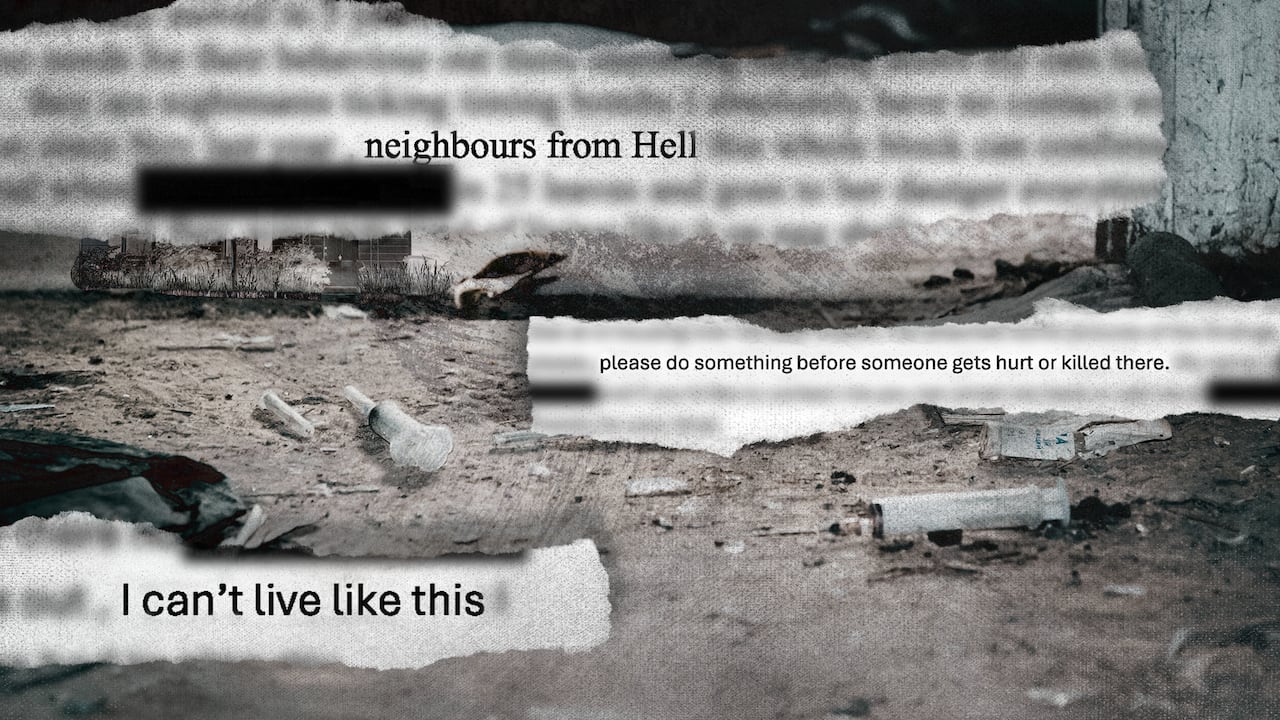 Emails provided to CBC News through access to information show neighbours are frustrated over problematic Newfoundland and Labrador Housing Corporation units in their neighbourhoods. (CBC Graphics)
Tenants who recently spoke with CBC News anonymously due to safety concerns want the housing corporation to more strenuously enforce lease conditions.
Under a section titled crime-free and safe housing, the NLHC lease stipulates that tenants must not engage in or facilitate criminal activity or disrupt neighbours’ “peaceful enjoyment” of their property.
However, Wall said the provincial Residential Tenancies Act overrides any lease agreement between the province and tenant.
“There is a process to go through with respect to evictions. Normally it’s a 90-day process that you work through and so it doesn’t happen overnight,” Wall said.
“There have been many times that we’ve followed the rules. The tenant was removed, it was appealed and for whatever various reasons, they’re back in the unit again.”
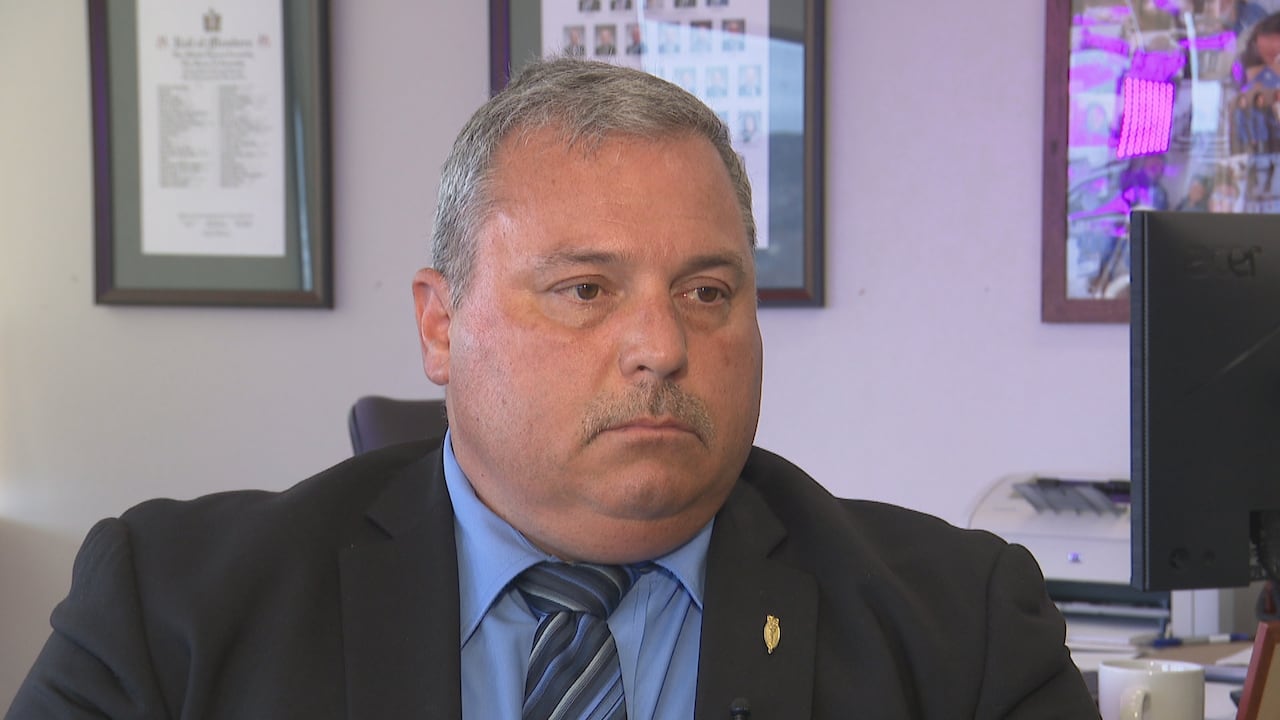 Joedy Wall was named minister responsible for the Newfoundland and Labrador Housing Corporation after the new Progressive Conservative government took office last fall. (Darryl Murphy/CBC)
Wall said he is taking a “hard stance” on the eviction process and said NLHC has had “a number of evictions in this past year alone.”
Based on records obtained through access to information, there were a total of 108 evictions due to lease violations between January 2024 and March 26, 2026. Nineteen of those evictions happened since Wall took over the NLHC portfolio.
Wall acknowledged there is a “delicate” balance between housing those with addictions who intersect with criminal activity, and ensuring other families feel safe in their own homes.
“We don’t want to see anyone homeless. We certainly don’t,” Wall said.
“It weighs heavy on the heart. I won’t sugarcoat it because you’re dealing with families, you’re dealing with children, you’re dealing with vulnerable populations, and no one wants to be evicting someone. But we have to think about the greater good. “
A recent report by the auditor general found the waitlist for social housing grew by more than 70 per cent from 2021 to 2025, while the number of units decreased.
Among her findings, Auditor General Denise Hanrahan said the NLHC failed to conduct cyclical inspections — something tenants who spoke with CBC News said would help identify problem properties.
“I can’t comment on before October of last year, but I can certainly tell you now it is our focus to make sure that inspections are done in a timely manner to make sure that we do pick up on any areas that need to be addressed, and that will be certainly going forward,” Wall said.
Frustration over so-called trap houses — havens for drug use and crime — goes beyond public housing units.
Emails obtained by CBC News through access to information show St. John’s city councillors are regularly contacted about houses that disrupt the neighbourhood — many are noted as rental properties.
“Since 2021 this property has become a persistent source of drug-related activity, noise, threats, and disorderly behaviour that have seriously affected the safety, peace and well-being of everyone nearby,” a person wrote in an email about a property in the west end of the city.
The author of the email said they’ve watched cash and drugs exchanged on the street and listened to threats of gun violence. They wrote that they made every effort to report the problem through the proper channels for more than four years, without success.
“Clearly, the landlord is the only one benefitting from this situation,” they wrote. “This begs the question what are the rights of the neighbours living in the neighbourhood?”
Mayor cites ‘totally erroneous’ belief about city’s powers
But according to the City of St. John’s, its hands are tied.
“Unfortunately some people have been given the impression that the city can shut these down and that’s just not correct,” Mayor Danny Breen said in a recent interview.
Breen said they work closely with the police and community groups, but noted that the city’s powers are limited and are focused on the properties themselves — not the people who live inside them.
“I can tell you that … we are doing whatever is appropriate to do at the time … to get these houses shut down,” the mayor noted.
“But to say that the city has the power to do that, it’s just totally erroneous.”
WATCH | What the housing minister says he will do to clean up problematic properties:
What’s a trap house? And who has the power to shut them down?
CBC Investigates reporter Ariana Kelland looks at complaints about problem properties in the capital city, and who is accountable for cleaning them up.
Breen said city bylaws allow inspectors to visit properties after a complaint is filed and order the property owner to fix deficiencies. If they don’t fix up the property, the city can go to court.
But Breen said the fines can be negligible, to a maximum of $5,000. He said changing the fine structure would require amendments to provincial legislation — something he said the city has been trying to do for years.
“What’s going on in these properties is criminal behaviour and it’s dealt with by the RNC,” Breen said.
But according to the Royal Newfoundland Constabulary, it’s not exactly their problem, either.
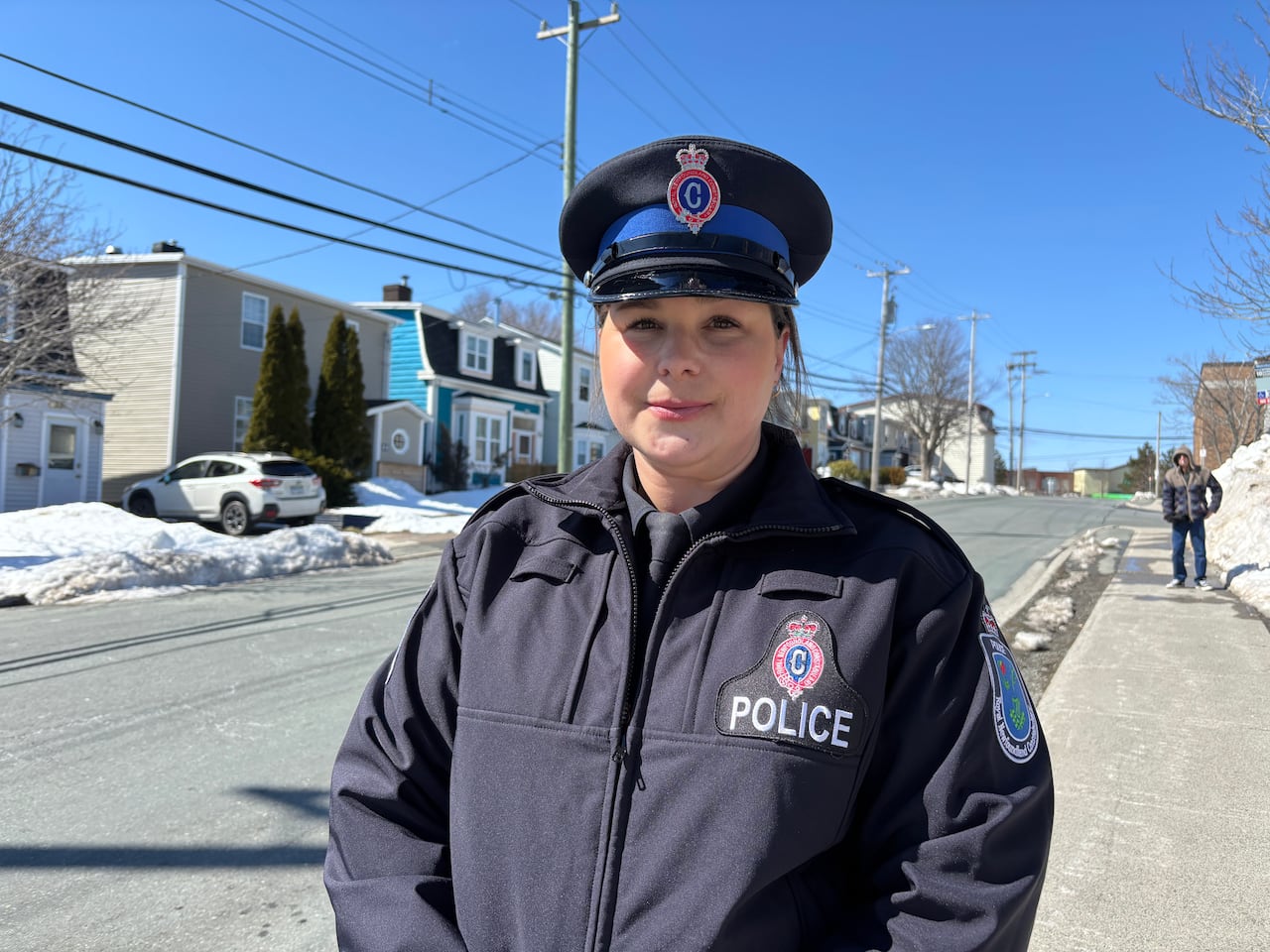 Const. Stephanie Myers is the public communications officer for the Royal Newfoundland Constabulary. (Ariana Kelland/CBC)
“It’s not like you see on TV. We can’t just go and, you know, kick in a door because we want to or because we think something’s happening in there,” said Const. Stephanie Myers, media relations officer with the RNC.
“We have to know what is happening.”
Myers said police are called to some houses more than others, and said they assist NLHC and the city when requested.
But Myers stressed the police can only act on evidence — not suspicion.
“When officers do arrive at that household, we need concrete evidence and we need information that allows us to act upon what was being reported,” she said.
“We need to have the evidence. We need to have people provide us with the information, leave their names, be willing to testify in court.”
Still, Myers encouraged anyone who is witnessing a crime to contact police — anonymously or otherwise.
“Just because there’s not a marked unit driving up and down a road doesn’t mean that we’re not investigating or that we’re not in the area,” Myers said.
“We may have covert operations ongoing. There may be background investigations ongoing that the people calling in the complaints just aren’t aware of.”
CONTACT US
Do you have a news tip you would like to share with CBC Newfoundland and Labrador Investigates?
Send us an email at: cbcnlinvestigates@cbc.ca