
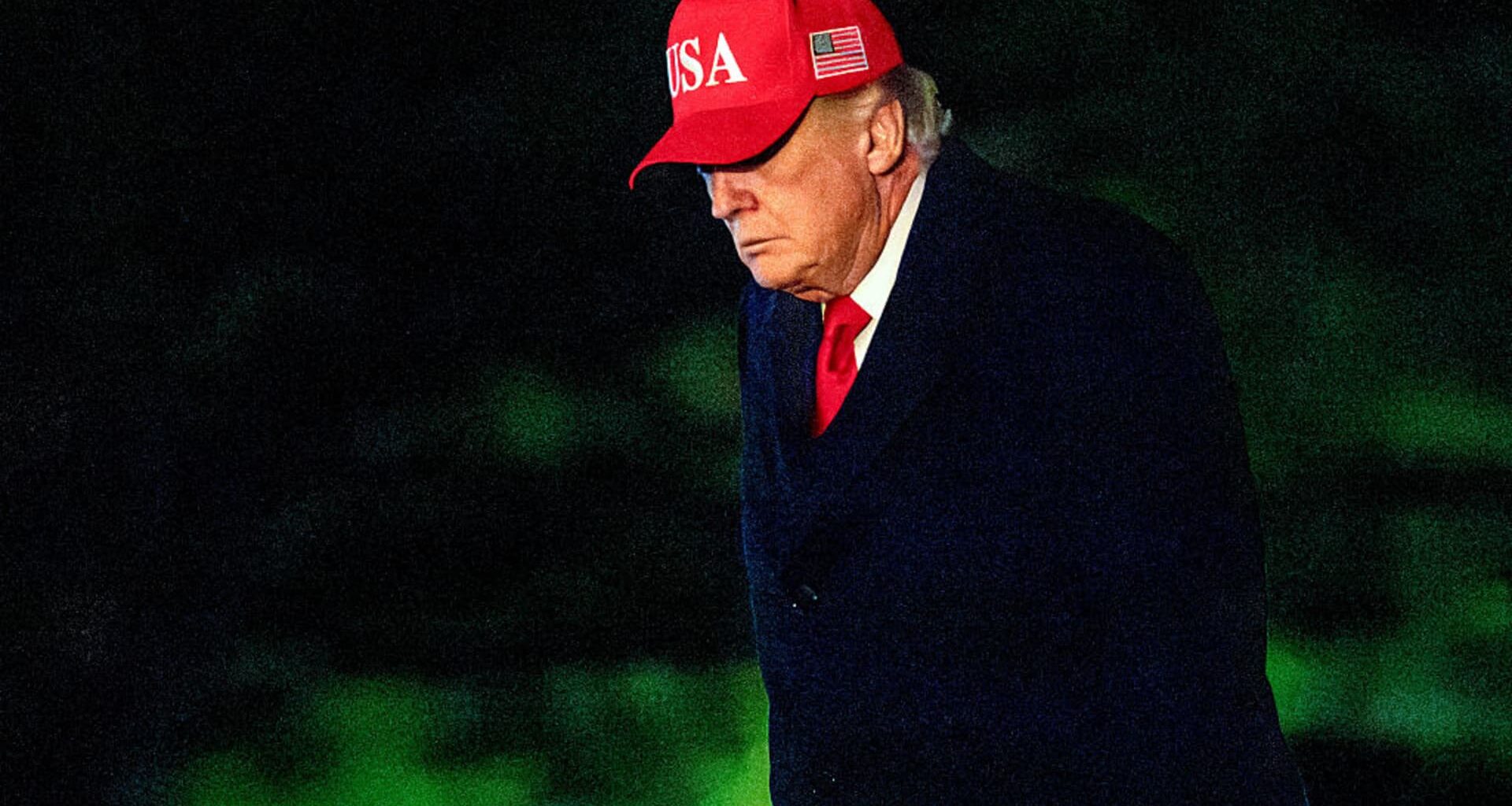
US President Donald Trump walks on the South Lawn of the White House after arriving on Marine One in Washington, DC, US, on Sunday, April 12, 2026. Trump attacked Pope Leo XIV for his criticisms of the US-Israeli war on Iran, calling the leader of the Catholic Church “WEAK on crime.” Photographer: Bonnie Cash/UPI/Bloomberg via Getty Images
Bloomberg | Bloomberg | Getty Images
Hello, this is Hui Jie writing to you from Singapore. Welcome to another edition of CNBC’s Daily Open.
Markets are soaring even as $58 billion in energy assets lie in ruins. But booming indexes don’t erase the impact of the war, with the World Bank warning that conflict-related disruptions could last for months.
Enjoy!
“Wars begin when you will, but they do not end when you please,” wrote Renaissance political philosopher Niccolò Machiavelli.
That lesson is proving relevant in the 21st century’s latest war, as U.S. President Donald Trump’s repeated assurances that the Iran war would end swiftly have yet to materialize.
On Wednesday, the president again insisted that the Iran war is “very close to over” with authorities in Tehran eager to agree a peace deal.
The U.S. and Iran will likely return to Pakistan next week for a second round of peace negotiations, two senior Pakistani officials told MS NOW on Wednesday.
However, Trump’s forecast that the “stock market is going to boom,” appears to be coming true.
The S&P 500 and Nasdaq Composite rose to new all-time highs overnight, with the S&P advancing 0.8% to 7,022.95, while the Nasdaq gained 1.59% to post its 11th straight gain in a row to 24,016.02.
However, World Bank President Ajay Banga sounded a cautionary note in his interview to CNBC, warning that conflict-related disruptions would likely last for months, even if the current shaky ceasefire lasts and the Strait of Hormuz is reopened.
Estimates from consulting firm Rystad Energy stated that the Iran war has damaged as much as $58 billion worth of energy infrastructure.
More than 80 energy facilities have been attacked in all since the conflict started on Feb. 28, and more than a third of those are severely damaged, according to Fatih Birol, executive director of the International Energy Agency.
With energy markets badly disrupted, the Iran war has also led countries like South Korea to rethink their energy security.
Energy minister Kim Sung-hwan told CNBC’s Lisa Kim that the current situation was “serving as a significant turning point” for Seoul to shift to renewable energy and away from oil.