

Mexico’s security cabinet is reviewing allegations a prominent organized crime group was involved in strong-arming workers at a Canadian-owned gold mine so they would vote for its management’s preferred union, Mexican President Claudia Sheinbaum said Tuesday.
A member of the Grupo Flechas faction of the Sinaloa cartel was allegedly behind threats directed at workers at the Camino Rojo mine during a months-long battle between union organizations, according to filings by the Office of the U.S. Trade Representative.
A labour panel, triggered by the U.S. under the Canada-U.S.-Mexico Agreement (CUSMA), recently determined that management at the mine allowed “an atmosphere of fear among workers” to permeate the lead-up to a November 2024 vote on union representation.
“We are reviewing this with the security cabinet, plus everything that has to do with the international panels,” Sheinbaum said during her regular weekday morning news conference.
Sheinbaum said she would also be discussing the matter with the secretary of labour and social welfare.
The Camino Rojo gold mine is located about 600 kilometres north of Mexico City, in a semi-desert area in the municipality of Mazapil, in the state of Zacatecas. It is owned by Orla Mining, which has its headquarters in Vancouver and recently bought the Musselwhite gold mine in northwestern Ontario.
 Mexican President Claudia Sheinbaum during a news conference Tuesday, in which she said her security cabinet would look into allegations of coercion and threats surrounding a vote to decide between two unions at a Canadian-owned gold mine in Zacatecas. (Office of the President)Panel finds ’employer interference’
The three-member CUSMA rapid response labour panel concluded that management at the Camino Rojo mine denied workers their labour rights.
Management engaged in “employer interference,” allowing workers to face threats and coercion so they would vote for its chosen labour organization, the panel said in a written “final determination” dated Feb 13.
“[T]his interference is aggravated considering there were also acts of intimidation and coercion that the [mine] could not, nor should it have, ignored.”
The 2024 vote resulted in a victory for the union favoured by management to take over collective bargaining from a group that had represented workers at the mine since 2021, the panel said.
In a statement emailed to CBC News, Orla Mining said it was “engaging in dialogue with the governments of Mexico and the United States” and it was implementing “additional measures” following the panel’s findings.
The company said it was in the midst of a review launched last year “regarding potential criminal activity involving the mine.” The statement said it had informed authorities of its review and that it was “enhancing the mine’s security measures in collaboration with authorities.”
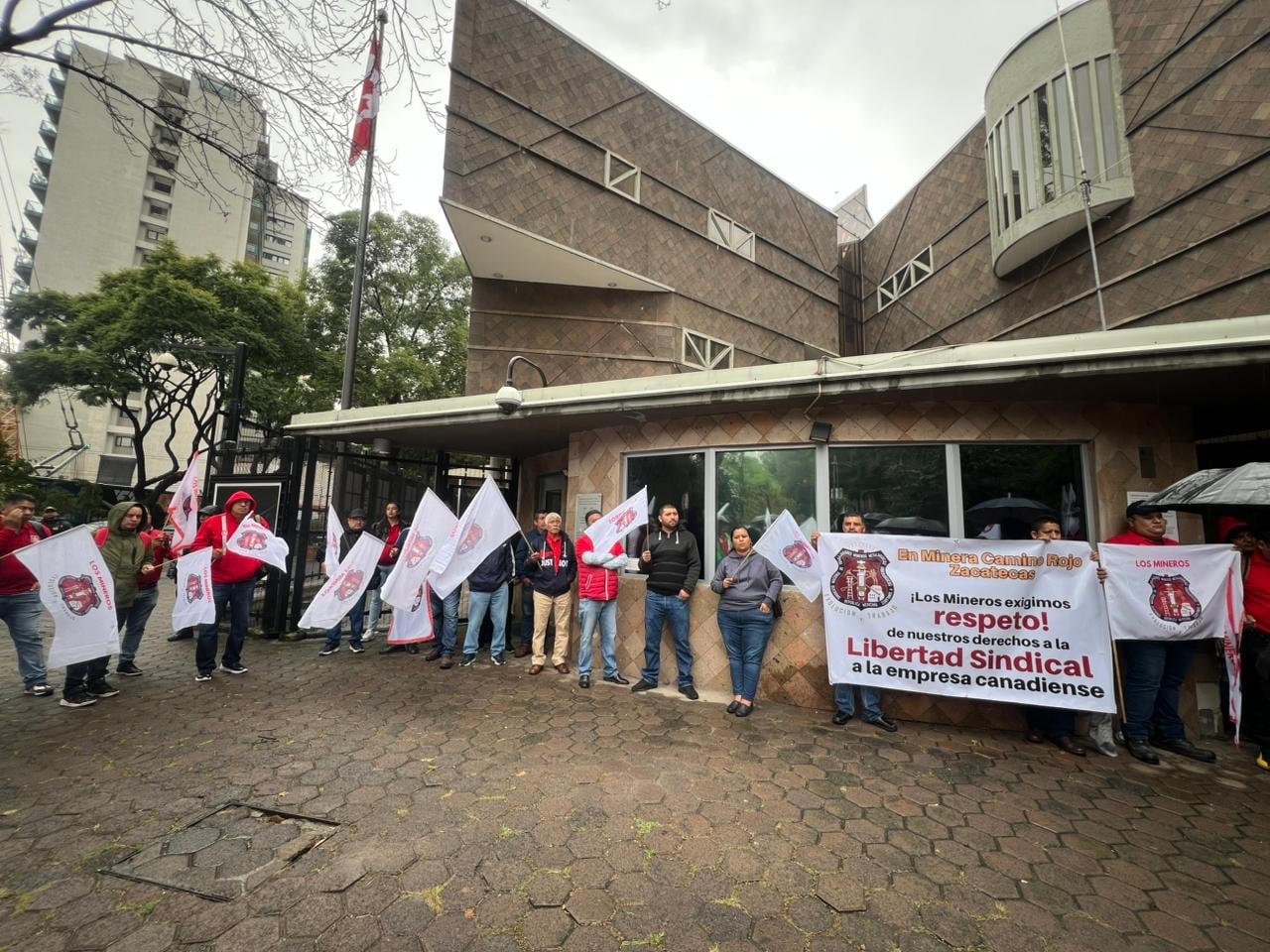 Members and supporters of the Mineros Union protest in front of the Canadian embassy in Mexico City on Oct. 21, 2024, over threats during the union battle at the Camino Rojo gold mine. (Courtesy of Voz Minera Radio)Mine allegedly hired cartel operative
The panel said while Camino Rojo management was negotiating a collective bargaining agreement in early 2024 with the National Union of Workers for Mining, Metalworking and Similar (Mineros Union), it began planning to displace them with the National Union of Exploration, Exploitation and Processing Mine Workers (Beneficio de Minas).
The Mineros Union filed a complaint with the U.S., which triggered the panel under CUSMA rules, after it failed to come to a resolution with Mexico on the issue.
U.S. filings in the case say the Beneficio de Minas was “widely known as a ‘white’ or ‘protection union’ that is commonly understood to support employers’ interests over workers.”
Beneficio de Minas could not be reached for comment.
Napoleón Gómez Urrutia, national president of the Mineros Union, alleged that the mine used its relationships with “criminal groups” in order to “impose by force, by violence, by intimidation, by fear, this spurious union … against the legitimate mining union.”
Gómez Urrutia is also a federal lawmaker with the governing National Regeneration Movement party (Morena).
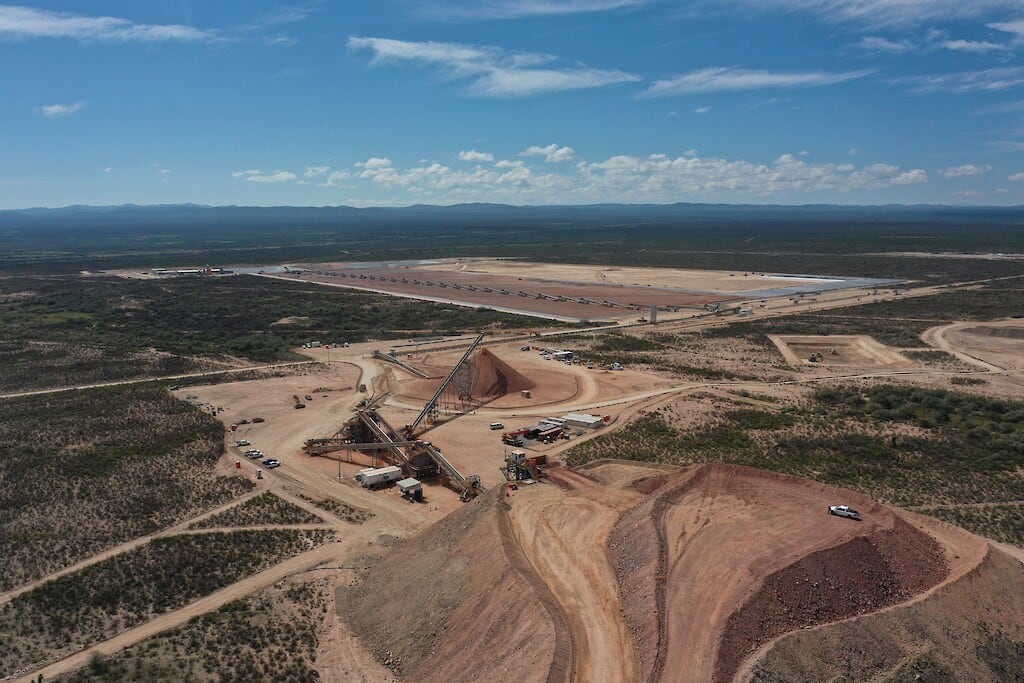 Orla Mining’s Camino Rojo gold mine in Zacatecas. (Courtesy of Orla Mining)
The U.S. alleges in its publicly available filings that an individual, nicknamed “el Mocho” and “el Paul,” who was part of the Sinaloa cartel faction Operativa Flechas, was hired on contract by the Camino Rojo mine. The filings include a photo of the individual, with his face blurred, in the front seat of a vehicle with the Orla Mining logo on the door.
El Paul allegedly “attended and interrupted” Mineros Union meetings with “armed individuals,” according to the filings.
During one meeting on May 21, 2024, the individual “again accompanied by armed individuals told Los Mineros workers that they would be killed if they didn’t stand down,” said the U.S. filings.
“Anticipating possible violence at this meeting, Los Mineros had requested the presence of Mexican law enforcement.
“Mexican authorities declined that request, however, which workers indicated was due to [el Paul’s] influence over local authorities.”
Call for criminal complaint against Orla Mining
The death threats continued against Mineros Union members even after the union lost the vote.
A hooded man delivered a handwritten threat to a member’s home in April 2025, warning he would soon “pay” and there was “nowhere for the person to hide,” according to the U.S. filings.
“Camino Rojo is already mine,” said an image of the letter included in the documents.
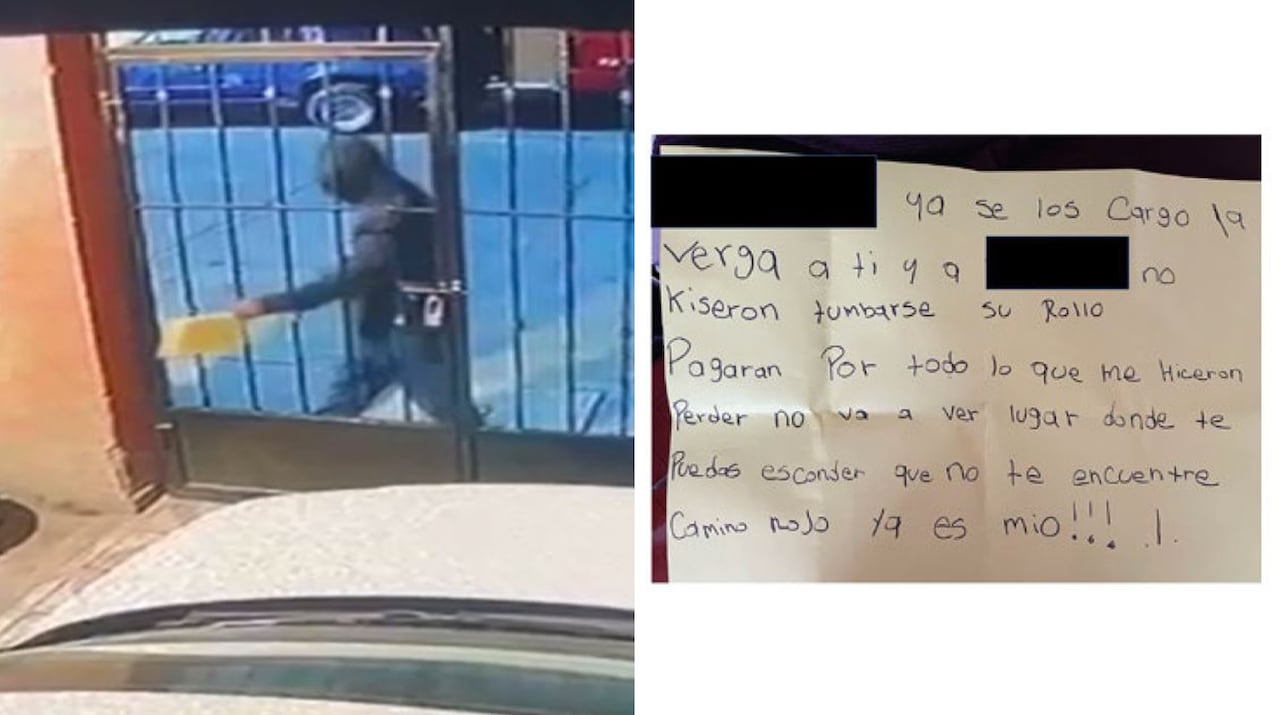 The contents of a letter allegedly dropped off at the home of a Mineros Union member on April 21, 2025, after the union lost the vote. The translation by the U.S. Office of the Trade Represenative reads: ‘Now you are in for it. You and [redacted] didn’t want to end your bullshit. You will pay for all that you have made me lose. There is no place where you can hide where I won’t find you. Camino Rojo is already mine!’ (CBC News/Office of US Trade Represenative)
David Saucedo, a Mexico City-based corporate security consultant, said the Operativa Flechas belong to the Mayiza faction of the Sinaloa cartel, which remains loyal to former Sinaloa cartel leader Ismael (El Mayo) Zambada García, who is awaiting sentencing in the U.S.
They are part of an elite operations unit split across several brigades with operations in several states, including Zacatecas, Saucedo said.
He added that the Operativa Flechas are known to be present in the area of Camino Rojo’s operations and became allies of the company.
“They’ve been operating in favour of the Canadian mining company for about four or five years, more or less,” he said.
Paul Bocking, a project officer with the United Steelworkers Humanity Fund, said a criminal complaint should be considered against Orla Mining given its alleged links to the Sinaloa cartel — a designated terror organization in Canada — in this case.
“The evidence is on the table. It’s no longer a matter of anecdote,” said Bocking.
The Canadian National Office of the United Steelworkers, an ally of the Mineros Union, filed a complaint with Employment and Social Development Canada (ESDC) in November 2024, also hoping to trigger a labour panel hearing under CUSMA.
“It’s just kind of gone into limbo, essentially,” said Bocking.
ESDC said in an emailed statement that the federal government was “deeply concerned about these allegations” and it was reviewing the CUSMA labour panel’s findings.
“Canada takes the matter very seriously and expects all Canadian companies operating abroad to abide by all relevant laws,” said the statement.