
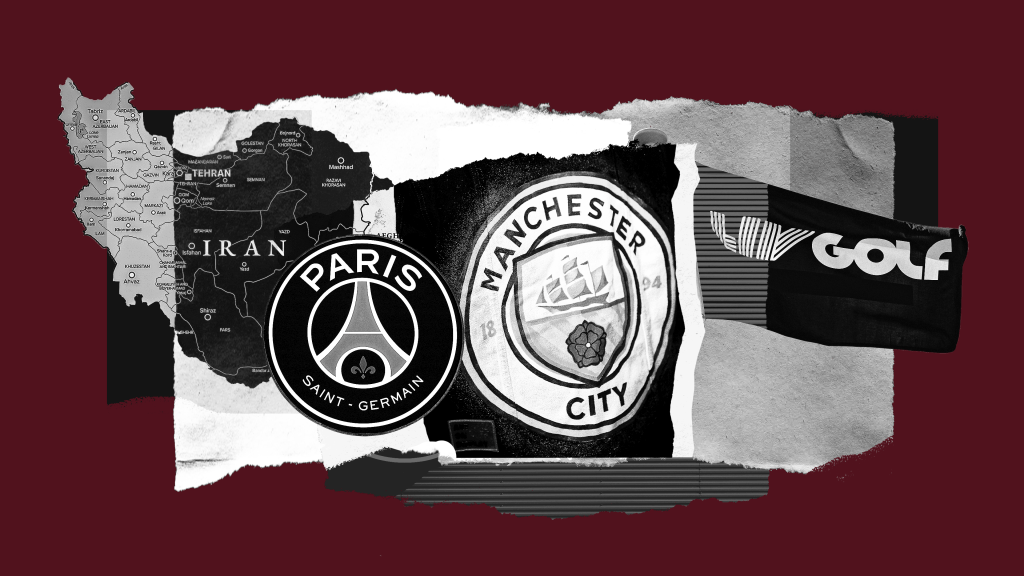
The proliferation of sovereign wealth money from the Middle East has arguably been the biggest story in global sports over the past 10 years.
Since the war in Iran started six weeks ago, however, there’s been an open question about whether the fighting, which has spread to include airstrikes on neighboring countries, might prompt a strategic shift from the funds that reshaped sports over the past decade. There’s mounting evidence that it will.
Consider these three pieces of news, in three different sports, over the past few weeks:
Saudi Arabian sovereign wealth fund PIF has spent more than $5 billion on LIV Golf, but the group is now considering pulling its funding.
PIF-backed Newcastle and Qatar-backed Paris Saint-Germain were both considered frontrunners for franchises in the NBA Europe league being built, but last I heard, neither submitted preliminary bids before last month’s deadline.
The WTA Tour Finals were held in Riyadh for the past two years, but the women’s tennis circuit is now seeking a new home for its year-end event starting in 2027.
Taken individually, it’s possible to find other justifications for each. LIV Golf has been losing hundreds of millions each year; some would-be NBA Europe bidders have concerns about the economic structure of the league; and the WTA Tour Finals may have been the opener to lure a new ATP Tour men’s event in Riyadh, which is scheduled to debut in 2028. But conversations with a number of people across global sports over the past few weeks makes me think there are some changes underway in the region, ones that could dramatically impact sports large and small.
In the past decade, sovereign funds from the Middle East have committed many billions to global sports. That’s spanned everything from hosting major events (the 2022 World Cup in Qatar) and buying major sports teams (PIF’s Newcastle), to backing upstart leagues (LIV Golf and the Professional Fighters League, which has Saudi and Emirati investors) and high-profile bouts across boxing and mixed martial arts. Sovereign funds have become backers for many of the U.S.-based institutional funds that have invested up and down American sports, and sought to partner on celebrity-laden events like Fanatics Fest. (Sportico has done business with an entity whose principals have ties to the Qatar Investment Authority, including sponsorship of an annual sports summit in Doha. SRMG, a publicly traded media firm in Saudi Arabia, is a minority investor in PMC, Sportico‘s parent company.)
The motivation behind this spending is hotly debated. Each country has its own aims and motives, but they generally fall into a few broad buckets. Middle Eastern economies are looking to diversify beyond hydrocarbons, they’re looking to boost tourism within their borders and they’re looking for the reputation lift often associated with sports team ownership and big-event hosting. Sports and other entertainment events have been a critical piece of the narrative for a handful of countries undergoing rapid—if not also selective—modernization.
Critics of this point often use the term sportswashing, implying that the investments are used to divert attention from human rights violations committed inside those countries (including, in Saudi Arabia’s case, the murder of journalist Jamal Khashoggi). Saudi crown prince and prime minister Mohammed bin Salman used the term himself in a rare English-language interview with Fox News in 2023, saying that, “If sport washing is going to increase my GDP by way of 1%, then I will continue doing sport washing.”
The Iran war has shifted economic resources within countries like Qatar, UAE and Saudi Arabia, all of which have been subject to Iranian missile/drone attacks in the last few weeks. The fighting also forced the cancellation of a handful of major events—F1 races in Bahrain and Saudi Arabia; Fanatics’ planned flag football extravaganza in Riyadh—and impacted the travel of many looking to attend events here in the U.S. via pricy hospitality.
It’s also slowed dealmaking. Americans looking to either raise money or close M&A transactions in the Middle East have had their travel largely disrupted over the past few weeks. That’s particularly acute for people who don’t have offices in the region, and for those restricted by key man or executive travel insurance. Lack of live human-to-human interaction, by definition, means less dealmaking.
If the surge of sovereign money has been the biggest story in global sports in the past decade, the push of private equity into U.S. sports might be No. 2. And in some ways, they’re the same story. Many of those private equity funds have raised money from Middle Eastern sovereign wealth, a layer of abstraction that has likely benefited all parties. Prior to the war, fundraising for sports strategies has already grown harder over the past few years as the market crowded and the deals grew more complex.
Some of this is also running up against a subtle shift in sports spending from Saudi Arabia that predates the war. While PIF has made notable sports investments for properties that compete outside the country, such as LIV and Newcastle, the fund has placed a heavier emphasis recently on investments that bring sporting events to the Kingdom itself, according to multiple people familiar with the thinking. That includes major tournaments like the 2034 men’s World Cup, long-standing WWE events and other one-offs that compliment Riyadh Season, a months-long annual entertainment festival in the capital. A rep for PIF didn’t respond to an email seeking comment.
There are exceptions. In this case, a series of mega deals outside of sports that appear to be moving forward. A PIF-led group recently agreed to a $55 billion takeover of video game giant EA, and funding for the $110 billion Paramount purchase of Warner Bros. reportedly includes backing from Saudi, Qatari and Abu Dhabi funds.
The biggest long-term impact of the Iran war, however, might also be the one that’s hardest to quantify. For the past decade, many Middle Eastern countries—UAE and Qatar included—have moved closer to the U.S. politically, culturally and economically. Now, according to many experts, those relationships are strained.
Many Gulf countries “are feeling abandoned by the United States,” former Pakistan ambassador to the U.S. Maleeha Lodhi told The Mishal Husain Show earlier this week. “Many feel that the American security umbrella, when push came to shove, was of no value to them, because America didn’t defend them.”
“The Middle East has changed forever,” she added.
Maybe its sports spending has too.