
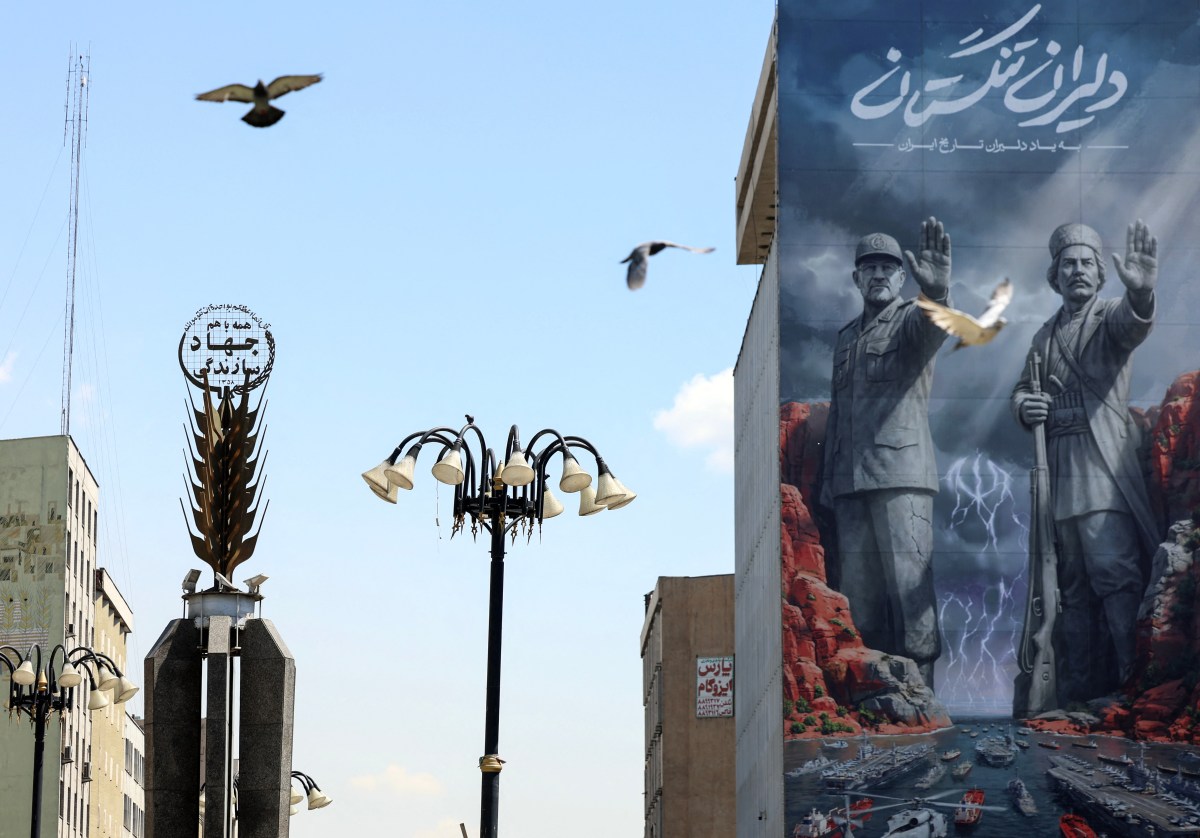
After outlasting a joint U.S.-Israeli military campaign, Iran now finds itself contending with an even more menacing threat in the form of a blockade ordered by President Donald Trump to sever the Islamic Republic’s remaining economic lifelines.
The White House’s tactic will test Tehran in ways that risk undermining a survival doctrine that has weathered the assassination of top leadership and devastation of military assets by applying asymmetric pressure through regionwide missile and drone attacks and exertion of control over the Strait of Hormuz energy trade choke point.
Now, that same crucial waterway is being weaponized against Iran, with U.S. Central Command claiming total enforcement of the blockade targeting vessels seeking to arrive at and depart from Iranian ports.
And while this measure may not alone be enough to force a deeply entrenched Islamic Republic into capitulation, the effects are likely to be severe for a nation already in the throes of economic crisis and popular discontent in the lead-up to the conflict.
“We will see a sharp increase in consumer prices, pushing the annual inflation rate into triple-digit territory,” Ali Dadpay, a Texas-based economist specializing on Iran, told Newsweek. “The most serious challenge for the regime would be the combination of fiscal stress and social pressure.”
“If the state cannot sustain export earnings while prices for basic goods rise sharply, it will face growing difficulty financing its patronage networks, maintaining purchasing power, and containing unrest,” Dadpay said. “In that scenario, the blockade would not necessarily produce immediate state collapse, but it could significantly weaken the regime’s economic base and increase the cost of political control.”
 A Model of Resistance
Just as Iran long prepared for the kind of existential struggle it faces on the battlefield, the Islamic Republic has a history of evading economic roadblocks imposed by sanctions.
“Over the past decade, particularly since 2010, Iran has focused on building a ‘sanctions adaptation toolkit’ rather than eliminating its underlying vulnerability,” Hadi Kahalzadeh, researcher at Brandeis University’s Center for Global Development and Sustainability, told Newsweek.
“This has included shifting trade toward non-Western partners, diversifying parts of the economy, reducing dependence on certain strategic imported raw materials, promoting selective domestic production in key sectors such as food and pharmaceuticals, developing alternative financial channels outside the dollar system, and expanding the use of informal and semi-formal networks, including a shadow shipping fleet,” he said.
Among the outcomes described by Kahalzadeh was a “further militarization of the economy and the shrinking of the independent private sector.”
The main benefactor of this arrangement has been the Islamic Revolutionary Guard Corps (IRGC). While formally acting as a military service dedicated to the preservation of the Islamic Republic, the IRGC has expanded its role over decades to include greater influence over the economy.
But as Dadpay pointed out, these conditions also gave rise to a parallel network of elite-owned businesses, including shell companies “from Africa to Central Asia, with Dubai, UAE [United Arab Emirates], being a favorite hub.” Instead of filling the state’s coffers, Dadpay argued, much of this practice directly benefited influential figures.
He called it “networks of evasion rather than an economy of resilience.”
 Turning Off the Tap
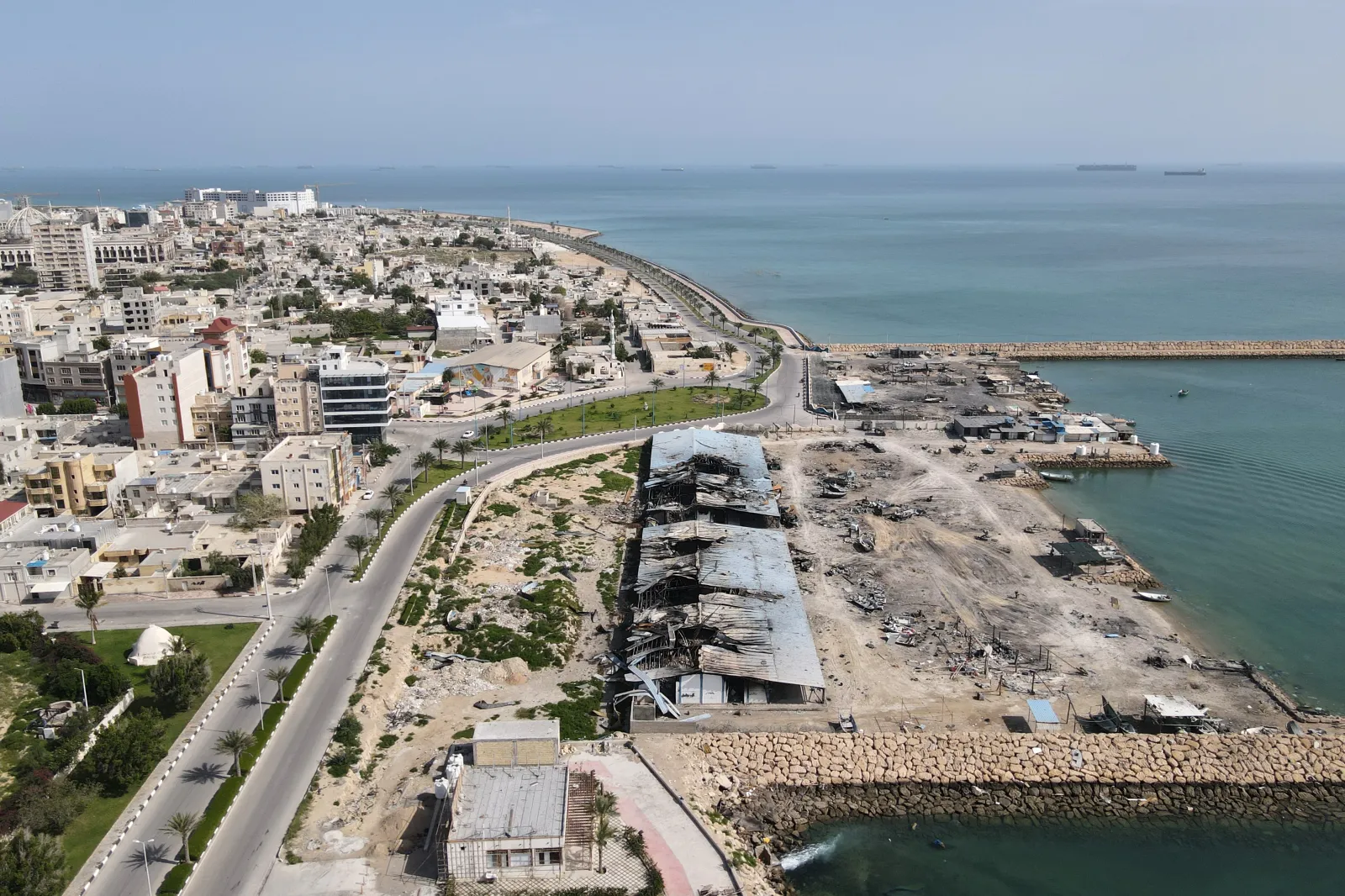
However, with Iran targeting nearby Arab states hosting U.S. military bases throughout the war, these same nations have been decidedly less eager to accommodate activity tied to Tehran.
The UAE, which has been subject to the most Iranian missile and drone attacks, has been particularly firm, cracking down on networks suspected of being affiliated with the IRGC and even banning all Iranian nationals from entering the nation.
And with maritime shipping at a halt due to the blockade, Iran will have to rely on other options, of which the nation straddling West, South and Central Asia has several, including land routes and smuggling networks.
“These channels may alleviate absolute scarcity in certain categories, especially for those who can afford black-market prices,” Dadpay said. “But they cannot fully replace the scale, efficiency, or revenue associated with normal maritime trade.”
Most critically perhaps is the cutoff of Iran’s lucrative trade with China, which accounted for nearly all of the Islamic Republic’s oil sales and, in turn, proved a key source for other goods.
“This line of business thrived under sanctions. However, a naval blockade has interrupted this trade relationship in both directions,” Dadpay said. “The Islamic Republic can neither export oil to nor import commodities from China.”
“Given the dynamics of oil exports, Iran might not be able to keep its oilfield operational for more than a few weeks,” he added. “Shutting them down can cause lasting damage.”
Long-Term Effects
The challenge is complicated by the reality that the impact is likely to extend far beyond the end of the shooting war and even a possible peace deal as Washington and Tehran consider a return to talks.
“A ceasefire may halt physical destruction, but it will not automatically reverse income losses, inflation, unemployment, or the erosion of household resilience,” Kahalzadeh said. “The social consequences of the war are therefore likely to last well beyond the fighting itself.”
“Sanctions, fiscal deficits, high inflation, and weak purchasing power already constrain the government,” he added. “It may still be able to provide selective relief to politically important constituencies. Still, it is unlikely to have the resources to deliver broad-based social protection on the scale now required.”
Meanwhile, life is set to get even more difficult for Iranian citizens.
In late December, deteriorating economic conditions prompted Iranian merchants and shopkeepers to stage a series of demonstrations in Tehran’s Grand Bazaar that spiraled by early January into a broader protest movement challenging the Islamic Republic.
Thousands were killed amid the unrest and a crackdown by Iranian security forces, which alleged infiltration and agitation on the part of foreign intelligence agencies. The bloodshed served as the initial pretext for Trump’s military build-up in the region and further tore at Iran’s fraying social fabrics.
Kahalzadeh estimated that “between 65 and 70 percent of the population was either already poor or vulnerable to falling into poverty” before the war. He cited recent United Nations Development Program data indicating that, today, the share of Iranian households below the poverty line has risen from roughly 35 to 40 percent, with vulnerability remaining around 30 to 35 percent.
“These figures imply that only about 25 percent of Iranian households, mainly those with managerial positions, highly skilled private-sector jobs, or relatively protected public-sector employment, are likely to remain meaningfully sheltered from severe economic hardship,” Kahalzadeh said.
“In other words,” he added, “the overwhelming majority of Iranians are likely to be under intense economic pressure.”
 Two-Way Risks
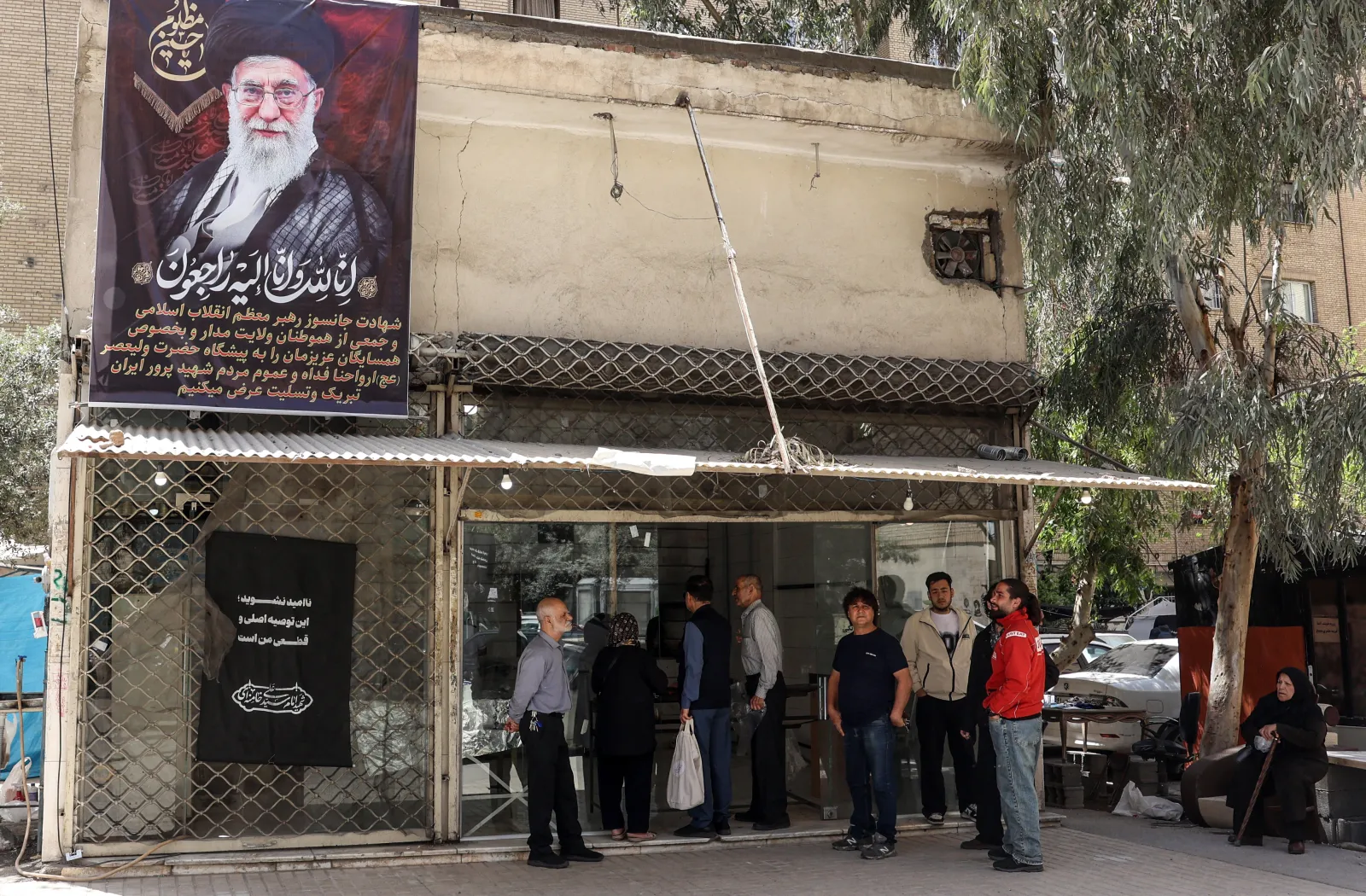
Despite calls to action from Trump and Israeli Prime Minister Benjamin Netanyahu, the war has to serve as a catalyst for another Iranian uprising against the government. The Islamic Republic has also used the conflict as an opportunity to demonstrate its ability to leverage global energy trade, a card still in play despite the U.S. countersiege.
“Even if the Strait of Hormuz is reopened as part of an agreement, the conditions will not fully revert to the status quo ante,” Kahalzadeh said. “As the war, so far, does not lead to the disintegration of Iran or the overthrow of the Islamic Republic, it would underscore the limits of the military option, demonstrating that excluding Iran from the regional equation is neither feasible nor strategically effective.”
“All of these factors leverage Iran’s position to work and receive support,” he added.
Djavad Salehi-Isfahani, professor of economics at Virginia Tech and managing editor of the Middle East Development Journal, pointed to aspects of Iran’s system and position that may serve to alleviate the worst of the crisis, at least temporarily.
“Iran is energy rich so it can keep its homes, offices, and factories (those that remain) supplied with the energy needed for the minimal functioning of its economy,” Salehi-Isfahani told Newsweek. “It claims to have supplies of essential commodities lasting several months. It borders many countries that can supply it through land routes.”
“It has a robust cash transfer system that offers everyone in the bottom 90 percent receive enough cash to pay for essentials, especially to stave off hunger,” he said. “For example, before the war it was enough to buy at least 4 loaves of bread per person per day. In addition, it offers essential goods in special stores that consumers can pay for with coupons. This is essential for ensuring fair distribution of the dwindling supply under war conditions.”
Salehi-Isfahani also observed that, as opposed to the war undermining the Islamic Republic’s support, “the regime has become more popular in its role as the defender of the homeland” throughout the conflict, owing in part due to Trump’s threats to Iranian wipe out “civilization” and destroy civilian infrastructure.
“The insults hurled at Iran as a country and a civilization by U.S. leaders has persuaded many who disliked the regime to prioritize national defense over individual welfare, which was their main concern before the war,” he said.